Fire Grill Waikiki
Our verdict
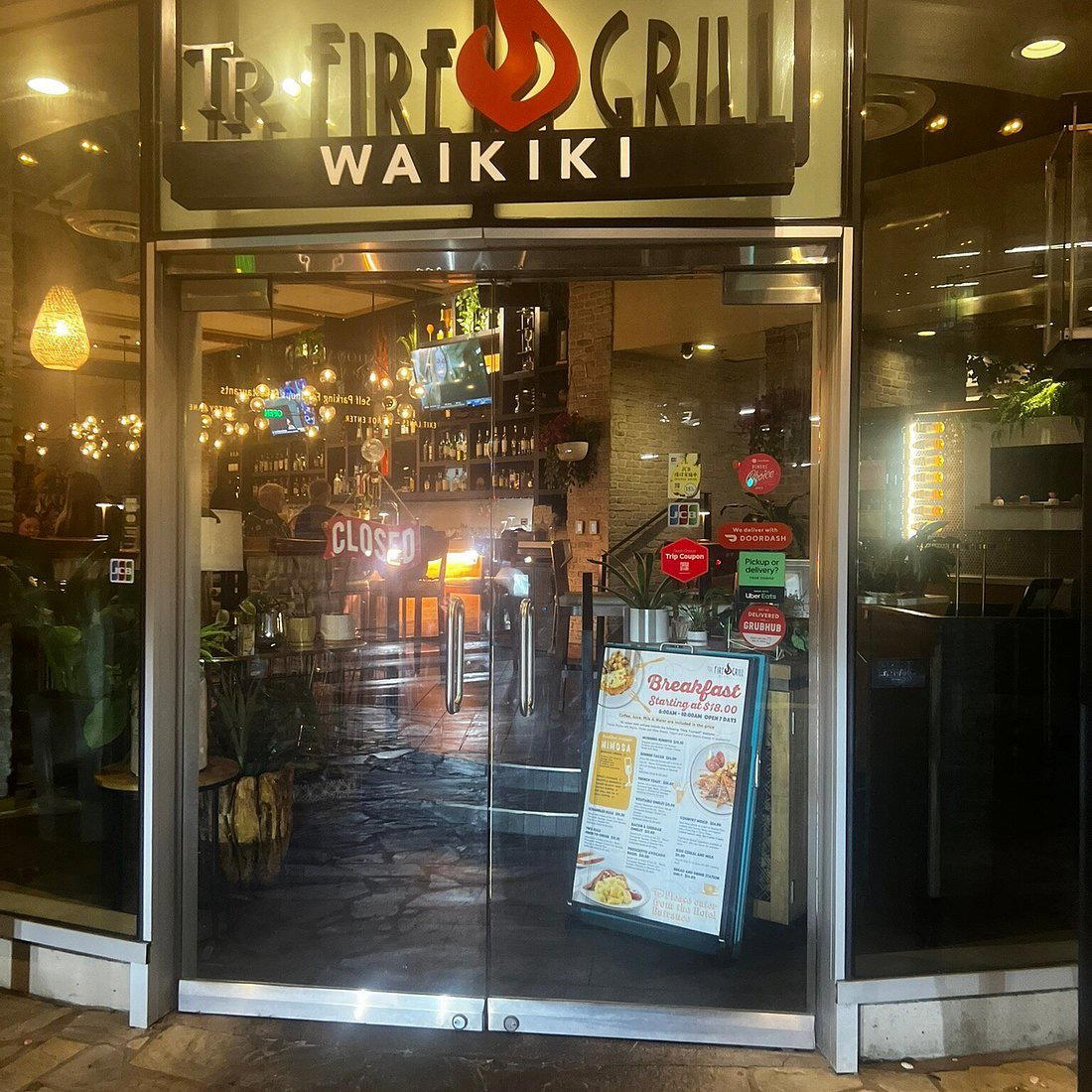
A fire-driven grill concept on Kūhiō Avenue places Fire Grill Waikiki inside Honolulu's growing appetite for open-flame cooking formats. The address puts it within reach of both visitors and locals navigating the Waikiki dining corridor, where the distinction between resort-facing menus and independently minded kitchens has grown sharper in recent years.

Pearl is the En Primeur Club membership app — saves, bookings, and concierge access live there. Same editors, same standards.
- Address
- 2330 Kūhiō Ave., Honolulu, HI 96815
- Phone
- (808) 744-3300
- Hours
- Daily 6–10 AM, 11:30 AM–2:30 PM, 3–9:30 PM
- Website
- trfiregrill.com
- Directions
- Get directions
- Booking
- Book on OpenTable
The menu
What to order
- Smoked Prime Rib
- BBQ Baby Back Ribs
- Seared Ahi & Avocado Salad
- Crab Stuffed Mushrooms
Waikiki's Open-Flame Format and Where Fire Grill Fits
Kūhiō Avenue runs parallel to Kalākaua, one block inland from the beach strip, and that single block of distance matters more than it might sound. The venues along Kūhiō tend to draw a different crowd than the oceanfront resort dining rooms: less transient, more repeat, and increasingly local in orientation. Fire Grill Waikiki sits at 2330 Kūhiō Ave. a location that places it squarely in the middle of this corridor, where a quieter but more deliberate dining scene has been taking shape over the past several years.
Across the United States, open-flame and live-fire cooking formats have moved from novelty into something closer to a defined category. Wood-fired and charcoal-driven kitchens now operate at multiple price points, from the tasting-menu tier occupied by venues like Blue Hill at Stone Barns in Tarrytown and Single Thread Farm in Healdsburg, down through accessible neighborhood formats that make fire-cooking a weeknight option rather than a special occasion. Fire Grill Waikiki occupies the latter part of that spectrum in Honolulu, bringing a grill-centered identity to a part of the city where the competition ranges from casual plate-lunch counters to more considered independent kitchens.
The Honolulu Grill Scene in Context
Honolulu's dining identity has always been shaped by the Pacific Rim proximity that gives the city access to tuna, local produce, and a culinary syntax borrowed from Japanese, Korean, Filipino, and Hawaiian traditions. What the open-flame format does, when applied here, is introduce a different kind of transformation to those same raw materials. Char and smoke carry their own argument, independent of marinade or preparation style, and in a city where poke and izakaya formats have long dominated the casual end of the market, a grill-forward concept represents a distinct alternative.
For reference points in Honolulu's broader restaurant scene, Fête (New American) has carved out a reputation for locally sourced ingredients treated with technical discipline, while 3660 On the Rise has long anchored Euro-Asian fine dining in the Kaimuki neighborhood. Neither operates primarily around fire cookery, which is precisely why a venue with a grill identity occupies a different slot in the city's dining conversation. Further along the experiential end, Ahaaina Luau offers a cultural performance format built around the imu, the underground oven central to Hawaiian tradition, demonstrating that fire and heat have deep roots in this island's food culture long before the contemporary grill-restaurant format arrived.
How the Wine List Defines Ambition in a Grill Context
One of the more reliable ways to read a grill restaurant's ambitions is through its wine program. At the casual end of the open-flame category, wine lists are functional: a handful of reds chosen for tannin and a few whites chosen for acidity, priced to move quickly with a steak or a grilled fish. At the serious end, the wine program becomes an editorial statement, with the selection curated to argue for specific regional pairings, to introduce drinkers to less obvious producers, and to demonstrate that the kitchen's investment in ingredient quality extends to what goes in the glass.
In cities with mature dining cultures, the sommelier's role at a grill-forward restaurant tends to involve a particular negotiation: how to balance the crowd-pleasing pulls of Napa Cabernet and Argentine Malbec against the more interesting arguments for Ribera del Duero, Barossa Shiraz, aged Burgundy, or even structured white wines from the Rhône or Alto Adige. Venues like Addison in San Diego and Providence in Los Angeles have demonstrated that the Pacific Coast can sustain sophisticated cellar programs that go well beyond regional comfort zones. Whether the wine program at Fire Grill Waikiki has moved in that direction is something the on-site list will clarify.
What can be said generally is that grill restaurants operating in tourist-heavy markets face a specific temptation: to keep the list short, familiar, and high-margin. Resisting that pull, and instead building depth in even a small number of categories, is the distinguishing move that separates a hospitality-grade wine program from a transactional one. Honolulu's visitor economy creates the same pressures here as in any resort-adjacent dining corridor, which makes curation choices at venues like Fire Grill Waikiki worth scrutinizing.
Seasonal Timing and the Waikiki Dining Corridor
Honolulu's dining scene operates on rhythms that differ from mainland US cities. Peak visitor traffic through Waikiki runs from December through February, when mainland winters push travelers toward the islands, and again in July and August. The shoulder months, particularly April through June and September through October, offer a different experience: smaller crowds, shorter waits, and a dining room that tends to skew more toward repeat visitors and local residents than toward first-time tourists.
For a grill concept on Kūhiō, the shoulder months also offer the practical advantage of more consistent access. Reservations that would be difficult to secure in peak season become more available, and the pacing in the dining room reflects that reduced pressure. Honolulu venues that have built a local following, rather than running purely on visitor volume, tend to maintain quality more consistently across the year, which is worth factoring into planning.
Visitors building a broader Honolulu itinerary should consider how Fire Grill Waikiki fits alongside the city's other distinct formats. 53 By The Sea offers a waterfront setting with formal service that serves special-occasion dining, while 855-ALOHA represents the experiential and culturally immersive end of the Honolulu dining range. A grill concept at the Kūhiō address fills a different role: accessible, ingredient-driven, and suited to the kind of meal that doesn't require a significant occasion to justify it. For the full picture of where these venues sit relative to each other, the EP Club Honolulu restaurants guide maps the city's current dining options across categories and price points.
American Grill as a Category, Nationally and in Honolulu
At the high end of American restaurant culture, fire cookery has become a serious culinary language. Kitchens at Smyth in Chicago and Lazy Bear in San Francisco have incorporated open fire into tasting-menu formats that demand as much technical precision as any classical French kitchen. At Le Bernardin in New York City, the argument is made through fish and classical technique rather than fire, but the underlying principle, that a single cooking method applied with rigor can define an entire restaurant identity, holds across both approaches. The French Laundry in Napa, Emeril's in New Orleans, The Inn at Little Washington in Washington, and Atomix in New York City each make the same case in different idioms: that American fine dining, at its finest, argues for a clear point of view rather than encyclopedic range. Even at the international level, kitchens like Atelier Moessmer Norbert Niederkofler in Brunico demonstrate how a place-rooted cooking philosophy can anchor a restaurant's entire identity.
Fire Grill Waikiki operates at a different scale and price register than those venues, but the category logic applies at every level: the clarity of a grill-forward identity is only as compelling as the execution that follows it. In a city where the dining conversation is becoming more sophisticated, that execution will be what determines whether Fire Grill holds its position in the Kūhiō corridor over the long term.
Planning Your Visit
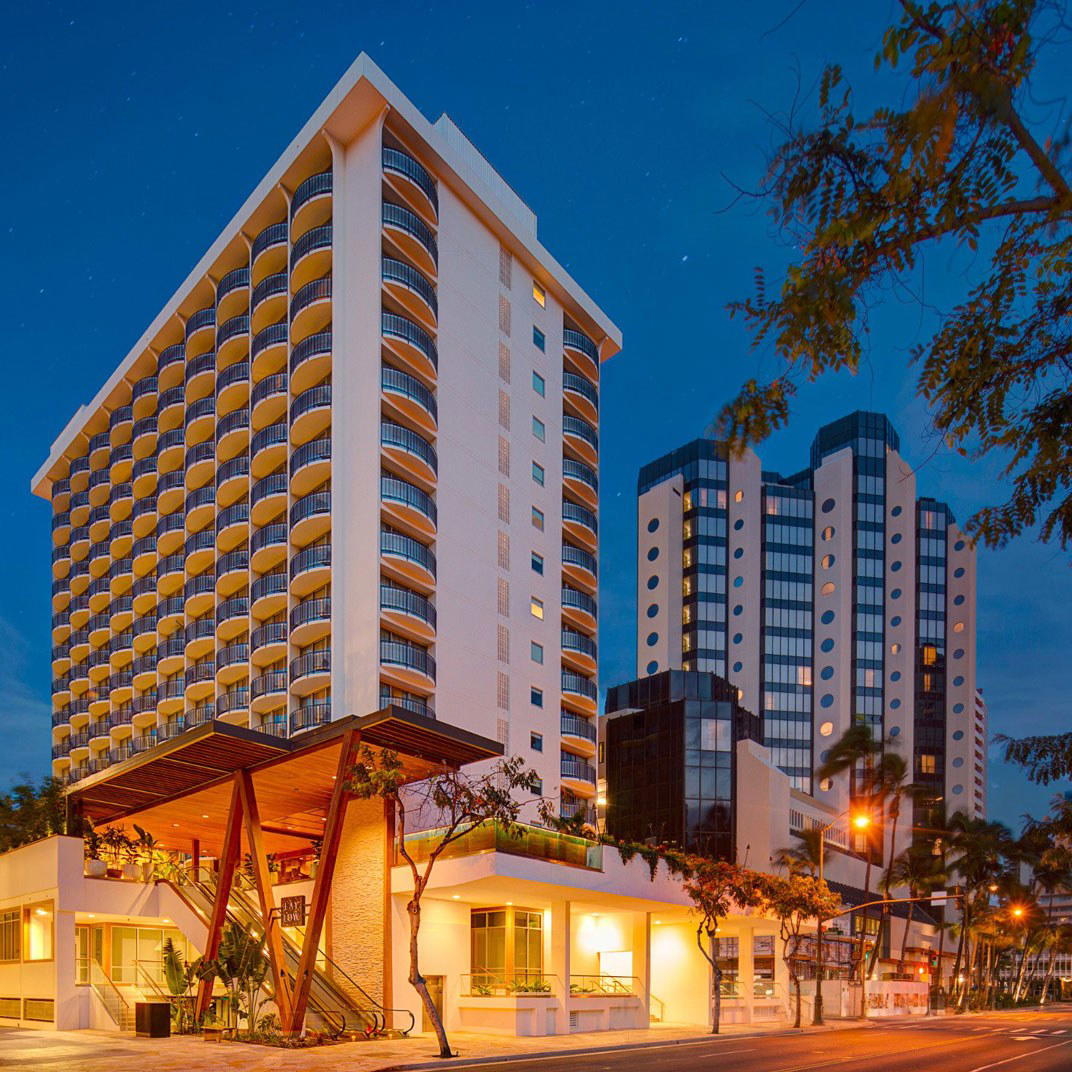
Fire Grill Waikiki is located at 2330 Kūhiō Ave. Honolulu, HI 96815, within walking distance of the main Waikiki hotel concentration. Given the seasonal dynamics of the Waikiki corridor, arriving during shoulder months offers the most relaxed conditions for a first visit.
Frequently asked questions
Where is Fire Grill Waikiki located?
Fire Grill Waikiki is located at 2330 Kūhiō Ave. Honolulu, HI 96815, Honolulu.
Is Fire Grill Waikiki a good option for visitors staying in the main Waikiki hotel zone?
The address at 2330 Kūhiō Ave. places Fire Grill Waikiki within walking distance of the main Waikiki hotel concentration, making it a practical choice for guests who want open-flame cooking without leaving the neighbourhood. Kūhiō runs one block inland from Kalākaua, which typically means a slightly quieter setting than the beachfront strip. Honolulu's grill scene draws on Pacific Rim proximity for fish and produce, so the location positions the kitchen to work with strong local sourcing.
What do people recommend at Fire Grill Waikiki?
Fire Grill Waikiki is positioned around open-flame cookery, so the fire-cooked proteins are the core draw. The restaurant sits on Kūhiō Avenue in Honolulu, within the main Waikiki hotel concentration, putting it in a corridor where grilled fish and beef dishes tend to dominate local preference. For the most current menu recommendations, checking recent reviews on dining platforms will give you the clearest picture of what's performing well at the moment.
How hard is it to get a table at Fire Grill Waikiki?
Waikiki's dining corridor on and around Kūhiō Avenue sees consistent foot traffic from December through February, when peak visitor numbers push reservation demand across the neighbourhood. Booking ahead by at least a few days during those months is advisable, particularly for weekend evenings. Outside peak season, walk-in availability tends to be more realistic. Check the restaurant's current booking channel directly for the most accurate wait times.
City Peers
Comparable venues nearby, for context on price, style, and recognition.
| Venue | Cuisine | Price | Awards | Notes |
|---|---|---|---|---|
| Fire Grill WaikikiThis venue — the venue you are viewing | American Steakhouse & Grill | $50–100 | Not listed | Not listed |
| Aloha Steakhouse | Hawaiian-Inspired Steakhouse | $150–200 | Not listed | Waikiki |
| Tempura Kiki | Traditional Japanese Tempura | $20–30 | Not listed | Waikiki |
| Moobongri Soup & Yakiniku | Korean BBQ & Yakiniku | $30–50 | Not listed | McCully |
| The Pig and The Lady | Modern Vietnamese | $30–50 | James Beard Award Semi Finalist | Kaimuki |
| Onkee Korean Grill House | Modern Korean BBQ | $30–50 | Not listed | Ala Moana |