Our verdict
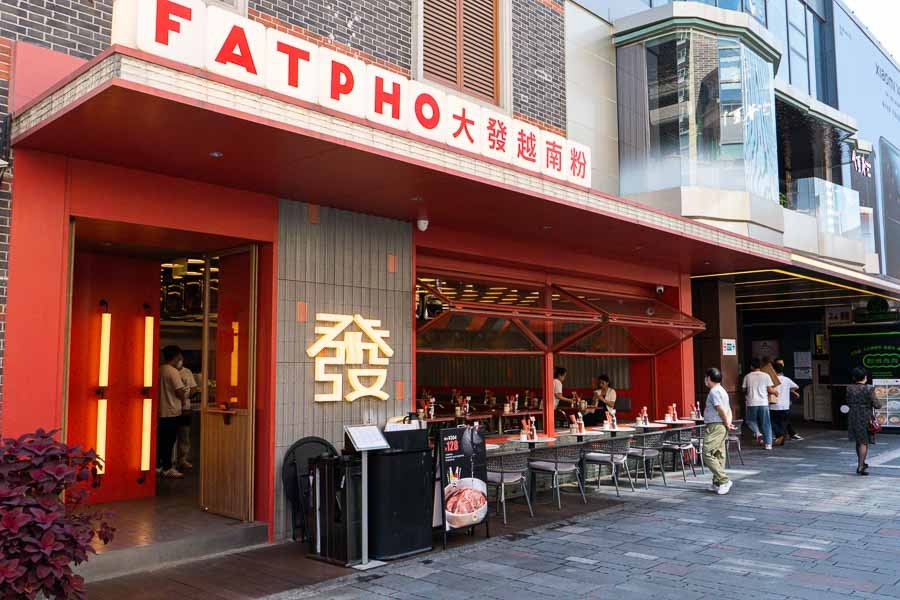
Fat Pho sits in Shanghai's Pudong district, joining a growing set of Southeast Asian casual options in a city that has historically prioritised Chinese regional and European fine dining. Readers planning a visit should verify current hours and format directly before travelling.

Pearl is the En Primeur Club membership app, where members save venues, book tables and use the concierge.
The menu
What to order
- Combination beef pho
Pho in Shanghai: A Bowl in Context
Street-level Vietnamese cooking occupies a quietly competitive position in Shanghai's mid-market dining scene. Pho, in particular, has moved through several phases in Chinese coastal cities: early-2000s canteen formats aimed at expatriate nostalgia, a second wave of sleek, Instagram-friendly broth counters, and more recently a cluster of independents trying to reference northern Vietnamese technique rather than a generalised pan-Southeast Asian menu. Fat Pho, located in Pudong's 200000 postal district, sits within that third wave, or at least within the neighbourhood conditions that produced it.
Pudong is not where most Shanghai dining conversation lands. The western bank of the Huangpu, with Jing'an and the Former French Concession, pulls the majority of critical attention and international press coverage. Pudong's dining identity has historically been anchored by hotel restaurants and large-format Chinese banquet spaces serving the Lujiazui financial district. That pattern has been shifting at the margins, with smaller, format-specific operators finding footholds in residential pockets east of Century Avenue. A Vietnamese casual concept in this context is less an anomaly than a response to a neighbourhood demographic that now includes long-term residents rather than just corporate transit.
What the Pho Format Demands
To understand where a venue like Fat Pho sits editorially, it helps to understand what the pho format actually requires to do well. The broth is the first and most telling signal: a Hanoi-style pho bo depends on a long beef bone reduction, typically twelve to twenty-four hours, with specific aromatic stages involving charred ginger, star anise, and cinnamon that must be introduced at controlled intervals. The result should be clear, not cloudy, with a depth that reads as savoury without tipping into heaviness. Ho Chi Minh City's southern variant runs sweeter, with a richer base and more garnish latitude given to the diner.
In Shanghai, sourcing for that kind of broth is not direct. Imported Vietnamese aromatics are available but inconsistent through the city's wholesale channels, and bone quality at local markets varies by supplier relationship rather than by season. The operators who get it right in Shanghai tend to have either direct supply agreements or enough volume to maintain supplier standards.
The secondary markers matter too: noodle texture (fresh rice noodles degrade quickly and require on-demand preparation), tableside condiment selection (fish sauce, hoisin, chilli oil, and fresh herbs are the baseline), and the temperature of the bowl at service. These are not decorative details. They are the operational signals that separate a kitchen that understands the dish from one that treats it as a simple protein-in-broth proposition.
Pudong's Casual Dining Position in the Wider Shanghai Picture
Shanghai's upper dining bracket is well-documented. Venues like Taian Table in the modern European innovative category and Fu He Hui in high-end vegetarian represent a tier where the city competes directly with Tokyo and Hong Kong. Cantonese traditions are covered by venues like 102 House, while Italian and European mid-market options extend across the former concession districts. At the premium end, 8½ Otto e Mezzo Bombana and regional Chinese specialists like Xin Rong Ji (West Nanjing Road) anchor the formal end of the spectrum.
The Vietnamese casual segment operates well below that tier in price and critical attention, but it serves a different function: frequency dining, neighbourhood anchoring, and accessible lunch-format options for Pudong's working population. In that context, Fat Pho's Pudong address is strategically coherent even if it sits outside the city's designated dining districts. For readers building a broader picture of how Shanghai's dining spreads across neighbourhoods and price points, our full Shanghai restaurants guide maps the scene across all tiers.
Regional Comparisons Worth Making
The Vietnamese casual format appears in several of China's major cities, and the quality benchmark shifts depending on local Vietnamese community density and supply chain access. Guangzhou, with its Pearl River Delta proximity, has historically had stronger Southeast Asian sourcing infrastructure than Shanghai. Venues like Imperial Treasure Fine Chinese Cuisine in Guangzhou signal how much attention the Guangzhou market pays to precise regional sourcing, a standard that Vietnamese operators in that city benefit from by association.
In other Chinese cities, the restaurant landscape trends toward local tradition: Xin Rong Ji in Chengdu speaks to Sichuan-centred preferences, and Dai Yuet Heen in Nanjing to Cantonese fine dining in an inland setting. Southeast Asian casual concepts operate at a different register entirely, closer to how Fleurs Et Festin in Xiamen occupies a French-inflected niche in a city not typically associated with European dining. The common thread is a restaurant finding its footing in a market that does not automatically favour its cuisine category.
Beyond China, the pho format has demonstrated staying power in markets as varied as San Francisco, where Lazy Bear shows how deeply American diners have absorbed Asian flavour references into their expectations of seasonal, produce-led cooking, and New York City, where Le Bernardin sets a benchmark for technique-first cooking that Vietnamese specialists increasingly reference when articulating their own standards of broth construction and ingredient discipline.
Planning a Visit
Fat Pho is located in the Pudong district of Shanghai, postal code 200000. Readers should treat any third-party listing data with caution, as casual-format independents in Chinese cities often operate under hours that shift seasonally or without public notice. Arriving at the venue to confirm operating status is the most reliable approach until direct contact information becomes available. No booking system or dress code requirements are confirmed.
Frequently asked questions
Is fat pho okay with children?
Pho-focused casual venues in Pudong generally suit families well, the format is approachable, the dining pace is relaxed, and noodle soups tend to work across age groups. Fat Pho's Pudong address puts it in a district with a broad residential population, which typically correlates with family-friendly foot traffic.
What's the overall feel of fat pho?
Fat Pho occupies the casual, street-level end of Shanghai's Vietnamese dining scene, positioned in Pudong rather than the more tourist-dense areas west of the Huangpu. The name signals informality, and the format, pho as the anchor dish, points to a no-frills, bowl-focused operation rather than a full Vietnamese menu spread.
Does Fat Pho in Shanghai focus on a specific regional style of Vietnamese pho?
Vietnam's two dominant pho traditions, the cleaner, more restrained northern Hanoi style and the sweeter, garnish-heavy southern Saigon style, produce noticeably different bowls. Fat Pho is located in Pudong, Shanghai, and EP Club's records do not confirm which regional approach the kitchen follows. Asking the kitchen directly about their broth base and preparation method is the quickest way to establish where the bowl sits in that regional spectrum.
What's the best thing to order at fat pho?
The name points directly at the pho, and in any venue where the broth is the headline, that is where the kitchen's priorities are concentrated. Pho demands long-cooked bone stock, precise noodle texture, and balanced aromatics, qualities that distinguish a serious bowl from a perfunctory one. EP Club does not have confirmed menu data for Fat Pho, so specific dish recommendations are not available; ordering the pho as a baseline assessment remains the logical starting point.
Recognition, Side-by-Side
| Venue | Cuisine | Price | Awards | Notes |
|---|---|---|---|---|
| fat phoThis venue (the venue you are viewing) | Vietnamese Pho | $10–20 | Not listed | Not listed |
| Fu He Hui | Modern Seasonal Vegetarian Fine Dining | $200–300 | 2 Michelin Stars · World's 50 Best #62 | Vegetarian |
| Ming Court | Cantonese with Shanghainese Influences | $30–50 | 1 Michelin Star · Black Pearl 1 Diamond | Cantonese |
| Polux | French Bistro | $30–50 | Michelin Bib Gourmand | French |
| Royal China Club | Cantonese Dim Sum | $100–150 | Michelin Plate · The Good Food Guide GFG Good | Chinese, Cantonese |
| Scarpetta | Refined Italian Pasta & Pizza | $50–100 | Michelin Plate · Wine Spectator Best of Award of Excellence | Italian |