Our verdict
Si Ji Xuan sits on the fifth floor of a Minhang District address, positioning it at a remove from Shanghai's central dining circuit. The restaurant operates within a category of Chinese dining where seasonal sourcing and considered ingredient provenance increasingly define the offer. For travellers extending their Shanghai itinerary beyond the Bund, it represents a neighbourhood-level alternative worth tracking.

Pearl is the En Primeur Club membership app, where members save venues, book tables and use the concierge.
The menu
What to order
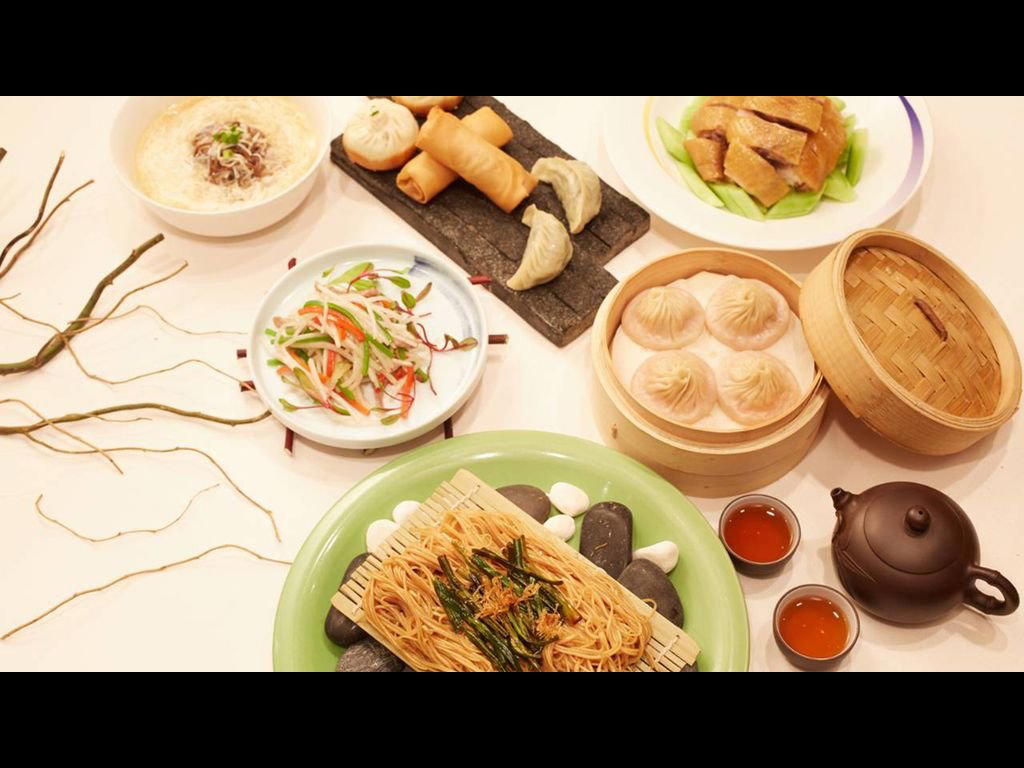
- Wok-fried scallops and tender abalone mushrooms
- Dim sum brunch
Minhang's Quieter Register
Shanghai's restaurant culture has long operated on two frequencies: the high-decibel venues clustered around Xintiandi and the Bund, and a quieter tier of neighbourhood dining that earns its following through consistency rather than address. The Minhang District, spread across the city's southwest, belongs firmly to the second category. Its dining rooms draw local regulars rather than hotel concierge referrals, and that separation from the tourist circuit tends to filter the room toward guests who are there specifically for the food.
Si Ji Xuan occupies the fifth floor of a building on Beidi Road, a location that requires a degree of intention to reach. In a city where dining destinations are increasingly frictionless, valet drop-offs, ground-floor lobbies, WeChat booking confirmations, a fifth-floor address in an outer district signals something about the venue's relationship with its clientele. The guests who arrive here have looked it up, planned the trip, and come with a specific purpose. That self-selecting quality shapes the atmosphere in ways that no interior design decision can replicate.
Chinese Dining and the Ethics of the Seasonal Plate
The sustainability conversation in Chinese fine dining has arrived later and more quietly than in Western restaurant culture, but it is arriving. A generation of chefs and restaurateurs working within Cantonese, Shanghainese, and regional Chinese traditions are revisiting sourcing as a point of culinary identity rather than an operational afterthought. The driver is partly generational, younger diners in tier-one Chinese cities now ask questions about provenance that their parents did not, and partly competitive, as restaurants in this tier seek differentiation beyond technique and presentation.
The seasonal dimension of classical Chinese cooking actually predates the sustainability framing by centuries. The concept of shí lìng, eating in accordance with the season, is embedded in both culinary tradition and Chinese medicine philosophy. What contemporary restaurants are doing, in effect, is recovering and formalising a practice that industrialised supply chains had partially displaced. Venues in Shanghai's mid-to-upper Chinese dining category, a group that includes addresses like 102 House on the Cantonese side and Fu He Hui with its plant-based programme, are each framing that recovery in slightly different ways.
Si Ji Xuan's name itself, which translates loosely as Four Seasons Hall, anchors it to this seasonal logic. The name functions as a culinary promise: the menu's character should shift as the calendar moves, sourcing the ingredients that belong to each quarter rather than maintaining a static card year-round. Whether that promise is delivered at the level of, say, Taian Table's ingredient-obsessive modern European approach, or operates as a lighter seasonal inflection within a more traditional Chinese format, the positioning is clear.
The Outer-District Proposition
Restaurants in Shanghai's outer districts face a structural challenge: they must offer something the central circuit cannot, because they cannot compete on convenience. The venues that sustain themselves in locations like Minhang tend to do so through one of three routes, a hyper-local following built over years, a price point that justifies the journey for value-conscious guests, or a specific culinary offer unavailable closer to the centre.
For context, the comparison set in Shanghai's broader Chinese dining category covers considerable price and format range. Xin Rong Ji on West Nanjing Road operates at the upper end of Taizhou seafood, with a corresponding price tier that places it alongside the city's Western fine-dining addresses. Fu He Hui commands a ¥¥¥¥ price point built around a fully vegetarian tasting format. At the other end, regional Chinese cooking in neighbourhood settings can deliver serious food at a fraction of the central-city price.
Shanghai in the Greater Chinese Dining Circuit
Shanghai no longer needs to justify itself as a serious dining city. The question for restaurants here is how they position within a circuit that now includes credible competitors in Beijing, Chengdu, Hangzhou, and Guangzhou. Venues like Xin Rong Ji in Beijing, Ru Yuan in Hangzhou, and Xin Rong Ji in Chengdu demonstrate that regional Chinese cooking at a high level is no longer exclusively a Shanghai or Hong Kong story. Further afield, Chef Tam's Seasons in Macau and Imperial Treasure Fine Chinese Cuisine in Guangzhou represent the Cantonese tradition at its most formalised.
For travellers building a broader Greater China itinerary, Dai Yuet Heen in Nanjing also warrants attention in that regional comparison. Internationally, the contrast with Western restaurants working similar sustainability themes, Le Bernardin in New York City on the seafood-sourcing side, or Atomix for a Korean lens on seasonal precision, illustrates how different culinary traditions arrive at similar supply-chain concerns from entirely different philosophical starting points.
Planning Your Visit
Si Ji Xuan is located at 3398 Beidi Road, fifth floor, Minhang District, Shanghai 201803. The Minhang District lies in Shanghai's southwest, at a meaningful distance from the central riverside districts. Metro line access exists within the broader district, but the specific Beidi Road address warrants checking current transport options before arrival. Given the outer-district location, building extra travel time into any evening booking is advisable.
Checking current reservation options via a hotel concierge or local dining platform before your visit is the practical approach. Hours and current pricing should be verified directly. For broader Shanghai planning, see our full Shanghai restaurants guide, as well as resources covering hotels, bars, wineries, and experiences across the city.
How Si Ji Xuan Compares Logistically
| Venue | District | Price Tier | Format | Cuisine |
|---|---|---|---|---|
| Si Ji Xuan | Minhang | Not confirmed | Not confirmed | Not confirmed |
| Fu He Hui | Central Shanghai | ¥¥¥¥ | Tasting menu | Vegetarian |
| Xin Rong Ji (West Nanjing Rd) | Jing'an | ¥¥¥¥ | À la carte / private rooms | Taizhou seafood |
| 8½ Otto e Mezzo Bombana | Central Shanghai | ¥¥¥¥ | Tasting / à la carte | Italian |
| 102 House | Central Shanghai | Not confirmed | Not confirmed | Cantonese |
Frequently asked questions
Where exactly is Si Ji Xuan?
Si Ji Xuan is located at China, Shanghai, Minhang District, 3398, Beidi Rd, 3398号5层 邮政编码: 201803, Shanghai.
What dish is Si Ji Xuan famous for?
The restaurant sits within Shanghai's Minhang District, a part of the city where Chinese kitchens tend to emphasise seasonal, regionally grounded cooking over theatrical set pieces. Visiting directly or contacting the venue at 3398 Beidi Road, fifth floor, is the most reliable way to get current menu detail.
Do I need a reservation for Si Ji Xuan?
Si Ji Xuan is located on the fifth floor at 3398 Beidi Road in Minhang District, a southwest Shanghai address that draws a local rather than tourist crowd. Demand patterns at outer-district venues can shift quickly, and walk-in availability is not confirmed. Booking ahead is advisable, particularly for weekend dining.
What is Si Ji Xuan known for?
Si Ji Xuan occupies a position in Shanghai's outer-district dining scene, operating from Minhang rather than the central Xintiandi or Bund corridors. That geography signals a venue built around neighbourhood regulars rather than destination traffic.
Can Si Ji Xuan handle vegetarian requests?
No dietary accommodation details are confirmed in the available record for Si Ji Xuan. Chinese restaurant kitchens in Shanghai generally maintain the flexibility to adjust dishes, but specific vegetarian or dietary policies should be confirmed directly with the venue at 3398 Beidi Road, Minhang District, Shanghai 201803.
Style and Standing
Comparable venues nearby, for context on price, style, and recognition.
| Venue | Cuisine | Price | Awards | Notes |
|---|---|---|---|---|
| Si Ji XuanThis venue (the venue you are viewing) | Cantonese & Shanghainese Chinese | Not listed | Not listed | Not listed |
| Wu Kang Lu | French Bistro & Cafe Culture | $20–30 | Not listed | Xujiahui |
| Dahuchun | Shanghai Chinese Pan-Fried Buns | $10–20 | Not listed | Huangpu |
| Guang Dong Lu | Traditional Shanghainese Noodles & Dim Sum | $20–30 | Not listed | Huangpu |
| 馋三尺蟹粉小笼 | Shanghainese Crab Roe Xiaolongbao | $1–10 | Not listed | Yang Jia Du |
| Haiweiguan | Modern Shanghainese in a historic Shanghai-style building | $30–50 | Black Pearl 1 Diamond | Huangpu District |