Our verdict
On Quellenstraße in Vienna's 10th district, Falafilo Imbiss occupies a stretch of the city where everyday eating still follows neighbourhood logic rather than tourist traffic. The regulars here return not for occasion dining but for the reliable rhythm of a local imbiss counter, placing this address in a different competitive register from Vienna's formal restaurant tier entirely.

Pearl is the En Primeur Club membership app, where members save venues, book tables and use the concierge.
Where the 10th District Eats Without Performance
Quellenstraße runs through Favoriten, Vienna's most populous district, along a corridor that has never particularly courted outside attention. The street's commercial life is oriented toward the people who live and work nearby, and the eating options along it follow that same logic. Imbiss culture in Vienna sits in a distinct category from the city's celebrated fine-dining tier, which is anchored by institutions like Steirereck im Stadtpark and Amador in the inner districts. An imbiss operates differently: the transaction is quick, the format is counter-facing, and the social contract between kitchen and customer is built on repetition rather than occasion. Falafilo Imbiss at Quellenstraße 143 belongs squarely to that tradition.
Favoriten has shifted considerably over the past two decades. What was once a largely working-class district defined by post-industrial housing has become one of Vienna's most diverse neighbourhoods, with a food scene that reflects that composition directly. The international character of the local population has pulled the street-level eating options well beyond the Viennese schnitzel-and-Gulasch defaults you find in tourist-facing parts of the first district. An imbiss in this part of the city is as likely to draw on Middle Eastern or Eastern Mediterranean cooking traditions as on Austrian ones, and that plurality is the neighbourhood's main culinary story.
What Keeps the Regulars Coming Back
The regulars' relationship with a neighbourhood imbiss is built on something that no single visit can capture: the accumulated trust that the kitchen will produce the same result on a Tuesday afternoon as it did six months ago. This is a different expectation from the one a diner brings to a tasting-menu counter at Konstantin Filippou or Mraz & Sohn, where innovation and seasonal evolution are part of the value proposition. At a counter like Falafilo, the value is consistency, proximity, and price accessibility. Regulars are not looking for surprise; they are looking for the comfort of a known quantity in a neighbourhood format they can return to without planning.
That pattern is well established in Viennese imbiss culture broadly. The counter format creates an informal social layer that sit-down restaurants rarely produce: brief conversations between visits, the shorthand of a regular order, the small calibrations a kitchen makes over time for customers it recognises. These dynamics are not unique to Vienna, but they take on a particular character in a district like Favoriten, where the density of working residents means the lunch and early-dinner window is genuinely high-volume and the competition for reliable everyday eating is real.
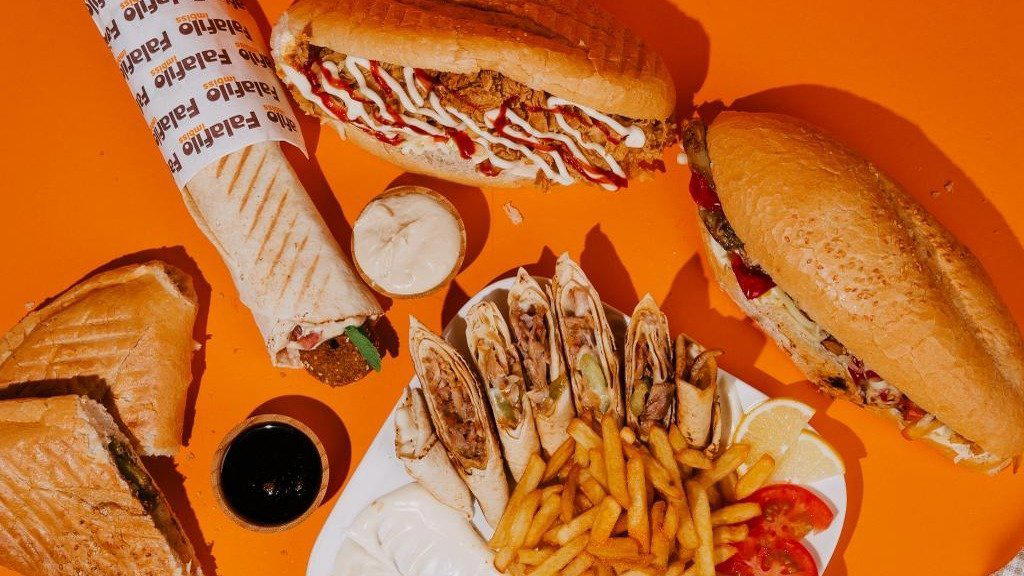
Falafilo's name signals a specific culinary orientation, placing it in the falafel-and-broader-Levantine-street-food category that has established a real following across Vienna's outer districts. This is not a peripheral niche in 2024: falafel has become one of the reference points for accessible, meatless, high-turnover street eating across Central European cities, with a consistent presence in Berlin, Munich, and Zurich alongside Vienna. The format suits the imbiss structure well, since the core product is fast to assemble, scalable, and holds its quality across a busy service period in a way that more complex preparations do not.
Favoriten in the Wider Vienna Dining Context
Vienna's dining conversation is dominated by the inner districts and the restaurants that carry Michelin recognition or media coverage in German-language food press. The comparison venues that define the city's high-end register, from Doubek to the tasting menus at Mraz & Sohn, operate at price points and booking depths that place them in an entirely different category from a Favoriten imbiss. That gap is not a criticism of either end; it is simply a description of how a city's eating life stratifies. The outer-district imbiss and the inner-district fine-dining room are not competing for the same customer in the same moment.
What is notable about addresses like Falafilo is that they anchor the food culture of districts that Vienna's mainstream restaurant coverage rarely maps. A reader who has traced the city's full Vienna restaurants guide will find the high-density editorial attention sitting in the 1st through 9th districts. The 10th is a different proposition: larger in population, more diverse in background, and served by a food infrastructure that is legible to its residents but underrepresented in most travel-facing editorial.
Austria's broader dining geography extends well beyond Vienna, and the regional fine-dining tier includes addresses as varied as Döllerer in Golling an der Salzach, Obauer in Werfen, and the seasonal precision of Gourmetrestaurant Tannenhof in Sankt Anton am Arlberg. The contrast between those destinations and a Favoriten imbiss is the full span of Austrian eating, from destination dining that draws travellers across country borders to the neighbourhood counter that exists entirely for the people who walk past it every day. Both matter; they just require different editorial frames.
For context on the European street-food end of the spectrum more broadly, it is worth noting that the ambition of places like Le Bernardin in New York City or the community-focused format of Lazy Bear in San Francisco represents a formal-dining axis that the imbiss format deliberately sidesteps. The value of an address like Falafilo is precisely that it does not operate on those terms.
Elsewhere in the Austrian regional tier, addresses including Schwarzer Adler in Hall in Tirol, Landhaus Bacher in Mautern an der Donau, Restaurant 141 by Joachim Jaud in Mieming, Ois in Neufelden, Stüva in Ischgl, Kräuterreich by Vitus Winkler in Sankt Veit im Pongau, and Taubenkobel in Schützen am Gebirge collectively define a regional dining culture with serious ambition. Falafilo represents the other end of that range: the everyday, the accessible, and the local.
Planning a Visit
Location: Quellenstraße 143, 1100 Wien, Austria, in Vienna's 10th district (Favoriten). Reachable by U1 to Reumannplatz or by tram along Quellenstraße. Reservations: Not applicable for a counter-format imbiss; walk-in only. Budget: Imbiss pricing in this part of Vienna is consistent with the accessible end of the market; expect the cost structure of a counter meal rather than a restaurant. Hours: Dress: No code; the format is casual by design.
Frequently asked questions
Where is Falafilo Imbiss in Vienna?
Falafilo Imbiss is located at Quellenstraße 143, 1100 Wien, Austria, Vienna.
Is Falafilo Imbiss a good option for eating near Reumannplatz in Vienna's 10th district?
Falafilo sits at Quellenstraße 143 in Favoriten, reachable on foot from the U1 stop at Reumannplatz, making it a practical option for anyone in the lower 10th district. The imbiss format means fast service and no dress code or booking required. For a neighbourhood like Favoriten, Vienna's most populous district and one that rarely appears in mainstream dining guides, it represents the kind of counter that feeds the area rather than performing for visitors.
What dish is Falafilo Imbiss famous for?
The name points directly to falafel as the kitchen's anchor product, consistent with the imbiss format at Quellenstraße 143 in Vienna's 10th district. Regulars in Favoriten return for consistency rather than variety.
Do I need a reservation for Falafilo Imbiss?
Imbiss counters in Vienna operate on a walk-in basis as a rule, and Falafilo at Quellenstraße 143 follows that format. No booking system is listed. Arrive during off-peak hours if you want to avoid a queue, particularly around midday on weekdays when Favoriten's working population is on the move.
What's the signature at Falafilo Imbiss?
The venue name itself, combining falafel with the Viennese imbiss tradition, identifies the signature format: falafel served in the quick-service counter style that defines neighbourhood eating in working districts like Favoriten. No specific dish descriptions are available, but the focus is narrow by design, which is how a local counter builds its reputation on Quellenstraße.
Reputation Context
Comparable venues nearby, for context on price, style, and recognition.
| Venue | Cuisine | Price | Notes |
|---|---|---|---|
| Falafilo ImbissThis venue (the venue you are viewing) | Syrian Street Food | $10–20 | Not listed |
| L´ORIENT | Authentic Moroccan | $20–30 | Praterstern Wien Nord |
| Baschly | Modern Middle Eastern Street Food | $10–20 | Stadt |
| Café Ansari | Georgian-Mediterranean Fusion | $20–30 | Praterstern Wien Nord |
| DR-FALAFEL | Israeli Falafel & Shawarma | $1–10 | Wieden |
| Band Amir Restaurant | Afghan-Persian | $20–30 | Kaiserebersdorf |