Our verdict
At Naschmarkt stall 560, DR-FALAFEL draws a loyal crowd that has little interest in tasting menus or Michelin asterisks. Vienna's open-air market remains one of Central Europe's most consequential food corridors, and this counter operates as a reference point within it, the kind of place regulars return to on a weekly rhythm rather than a special occasion.

Pearl is the En Primeur Club membership app, where members save venues, book tables and use the concierge.

The menu
What to order
- Falafel
- Falafel Wrap
- Chicken Shawarma
- Vegan Falafel
A Counter That Earns Its Repeat Business
The Naschmarkt runs roughly two kilometres along the Wienzeile, and on a Saturday morning it is one of the most densely populated food corridors in Central Europe. Spice merchants, cheese counters, olive stalls, and hot-food windows compete for attention across more than three hundred permanent pitches. Within that density, the places that last are rarely the ones with the widest menus or the most elaborate fitouts. They are the ones that a specific group of people decide, over time, to keep returning to. DR-FALAFEL at stall 560 belongs to that category.
Vienna's dining conversation is dominated by its fine-dining tier. Steirereck im Stadtpark and Mraz & Sohn anchor the creative end; Konstantin Filippou and Amador pull the city into a broader European conversation about modern technique. That tier is well documented. What gets less coverage is the parallel infrastructure of the city's market eating, the counters and stalls that form the daily eating habits of the people who live here, not just those who visit.
The Naschmarkt as Competitive Context
Open-air food markets in European capitals tend to follow one of two trajectories: they either become tourist destinations that progressively price out their original clientele, or they maintain enough density of local trade that both audiences coexist in an uneasy but functional balance. Vienna's Naschmarkt has moved along the first path in some sections, particularly those closest to the Karlsplatz end. The middle and far stretches, however, retain a different character, lower foot traffic, higher repeat-visit ratios, and prices calibrated to people who are shopping for dinner rather than photographing it.
Falafel as a category sits at a particular intersection within European market eating. It occupies a price bracket that makes it accessible to the widest possible cross-section of a city's population, but its execution range is enormous. The gap between a falafel made from dried, soaked chickpeas ground in-house and one produced from pre-mixed powder is immediately legible to anyone who eats them back to back. That gap is what regulars at stalls like DR-FALAFEL tend to be tracking, even if they would not describe their loyalty in those terms.
Markets like the Naschmarkt also reward timing. Weekend mornings, before midday, are when produce quality is highest and queues at popular counters are shortest. By early afternoon on a Saturday, the most attended stalls have depleted their first prep runs. This is a structural feature of market eating rather than anything specific to one vendor, and it applies across the comparable format in cities like Istanbul's Kadikoy, Barcelona's Boqueria, or London's Borough Market.
What the Regulars Are Actually Tracking
The regulars' perspective on a market stall is rarely about occasion or ceremony. It is about consistency, speed, and the specific details that tell you whether the kitchen is operating at its standard level on a given day. For a counter focused on falafel, those signals are concrete: the colour of the crust, the interior texture, the temperature at which it arrives. Regulars develop an implicit calibration against which each visit is assessed, and it is that calibration, not loyalty in any sentimental sense, that explains the repeat-visit pattern.
This is the mode of eating that Vienna's market infrastructure is built for, and it is distinct from the kind of experience offered by the city's destination restaurants. Doubek operates with a different register entirely. So do the Michelin-recognised rooms outside the capital, from Döllerer in Golling an der Salzach to Obauer in Werfen and Landhaus Bacher in Mautern an der Donau. The comparison is not invidious. A market stall and a tasting-menu restaurant serve different functions in a food culture, and both are necessary for that culture to have any depth.
Internationally, the model of the repeat-visit market counter has equivalents at very different price points. Le Bernardin in New York City builds repeat business through precision and consistency in a formal register. Lazy Bear in San Francisco does it through a format that is deliberately communal. A Naschmarkt falafel counter earns the same loyalty through entirely different means, but the underlying mechanism is the same: people return when the experience matches what they are tracking.
The Broader Austrian Picture
Austria's food culture beyond Vienna tends to get framed around its alpine and Viennese Classics, Wiener Schnitzel, Tafelspitz, the wine-region restaurants of the Wachau. But the country's cities have absorbed significant migration from the Middle East and southeastern Mediterranean over several decades, and that has produced a layer of eating that runs parallel to the established Austrian culinary identity. Falafel, shawarma, and the flatbread formats associated with them are now structural parts of the Viennese street-food register, not imports that require explanation.
Within Austria more broadly, the fine-dining tier continues to expand. Gourmetrestaurant Tannenhof in Sankt Anton am Arlberg, Stüva in Ischgl, Kräuterreich by Vitus Winkler in Sankt Veit im Pongau, Taubenkobel in Schützen am Gebirge, Ois in Neufelden, and Restaurant 141 by Joachim Jaud in Mieming all represent a regional fine-dining scene that has moved well beyond its alpine-lodge origins. Schwarzer Adler in Hall in Tirol adds further depth to the Tyrolean end. None of this displaces the importance of Vienna's market eating tier; if anything, a developed fine-dining culture tends to raise the standards people apply to everyday eating as well. See our full Vienna restaurants guide for a broader mapping of the city's dining tiers.
Planning Your Visit
The Naschmarkt operates on a rhythm that rewards early arrivals. Saturday is the market's busiest day and also when the flea market section at the Kettenbrückengasse end draws additional foot traffic. Weekday visits are quieter and often faster for food counters. The stall address is Naschmarkt 560, 1060 Wien, reachable via the U4 line at Kettenbrückengasse. Reservations: Not applicable for a market stall. Dress: The Naschmarkt has no dress expectations; market-appropriate clothing is the practical standard. Budget: Market falafel in Vienna prices at a level that makes it accessible across income brackets, this is not destination-dining spend. Timing: Arriving before noon on weekends gives you the widest selection and the shortest wait at the stalls that run hot-prep cycles.
Frequently asked questions
Is DR-FALAFEL child-friendly?
The Naschmarkt format makes it a practical choice for families. There is no booking requirement, no formal service, and the counter sits within a walkable open-air market at Naschmarkt 560 in Vienna's 6th district. Ordering is straightforward, and the food arrives quickly.
Is DR-FALAFEL formal or casual?
As casual as eating in Vienna gets. This is a market counter at Naschmarkt 560, not a seated restaurant, and there is no dress expectation or reservation system. It sits at the opposite end of the spectrum from the city's fine-dining rooms.
Is DR-FALAFEL part of Vienna's Middle Eastern food scene on the Naschmarkt?
The Naschmarkt has hosted Middle Eastern and eastern Mediterranean food vendors for several decades, and DR-FALAFEL operates within that established corridor at Naschmarkt 560 in Vienna's 6th district. The market's vendor mix reflects both the city's demographic shifts and its position as a Central European transit hub. Within that context, falafel counters occupy a category with genuine repeat-customer demand rather than purely tourist footfall.
What do people recommend at DR-FALAFEL?
The falafel is the point of reference. At a counter operating in this category on the Naschmarkt, regulars assess consistency of preparation above all else, and falafel is the dish against which the stall is measured.
Where exactly is DR-FALAFEL?
DR-FALAFEL is located at Naschmarkt 560, 1060 Wien, Austria, Vienna.
Same-City Peers
Comparable venues nearby, for context on price, style, and recognition.
| Venue | Cuisine | Price | Notes |
|---|---|---|---|
| DR-FALAFELThis venue (the venue you are viewing) | Israeli Falafel & Shawarma | $1–10 | Not listed |
| L´ORIENT | Authentic Moroccan | $20–30 | Praterstern Wien Nord |
| C'est Bon | Middle Eastern Fast Casual | $1–10 | Wahring |
| Pita BOX | Turkish & Middle Eastern Street Food | $1–10 | Praterstern Wien Nord |
| Band Amir Restaurant | Afghan-Persian | $20–30 | Kaiserebersdorf |
| Swing Kitchen | Vegan Fast Food | $10–20 | Neubau |
Continue exploring
More in Vienna
Restaurants in Vienna
All restaurants in Vienna →
Bars in Vienna
All bars in Vienna →
Details
- Casual
- Bohemian
- Casual Hangout
- Solo
- Group Dining
- Open Kitchen
- A La Carte
- Counter Dining
- Homemade Lemonade
- Vegetarian Friendly
- Vegan Options
- Gluten Free Options
Current opening hours
- Monday
- 8 AM–6 PM
- Tuesday
- 8 AM–6 PM
- Wednesday
- 8 AM–6 PM
- Thursday
- 8 AM–6 PM
- Friday
- 8 AM–6 PM
- Saturday
- 8 AM–6 PM
- Sunday
- Closed
Hours can change for holidays and private events. Hours as of .
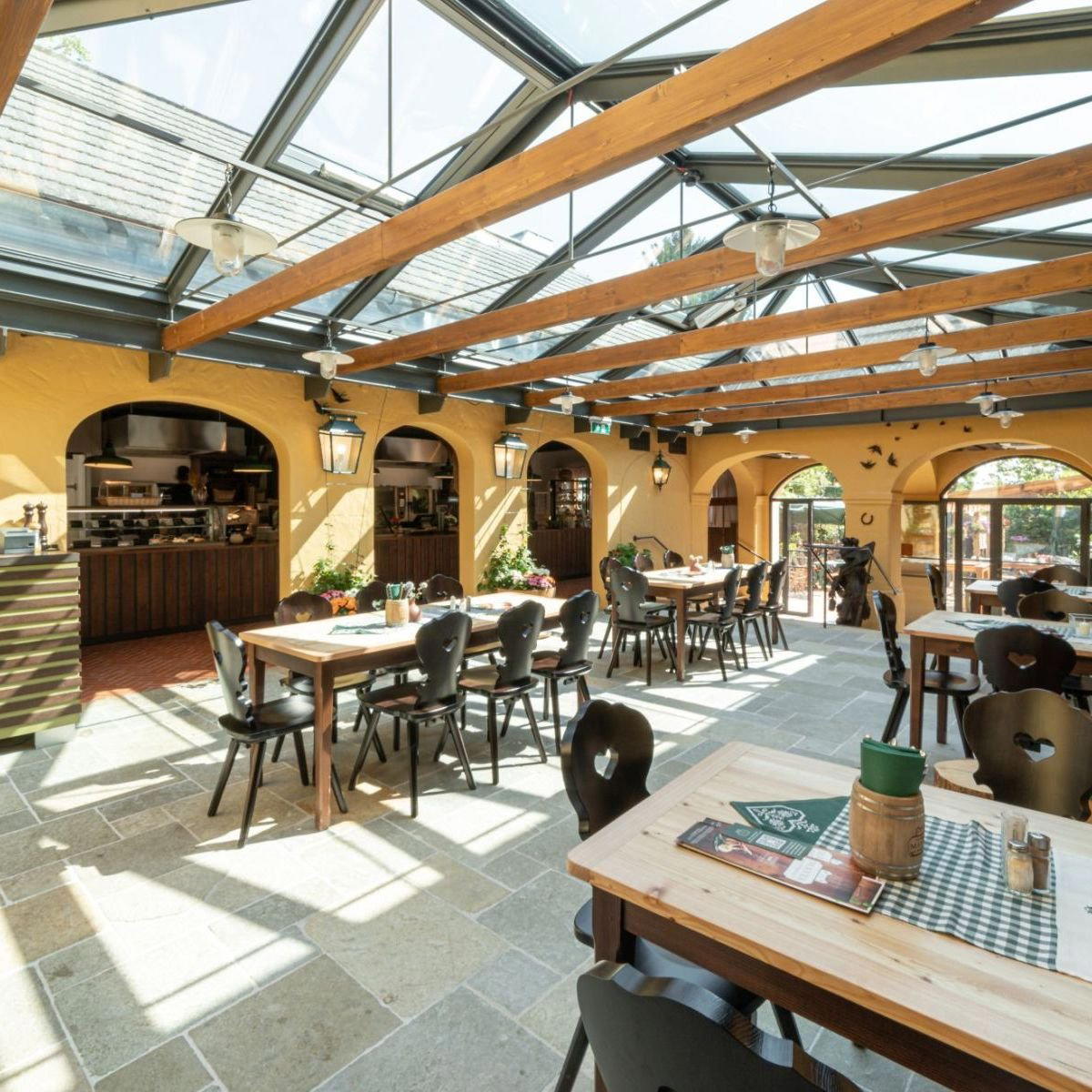
Bright, casual market stall atmosphere with light-filled seating; bustling and energetic during peak hours with a relaxed, bohemian market vibe.