
Kyoto’s bread culture has moved well beyond hotel bakeries and department-store counters, and eze bleu belongs to the smaller everyday tier where serious baking is folded into neighborhood routines. Its Tabelog Bread WEST 100 selections in 2020 and 2022 give it a clear credential, while the take-out format keeps the experience closer to a morning errand than a restaurant booking.
Pearl is the En Primeur Club membership app — saves, bookings, and concierge access live there. Same editors, same standards.
- Address
- 京都府京都市上京区今出川通寺町西入大原口町212 カーサビアンカビル 1F
- Phone
- +81752317077
- Website
- tabelog.com
 Saves & bookings on Pearl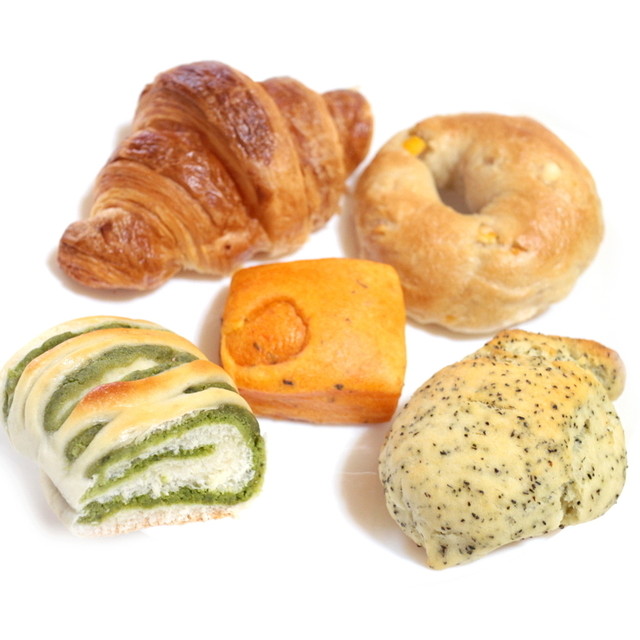
Approaching a Kyoto bakery in the morning is different from entering a dining room. The cues are smaller: a glass-fronted case, trays moving in and out, commuters, students, and residents choosing bread for the day rather than sitting down for ceremony. In Kamigyo-ku, this bakery culture sits between old Kyoto rhythm and imported technique, less about spectacle than repetition. eze bleu fits the pattern: compact, take-out driven, and known through bread, sandwiches, and bagels rather than a chef-led dining narrative.
Kyoto has long absorbed outside forms and made them local. Bread is a useful example. The city’s serious bakery scene does not compete with kaiseki or sushi on ritual; it competes on daily usefulness, fermentation discipline, and consistency. Recognition therefore matters differently. Selection for Tabelog Bread WEST 100 in both 2020 and 2022 places eze bleu inside a regional conversation across western Japan, not just among Kyoto neighborhood favorites. The point is not luxury. It is proof that a small-format bakery can command attention in a city better known abroad for temple cuisine, wagashi, and counter dining.
Kyoto bread culture, after the old bakery model
The evolution is not dramatic reinvention so much as a shift in what visitors take seriously. A decade ago, many travelers treated bakeries as convenient breakfast stops between temples. Kyoto’s current food map gives them more weight. Bread counters now sit beside coffee shops, confectioners, ramen counters, and casual specialist shops as part of a more granular reading of the city. A bakery can reveal as much about a neighborhood’s daily tempo as a formal restaurant reveals about its ceremonial life.
Within that frame, eze bleu belongs to the practical school. It is not built around long meals, beverage pairing, or a dining-room arc. It trades in portable categories: bread, sandwiches, and bagels. That matters because Kyoto’s strongest casual food addresses often work by specialization rather than breadth. Demachi Futaba is a different category, but occupies a similar mental slot for many Kyoto regulars: a focused stop whose value comes from precision, turnover, and habit. boulangerie Artisan'Halles sits closer in category and price tier, showing Kyoto’s bakery circuit as a set of small, low-cost decisions rather than one destination meal.
The comparison with formal Kyoto dining clarifies the choice. Sushi Hayashi operates in the expensive sushi bracket, where the counter, timing, and omakase structure define the evening. Epice belongs to a separate restaurant grammar. A bakery like this asks for another kind of attention: not the long reservation horizon, but the ability to build a day around good provisions. That is increasingly how informed travelers use Kyoto, mixing temple visits and galleries with quick specialist food stops instead of forcing every meal into a seated format.
A take-out counter with award-level signals
The Tabelog Bread WEST 100 selections are the main trust signal, useful because they come from a category-specific list. Bread is not judged as a side note to restaurant service; it is the category itself. For a city with heavy international attention on fine dining, that distinction gives the bakery scene its own hierarchy. It also explains why small-format addresses can matter without behaving like restaurants. The absence of a dining room is not a weakness in this genre. It is the format.
That format shapes atmosphere. There is no elaborate room to decode, no sommelier choreography, no course sequence. The atmosphere is transactional in the better sense: choose, pay, leave, eat elsewhere. In Kyoto, that can be an advantage. Kamigyo-ku rewards walkers, and a bakery stop fits the northern side of the city, where university streets, residential blocks, shrines, and the Kamo River pull visitors away from the denser shopping corridors around Shijo and Kawaramachi.
For travelers building a broader Kyoto food itinerary, the bakery works well as one precise move rather than the day’s anchor. Pairing it with casual Kyoto addresses gives a more accurate picture of how the city eats outside formal dining rooms. For sit-down planning and context, Our full Kyoto restaurants guide is the starting point. Nearby or category-adjacent research can include 3TOKU6MI Shijo karasuma ten, 551蓬莱, [ki:], Abbesses, and Aburi Mochi Honke Nemoto Kazariya. For the rest of the trip architecture, use Our full Kyoto hotels guide, Our full Kyoto bars guide, Our full Kyoto wineries guide, and Our full Kyoto experiences guide.
How it fits into a sharper Kyoto itinerary
The smartest read is as a marker of Kyoto’s widening casual canon. The city’s international reputation often compresses into temples, ryokan, kaiseki, and a handful of counter restaurants, but daily food culture is broader and less formal. Bakeries, mochi shops, curry counters, pork bun specialists, and coffee rooms carry another kind of authority: repeat local use, narrow category focus, and low-friction access.
That is why the restaurant is stronger as part of a sequence than as a standalone trophy stop. It gives texture to a Kyoto morning and helps correct an itinerary too weighted toward long meals. The better day might include a bakery run, a river walk, a shrine visit, and a later reservation elsewhere. Kyoto rewards that pacing and leaves room for contrast: one day can move from bread and wagashi to sushi; another from a casual counter to a bar. For readers comparing Japan and beyond, EP Club’s wider restaurant index shows how specialist formats travel across cities, from -Grilled beef Sukiyaki- KAMAKURA TANUKIAN 鎌倉 たぬき庵 in Kamakura and. 鮪と炭火焼き うお炭 秋葉原店 in Tokyo to.cafe in Osaka.know in Kumamoto, (Shoku) Vietnam in Kawasaki, [Curry Senmon Ten] Maruyama Kyoju. in Sapporo, Jōdo Saké Bar in Los Angeles, and Onigiri Time in Pasadena.
The editorial case is simple: Kyoto’s food intelligence is not confined to high ceremony. The city’s bakery addresses show a quieter evolution, where technical bread-making has become part of the everyday route. The restaurant earns attention because it sits inside that shift with category-specific recognition and a format that keeps the focus on the bread, not the performance around it.
Side-by-Side Snapshot
Comparable venues by price and recognition.
| Venue | Cuisine | Price | Notes |
|---|---|---|---|
| eze bleuThis venue — the venue you are viewing | Kyoto artisan bakery & sandwich shop | $ | Not listed |
| Warder | Kyoto artisan bakery & sandwich shop | $ | Nakagyō |
| Kashi Shokunin | Japanese Cake Shop / Patisserie | $ | Ukyō |
| regal+e | Artisanal bakery for bread, bagels, and sandwiches | $ | Kizugawa |
| fiveran | Kyoto bakery & café | $ | Nakagyō |
| OHAYO biscuit | Japanese-style bakery cafe / sweets shop | $$ | Kamigyō |
Recognition history
Dated appearances from independent guides and award organizations, with the underlying list record or original source where available.
Tabelog 100 #95 · No. 95
Tabelog · Tabelog 100 - Bread - WEST - 2022
Continue exploring
More in Kyoto
Restaurants in Kyoto
Browse all →

Bars in Kyoto
Browse all →


Hotels in Kyoto
Browse all →

Wineries in Kyoto
Browse all →
At a Glance
- Cozy
- Quiet
- Modern
- Solo
- Casual Hangout
- After Work
- Standalone
- Design Destination
- Street Scene
A small, stylish takeout bakery with a modern facade and neatly arranged displays of breads and pastries, creating a calm, cozy neighborhood feel rather than a bustling café atmosphere.