
Michelin Bib Gourmand
Our verdict
On the first floor of the award-winning L'Antic Molí complex in Ulldecona, Espacio Amunt offers a more accessible entry point into chef Vicent Guimerà's cooking without abandoning the seasonal rigour that defines it. Two menus anchor the experience to the produce of Terres de l'Ebre, Terres del Sénia, and the Parc Natural dels Ports. Michelin Bib Gourmand recognition in both 2024 and 2025 confirms its standing in a region that punches well above its profile.

Pearl is the En Primeur Club membership app — saves, bookings, and concierge access live there. Same editors, same standards.
- Address
- Carretera Ulldecona, KM 10, 43559 Ulldecona, Tarragona, Spain
- Phone
- +34 604 97 47 44
- Hours
- Mon–Tue ClosedWed–Thu 1–3 PMFri–Sat 1–3 PM, 8:15–9:45 PMSun 1–3 PM
- Website
- espacioamunt.com
- Directions
- Get directions
- Booking
- Book on TheFork
The menu
What to order
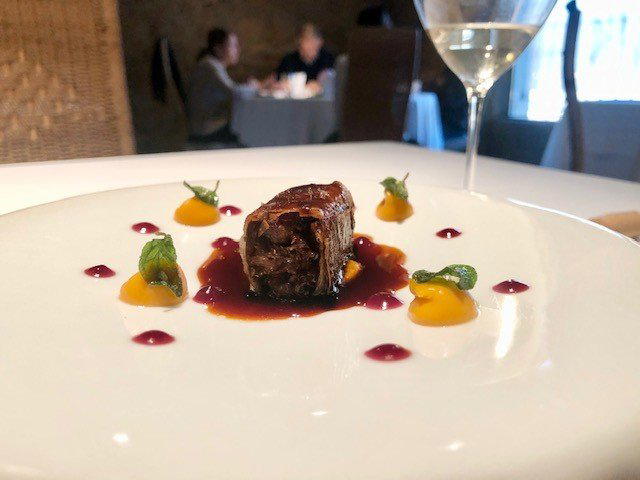
- Chicken ravioli in broth
- Rice with cod and romesco sauce
- Veal with quince and cauliflower
First Floor, Separate Door, Same Seasonal Logic
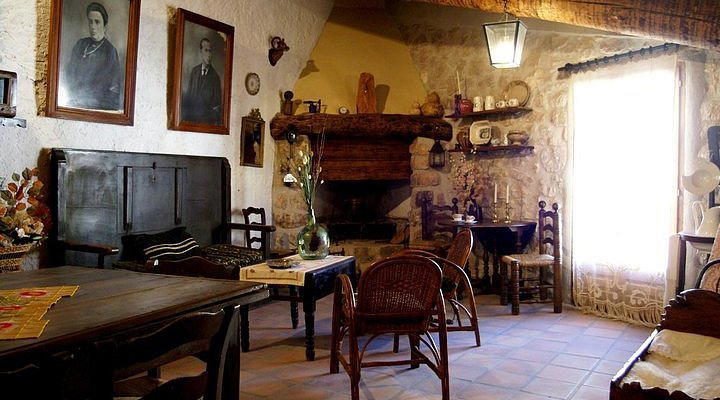
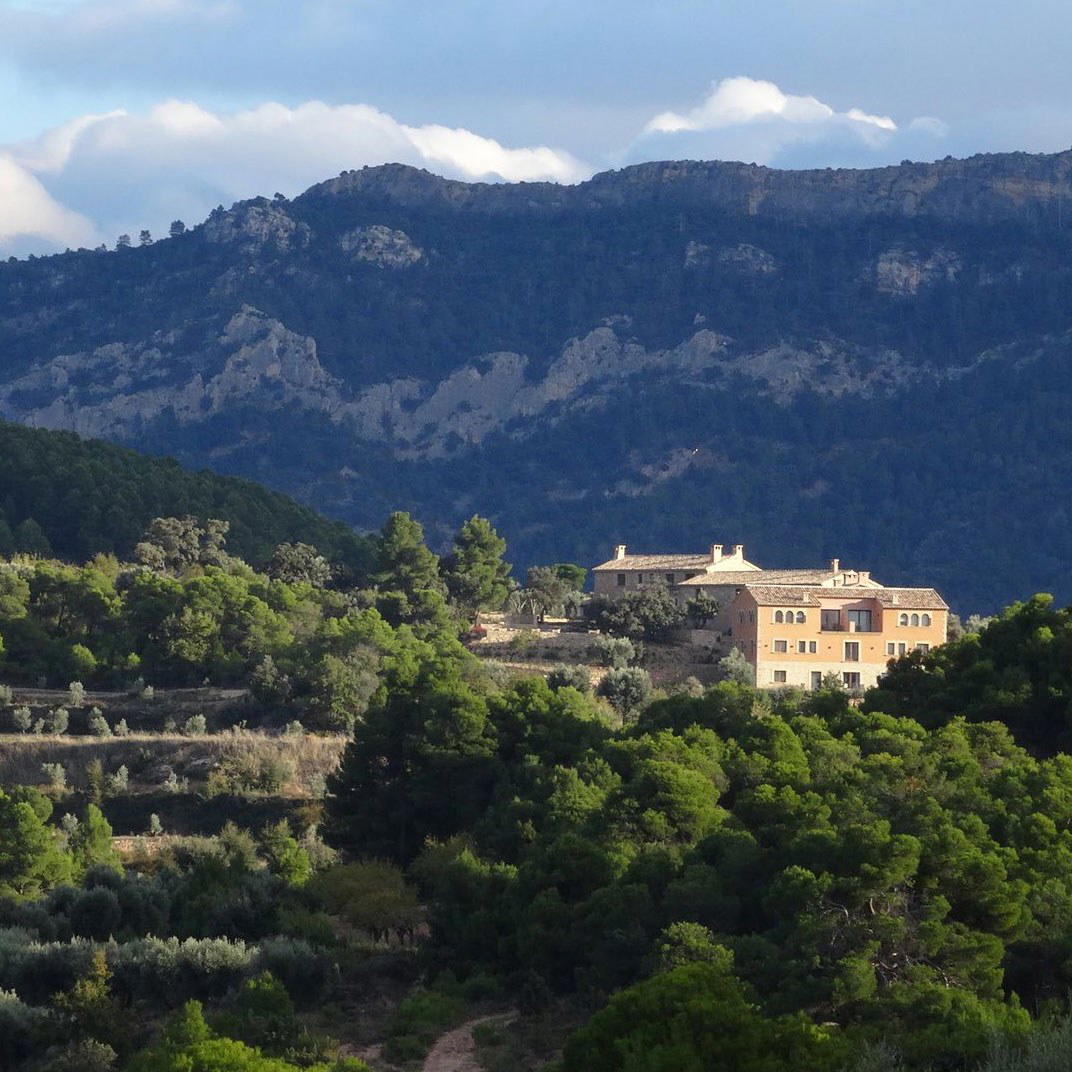
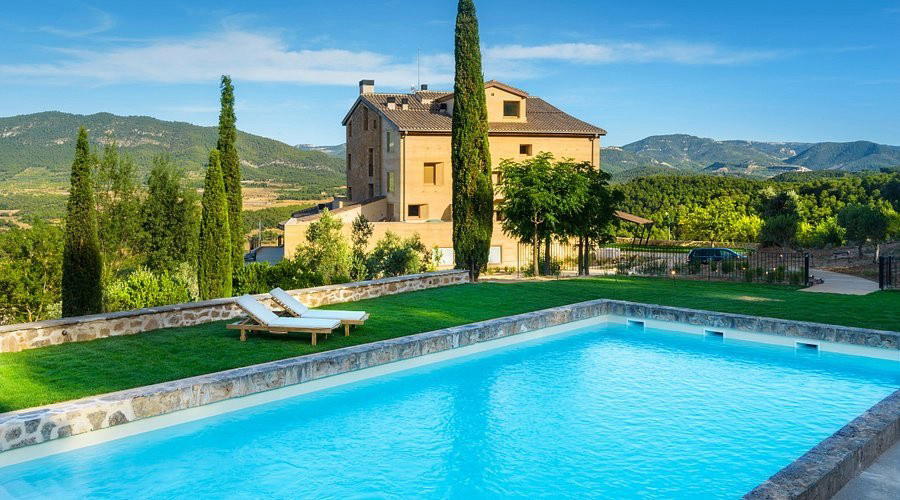
The approach to Espacio Amunt tells you something before you sit down. Rather than entering through L'Antic Molí's main reception, you come through a separate entrance on the first floor of the same building on the Carretera Ulldecona — a deliberate architectural signal that this is its own room, with its own rhythm. The setting is in the agricultural hinterland of southern Tarragona, where the Terres de l'Ebre meet the Terres del Sénia and the Parc Natural dels Ports begins its climb into the Serra de Ports range. It is not an urban address, and the cooking reflects that plainly.
Bistro formats at this level in Spain typically operate as pressure-valve releases for chefs who want to cook outside the formal tasting-menu framework. What Espacio Amunt does within that convention is anchor every dish to a specific geographic logic: the produce comes from identifiable nearby territories, the flavours align with the older cooking traditions of this stretch of the Valencian-Catalan border, and the menus shift to follow what the season actually offers rather than what a fixed narrative demands.
Vicent Guimerà and the Tradition He's Working From
In much of Spain's restaurant conversation, the biographical arc of a chef tends to follow a recognisable path: formal training, a formative stage abroad or under a luminary, and a homecoming that reframes local ingredients through an acquired external lens. Guimerà's trajectory is somewhat different in that the lens was already here. The cooking at both Espacio Amunt and its sibling L'Antic Molí (Modern Cuisine) draws on the food culture of a region that most Spanish dining guides have historically overlooked in favour of the Basque Country, Catalonia proper, or the Valencian coast.
That gap in the wider narrative is, arguably, part of the point. The Terres de l'Ebre and Terres del Sénia have their own distinct agricultural identity: olive groves with some of the oldest specimens in Europe, rice cultivation along the delta, game from the ports massif, and a fish and shellfish supply that travels inward from the Ebro mouth rather than from a major port. A chef who trained within that system, rather than importing a technique set from elsewhere and applying it retroactively to local ingredients, produces food that reads differently. It is less demonstrative and more embedded.
The contemporary touches Guimerà introduces at Espacio Amunt, by Michelin's own characterisation, are additions to a traditional foundation, not replacements for it. That sequencing matters. Dishes such as chicken ravioli in broth, rice with cod and romesco sauce, and veal with quince and cauliflower are legible within the regional cooking canon before they are anything else. The modern inflections clarify and sharpen; they don't rewrite.
Two Menus, One Frame
The format is built around two options: Bistró and Gran Bistró. The distinction between them follows a logic common in Spanish informal dining, where a shorter, more compact menu exists alongside a broader version for those who want more range without committing to the formality of the main restaurant upstairs. Both operate at the €€ price tier, which places Espacio Amunt in a bracket considerably more accessible than the flagship — and considerably more competitive as a proposition for anyone visiting the region without a specific occasion to mark.
For context, the higher end of Spanish fine dining is concentrated in venues like El Celler de Can Roca in Girona, Arzak in San Sebastián, Azurmendi in Larrabetzu, Mugaritz in Errenteria, Martin Berasategui in Lasarte-Oria, and DiverXO in Madrid, venues operating at €€€€ with international recognition and multi-month booking queues. Quique Dacosta in Dénia, Aponiente in El Puerto de Santa María, and Cocina Hermanos Torres in Barcelona also operate in that upper tier. Espacio Amunt shares a regional philosophy with some of these addresses, the emphasis on territory, the respect for primary ingredients, but functions in a fundamentally different register, one where the value equation is a genuine part of the offer rather than an afterthought.
The Michelin Bib Gourmand in both 2024 and 2025 confirms that Michelin's inspectors read it similarly: this is cooking that delivers meaningfully above its price point.
The Seasonal Argument
Seasonal cooking at the bistro level can mean many things, and not all of them are demanding. At its laziest, it means swapping a garnish when produce changes. At Espacio Amunt, the seasonal commitment runs deeper: the menus are anchored to the Terres de l'Ebre and Terres del Sénia supply chains, which means the kitchen is working with what is actually available from specific nearby agricultural and natural zones rather than sourcing broadly across Spain and labelling it local. The Parc Natural dels Ports contributes game; the delta and surrounding area provide rice and fish. These are not interchangeable with substitutes from further afield, and the cooking reflects that constraint directly.
The practical implication for visitors is that the menus change, and what you encounter in one season will differ from what you'd find in another. That is a feature rather than a limitation, particularly for anyone who spends time in the region across multiple visits.
Ulldecona's Dining Position
Ulldecona is not a dining destination in the way that a city with density and foot traffic becomes one. It is a destination in a more specific sense: you come here for a small number of addresses that would justify the journey on their own, and the wider region provides everything else. For anyone building a proper itinerary around the area, Les Moles (Modern Cuisine) is the other name worth knowing. The full Ulldecona restaurants guide maps the broader picture, and the Ulldecona hotels guide covers places to stay if you're building an overnight stay around a meal. Espacio Amunt's address is rural, Carretera Ulldecona, KM 10, so arriving by car is the practical reality for most visitors. There is no meaningful public transport connection at that distance from the town centre.
For those who want to extend the visit beyond the table, the Ulldecona bars guide, wineries guide, and experiences guide offer additional context for the region's hospitality and cultural offer. The Terres del Sénia olive territory alone makes the area worth approaching as a multi-day destination rather than a single-meal stop.
For traditional cuisine at a similar price tier and comparable regional philosophy elsewhere in Spain, Auga in Gijón and Auberge Grand'Maison in Mûr-de-Bretagne represent the broader European bistro-with-roots tradition. Espacio Amunt belongs to that cohort.
Practical Notes
Espacio Amunt sits at Carretera Ulldecona, KM 10, on the first floor of the L'Antic Molí complex, accessed via its own entrance. It operates at the €€ price range, with two menu formats available.
Frequently Asked Questions
What's the must-try dish at Espacio Amunt?
Michelin's own documentation of the kitchen references dishes including chicken ravioli in broth, rice with cod and romesco sauce, and veal with quince and cauliflower as representative of the two menus on offer. These align directly with the regional cooking tradition of Terres de l'Ebre and the chef's stated approach of working from tradition toward contemporary refinement rather than the reverse. The rice with cod and romesco is the dish that most clearly sits at the intersection of the two menus' philosophy: it is a regional classic, executed with the rigour that consecutive Bib Gourmand recognition implies, and it connects to the broader Catalan-Valencian culinary heritage of the area in a way that more experimental preparations don't. For first visits, it is the most instructive order.
A Quick Peer Check
| Venue | Cuisine | Price | Awards |
|---|---|---|---|
| Espacio AmuntThis venue — the venue you are viewing | Traditional Catalan Bistro | $30–50 | Michelin Bib Gourmand |
| Aponiente | Progressive - Seafood, Creative | Not listed | Michelin 3 Star |
| Arzak | Modern Basque, Creative | Not listed | Michelin 3 Star |
| DiverXO | Progressive - Asian, Creative | Not listed | Michelin 3 Star |
| El Celler de Can Roca | Progressive Spanish, Creative | Not listed | Michelin 3 Star |
| Quique Dacosta | Creative | Not listed | Michelin 3 Star |
Recognition history
Dated appearances from independent guides and award organizations, with the underlying list record or original source where available.
Michelin Bib Gourmand
Michelin
Full recognition history (3 entries)
Michelin Bib Gourmand
Michelin
Michelin Bib Gourmand
Michelin
Continue exploring
More in Ulldecona
Restaurants in Ulldecona
Browse all →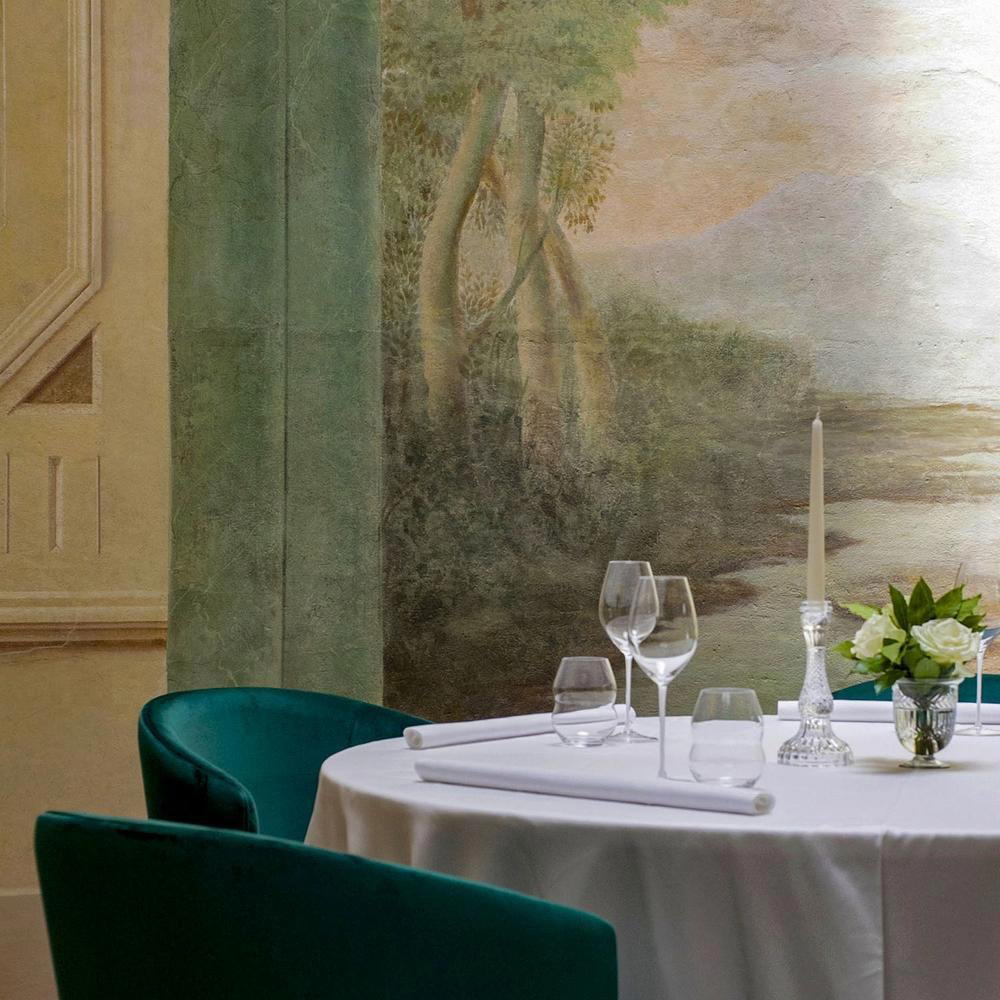
Hotels in Ulldecona
Browse all →

Details
- Elegant
- Cozy
- Intimate
- Modern
- Family
- Group Dining
- Open Kitchen
- Extensive Wine List
- Farm To Table
- Organic
- Local Sourcing
- Set Menu
- Vegetarian Friendly
Current opening hours
- Monday
- Closed
- Tuesday
- Closed
- Wednesday
- 1–3 PM
- Thursday
- 1–3 PM
- Friday
- 1–3 PM, 8:15–9:45 PM
- Saturday
- 1–3 PM, 8:15–9:45 PM
- Sunday
- 1–3 PM
Hours can change for holidays and private events. Last verified .
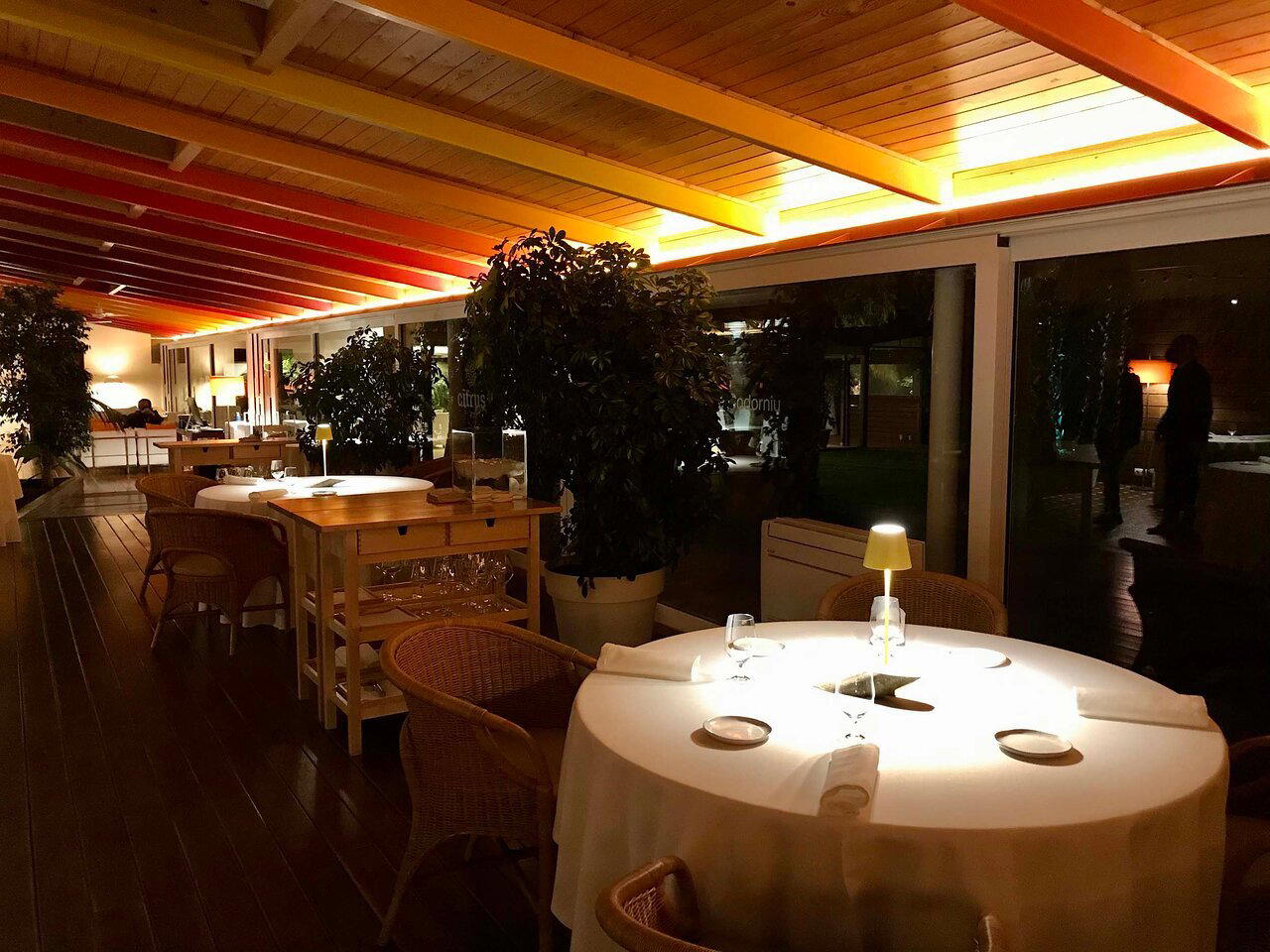
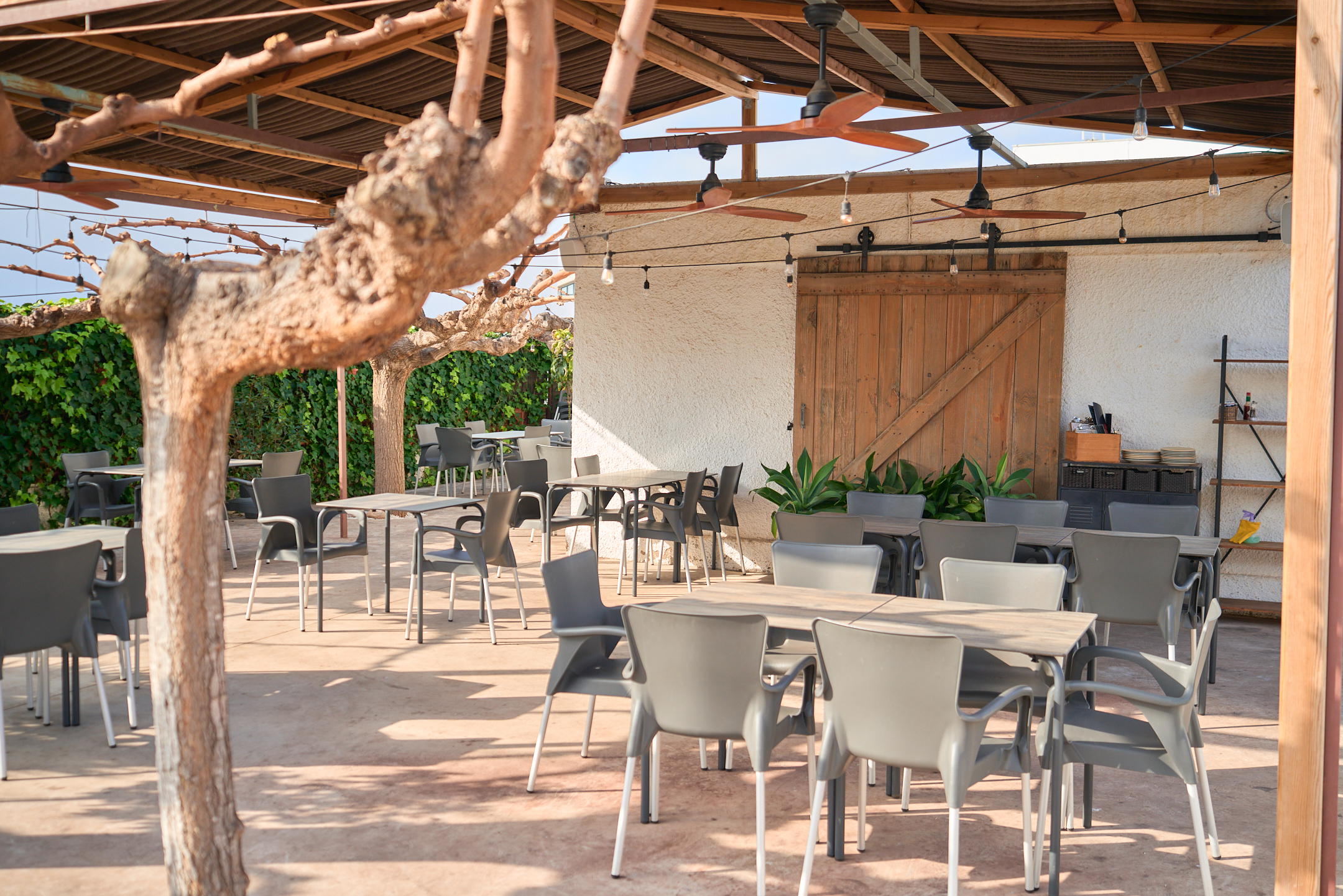
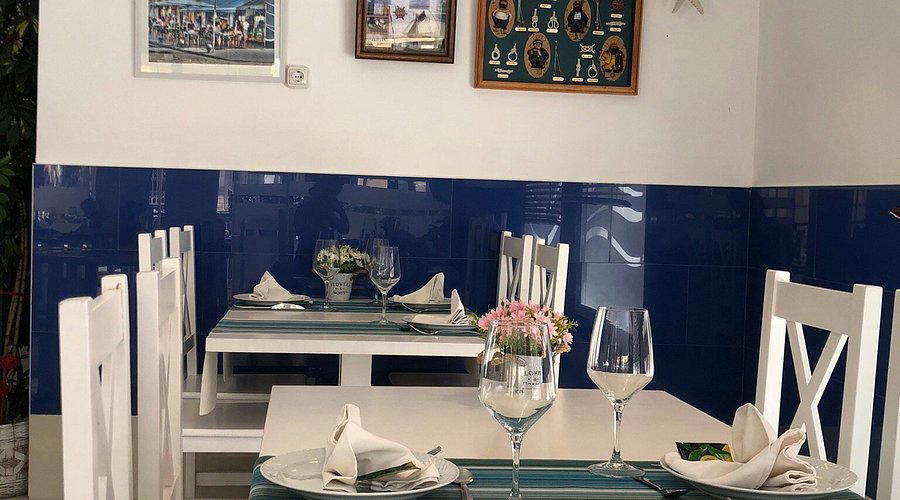
Bright, modern, and pleasant space with restrained elegance, pale stone, warm wood, and pleasant acoustics even when busy.