
On the fourth floor of a Charoen Krung address in Talat Noi, Electric Sheep occupies a recycled-materials space where Mediterranean technique meets an exclusively Thai pantry. Chefs Amerigo Tito Sesti and Yoan Martin run both an à la carte menu and a Chef's Cuts format, with produce grown on the building's own rooftop. The cooking has a zero-waste discipline that runs through every element, from the plates to the decor.
Pearl is the En Primeur Club membership app — saves, bookings, and concierge access live there. Same editors, same standards.
- Address
- 4th Floor, 867,869,871,873, 875 ถ. เจริญกรุง Talat Noi, Samphanthawong, Bangkok 10100, Thailand
- Phone
- +66 65 515 0650
- Website
- electricsheepbkk.com
 Saves & bookings on Pearl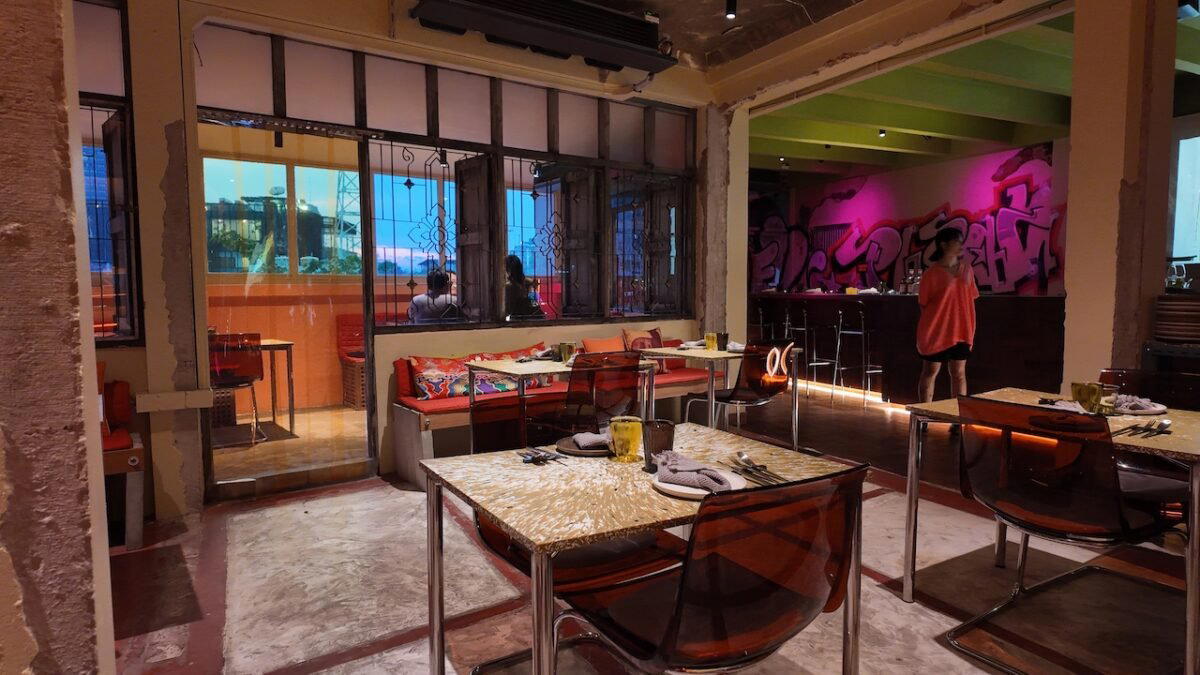
Industrial Floors, Rooftop Roots: The Charoen Krung Dining Shift
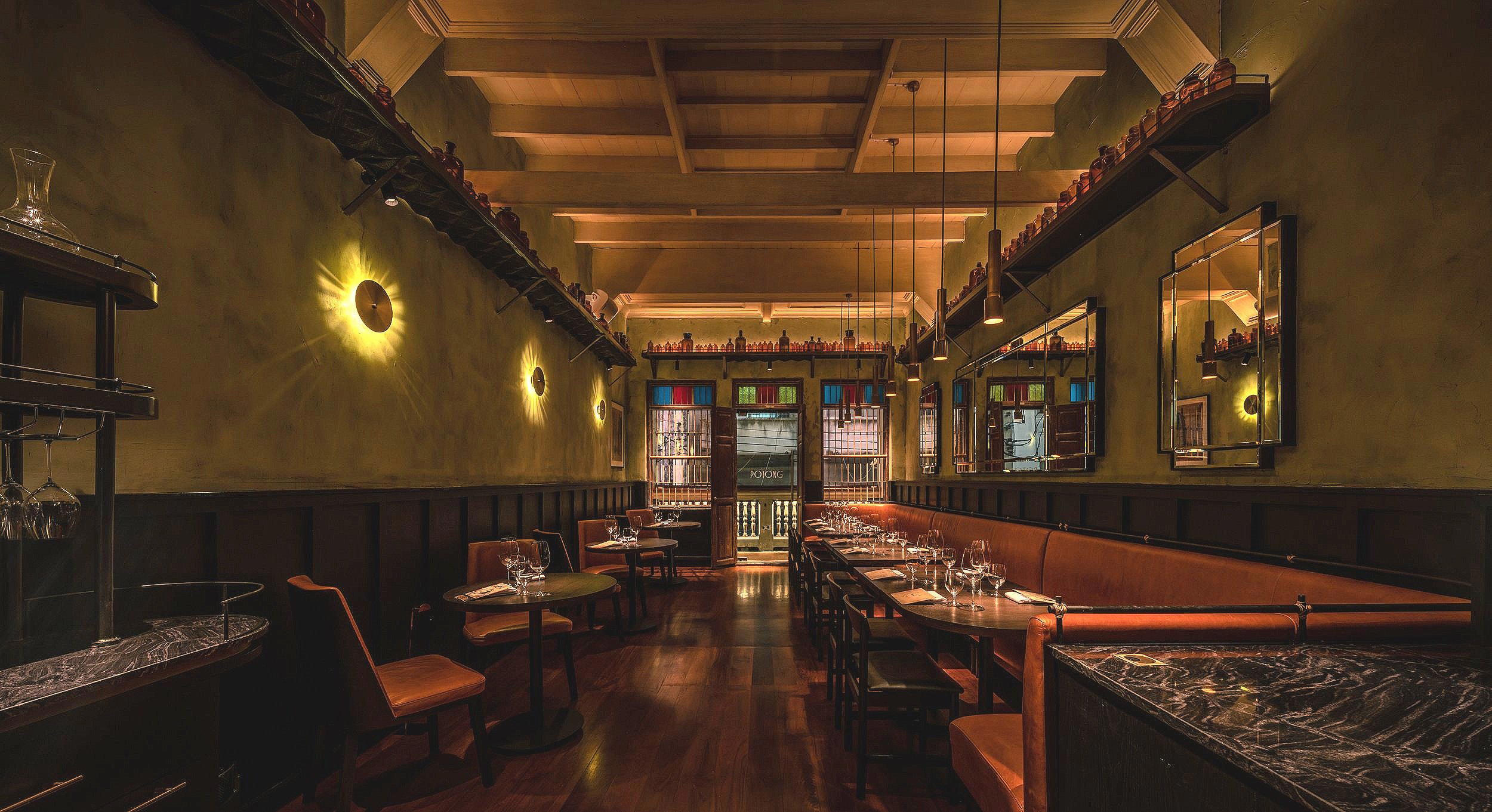
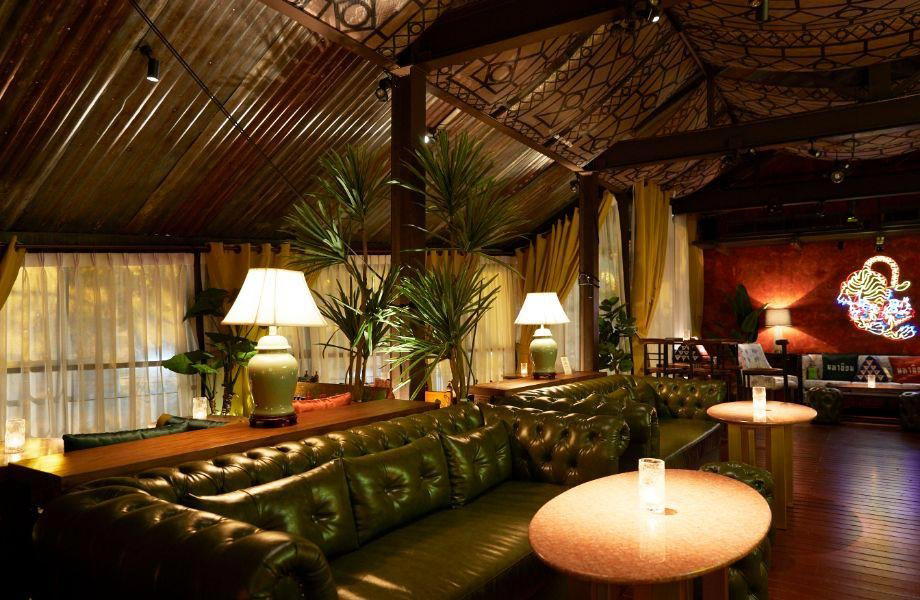
Charoen Krung has spent the better part of a decade repositioning itself. Once Bangkok's oldest paved street and the address of colonial trading houses, it now carries a second identity as the city's most architecturally interesting dining corridor. The buildings are worn, the sois are narrow, and the neighbourhood draws a specific kind of operator: one who wants history underfoot without paying Silom prices. Electric Sheep is a restaurant in Bangkok's Talat Noi district, on the fourth floor of 867 to 875 Charoen Krung, serving modern Mediterranean with Thai ingredients at about $50 per person. Electric Sheep, on the fourth floor of a Talat Noi block at 867 to 875 Charoen Krung, reads like a direct product of that context. The industrial fit-out is not a design affectation borrowed from elsewhere, it is a statement about the building and the waste stream that furnished it. Every surface, plate, and fitting carries recycled provenance.
That material commitment places Electric Sheep in a distinct tier within Bangkok's serious-cooking scene. The city's upper bracket, Sorn (Southern Thai), Baan Tepa (Thai contemporary), Gaa (Modern Indian), and Sühring (German), operates on familiar luxury grammar: tablecloths, deep service ratios, long tasting formats. Electric Sheep shares the culinary seriousness but runs on different grammar entirely. The industrial atmosphere and zero-waste framework position it closer to a European sustainability-led restaurant than to the white-glove Bangkok establishment dining that claims most of the city's recognition.
Mediterranean Frame, Thai Pantry
The conceptual engine here is worth examining on its own terms, separate from any single dish. The Mediterranean culinary tradition is product-driven at its core: quality of raw material, seasonality, restraint in technique. When Chefs Amerigo Tito Sesti and Yoan Martin chose to apply that framework to an exclusively Thai ingredient pantry, they were not making a fusion gesture. They were applying Mediterranean discipline, source locally, intervene sparingly, to a completely different climate and agricultural system. The result is a menu that reads European in structure but is Thai in every ingredient.
The rooftop garden is central to this logic. Growing produce at the same address where it is cooked closes the supply chain to its smallest possible radius, which has implications for freshness, seasonality, and waste control that no imported-ingredient program can match. Dishes like mackerel with smoked fermented chilli show the translation at work: a fish familiar to Mediterranean cooking, treated with a fermentation and smoke register that is entirely of this part of Thailand. The flavours are described as clean and considered rather than layered for complexity's sake. Compare that approach to what Côte by Mauro Colagreco does at the Mediterranean end of Bangkok's fine-dining range, and the difference becomes clear: one imports the Mediterranean pantry to Bangkok, the other applies Mediterranean thinking to a Thai one.
The Wine Question at a Zero-Waste Table
A sustainability-led restaurant with a clear material philosophy raises an immediate question for any serious wine program: how do you curate a list that aligns with the kitchen's values without closing the room off to the depth that fine-dining guests expect? Across the European zero-waste and natural-materials dining scene, the consistent answer has been to lean toward small-production, low-intervention wines, producers whose vineyard practices reflect something of the same waste-reduction, locality, and minimal-processing ethos the kitchen is demonstrating. It would be consistent with Electric Sheep's framework to expect a list that prioritises that kind of producer over conventional labels.
Thailand does not sit inside a significant domestic wine region, which means any list here is necessarily import-led. That removes the local-wine angle that would be available to a comparable restaurant in, say, natural-wine-producing regions of France or Italy. What it creates instead is a curation challenge: find producers whose philosophy rhymes with the kitchen, regardless of origin. Diners who come to the restaurant for the zero-waste premise and find a list built on industrial Bordeaux would feel the dissonance immediately. The wine list should have intentionality behind every label. The rooftop garden signals that the team thinks hard about provenance; the wine program should carry the same signature.
Two Formats, One Kitchen
Bangkok's serious restaurants increasingly offer a choice between à la carte freedom and a guided tasting format, and the restaurant follows that pattern with its Chef's Cuts menu alongside the standard à la carte. The distinction matters for how you approach the room. À la carte at a restaurant of this type rewards those who already understand the kitchen's logic, who know to follow the fermented and smoked registers, who can read a short menu and identify where the chefs are most confident. The Chef's Cuts format removes that interpretive burden and hands the sequencing to the kitchen, which at a zero-waste restaurant with a rooftop supply line has particular value: the chefs can build the menu around what is genuinely ready that day rather than what a printed card committed them to months ago.
For first-time visitors, the Chef's Cuts is the more revealing option. For those returning to test specific combinations, à la carte makes sense. Neither format requires the three-hour commitment of Bangkok's full omakase or long tasting menus at places like Sorn or Baan Tepa, which positions the restaurant as the more accessible entry point into Charoen Krung's serious-cooking tier.
Bangkok's Sustainable Cooking Conversation
The restaurant is not operating in isolation. Across Thailand, a growing number of operators are building kitchen programs around sourcing discipline and waste reduction. PRU in Phuket runs a farm-to-table model in the south; AKKEE in Pak Kret and Aeeen in Chiang Mai each represent locality-first thinking in their respective areas. The Bangkok equivalent of that conversation had been largely confined to Thai-cuisine frameworks. The restaurant brings a European-kitchen structural language to the same sustainability argument, which extends the conversation across culinary traditions rather than keeping it within a single one.
At the international level, the parallels run to technically serious zero-waste rooms in New York and Copenhagen. Atomix in New York operates in a comparable space between European technique and non-European pantry, though Korean rather than Thai. The structural similarity, formal discipline applied to a local ingredient system, suggests that this approach to cooking has become a recognisable format rather than an isolated experiment.
Planning Your Visit
The restaurant sits on the fourth floor of a Charoen Krung block in the Talat Noi sub-district of Samphanthawong, reachable from the Saphan Taksin BTS station with a short walk or taxi through the riverside lanes. The Charoen Krung stretch between the riverside and the main road carries a concentration of serious restaurants and bars, making a multi-stop evening practical. Booking in advance is advisable given the room's scale and the specificity of the program; the Chef's Cuts format in particular may require advance notice. Hours and reservation details are confirmed directly with the restaurant.
Frequently Asked Questions
What should I order at the restaurant?
The Chef's Cuts menu is one direct way to understand the kitchen's logic: it sequences the cooking around what the rooftop garden and Thai-only pantry are supplying at that point, rather than asking you to move through the à la carte without context. Among documented dishes, mackerel with smoked fermented chilli represents the kitchen's approach well, Mediterranean structure, Thai fermentation register. If you prefer à la carte, follow the dishes that use particularly local and fermented ingredients, where the Sesti-Martin technique has the clearest application to Thai produce.
Do I need a reservation for the restaurant?
Bangkok's Charoen Krung dining corridor has developed enough recognition that the better-regarded rooms in the area fill consistently, particularly on weekends. The restaurant's fourth-floor format and sustainability-led program attract a specific audience, and the Chef's Cuts option may have limited covers per service. Booking ahead is the practical approach. The restaurant does not publish online booking details publicly, so direct contact via the address at 867 to 875 Charoen Krung, Talat Noi, is the starting point. For comparison, Michelin-tracked peers like Sorn and Baan Tepa operate waitlists of several weeks, which reflects the general pressure on serious Bangkok dining at the upper end. The restaurant occupies a different tier, but the same advance-planning logic applies.
A Pricing-First Comparison
Comparable venues nearby, for context on price, style, and recognition.
| Venue | Cuisine | Price | Awards |
|---|---|---|---|
| ELECTRIC SHEEPThis venue — the venue you are viewing | Not listed | $$$ | Michelin Plate |
| Si Sawat | Si Lom, Modern Thai | $$$ | Michelin Plate |
| Khao (Vadhana) | Khlong Tan Nuea, Modern Royal Thai | $$$ | Michelin Plate |
| Mhom | Hua Mak, Refined Thai Home Cooking | $$$ | Michelin Plate |
| Err: Urban Rustic Thai | Khlong Tan, Modern Urban Rustic Thai | $$$ | Not listed |
| Grok | Makkasan, Modern Ratchaburi Thai | $$$ | Michelin Plate |
Recognition history
Dated appearances from independent guides and award organizations, with the underlying list record or original source where available.
Michelin Plate
Michelin
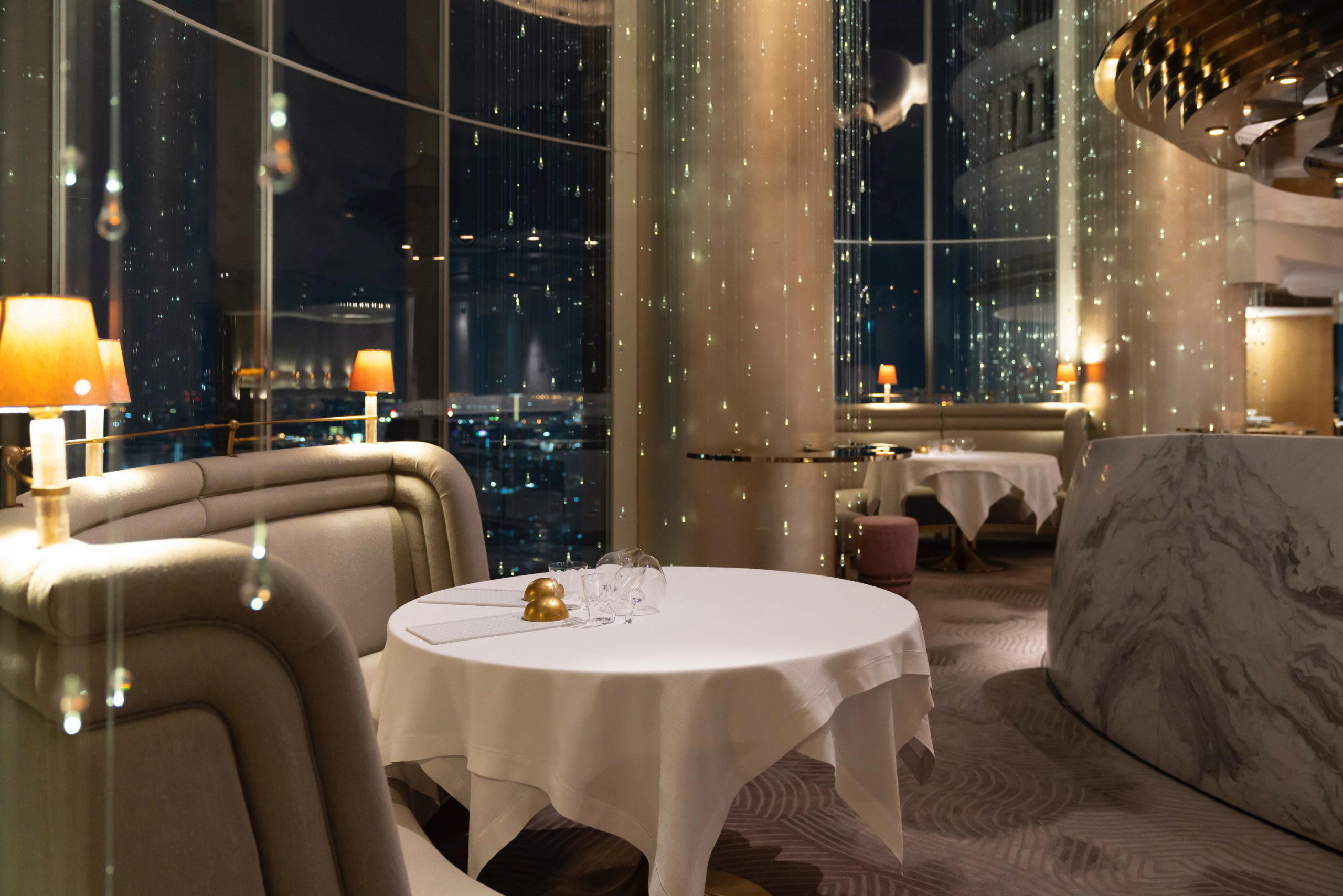
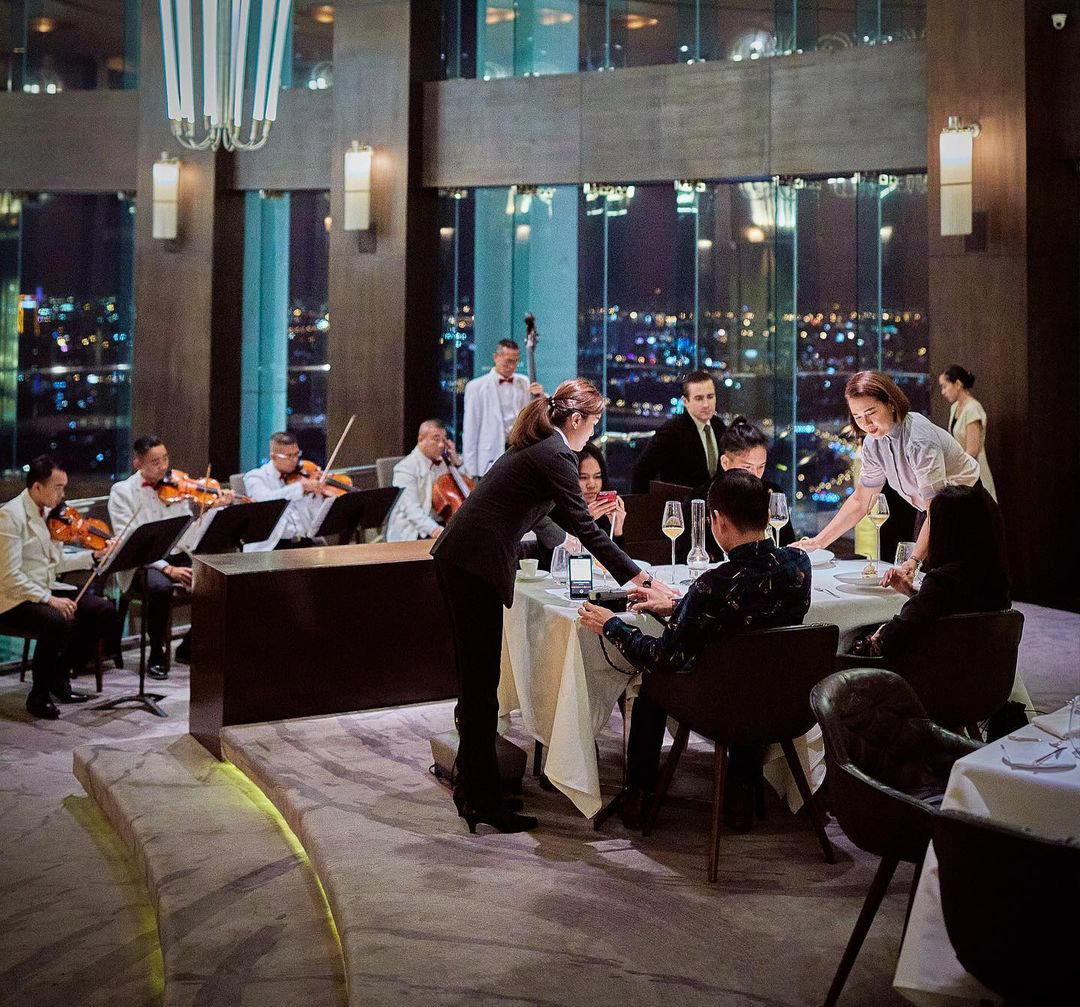
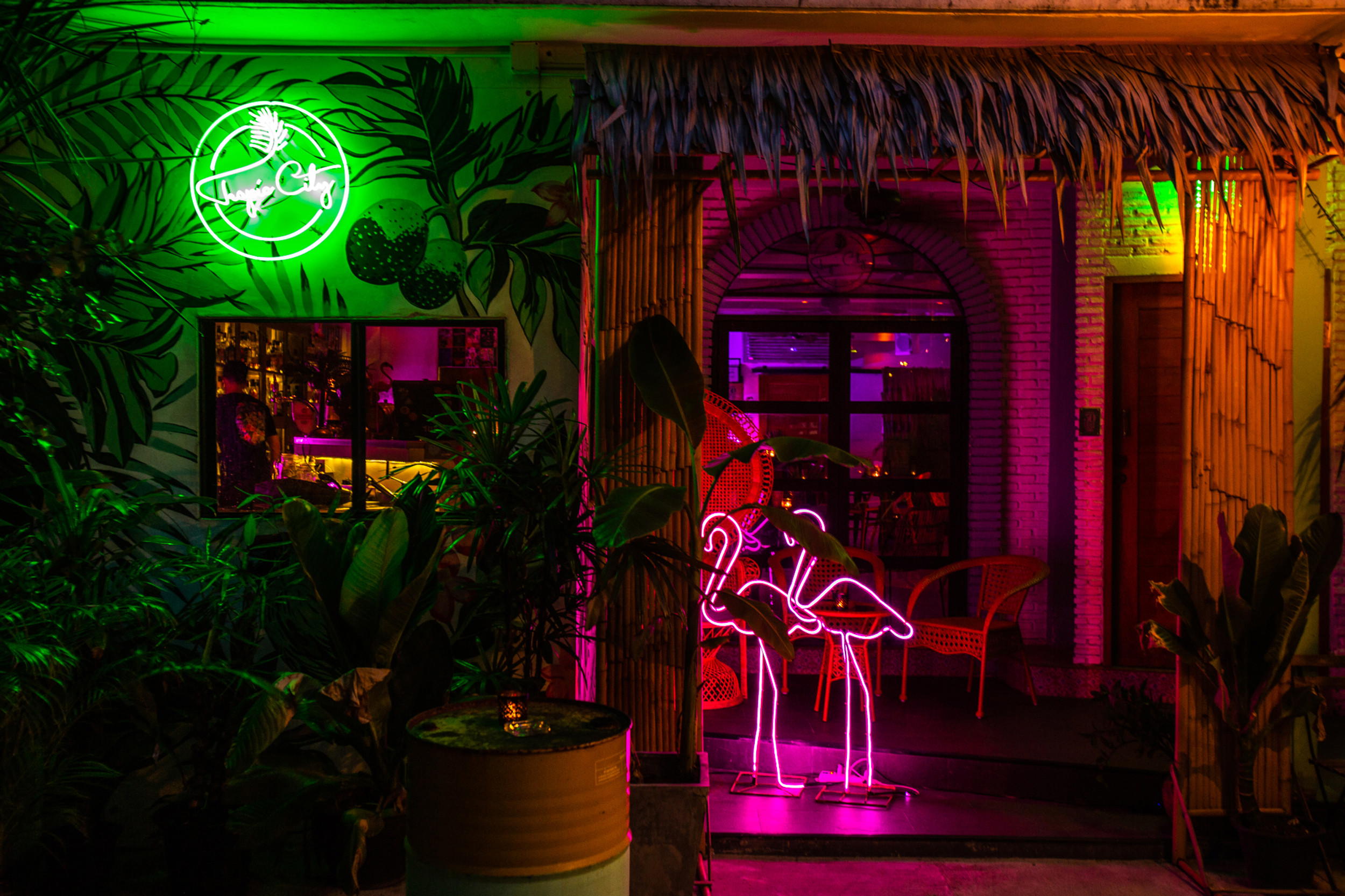

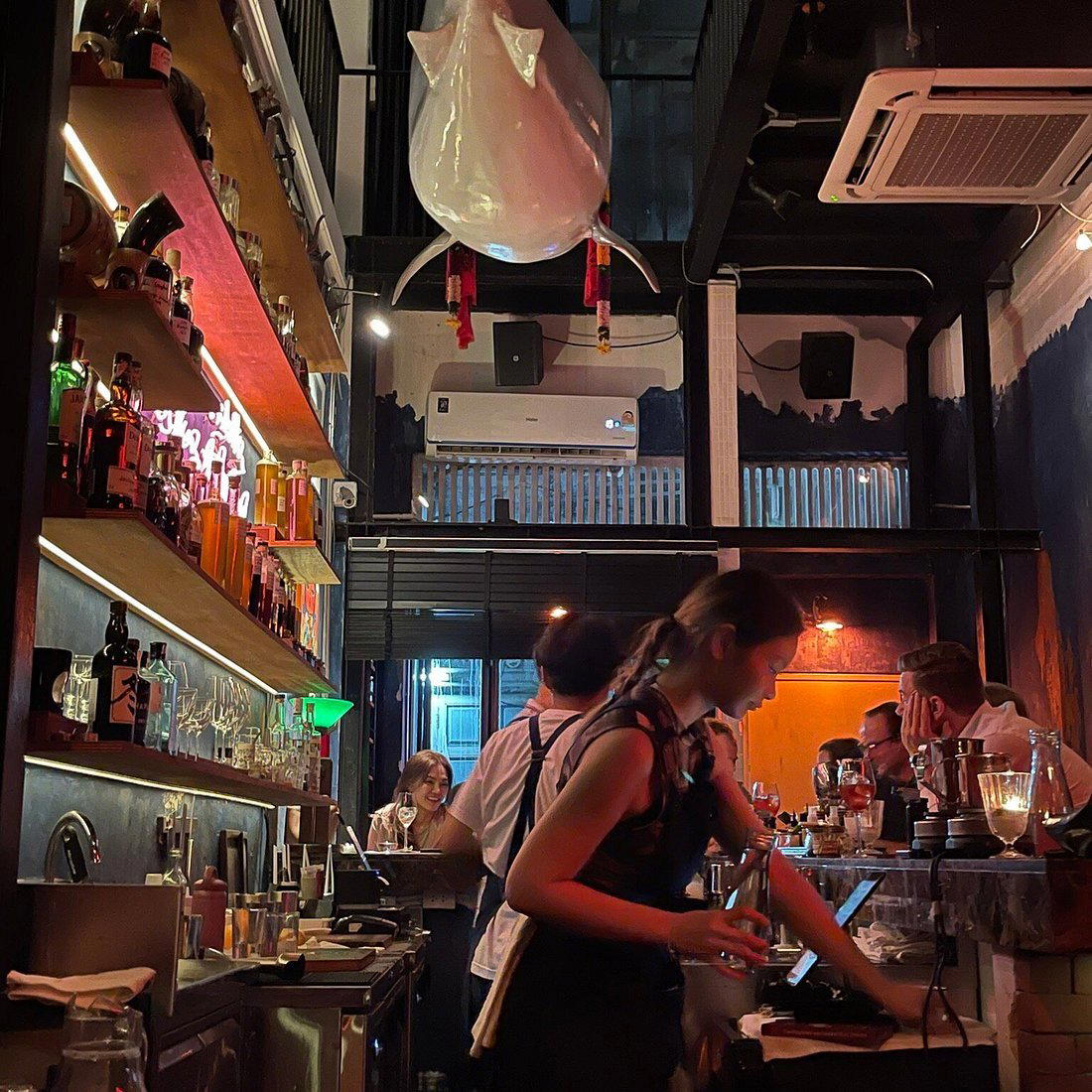
At a Glance
- Trendy
- Industrial
- Modern
- Whimsical
- Date Night
- Special Occasion
- Group Dining
- Open Kitchen
- Rooftop
- Design Destination
- Craft Cocktails
- Natural Wine
- Local Sourcing
- Zero Waste
Current opening hours
- Monday
- Closed
- Tuesday
- 6:30 PM–12 AM
- Wednesday
- 6:30 PM–12 AM
- Thursday
- 6:30 PM–12 AM
- Friday
- 6:30 PM–12 AM
- Saturday
- 6:30 PM–12 AM
- Sunday
- 6:30 PM–12 AM
Hours can change for holidays and private events. Last verified .
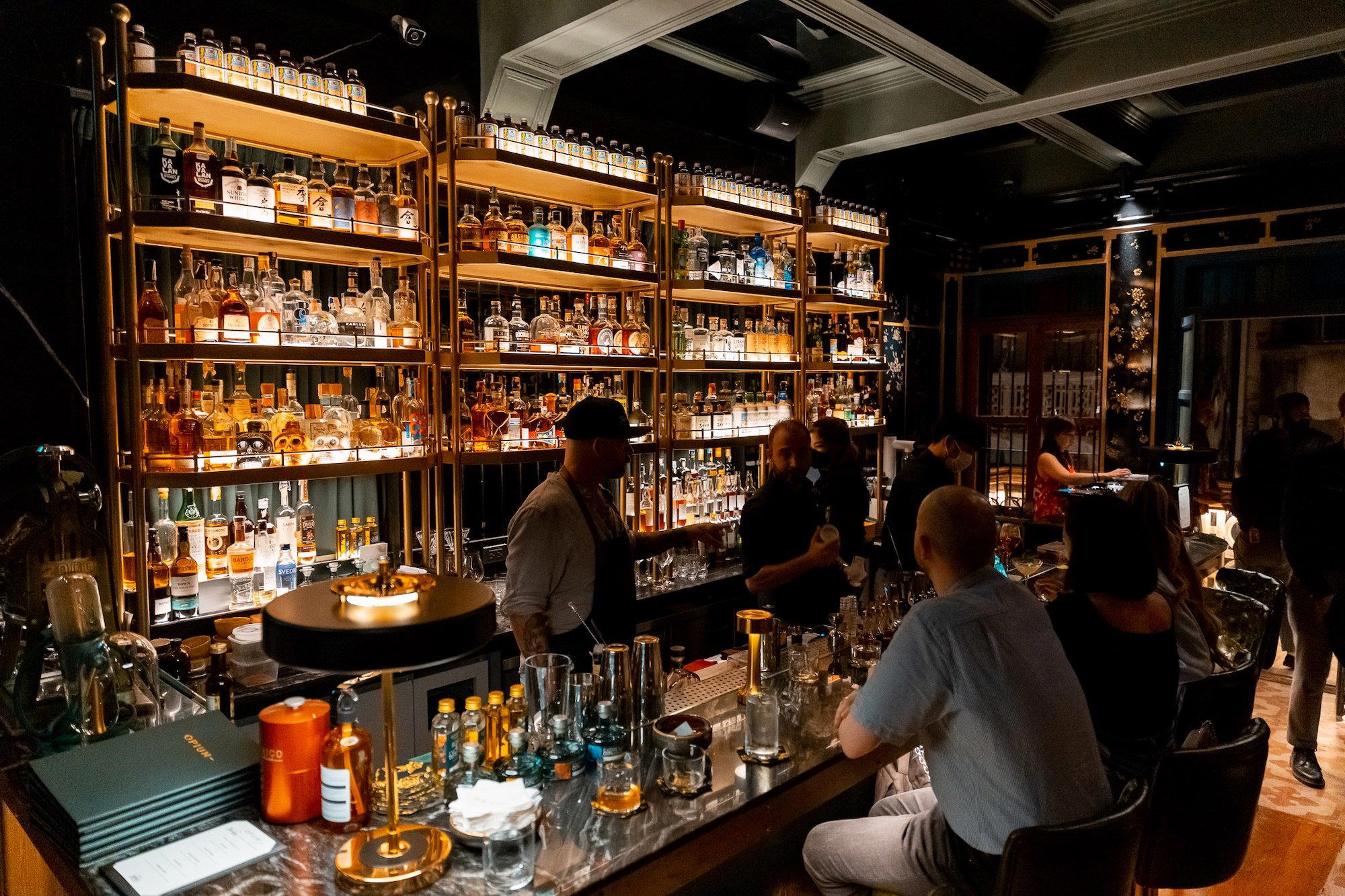
Edgy industrial atmosphere with neon-lit terraces, video installations, and surreal design blending old world nature with mechanical past.