Our verdict
El Tarascon occupies a measured address on Clemens-August-Straße in Bonn's Südstadt quarter, where the city's quieter dining side asserts itself away from the Rhine-facing tourist corridor. The kitchen operates in a segment of Bonn's restaurant market that sits between the casual neighbourhood trattoria and the full fine-dining format, a middle register the city increasingly does well. Visitors with an interest in sourcing-conscious cooking will find the address worth tracking.

Pearl is the En Primeur Club membership app, where members save venues, book tables and use the concierge.

Where Bonn's Südstadt Dining Character Shows Itself
Clemens-August-Straße runs through one of Bonn's denser residential stretches, a part of the Südstadt where the dining offer is shaped less by tourist volume and more by the expectations of a local professional population. The street-level approach to El Tarascon at numbers 2–4 places it inside that neighbourhood logic: this is not a destination built around river views or proximity to the Bundesviertel's former ministerial infrastructure, but one that functions on the terms of its immediate catchment. In cities like Bonn, where the upper dining tier is genuinely competitive, with halbedel's Gasthaus anchoring the Modern French end and Yunico holding the Japanese fine-dining position, the mid-tier addresses carry a different pressure. They have to earn regular repeat visits rather than one-off special-occasion bookings.
That structural context matters when reading an address like El Tarascon. Bonn's dining scene has quietly developed a credible mid-range layer over the past decade, with addresses like Konrad's and Forissimo Ristorante Italiano filling the space between neighbourhood casual and formal tasting-menu territory. El Tarascon sits inside that pattern. The name itself, Tarascon being a town in Provence, on the Rhône between Arles and Avignon, suggests a southern French or at minimum a Mediterranean sourcing orientation, which in the current German restaurant market carries specific editorial weight.
The Sourcing Question in a German Context
Southern French and Provençal cooking traditions are built around a very specific ingredient logic: produce that arrives at the table having spent minimal time in transit, with preparations scaled to let the raw material carry the dish rather than obscure it. Ratatouille, bouillabaisse, daubes, tapenade, the canon of this kitchen is inseparable from the markets of Marseille, Avignon, and Arles, from olive oil pressed in the Alpilles, from fish out of the Mediterranean rather than the Atlantic. Transplanting that tradition to the Rhine Valley introduces an immediate sourcing tension that any honest kitchen in this register has to address.
Germany has developed a coherent response to this challenge over the past twenty years, partly through the influence of chefs whose careers crossed through French kitchens. At the three-star level, houses like Vendôme in Bergisch Gladbach, less than an hour from Bonn, and Waldhotel Sonnora in Dreis have spent decades demonstrating that French culinary frameworks can be executed at the highest level with German and regional European supply chains. Further afield, Schwarzwaldstube in Baiersbronn and Aqua in Wolfsburg represent the same argument at institutional scale. The interesting question for a mid-tier address with a Mediterranean orientation is how it engages with that same logic at a different price point and with a different volume of covers.
Addresses operating in this register typically resolve the tension in one of three ways: by sourcing from specialist German importers who bring Provençal and Mediterranean produce directly; by building the menu around German-grown ingredients that share textural or flavour affinities with their southern French equivalents, Palatinate wine country vegetables, Moselle valley herbs, Rhine fish; or by a hybrid approach that uses the southern French framework as a flavour vocabulary while making no strong claims about geographical provenance. Each approach produces a different dining experience and a different relationship between the menu and the season.
Bonn's Position in the German Fine-Dining Map
Bonn is not the first German city that comes to mind when mapping the country's serious dining addresses, but that reading undersells the city's actual offer. The former capital has retained a density of educated, internationally mobile residents, academics, EU-adjacent professionals, diplomatic community, that sustains a more sophisticated restaurant market than the city's size alone would predict. The comparison set in the mid-to-upper tier includes Il Punto and the Italian end of the market alongside the French-inflected addresses. For visitors arriving from outside Germany's major dining cities, Bonn rewards more careful attention than the tourist infrastructure implies.
Germany's broader restaurant scene has been undergoing a gradual reorientation toward sourcing transparency and regional identity, a shift visible at addresses like JAN in Munich, ES:SENZ in Grassau, and Schanz in Piesport. Even at the more experimental end, addresses like CODA Dessert Dining in Berlin have built their identity partly around a deliberate engagement with where ingredients originate and what that implies for the format. The mid-tier, where El Tarascon operates, is where those same conversations happen without the infrastructure of a full development kitchen or a lengthy tasting menu to accommodate them. That constraint can produce more direct, less mediated cooking, which is, arguably, closer to what the Provençal tradition was built on in the first place.
For visitors building a Bonn itinerary, Clemens-August-Straße is navigable on foot from the Südstadt's main tram connections, and the address is accessible without a car. Reservation practice for addresses in this part of Bonn's market tends to reward advance booking, particularly at weekends when the neighbourhood dining demand is highest. Our full Bonn restaurants guide covers the broader city picture, including how this part of the Südstadt fits into a multi-day eating programme.
Visitors with a broader interest in Mediterranean cooking executed at higher technical levels might also look at what addresses like Restaurant Haerlin in Hamburg or internationally at Le Bernardin in New York City and Lazy Bear in San Francisco demonstrate about ingredient sourcing as a structural principle, namely, that the provenance conversation produces better results when it shapes the menu from the beginning rather than being applied as a marketing layer after the fact. That standard applies at every price point, including the mid-tier.
Planning Your Visit
El Tarascon is located at Clemens-August-Straße 2–4, 53115 Bonn, in the Südstadt neighbourhood. The address is within walking distance of the area's main public transport links, making it accessible from the city centre without requiring a taxi or car. Given the mid-tier Bonn market's tendency toward full houses on weekend evenings, contacting the restaurant directly to confirm availability before arrival is advisable. Current hours, pricing, and booking arrangements are best confirmed through direct contact with the venue, as this information is subject to change.
Frequently asked questions
How do I find El Tarascon?
El Tarascon is located at Clemens-August-Straße 2-4, 53115 Bonn, Germany, Bonn.
How does El Tarascon fit into Bonn's broader dining scene compared to other French restaurants in the city?
Bonn is not a city with a deep bench of Provençal specialists, which makes El Tarascon's positioning on Clemens-August-Straße in the Südstadt relatively distinct within the local French dining offer. While Germany's serious French restaurant addresses tend to cluster in Frankfurt, Düsseldorf, and Munich, Bonn has a quieter but committed dining culture supported by its professional and academic population. El Tarascon operates in that context, serving a neighbourhood that rewards consistency over spectacle.
What should I eat at El Tarascon?
El Tarascon's kitchen draws on southern French and Provençal cooking traditions, where the ingredient logic centres on produce quality rather than elaborate technique. Given that framing, dishes rooted in the Provençal canon, herb-driven, produce-forward plates common to that tradition, are the natural focus.
Do I need a reservation for El Tarascon?
El Tarascon sits on Clemens-August-Straße in Bonn's Südstadt, a dense residential quarter where dining rooms tend to be compact and local regulars fill seats quickly. Booking ahead is the sensible approach for any evening visit. No online reservation system or phone number is publicly confirmed at this time, so reaching out through the venue directly is the most reliable route.
What is El Tarascon known for?
El Tarascon is associated with southern French and Provençal cooking in a Bonn neighbourhood shaped more by local residents than by the tourist circuit. That address on Clemens-August-Straße places it within a part of the city's Südstadt where restaurants earn their standing through repeat custom rather than passing trade. In Bonn's dining context, that kind of neighbourhood anchoring carries its own credibility.
Comparable Spots, Quickly
| Venue | Cuisine | Price | Awards | Notes |
|---|---|---|---|---|
| El TarasconThis venue (the venue you are viewing) | Argentinian Steakhouse | $50–100 | Not listed | Not listed |
| halbedel's Gasthaus | Michelin-Starred German Fine Dining | $100–150 | 1 Michelin Star | Modern French |
| Yunico | Modern Japanese Fine Dining with Mediterranean Influences | Not listed | 1 Michelin Star | Japanese |
| Redüttchen | Modern German Fine Dining | $50–100 | Michelin Plate | Modern Cuisine |
| Strandhaus | Contemporary Mediterranean Seafood | $50–100 | Michelin Plate | Mediterranean Cuisine |
| Konrad's | Modern Mediterranean Fine Dining | $100–150 | Michelin Plate | Contemporary |
Continue exploring
More in Bonn
Restaurants in Bonn
All restaurants in Bonn →

Bars in Bonn
All bars in Bonn →

Details
- Cozy
- Rustic
- Intimate
- Date Night
- Group Dining
- Open Kitchen
- A La Carte
- Gluten Free Options
Current opening hours
- Monday
- Closed
- Tuesday
- 12–2:30 PM, 6–10:30 PM
- Wednesday
- 12–2:30 PM, 6–10:30 PM
- Thursday
- 12–2:30 PM, 6–10:30 PM
- Friday
- 12–2:30 PM, 6–10:30 PM
- Saturday
- 6–10:30 PM
- Sunday
- Closed
Hours can change for holidays and private events. Hours as of .
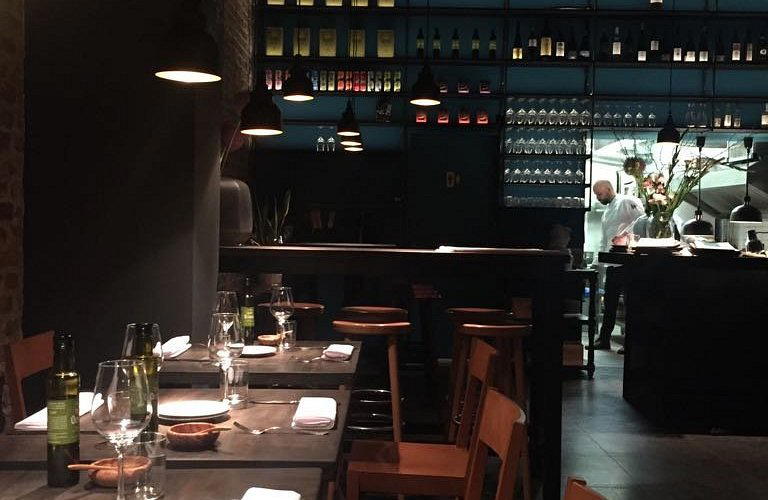
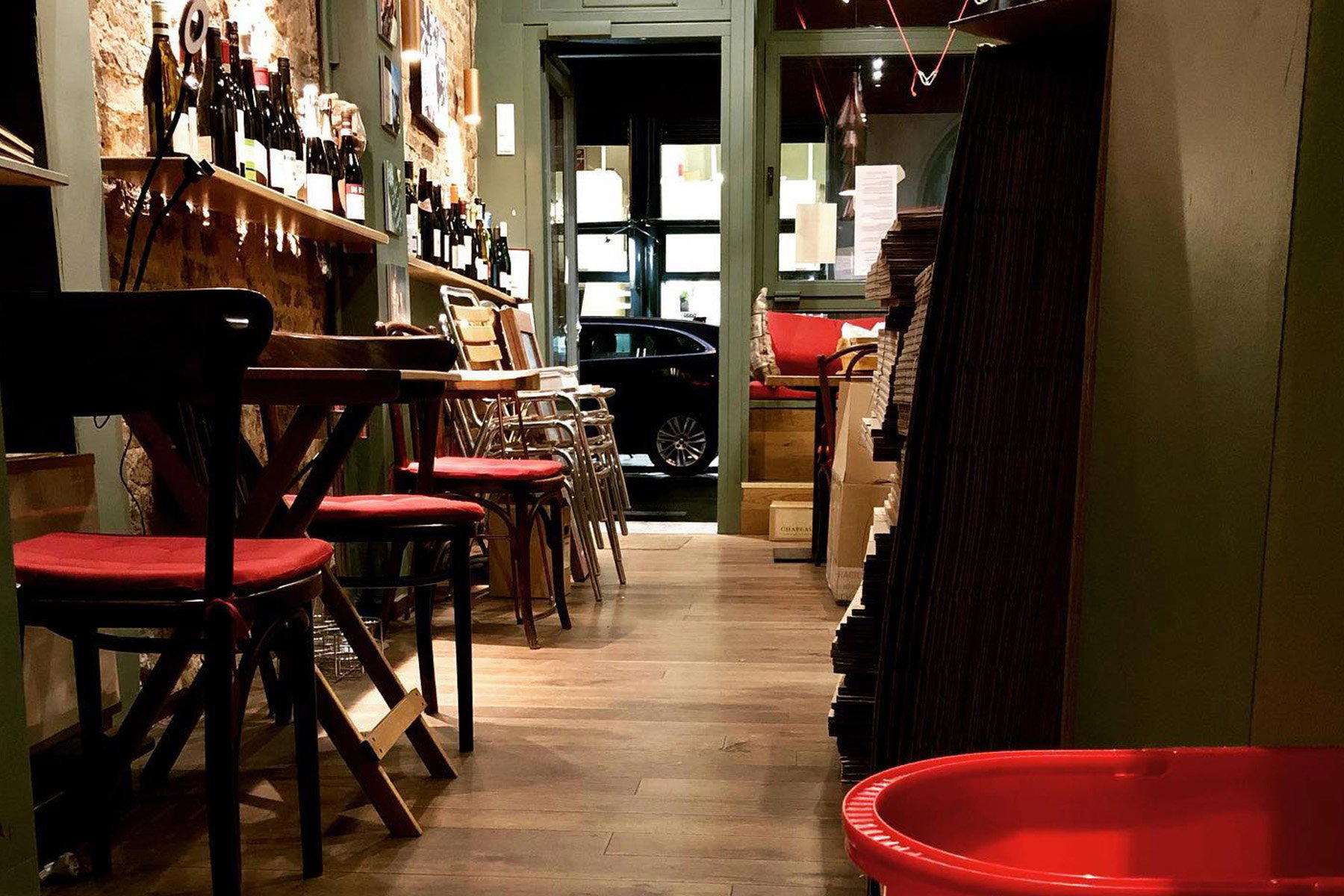
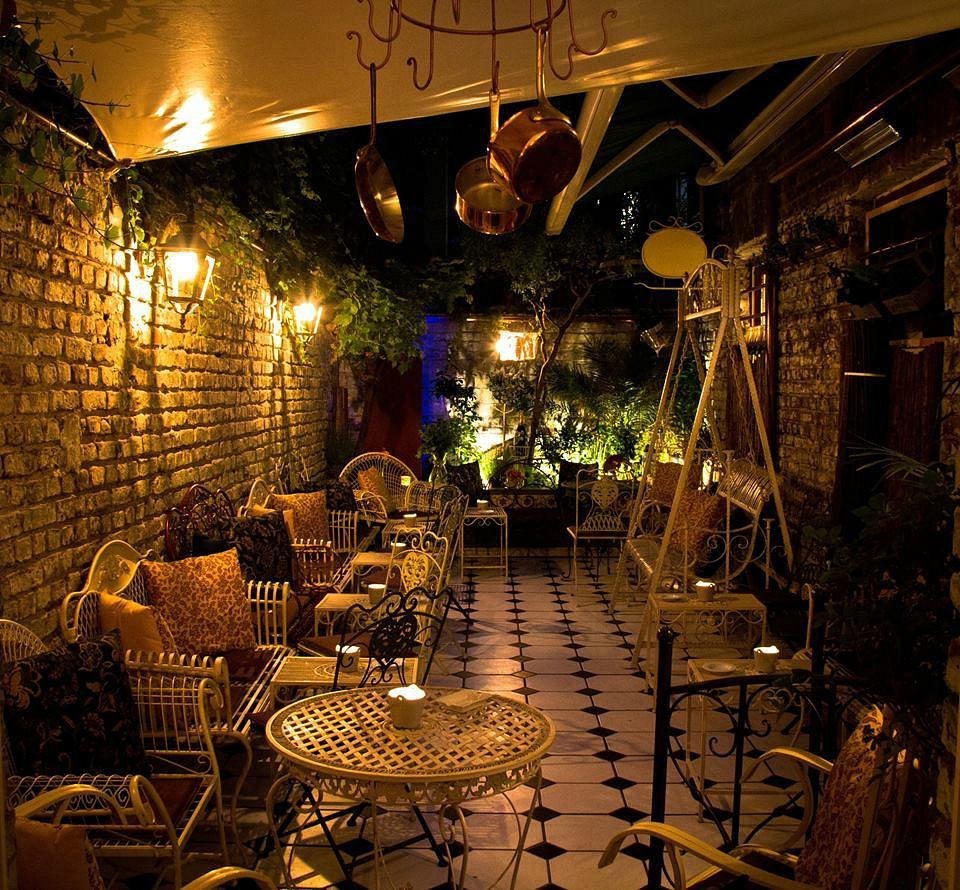
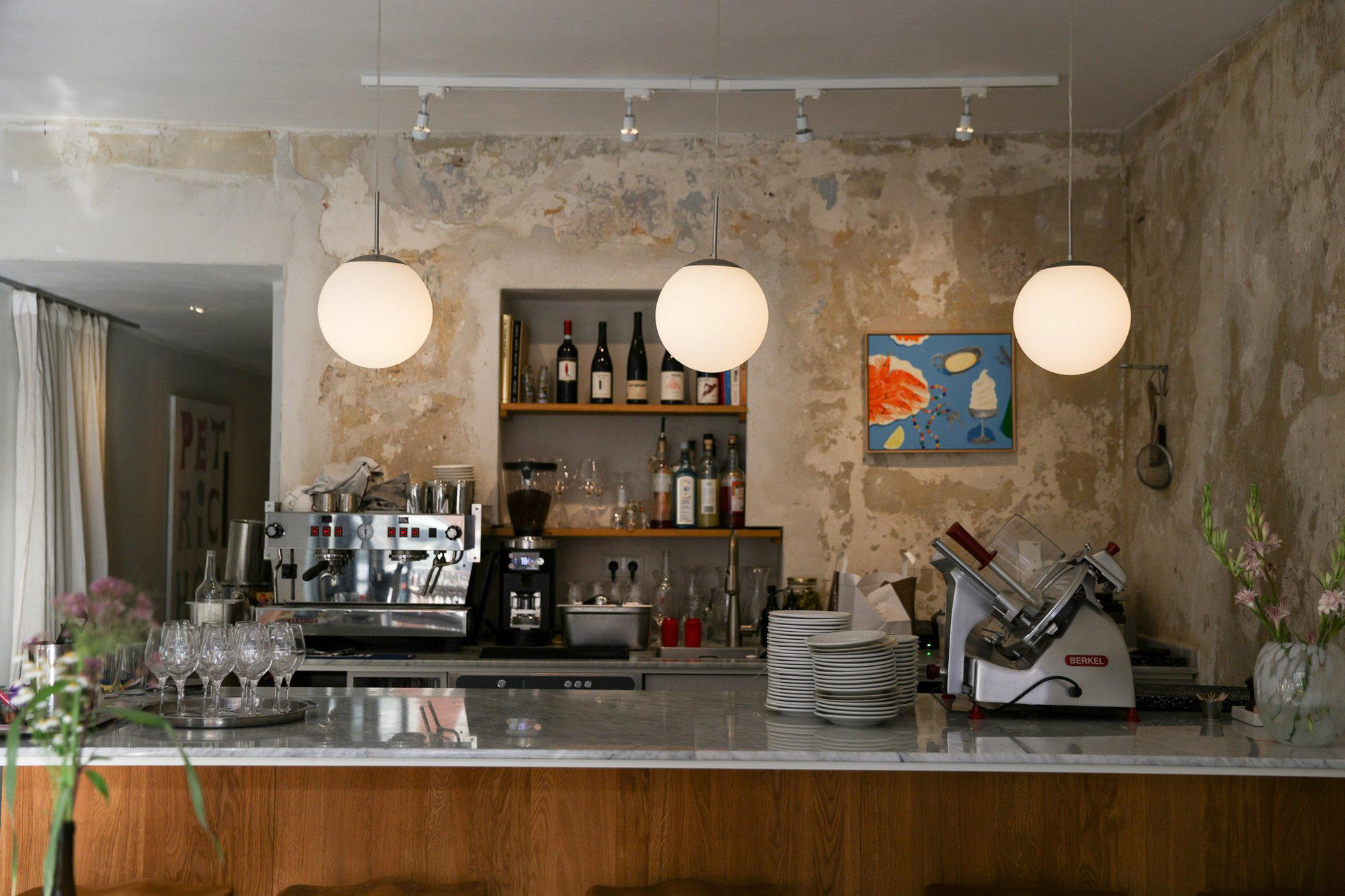
Cozy, rustic basement with brick walls, warm lighting, and lively atmosphere from open kitchen.