
Edo Yakiniku brings Ginza yakiniku into a small counter format, with six seats, reservation-only service, and a high dinner spend that places it in Tokyo’s luxury beef tier. Its Tabelog 100 Yakiniku Tokyo selections in 2023 and 2025 signal a serious address for diners tracking how grilled beef has moved from group-table conviviality toward tightly managed, chef-facing formats.
Pearl is the En Primeur Club membership app — saves, bookings, and concierge access live there. Same editors, same standards.
- Address
- Japan, 〒104-0061 Tokyo, Chuo City, Ginza, 6 Chome−6−5 HULIC & New GINZA NAMIKI 6 4階 B
- Phone
- +81 3-6263-9925
- Website
- edo-yakiniku.com
 Saves & bookings on Pearl
Ginza’s upper floors are natural habitat for Tokyo’s quieter luxury restaurants: small elevators, discreet directories, and rooms where city noise falls away before dinner. In that setting, yakiniku has changed. The old image of smoke, beer, and large tables remains, but a narrower format has emerged around counter seating, controlled pacing, and wine or sake service treated with the seriousness once reserved for sushi and kappo.
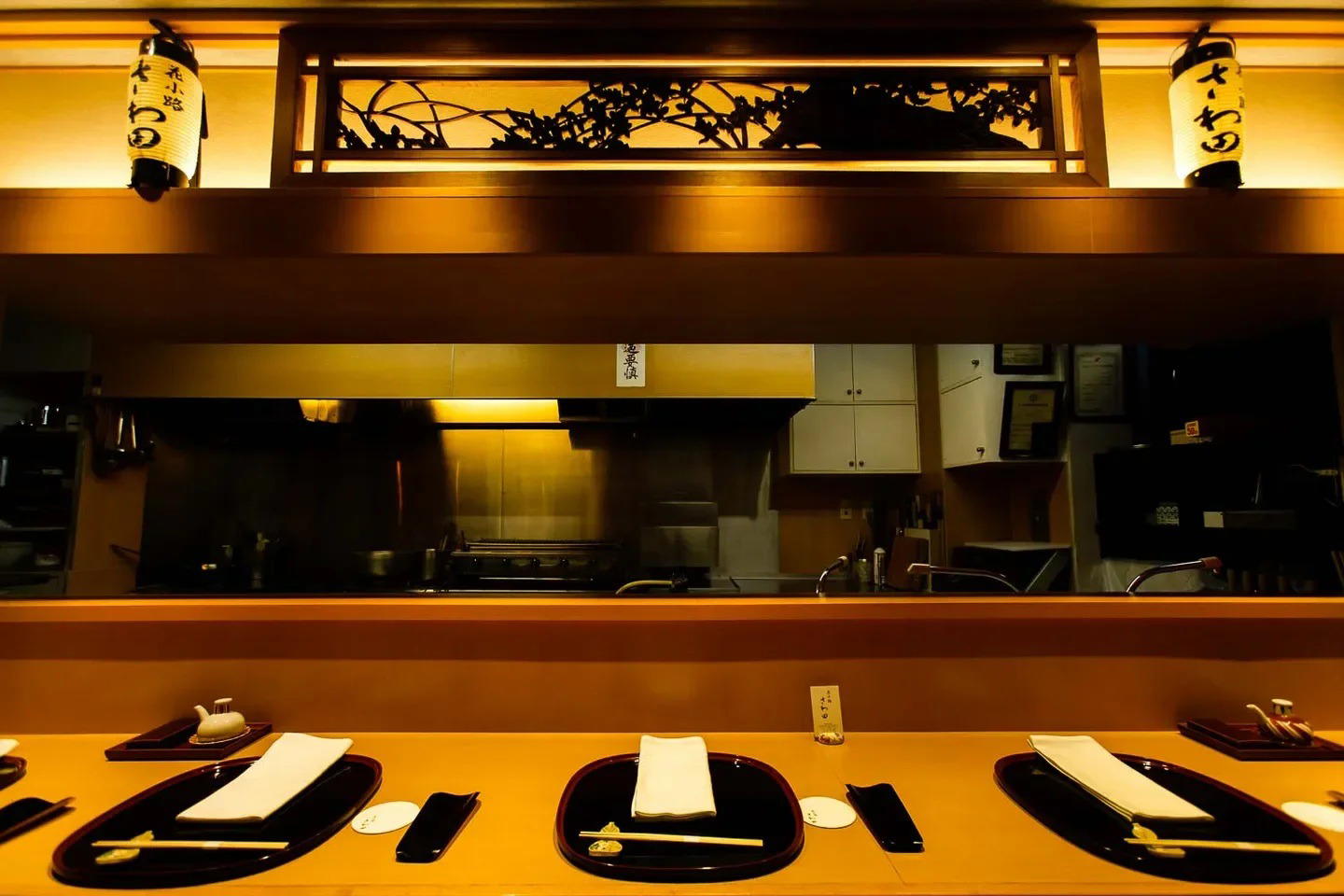
Edo Yakiniku belongs to that shift. Built around six counter seats, it changes yakiniku’s logic. Instead of a table setting its own rhythm, the experience becomes a guided beef course, with the grill not just shared heat but the meal’s organizing principle. In Ginza, where tempura counters, sushi counters, and kappo rooms have trained diners to read precision through proximity, this is a telling evolution for Japanese barbecue.
Ginza yakiniku moves from smokehouse energy to counter discipline
Tokyo’s yakiniku scene has split into clear tiers: casual neighborhood rooms for speed and appetite, polished group restaurants for celebrations, and a smaller luxury category where beef sourcing, pacing, drinks, and privacy factor into the price. Edo Yakiniku sits in the last category, not by copying fine dining vocabulary, but by applying fine dining constraints to a format historically associated with informality.
The distinction matters. At a large yakiniku table, pleasure often comes from abundance and personal timing: cuts arrive, conversation takes over, and the grill becomes democratic. At a six-seat counter, the meal asks for attention. The format compresses the distance between guest, grill, and service team, making errors harder to hide and repetition more obvious. That pressure suits Ginza, a district that rewards restaurants able to turn restraint into value.
Recognition from Tabelog 100 Yakiniku Tokyo in 2023 and again in 2025 places the restaurant within a competitive Tokyo category rather than a broad tourist list. For diners comparing beef-focused rooms in the city, that matters more than vague prestige. Yakiniku Ginza Cobau offers a neighborhood comparison in the same genre, while Tenichi shows how Ginza has long supported counter-led Japanese luxury in tempura. The common thread is not cuisine; it is the neighborhood’s appetite for formats where proximity, pacing, and product quality carry the evening.
The beef-counter model changes what diners should pay attention to
High-end yakiniku is not simply expensive barbecue. Its modern Tokyo expression borrows from the sequencing of a tasting menu, the sightlines of sushi, the ingredient focus of kappo, and the celebratory charge of wagyu culture. The question is how much control diners want to give the room. A counter format reduces improvisation, but can sharpen the meal, especially when drink service is part of the architecture rather than an afterthought.
Here, the drink program is a signal. Sake, shochu, and wine are all listed focuses, and a sommelier is available. That combination shows where premium yakiniku has moved in Tokyo: beef no longer automatically means beer or highballs. Wine and sake pairings, handled with discipline, can make grilled fat, tare, salt, and smoke read with more nuance. This is where the genre has become more serious, and more demanding of the guest.
The restaurant opened in 2022, significant in post-pandemic Ginza. Smaller rooms, tighter seating counts, and reservation-led operations became more than survival tactics; they became a way to define luxury without grand scale. Edo Yakiniku’s place in a broader group that includes Ginza Chikamitsu, Ginza Chikamitsu Rokuchome, Ginza Chikamitsu Namiki Street, and Ushimitsu addresses also situates it inside a larger Tokyo beef ecosystem. The point is not a founder narrative, but that beef-focused operators in Tokyo have tested multiple neighborhoods and formats, with Ginza still the proving ground for the polished, compact end of the market.
For travelers building a Tokyo dining itinerary, the contrast helps. A curry specialist such as 3 Chome no Curry Ya San, a yakitori address like 124. KAGURAZAKA (Yakitori), or a casual seafood-and-charcoal stop such as . 鮪と炭火焼き うお炭 秋葉原店 answers different Tokyo questions. The restaurant answers how far yakiniku can move toward counter-restaurant discipline while remaining recognizably about grilled beef.
Where it fits in a serious Tokyo itinerary
The strongest case here is focus. Six seats, counter service, reservation-only operation, and repeat Tabelog 100 selection create a narrow promise: this is not the flexible choice for a loose group dinner, but a concentrated expression of Ginza beef dining. Private rooms are not part of the format, reinforcing the point. The room is meant to be read from the counter, not hidden away from it.
That makes it best for diners who already understand Tokyo’s high-control restaurant culture. Visitors coming from sushi omakase or tempura counters will recognize the cues: small capacity, compressed pacing, and a premium on watching technique rather than staging a large social occasion. Diners who want a broader night out in Shinjuku might pair research with 12/10 Shinjuku ten or the citywide restaurant index at Our full Tokyo restaurants guide. Those planning a wider trip can also cross-check Our full Tokyo hotels guide, Our full Tokyo bars guide, Our full Tokyo wineries guide, and Our full Tokyo experiences guide.
For comparison outside the immediate Ginza beef lane, the broader Japan and overseas directory shows how formats serve different appetites: -Grilled beef Sukiyaki- KAMAKURA TANUKIAN 鎌倉 たぬき庵 in Kamakura for another beef tradition, [ki:] in Kyoto for a different city rhythm.cafe in Osaka.know in Kumamoto, (Shoku) Vietnam in Kawasaki, [Curry Senmon Ten] Maruyama Kyoju. in Sapporo, Jōdo Saké Bar in Los Angeles, Onigiri Time in Pasadena, and the stylized café register of 2D Cafe. The restaurant sits at the opposite end of that spectrum: compact, expensive, adult, and built around the contemporary Tokyo belief that a grill can be as exacting as any counter in the city.
Budget and Context
Comparable venues for context, by category and price tier.
| Venue | Cuisine | Price | Notes |
|---|---|---|---|
| Edo YakinikuThis venue — the venue you are viewing | Chūō, High-end Wagyu Yakiniku Counter | $$$$ | Not listed |
| Kabuto (天然鰻 かぶと) | Not listed | $$$$ | Ikebukuro, Traditional Unagi Nose-to-Tail |
| sukiyaki & shabu shabu Ginza Rangetsu | Chūō, Premium Sukiyaki & Shabu-Shabu | $$$$ | Not listed |
| Ginza Kudo | Chūō, Seasonal Japanese Kaiseki | $$$$ | Not listed |
| Hiroyuki | Not listed | $$$$ | Chūō, Creative Japanese "luxurious home cooking" course at an 8-seat Ginza counter |
| Toku Uchiyama | Chūō, Traditional Japanese Kaiseki | $$$$ | Not listed |
Recognition history
Dated appearances from independent guides and award organizations, with the underlying list record or original source where available.
Tabelog 100 #57 · No. 57
Tabelog · Tabelog 100 - Yakiniku - TOKYO - 2025











At a Glance
- Elegant
- Intimate
- Sophisticated
- Quiet
- Modern
- Special Occasion
- Date Night
- Business Dinner
- Chefs Counter
- Design Destination
- Standalone
- Sake Program
- Local Sourcing
Current opening hours
- Monday
- 5–11:30 PM
- Tuesday
- 5–11:30 PM
- Wednesday
- 5–11:30 PM
- Thursday
- 5–11:30 PM
- Friday
- 5–11:30 PM
- Saturday
- 5–11:30 PM
- Sunday
- 5–11:30 PM
Hours can change for holidays and private events. Last verified .
A calm, refined Japanese-style space reminiscent of an Edomae sushi counter, with a small six-seat counter, subdued lighting, and an atmosphere focused on quiet, personalized service and the theatrical grilling of top-grade wagyu before guests.