
E-itou curry Hiragishi honten belongs to Sapporo’s serious everyday-curry tier: modestly priced, ingredient-led, and recognized in Tabelog’s Curry EAST 100 selections across multiple years. The draw is range rather than ceremony, with curry bases spanning ramen-broth inspiration, fruit-and-vegetable spice work, Abeno chicken, and seasonal formats in a compact Hiragishi room.
Pearl is the En Primeur Club membership app — saves, bookings, and concierge access live there. Same editors, same standards.
- Address
- 2 Chome-7-33 Hiragishi 1 Jo, Toyohira Ward, Sapporo, Hokkaido 062-0931, Japan
- Phone
- +81 11-555-4745
- Website
- e-itoucurry.com
 Saves & bookings on Pearl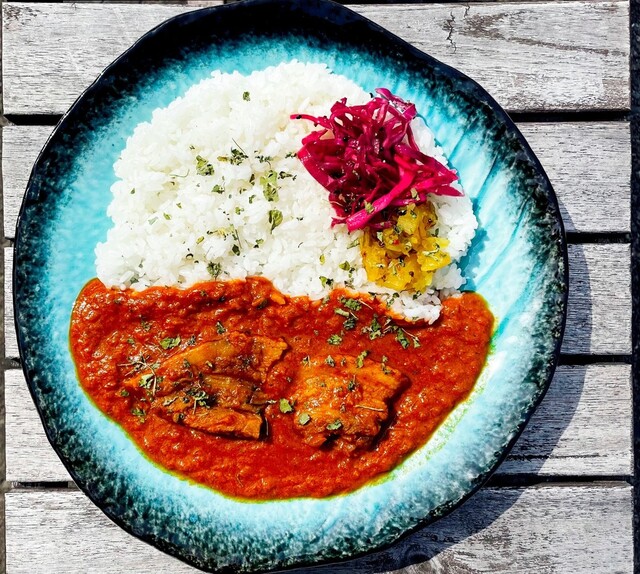
Hiragishi is not the postcard version of Sapporo dining. South of the city’s central hotel corridors, the rhythm is residential, subway-led, and practical: small restaurants, repeat customers, quick lunches, and the kind of food that earns loyalty by being specific rather than theatrical. In that setting, curry matters because Sapporo has long treated spice as an everyday language, not a novelty. Soup curry may dominate the city’s outside reputation, but the broader local scene also includes thicker Japanese curry, Indian-influenced plates, organic-leaning kitchens, and ramen-adjacent broth thinking.
E-itou curry Hiragishi honten fits that second map of the city. Its Tabelog Curry EAST 100 selections in 2019, 2020, 2023, and 2024 put it in a recognized group of curry specialists rather than in Sapporo’s high-ceremony dining tier. That distinction matters. This is a counter-and-table restaurant built around repeated use, with a 21-seat format and a no-reservations setup, not a destination tasting menu. The editorial value is in how it shows Sapporo curry moving beyond a single local stereotype.
Ingredient-led curry in a city too often reduced to soup curry
Sapporo’s curry identity is frequently flattened into soup curry: clear broth, vegetables, spice level choices, and a format that reads well to visitors. The more interesting story is that the city’s curry culture is wider and more hybrid. E-itou curry Hiragishi honten sits in the lane where base construction does the work. The kitchen lists more than four curry types with different foundations, including a curry inspired by ramen broth, a fruit-and-vegetable-driven spicy curry, a version built with Abeno chicken and onions cooked slowly in low-temperature oil, and a seasonal limited spice curry. On weekends, a limited-quantity spice curry adds another layer to the rotation.
That range says something useful about Sapporo’s current casual dining scene. The city’s lower-priced specialists increasingly compete on process: broth technique borrowed from ramen, sweetness and body from produce, named poultry as a signal of sourcing, and seasonal rotation as a reason for repeat visits. The categories here are Curry, Indian curry, and Organic, a combination that places the restaurant between Japanese comfort food and spice-house vocabulary rather than inside a single orthodox tradition.
Within Sapporo, that makes it a different proposition from the city’s ramen-and-noodle pull. A visitor building a sharper eating itinerary could put it near 175°DENO Tantanmen Sapporo kitaguchi ten for spice comparison, or alongside [Curry Senmon Ten] Maruyama Kyoju., Ajanta Indo Curry Ten, and Ajanta Sohonke to understand how broad the city’s curry vocabulary has become. Bread and pastry-focused detours such as Aigues Vives underline the same point: Sapporo rewards category specialists more than checklist dining.
A compact, practical room built for repeat eating
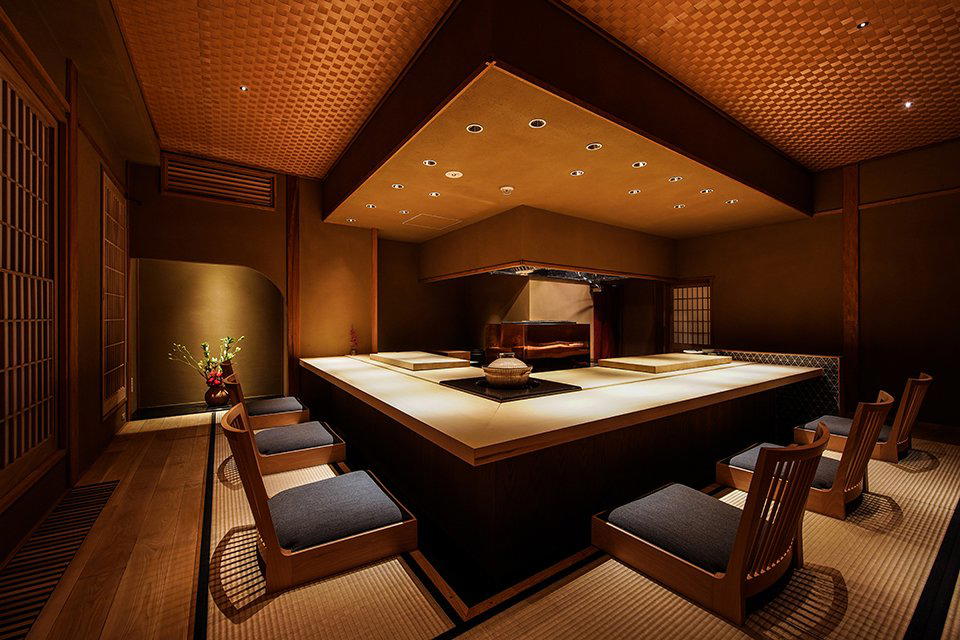
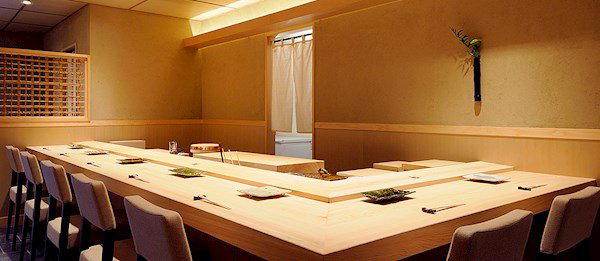
The room’s format is part of the argument. Twenty-one seats, including counter seating, pushes the experience toward solo diners, pairs, and small groups. Private rooms and private use are not part of the offer, which keeps the focus on short, direct meals rather than occasion dining. Non-smoking service, take-out, delivery, card payments, transport IC cards, and QR payments all point to a restaurant embedded in daily city life. Two parking spaces next to the store help drivers, but the more revealing detail is the walk from Nakanoshima Station: this is a neighbourhood curry stop with enough recognition to pull diners beyond its immediate blocks.
The pricing also places it in Sapporo’s accessible specialist band. In the comparison group, THIRTY FOUR, European Curry Domon, and Okami Soup sit below the JPY 1,000 mark, while Sapporo Tsukemen Sapporo Ramen Furaido and LOOK-Ka PyPy occupy a similar JPY 1,000 to JPY 1,999 bracket. E-itou curry Hiragishi honten prices with that latter casual-specialist tier, then adds the trust signal of repeated Tabelog Curry EAST 100 selection. For visitors, that combination is useful: recognized food, low barrier to entry, and no fine-dining choreography.
There is also a family-reading to the format. A children’s curry is listed, though the restaurant notes that it may carry some spice for certain children. That caveat is more helpful than a blanket family-friendly label. Sapporo curry can be softer than its reputation suggests, but spice tolerance varies, and a kitchen built around several bases will make more sense for families who already know how their children handle heat.
How to place it in a Sapporo itinerary
For a traveller, the useful decision is not whether this is the grand meal of a Sapporo trip. It is not trying to be that. The stronger case is as a focused lunch or early dinner away from the station-and-Susukino loop, especially for diners interested in how Hokkaido’s capital absorbs Indian curry references, Japanese curry comfort, ramen-broth habits, and seasonal produce logic into one casual category. The repeated Curry EAST 100 selections give it credibility; the seat count and no-reservations format keep the stakes grounded.
Readers mapping a wider city plan should use Our full Sapporo restaurants guide for dining context, then layer in Our full Sapporo hotels guide, Our full Sapporo bars guide, Our full Sapporo wineries guide, and Our full Sapporo experiences guide for the rest of the trip. For broader Japan and Japanese-food context beyond Hokkaido, compare the category specificity of -Grilled beef Sukiyaki- KAMAKURA TANUKIAN 鎌倉 たぬき庵 in Kamakura. 鮪と炭火焼き うお炭 秋葉原店 in Tokyo.cafe in Osaka.know in Kumamoto, (Shoku) Vietnam in Kawasaki, and [ki:] in Kyoto. Overseas, Jōdo Saké Bar in Los Angeles and Onigiri Time in Pasadena show how tightly defined Japanese formats translate when they leave Japan.
At-a-Glance Comparison
Comparable venues to calibrate price, style, and recognition.
| Venue | Cuisine | Price | Notes |
|---|---|---|---|
| E-itou curry Hiragishi hontenThis venue — the venue you are viewing | Japanese curry house | $$ | Not listed |
| 麺屋 菜々兵衛 | Sapporo Chicken Paitan Ramen | $$ | Shiroishi-ku |
| Teishoku Meshiya | Casual Japanese seafood bowls & shio ramen | $$ | Chūō |
| Le Coq | Yakitori Izakaya | $$ | Chūō |
| Picante | Sapporo soup curry | $$ | Kita |
| Clock | Japanese Curry | $$ | Chūō |
Recognition history
Dated appearances from independent guides and award organizations, with the underlying list record or original source where available.
Tabelog 100 #88 · No. 88
Tabelog · Tabelog 100 - Curry - EAST - 2024




At a Glance
- Cozy
- Casual
- Solo
- Casual Hangout
- Family
- After Work
- Group Dining
- Standalone
- Local Sourcing
Current opening hours
- Monday
- 10 AM–3 PM, 5–9:30 PM
- Tuesday
- 10 AM–3 PM, 5–9:30 PM
- Wednesday
- 10 AM–3 PM, 5–9:30 PM
- Thursday
- 10 AM–3 PM, 5–9:30 PM
- Friday
- 10 AM–3 PM, 5–9:30 PM
- Saturday
- 10 AM–9:30 PM
- Sunday
- 10 AM–9:30 PM
Hours can change for holidays and private events. Last verified .
Casual, compact neighborhood curry shop with counter and small table seating, non-smoking and Wi‑Fi equipped, suited to relaxed solo or small-group meals rather than formal dining.