Dumpling House Restaurant on Spadina Avenue sits at the centre of Toronto's Chinatown corridor, where hand-folded dumplings and northern Chinese staples draw steady neighbourhood traffic and out-of-area visitors alike. The room operates at the casual, high-turnover end of the Spadina dining spectrum, making it a practical counterpoint to the city's higher-ticket Asian dining rooms. Arrive early or expect a wait at peak service.
Pearl is the En Primeur Club membership app — saves, bookings, and concierge access live there. Same editors, same standards.
- Address
- 328 Spadina Ave., Toronto, ON M5T 2E7, Canada
- Phone
- +1 416 596 8898
- Directions
- Get directions
 Saves & bookings on Pearl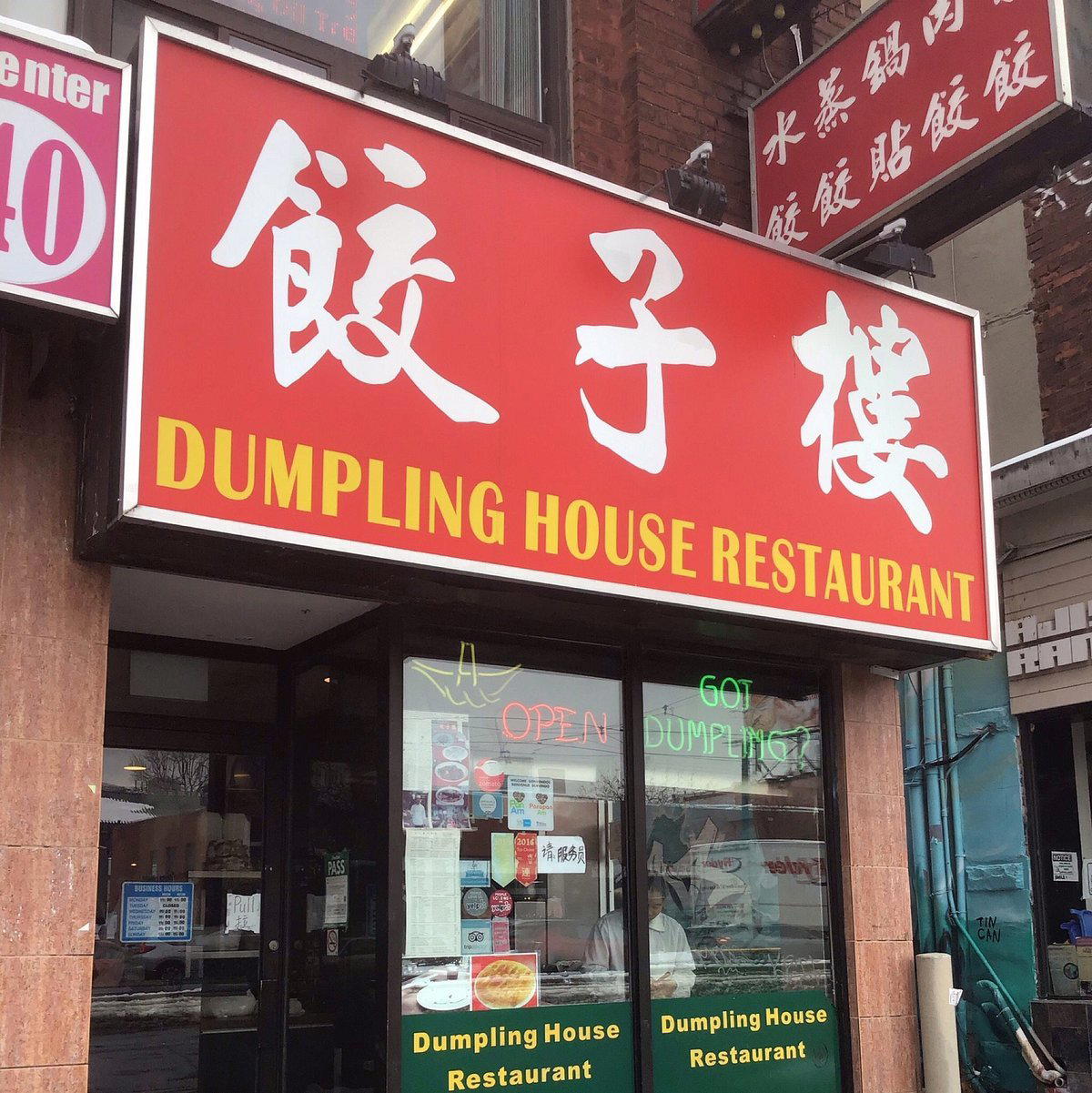
Spadina's Dumpling Corridor: Where the Neighbourhood Still Eats
Toronto's Spadina Avenue between Dundas and College streets functions as one of the few dining corridors in the city where price point has not meaningfully shifted in decades. While the broader downtown restaurant scene has moved toward tasting menus and reservation-only formats, represented at the high end by rooms like Alo (Contemporary) and Sushi Masaki Saito, Spadina's Chinatown strip has largely held its character as a walk-in, cash-friendly, high-turnover zone. Dumpling House Restaurant at 328 Spadina Ave. occupies that tradition directly, functioning as a reference point for northern-style Chinese dumplings in a neighbourhood that has offered them for generations.
The address itself carries context. Spadina's Chinatown is not Toronto's only Chinese food corridor, Scarborough's Pacific Mall area and Markham's York Region nodes handle a significant share of the city's Cantonese and Taiwanese dining traffic, but the Spadina strip retains a particular identity: older, denser, more pedestrian, and structured around quick-service formats rather than banquet dining. Dumpling House sits squarely within that identity.
Lunch on Spadina: The Practical Case
The lunch-versus-dinner divide at Spadina's dumpling counters is less about menu variation and more about pace, crowd, and value arithmetic. Midday service on this stretch tends to draw a mix of local workers, nearby University of Toronto students, and regulars who have mapped the neighbourhood's rhythms.
For dumpling-specific dining, lunch is the practical window. Northern Chinese dumpling formats, boiled, pan-fried, and steamed varieties filled with combinations of pork, cabbage, chive, and shrimp, are inherently fast food in direct sense: they are made to be eaten hot and immediately. A midday visit aligns with that logic. The cooking pace matches the demand, and the room operates at the kind of functional efficiency that suits the format.
Across Canada's Chinese dining spectrum, this type of operation sits well below the premium tier occupied by kaiseki-adjacent rooms like Aburi Hana and far from the evening-only fine dining cadence of DaNico or Don Alfonso 1890. Dumpling House belongs to a different and entirely legitimate tier of the city's eating culture, one that measures quality by consistency and value rather than by tasting menu architecture.
Evening Service: A Different Room, Same Kitchen
By early evening, the Spadina corridor shifts character. The student lunch crowd disperses, and the dinner traffic that arrives tends to include more out-of-neighbourhood visitors, groups, and people treating the area as a destination rather than a convenience. On Spadina, this does not translate into a dramatically different dining experience at most dumpling-focused operations, the menu stays largely consistent, the room does not transform, and the service model remains counter-forward and order-quick.
Where the dinner window differs is in wait time. Weekend evenings on Spadina see queues at particularly consistent dumpling addresses, and Dumpling House is no exception to that pattern. Arriving before 6:30 p.m. on a Friday or Saturday is the direct move if the goal is a seat without a prolonged wait outside. This is a neighbourhood norm rather than a venue-specific quirk: the Spadina Chinatown strip has operated this way for decades, and the pattern holds across comparable addresses on the same block.
For visitors already familiar with northern Chinese dumpling traditions from cities like Vancouver, where operations like AnnaLena represent the city's contemporary end but dumpling houses form a parallel infrastructure, the Toronto Spadina version will feel recognisable in format and ethos. The regional difference lies in Toronto's Chinatown leaning toward Cantonese heritage overall, which makes a northern-style dumpling house like this one a specific rather than generic choice on the strip.
Toronto's Broader Dining Frame
Placing Dumpling House within Toronto's wider restaurant culture requires acknowledging how bifurcated that culture has become. The city's premium dining tier has grown considerably more ambitious over the past decade, with Canadian restaurants like Tanière³ in Quebec City and Restaurant Pearl Morissette in Lincoln anchoring a serious regional fine dining movement, and destination experiences like Fogo Island Inn Dining Room and Eigensinn Farm in Singhampton attracting international attention. Against that backdrop, a neighbourhood dumpling house on Spadina is not trying to compete in the same conversation, and does not need to.
What the Spadina corridor offers, and what Dumpling House represents within it, is a form of dining continuity that premium restaurant culture frequently cannot replicate: a room that has served the same neighbourhood at the same price tier through cycles of development, gentrification pressure, and shifting dining trends. That kind of durability is its own credential, even if it does not appear on an awards list. For a fuller view of where this address fits within the city's restaurant infrastructure, the EP Club Toronto restaurants guide maps the range from Spadina's casual corridor through to the city's upper-end rooms.
Visitors who approach Toronto's dining from a fine dining orientation, arriving from experiences at Le Bernardin in New York City or Lazy Bear in San Francisco, will find Dumpling House operating at the opposite register, and that contrast is precisely the point. A city's eating culture is legible only when you move across its full range. Spadina at noon is as instructive as a tasting counter at night.
Other Canadian reference points that illustrate the regional range include Cafe Brio in Victoria, Jérôme Ferrer - Europea in Montreal, Narval in Rimouski, The Pine in Creemore, and Busters Barbeque in Kenora, each anchoring a different region and price tier of the country's dining geography.
Planning Your Visit
Dumpling House Restaurant is located at 328 Spadina Ave. in the heart of the Chinatown corridor, accessible by streetcar on Spadina or a short walk from St. Patrick or Spadina subway stations. The format is walk-in, and the operation functions without reservations in keeping with the neighbourhood standard. Lunch service on weekdays is the lower-friction window; weekend dinner arrivals before 6:30 p.m. avoid the longest waits.
Booking and Cost Snapshot
Comparable venues nearby, for context on price, style, and recognition.
| Venue | Cuisine | Price | Notes |
|---|---|---|---|
| Dumpling House RestaurantThis venue — the venue you are viewing | Chinatown, Northern Chinese Dumplings | $ | Not listed |
| Bitondo Pizzeria | Not listed | $ | Little Italy, Classic Italian Pizza & Panzerotti |
| Paddington's Pump | Corktown, Classic Canadian Diner | $ | Not listed |
| Tacos El Asador | Not listed | $ | Koreatown, Authentic Salvadoran & Mexican Street Food |
| Buk Chang Dong Soon Tofu | Koreatown, Korean Soon Tofu Stew | $ | Not listed |
| La Pizza & La Pasta | Yorkville, Neapolitan Pizza & Pasta | $$ | Not listed |
Continue exploring
More in Toronto
Restaurants in Toronto
Browse all →
Bars in Toronto
Browse all →
Hotels in Toronto
Browse all →

At a Glance
- Cozy
- Casual
- Casual Hangout
- Open Kitchen
Current opening hours
- Monday
- 11 AM–10 PM
- Tuesday
- Closed
- Wednesday
- 11 AM–10 PM
- Thursday
- 11 AM–10 PM
- Friday
- 11 AM–10:30 PM
- Saturday
- 11 AM–10:30 PM
- Sunday
- 11 AM–10 PM
Hours can change for holidays and private events. Last verified .
Casual Chinatown spot with dumplings made visibly in the front window and a simple red-painted dining room.