
Dote no Shinagawa sits in Japan’s tachinomi tradition: compact, low-waste, drink-led, and built around skewers rather than ceremony. Its 2025 selection for Tabelog 100 Tachinomi places it among a focused group of standing-bar addresses where format, turnover, and restraint matter as much as the cooking itself.
Pearl is the En Primeur Club membership app — saves, bookings, and concierge access live there. Same editors, same standards.
- Address
- Japan, 〒467-0827 Aichi, Nagoya, Mizuho Ward, Shimosakacho, 1 Chome−23
- Phone
- +81 52-881-5529
- Website
- tabelog.com
 Saves & bookings on Pearl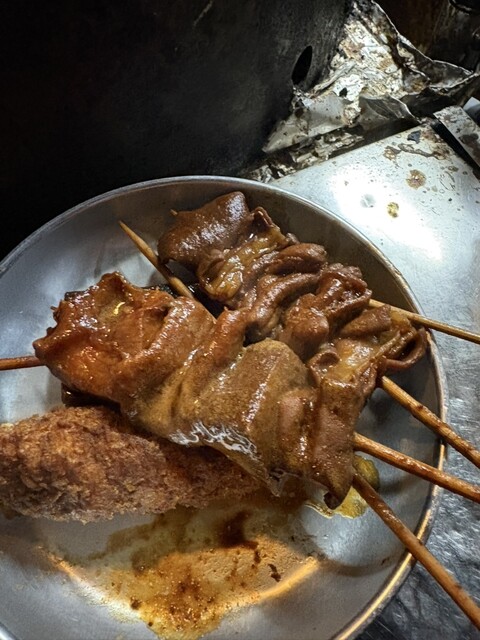
The first signal is scale. Tachinomi rooms replace long tables, leather chairs, and tasting-menu rhythm with proximity: counter sightlines, quick decisions, and food eaten without plate choreography. Dote no Shinagawa belongs to Japan’s older standing-bar grammar: compact rooms, skewer-leaning menus, and drinks close to sake and shochu rather than imported cocktail theatre.
That format has sustainability logic before branding. Small rooms waste less space. Skewer cooking uses tighter portions and fast heat. A tachinomi counter usually rewards narrower purchasing than a broad à la carte restaurant chasing every mood. The result is practical restraint: fewer moving parts, less ceremony, and service built for repeat local use.
Skewers, standing bars, and the discipline of doing less
Japan’s standing-bar culture is often mistaken by visitors for a casual prelude to dinner. In cities with deep after-work drinking habits, it can be the main event: grilled skewers, fried skewers, pickles or small plates, and a glass that needs no explanation. Dote no Shinagawa’s category mix, stand-up bar, kushiyaki, and kushi-age, places it in that pragmatic lane rather than the chef-counter prestige economy.
The distinction matters. Omakase counters build value through sequence, scarcity, and personality. Tachinomi builds it through repetition: reliable formats, a narrow appetite window, and a room that absorbs solo diners as easily as pairs of friends. That is why a 2025 Tabelog 100 Tachinomi selection carries weight. The recognition is not for luxury cues; it marks a venue judged within a genre where regularity, price discipline, and drinking compatibility are central.
Dote no Shinagawa’s 20-seat setup, combining tatami-room seating with standing counter space, gives it the split personality common in older Japanese casual dining: part quick-drink counter, part neighbourhood room. The counter keeps the meal nimble. The tatami space lets the format stretch without becoming formal. For travellers used to Osaka’s brighter, louder food streets, it shows Kansai and Chubu casual-drinking traditions are not only spectacle, but rooms small enough to control waste, staffing, and menu sprawl.
The drinking side reinforces that economy. Sake and shochu suit skewers because both handle salt, smoke, fry oil, and miso-rich seasoning without extensive glassware or garnish. In sustainability terms, the old izakaya model has a quiet advantage: compact drinks, familiar pairings, and less dependence on imported perishables. The better version needs no environmental agenda. It simply runs with fewer ornamental demands.
Why tachinomi belongs in a serious Japan food itinerary
Premium travel dining in Japan is often compressed into sushi, kaiseki, wagyu, ramen, and bakery culture. That misses how cities eat after dark. Tachinomi sits between restaurant and bar, with enough food for dinner and enough informality to keep focus on rhythm rather than occasion. The restaurant’s place in the Tabelog 100 Tachinomi 2025 list gives readers a recognised address in a category rarely given the same international attention as star-led restaurants.
Comparisons set expectations. Raa Menya Shio Soba Shizuku and Ebi Soba Hiiro sit in a similar casual-spend band, but ramen is built around one bowl and a faster exit. Atsuta Miso Ramen Buriyu also speaks to the region’s miso culture, through noodle-shop structure rather than drinking-room pacing. Atsuta Houraiken Jingu ten is higher-spend and more destination-led, rooted in eel tradition. Tachinomi differs from all of them: it is less about one defining dish than assembling a short, drink-compatible meal from the counter outward.
That difference makes the sustainability angle concrete. A ramen shop concentrates resources into broth, noodles, and toppings. A high-ceremony restaurant may require broader inventory and elaborate service. A skewer-led standing bar keeps portions modular, cooking direct, and ordering incremental. Diners take what they need rather than committing to a long progression. In a country where food waste is a serious public concern and small independent rooms operate on tight margins, that modesty matters.
The format also suits solo dining. Japan’s counter culture lets individuals eat well without occupying a full table, one of tachinomi’s strongest practical arguments in a travel itinerary. A solo guest can have a complete meal without the awkwardness still attached to single covers in many European and American dining rooms. Friends can use the room socially, but the design remains efficient.
For broader Osaka planning, this address sits beside other casual and specialist formats rather than replacing them. Readers mapping bakery, noodle, and counter culture can cross-reference .cafe, 52CHO-ME BAKERY, 551 Horai (551蓬莱), 99 Pizza Napoletana Gourmet, and a canto (Italian). For the wider city edit, use Our full Osaka restaurants guide, with adjacent planning in Our full Osaka hotels guide, Our full Osaka bars guide, Our full Osaka wineries guide, and Our full Osaka experiences guide.
A compact room for low-ceremony eating
The restaurant is strongest as format discipline. The recognition matters because tachinomi can look simple from outside: a few drinks, skewers, a short stay. The hard part is balance. Too sparse, and the room feels transactional. Too elaborate, and it loses the speed and resource efficiency that give standing bars character. The useful middle ground is where drinking, skewers, and room size align.
Travellers building a Japan route around casual dining should also look beyond one city. The same editorial logic connects to -Grilled beef Sukiyaki- KAMAKURA TANUKIAN 鎌倉 たぬき庵 in Kamakura. 鮪と炭火焼き うお炭 秋葉原店 in Tokyo.know in Kumamoto, (Shoku) Vietnam in Kawasaki, [Curry Senmon Ten] Maruyama Kyoju. in Sapporo, and [ki:] in Kyoto. Outside Japan, sake-led and rice-based casual formats appear in different registers at Jōdo Saké Bar in Los Angeles and Onigiri Time in Pasadena.
The editorial case is clear: this is not a luxury restaurant pretending to be modest, nor a drinking spot padded with generic food. It belongs to a Japanese category where compactness, quick heat, and familiar drinks create their own seriousness. For readers interested in sustainable dining without slogans, the lesson is the operating model. Small rooms, modular ordering, counter-led service, and a focused drinks list can say more about restraint than any manifesto.
Same-City Peers
Comparable venues to anchor price and recognition.
| Venue | Cuisine | Price | Notes |
|---|---|---|---|
| Dote no ShinagawaThis venue — the venue you are viewing | Traditional Nagoya kushikatsu & doteyaki stand-up bar | $ | Not listed |
| Chiikawa Bakery | Chiikawa-themed Japanese bakery café | $ | Umeda |
| Marusho Gyoza | Traditional Japanese Gyoza Specialist | $ | Daito City |
| Toki Ya | Tsukemen ramen shop | $ | Yodogawa |
| Mori no Okashi | Seasonal Japanese wagashi (ohagi & dorayaki) shop | $ | Kita |
| Kama Hiro | Japanese Udon | $ | Higashisumiyoshi |
Recognition history
Dated appearances from independent guides and award organizations, with the underlying list record or original source where available.
Tabelog 100 #44 · No. 44
Tabelog · Tabelog 100 - Tachinomi - 2025
Continue exploring
More in Osaka
Restaurants in Osaka
Browse all →
At a Glance
- Lively
- Cozy
- Classic
- Energetic
- After Work
- Casual Hangout
- Solo
- Group Dining
- Standalone
- Sake Program
- Beer Program
Current opening hours
- Monday
- 5:30–9 PM
- Tuesday
- 5:30–9 PM
- Wednesday
- 5:30–9 PM
- Thursday
- 5:30–9 PM
- Friday
- 5:30–9 PM
- Saturday
- 5:30–9 PM
- Sunday
- Closed
Hours can change for holidays and private events. Last verified .