Our verdict
Domaine de Barres serves Traditional French Market Cuisine at Route de Mende in Langogne, with local sourcing and garden views for a leisurely lunch or dinner.

Pearl is the En Primeur Club membership app, where members save venues, book tables and use the concierge.
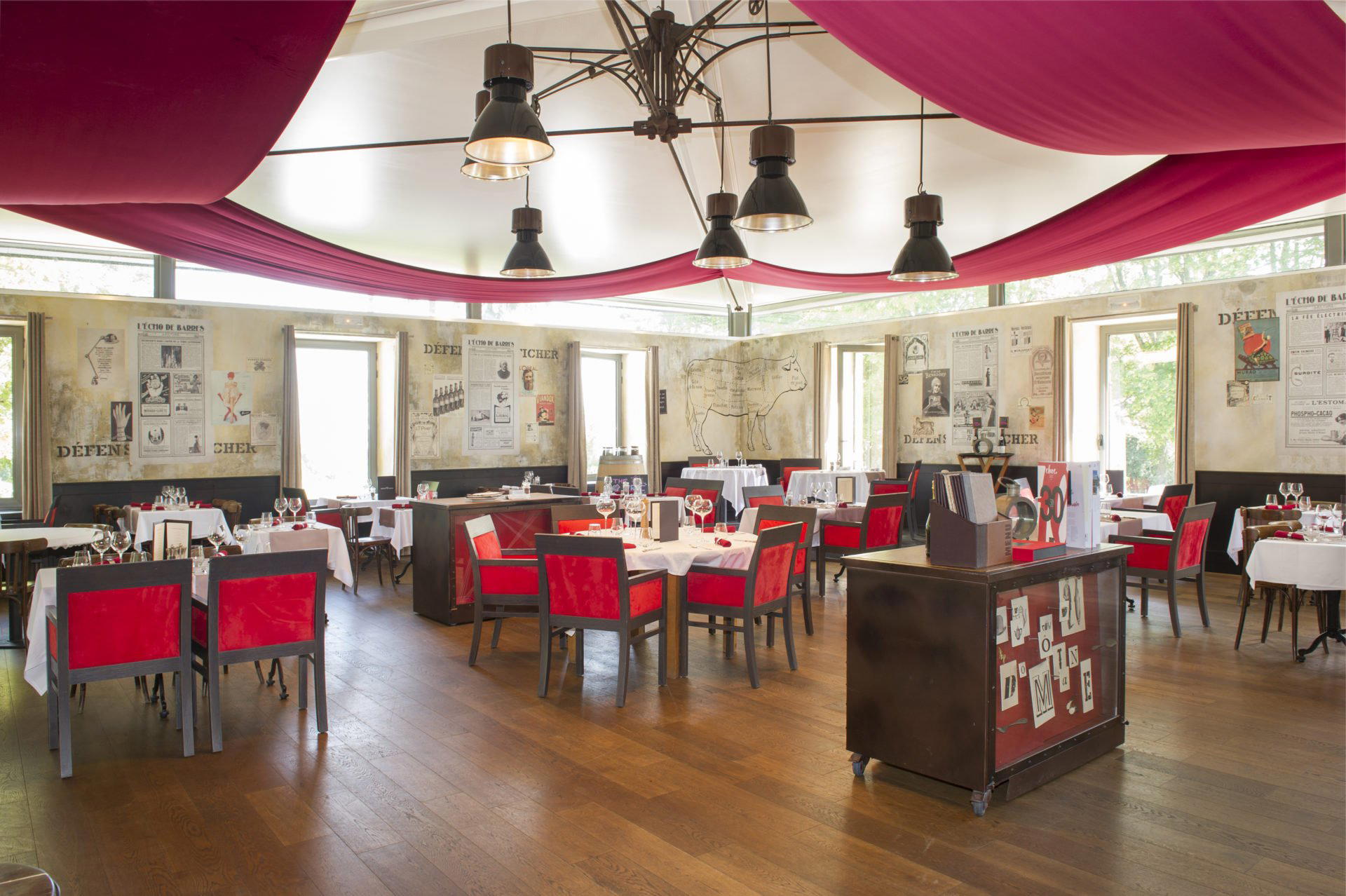
Where the Margeride Plateau Sets the Table
The approach to Langogne follows the upper Allier valley through country that is genuinely spare: high granite pastures, conifer stands, and villages that measure distance in agricultural time rather than kilometres. The Domaine de Barres sits along the Route de Mende on the edge of this small market town in the Lozère, a département that holds the lowest population density in mainland France. That geographic fact matters at the table. In a region where the land is not crowded, what grows and grazes here does so at its own pace, and cooking that draws from this territory has a character that is shaped by scarcity, altitude, and season in ways that are difficult to replicate closer to a motorway.
The Margeride and the broader Massif Central have long supported a particular kind of table rooted in what the land provides rather than what logistics can deliver. Lentilles vertes du Puy, AOC-designated since 1996 and grown on volcanic soils roughly fifty kilometres to the northwest, represent the kind of ingredient whose provenance is inseparable from its flavour profile. Lamb from the Gev audan, the historic territory that encompasses much of the Lozère, grazes at elevations above 1,000 metres on pastures where the grass is short and mineral-rich. These are not decorative origin stories; they are agronomic conditions that produce measurably different raw material. For context, the same argument about terroir-driven sourcing runs through destination restaurants elsewhere in rural France, from Bras in Laguiole in the nearby Aveyron, where Michel Bras built an entire cooking philosophy around the flora of the Aubrac plateau, to Les Prés d'Eugénie - Michel Guérard in Eugénie-les-Bains in the Landes.
The Langogne Setting and What It Signals
Langogne is a town of around three thousand inhabitants that functions as a modest crossroads for the southern Massif Central. It sits near the Lac de Naussac reservoir, a significant presence in the local landscape, and serves travellers on the Chemin de Saint-Gilles as well as those heading between the Auvergne and the Mediterranean. A property on the Route de Mende positions a dining address between the town centre and the open plateau, which means the surrounding environment is a working agricultural one rather than a curated resort backdrop. This is a different register from the polished estate settings found at properties like L'Oustau de Baumaniere in Les Baux or La Vague d'Or - Cheval Blanc St-Tropez in Saint-Tropez, where the landscape has been shaped to complement the dining experience. Here, the landscape precedes the table and largely dictates it.
The broader pattern in rural French dining has split into two camps over the past two decades. One camp has sought Michelin recognition and international clientele, investing in prestige signals that make sense to a global audience, as seen at addresses like Flocons de Sel in Megève or Le 1947 à Cheval Blanc in Courchevel. The other camp has stayed close to regional identity, serving a largely French audience that travels specifically for the cuisine of a place rather than the ceremony around it. Properties in the Lozère, by geography and by disposition, tend toward the second camp. Our full Langogne restaurants guide covers the wider context of dining in this part of the Massif Central.
Ingredient Sourcing as the Core Argument
The Lozère's agricultural identity is specific enough to function as a quality signal in itself. The département produces AOC Fin Gras du Mézenc beef, raised on high-altitude pastures in a system that restricts finishing to fresh or dried grass without silage, and it sits within the broader production zone for Aligot-grade tome fraîche, the fresh curd used in the Massif Central's most recognisable dish. Mushroom foraging, river fish from the Allier and its tributaries, and small-scale charcuterie traditions are all active parts of the regional food economy. A table that draws from this supply chain is working with ingredients that carry genuine regional specificity rather than generic French produce dressed in local terminology.
This is the same sourcing logic that underpins the reputation of major rural addresses across France, from Auberge du Vieux Puits in Fontjoncouse in the Corbières hills to Maison Lameloise in Chagny in Burgundy, where the relationship between local agriculture and the dining room is the primary editorial claim. The difference in the Lozère is that the supply chain has not been widely publicised, which keeps the ingredient sourcing relatively unmediated by the kind of premium positioning that raises prices at more celebrated addresses. Rural obscurity, in this context, is an advantage for the diner rather than a limitation.
How to Approach a Visit
Langogne is accessible by train on the Clermont-Ferrand to Nîmes line, which makes it reachable from both the Auvergne and the Languedoc without requiring a car, though a vehicle opens up the surrounding plateau considerably. The town functions leading as a stop within a longer itinerary of the Massif Central rather than a single-destination trip, particularly for travellers who want to move between the Lozère, the Aveyron, and the Cantal. For comparable destination dining in the wider region, Bras in Laguiole remains the reference point, approximately ninety minutes by road to the southwest. Further afield, Troisgros - Le Bois sans Feuilles in Ouches and Georges Blanc in Vonnas represent the dominant tradition of celebrated provincial French tables, against which Langogne's dining scene occupies a quieter, less formalised position. Across the Atlantic, the regional-sourcing argument plays out at very different scale at addresses like Lazy Bear in San Francisco and Le Bernardin in New York City, where ingredient provenance carries comparable weight but operates within urban fine-dining frameworks. International three-star French cooking, represented here by Mirazur in Menton, Alléno Paris au Pavillon Ledoyen in Paris, Paul Bocuse - L'Auberge du Pont de Collonges in Collonges-au-Mont-d'Or, Auberge de l'Ill in Illhaeusern, and La Table du Castellet in Le Castellet, operates in a different economic and reputational register entirely, but the sourcing argument that drives those kitchens finds its most unmediated expression at smaller, less-visited tables in territories like the Lozère.
Frequently asked questions
Does Domaine de Barres work for a family meal?
Langogne itself is a modest crossroads town of around three thousand inhabitants, and properties in this part of the Lozère tend to operate at an unhurried pace suited to longer, relaxed meals. Domaine de Barres on Route de Mende sits outside the town centre, which suggests space and informality rather than a formal dining room. For current family seating arrangements or private dining options, check the venue's official channels before travelling.
What is the atmosphere like at Domaine de Barres?
The setting is the defining element: high granite pastures, conifer stands, and the spare open country of the Margeride plateau surround this stretch of the Route de Mende. That physical context shapes expectations before you arrive. Expect rural quiet rather than urban energy, with the Lac de Langogne and the upper Allier valley providing the backdrop rather than any city-facing street scene.
Is Domaine de Barres a good base for exploring the Stevenson Trail and the southern Massif Central?
Langogne sits on the GR70, the route Robert Louis Stevenson walked in 1878 and the starting point many walkers choose today for the Chemin de Stevenson. Domaine de Barres on Route de Mende places guests within reach of both the trail's northern section and the Lac de Langogne, which functions as the town's main natural anchor. Langogne is also served by the Clermont-Ferrand to Nîmes rail line, meaning the property is accessible without a car from both the Auvergne and the Languedoc.
What should I order at Domaine de Barres?
The Lozère's agricultural identity is specific enough to anchor what appears on regional tables: the département produces AOC Fin Gras du Mézenc beef and is known for Lozère lamb, local cheeses, and foraged produce from the plateau. Without a confirmed menu on record, the safest approach is to ask staff what the kitchen is sourcing that week, as ingredient availability in this part of the Massif Central shifts with the season.
How do I find Domaine de Barres?
Domaine de Barres is located at Route de Mende, 48300 Langogne, France, Langogne.
Do they take walk-ins at Domaine de Barres?
No phone number or booking platform is currently listed for Domaine de Barres at Route de Mende, 48300 Langogne. Given the rural location and the relatively limited accommodation stock in this corner of the Lozère, arriving without prior contact carries real risk of finding the property at capacity. Reaching out well in advance is the practical approach, particularly for weekend visits or during summer when the plateau draws hikers and cyclists.
Quick Comparison
Comparable venues nearby, for context on price, style, and recognition.
| Venue | Cuisine | Price | Awards | Notes |
|---|---|---|---|---|
| Domaine de BarresThis venue (the venue you are viewing) | Traditional French Market Cuisine | $50–100 | Not listed | Not listed |
| Bienheureux | Modern French Creative | Not listed | Michelin Plate | Wasquehal |
| La Parenthèse | Seasonal French-Mediterranean Cuisine | $30–50 | Not listed | centre historique |
| LE BOUCHON QUI CHANTE | French Bistronomy | $30–50 | Not listed | Lyas |
| Le Métropole Oceania | Traditional Southern French Brasserie | $30–50 | Not listed | Comédie |
| Quai d'en Face | Gastronomic Mediterranean Seafood | Not listed | Not listed | Quai Aspirant Herber |
Continue exploring
More in Langogne
Restaurants in Langogne
All restaurants in Langogne →
Hotels in Langogne
Browse all →
Details
- Elegant
- Rustic
- Scenic
- Special Occasion
- Date Night
- Garden
- Terrace
- Historic Building
- Hotel Restaurant
- Local Sourcing
- Garden
- A La Carte
Luxurious and elegant atmosphere in a historic 18th-century manor with 1920s-themed dining room, lounge club-house, and panoramic park terrace.