
A compact Sapporo curry address in Tanukikoji, DELHI Sapporo ten belongs to the city’s practical, quick-turn curry culture rather than its ceremony-heavy dining tier. Its Tabelog Curry EAST 100 selections in 2019, 2020, 2023, and 2024 give it a credentialed place in a category where price, pacing, and repeat local use matter as much as formal service.
Pearl is the En Primeur Club membership app — saves, bookings, and concierge access live there. Same editors, same standards.
- Address
- Japan, 〒060-0063 Hokkaido, Sapporo, Chuo Ward, Minami 3 Jonishi, 1 Chome−12 狸小路 1丁目南側
- Phone
- +81 11-231-8461
- Website
- delhi.co.jp
 Saves & bookings on Pearl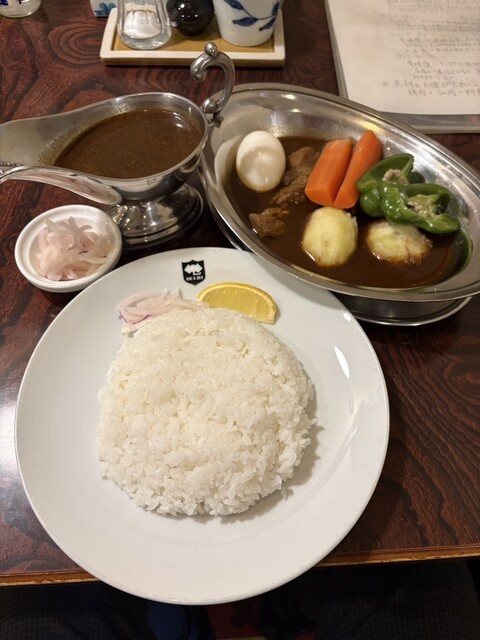
Tanukikoji puts dining on the street before the plate: covered arcades, short walks from subway exits, small counters, quick meals between errands and evening plans. Curry fits that Sapporo rhythm: solo lunch, low-commitment dinner, take-out decision, or friends’ table without long tasting-room theater. DELHI Sapporo ten sits inside that everyday ritual, judged by focus, speed, and whether the room can carry regular traffic without turning casual food into performance.
Sapporo’s curry identity is broader than tourist shorthand. Soup curry gets much attention, but the field also includes Indian curry specialists, Japanese curry counters, and hybrid shops treating spice as a daily staple, not an occasion. The category rewards repetition: diners compare concentration, portion logic, queue tolerance, and the reliability of a small kitchen in a tight service window, not linen, glassware, or dining-room choreography.
Curry as a short-form Sapporo dining ritual
The discipline of a compact curry shop differs from fine dining. There is less room for delay, and fewer decorative moves to hide weak fundamentals. The ritual is direct: arrive, decide quickly, eat while the dish is at its intended temperature, and release the seat. In Sapporo, where winter changes movement through the city, that short-form meal has cultural weight. Curry is practical but not merely utilitarian; it gives warmth, spice, and familiarity without demanding a long evening.
The Tabelog Curry EAST 100 selections in 2019, 2020, 2023, and 2024 place DELHI Sapporo ten in a measured peer group, not a vague popularity bracket. A 3.63 Tabelog score is not a luxury signal; it is a category signal, and in Japan’s curry field such numbers tend to reflect repeat diner confidence, regional comparison, and small-format consistency. The listed categories, Indian curry and soup curry, also place the restaurant at an intersection suited to Sapporo: imported spice culture adapted into a northern city’s habits.
Compared with Sapporo peers, the distinctions help. North Continent Machi No Naka sits in a higher casual-spend band, while soup curry yellow stays closer to the everyday curry lane, and Soup Curry Garaku represents the city’s soup-curry identity more explicitly. Le Coq, with higher dinner spend, belongs to another night-out calculus. The point is decision-making, not hierarchy: DELHI Sapporo ten reads as a low-friction curry choice inside a serious local category, not a ceremonial destination.
Small room, tight pacing, clear expectations
Scale shapes the experience. Eight seats create a room where lingering alters economics and mood. Diners are asked to understand the social contract of small Japanese restaurants: avoid indecision, keep the meal moving, and treat the compact room as shared space. That is not stiffness; it is how places this size remain usable for regulars. Listed take-out service reinforces the point: curry here belongs to the city’s working dining pattern as much as its sit-down culture.
Payment and planning keep it outside Sapporo’s tourist-polished layer. Cash-only operation, no private rooms, no private use, no parking, and non-smoking service indicate a practical urban shop, not a hospitality showcase. Children are welcome, keeping it in the family-and-friends lane. Travelers should use the expectations reserved for respected local specialists: arrive prepared, do not assume card acceptance, and do not treat the room like a long-form restaurant.
Tanukikoji is a useful base because it leaves the day flexible. The arcade area connects easily with central Sapporo eating and drinking, so curry can anchor a pre-bar meal, early dinner after shopping, or reset between sightseeing and a late train. For a wider read on the city’s dining map, see Our full Sapporo restaurants guide, with adjacent planning in Our full Sapporo hotels guide, Our full Sapporo bars guide, Our full Sapporo wineries guide, and Our full Sapporo experiences guide.
Where it fits in a curry-led itinerary
A Sapporo curry itinerary should not be a checklist of similar bowls. The category is more interesting when split by format: soup curry shops for broth, vegetable structure, and spice level; Indian curry specialists for masala logic; Japanese curry rooms for comfort and speed; and hybrid addresses for how the city absorbs outside influences. In that frame, the restaurant is a compact, credentialed stop for diners who value category depth over room design.
Nearby comparisons deepen the picture. 175°DENO Tantanmen Sapporo kitaguchi ten shows another side of spice-driven casual dining in the city, while [Curry Senmon Ten] Maruyama Kyoju., Ajanta Indo Curry Ten, and Ajanta Sohonke map the curry field beyond one style. Aigues Vives belongs to a different Sapporo-area food rhythm, useful for travelers contrasting curry’s quick-service logic with slower bakery-led planning.
The editorial verdict is simple: this is a category address, not a spectacle address. Its value lies in how clearly it reflects Sapporo’s compact curry culture: small scale, accessible spend, repeated Tabelog Curry EAST 100 recognition, and a meal structure respecting speed without feeling anonymous. Diners seeking a long evening should choose elsewhere. Diners building a serious understanding of Sapporo’s everyday food habits should pay attention.
For broader Japan planning, contrast how compact specialists work across cities: -Grilled beef Sukiyaki- KAMAKURA TANUKIAN 鎌倉 たぬき庵 in Kamakura. 鮪と炭火焼き うお炭 秋葉原店 in Tokyo.cafe in Osaka.know in Kumamoto, (Shoku) Vietnam in Kawasaki, and [ki:] in Kyoto. For Japanese food culture outside Japan, Jōdo Saké Bar in Los Angeles and Onigiri Time in Pasadena show how casual formats change when translated for another dining market.
Cuisine-First Comparison
Nearby venues at a similar price tier for orientation.
| Venue | Cuisine | Price | Notes |
|---|---|---|---|
| DELHI Sapporo tenThis venue — the venue you are viewing | Indian curry and soup curry | $ | Not listed |
| Future Curry Koris | Indian-style curry house | $$ | Chūō |
| Curry House Colombo | Classic Japanese curry house near Sapporo Station | $ | Chūō |
| China Soba Chiu | Traditional Sapporo ramen counter | $ | Chūō |
| Indian Restaurant Ram | Indian & Nepalese Curry House | $$ | Kita |
| Cao★ Manga ai | Thai | $ | Chūō |
Recognition history
Dated appearances from independent guides and award organizations, with the underlying list record or original source where available.
Tabelog 100 #49 · No. 49
Tabelog · Tabelog 100 - Curry - EAST - 2024



At a Glance
- Cozy
- Classic
- Solo
- Casual Hangout
- Family
- After Work
- Group Dining
- Standalone
Current opening hours
- Monday
- 11:30 AM–2:30 PM, 5:30–6:30 PM
- Tuesday
- 11:30 AM–2:30 PM, 5:30–6:30 PM
- Wednesday
- 11:30 AM–2:30 PM, 5:30–6:30 PM
- Thursday
- Closed
- Friday
- 11:30 AM–2:30 PM, 5:30–6:30 PM
- Saturday
- 11:30 AM–2:30 PM, 5:30–6:30 PM
- Sunday
- 11:30 AM–2:30 PM, 5:30–6:30 PM
Hours can change for holidays and private events. Last verified .
A tiny, old‑school curry shop with only a handful of tables, casual counter‑style service, and a relaxed, local feel that makes it popular for quick solo or after‑work meals rather than lingering dinners.