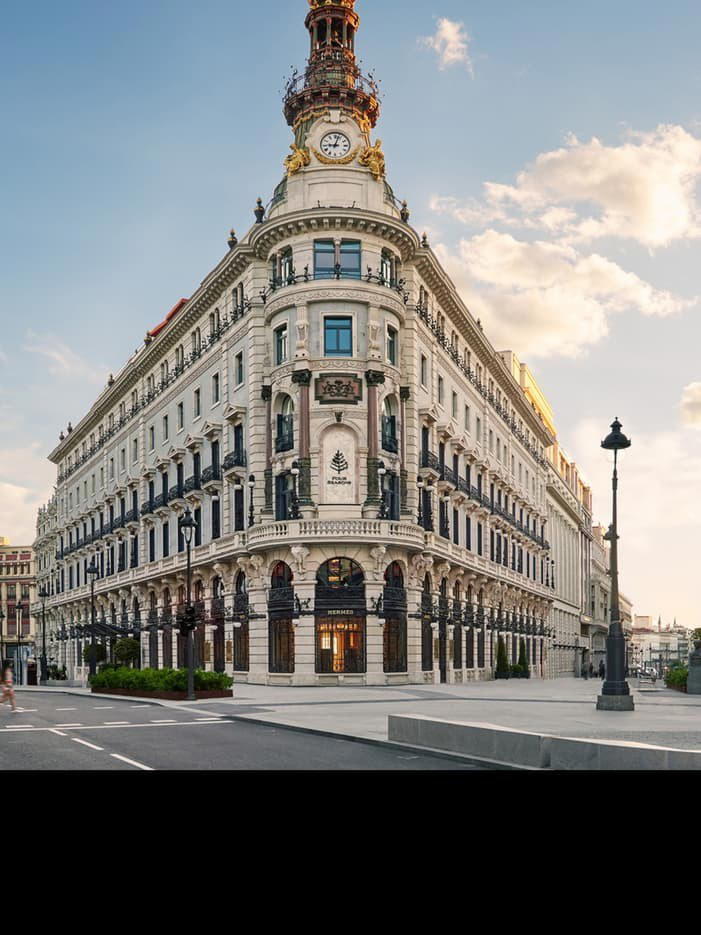
De Maria Preciados sits at the corner of Plaza del Callao in the heart of Madrid's Centro district, placing it squarely within the city's busiest commercial and cultural corridor. The venue occupies a position in Madrid's dining scene that rewards those who plan ahead, with its central address making it a logical anchor for any visit to the capital's Gran Vía stretch.
Pearl is the En Primeur Club membership app — saves, bookings, and concierge access live there. Same editors, same standards.
- Address
- Pl. del Callao, 1, Centro, 28013 Madrid, Spain
- Phone
- +34 915 21 16 03
- Website
- demariarestaurante.es
- Directions
- Get directions
 Saves & bookings on Pearl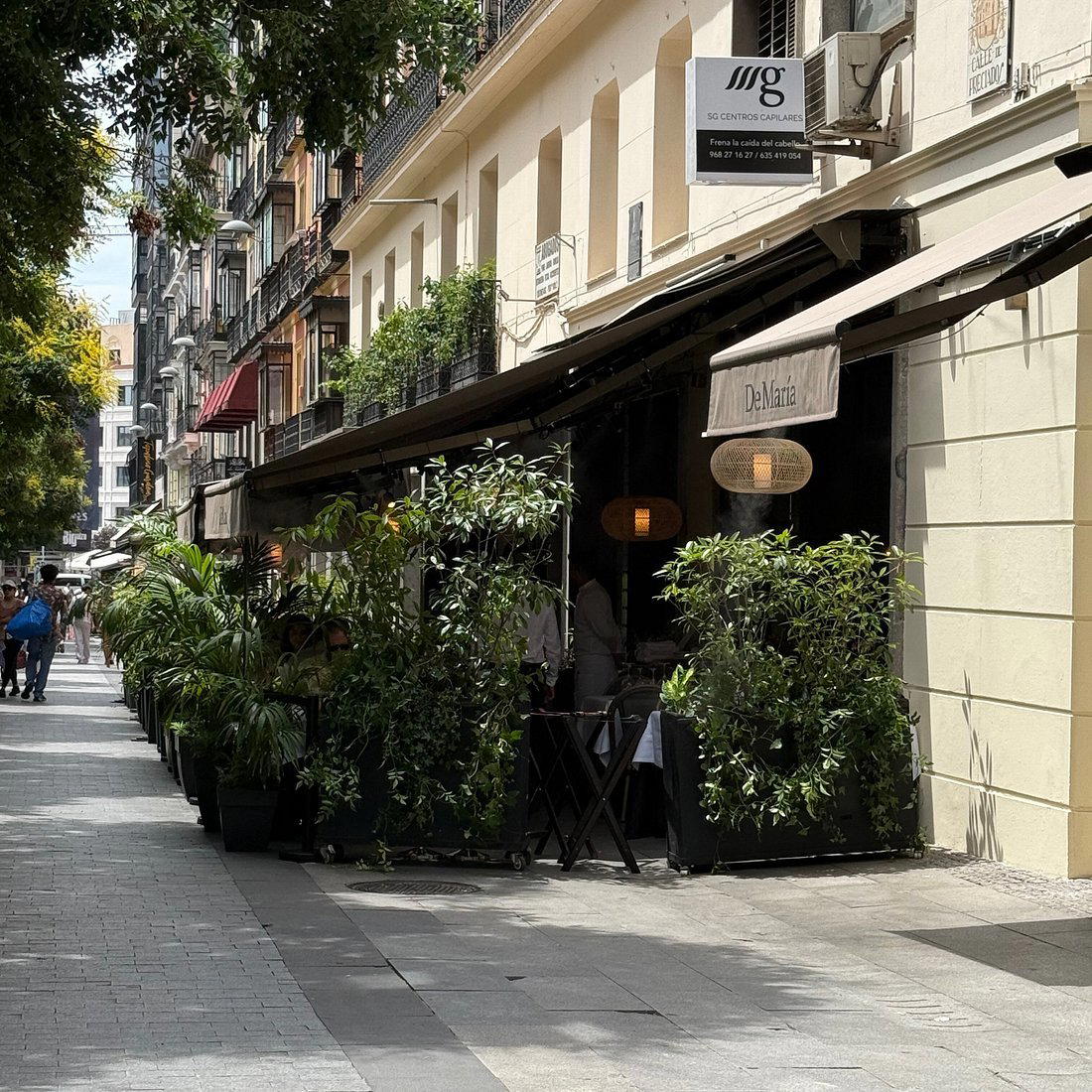
Plaza del Callao and the Logic of Eating in Madrid's Centre
Madrid's Centro district operates on a different rhythm than the capital's outlying restaurant neighbourhoods. Where Chamberí rewards the slow residential crawl and Salamanca runs on expense-account formality, the area around Plaza del Callao and Gran Vía moves with the city's commercial core: dense foot traffic, a mix of tourists and office workers, and a dining scene that has historically skewed toward accessibility over ambition. That context matters when thinking about De Maria Preciados, which sits at Pl. del Callao, 1 — one of the most legible addresses in the city, directly adjacent to one of Madrid's most recognisable public squares.
For travellers anchoring a Madrid itinerary around the city's central museums, the Teatro Español corridor, or the Gran Vía shopping belt, the location removes the navigational friction that comes with reaching venues in Fuencarral or the quieter pockets of Lavapiés. Callao metro station is steps away, connecting directly to both lines 3 and 5, which cover most of the city's major transit nodes. The address also makes De Maria Preciados a plausible option for a meal before or after the Prado, the Thyssen-Bornemisza, or an evening at one of the nearby theatres — the kind of practical alignment that Centro dining, at its finest, is positioned to offer.
Planning Your Visit: What the Booking Experience Looks Like
Madrid's restaurant booking culture has shifted considerably over the past decade. The city's highest-profile creative tables, DiverXO, Coque, Deessa, and DSTAgE, operate on booking windows that range from four weeks to several months, with online reservation systems, prepayment requirements, and cancellation policies that mirror the model established at northern European tasting-menu destinations. For visitors building an itinerary around those experiences, the planning load is front-heavy: you confirm a date, then build the rest of the trip around it.
De Maria Preciados sits in a different part of that spectrum. With its central address and the footfall dynamics of Plaza del Callao, it operates within a neighbourhood context where walk-in culture remains more viable than at the city's destination-dining tables. Visitors are advised to verify current reservation policy directly before arrival, particularly for weekend evenings, when the Callao area sees peak traffic from both tourists and Madrid residents heading into the Gran Vía entertainment corridor.
Seasonality is also worth factoring in. Madrid's dining patterns shift noticeably in late summer: August sees a reduction in local patronage as residents leave the city, while September brings a sharp return. The weeks around Madrid's Fiesta de San Isidro in May and the autumn cultural season (October through December) represent the city's busiest periods for restaurant demand. Visitors targeting those windows should approach any reservation-dependent venue with more lead time than they might assume necessary.
Where De Maria Preciados Sits in Madrid's Dining Tiers
Madrid's full-service restaurant scene now spans a wide range of formats, from the Michelin-starred tasting menus of Paco Roncero and the three-star ambition of DiverXO, to the traditional tabernas of La Latina and the market-driven casual formats spreading across Malasaña. Centro, historically, has been underrepresented in the city's serious dining conversation, the concentration of tourist traffic has pushed the neighbourhood toward volume-driven operations rather than the kind of focused culinary programs that earn sustained critical attention.
That is gradually changing. The logic behind the shift is partly real-estate driven: as rents have risen in Chamberí and Chueca, operators are returning to Centro addresses that offer visibility and footfall at a different commercial calculus. De Maria Preciados, at the corner of one of the city's most trafficked squares, sits within that emerging pattern. What is clear is the strategic value of its address: few restaurant locations in Madrid offer the same combination of transit access, tourist density, and proximity to the city's cultural institutions.
For visitors who have already secured tables at the city's more demanding creative venues, Coque or Deessa for a high-production tasting format, or DSTAgE for a more conceptual modern Spanish approach, De Maria Preciados offers a geographically convenient complement within the central circuit rather than a destination that requires its own planning logic.
Spain's Broader Restaurant Context
Madrid does not operate in isolation from Spain's wider restaurant geography. The country's most decorated tables are distributed across regions: El Celler de Can Roca in Girona, Mugaritz in Errenteria, Azurmendi in Larrabetzu, Martin Berasategui in Lasarte-Oria, Arzak in San Sebastián, Quique Dacosta in Dénia, Aponiente in El Puerto de Santa María, Cocina Hermanos Torres in Barcelona, Ricard Camarena in València, and Atrio in Cáceres. Visitors treating Madrid as a base for a broader Spain dining itinerary may find the capital's central venues most useful as operational pivots, meals that are logistically easy and leave capacity, both financial and in terms of palate, for the more demanding regional destinations.
Internationally, the shift toward central-city dining as a deliberate editorial choice, rather than a default, is visible in markets from New York (where venues like Le Bernardin have anchored Midtown's serious dining reputation for decades) to San Francisco (where Lazy Bear built a destination reputation from a less obvious address). Centro Madrid is still in an earlier phase of that trajectory. See our full Madrid restaurants guide for the broader picture.
Practical Planning
| Detail | De Maria Preciados | Typical €€€€ Madrid Creative (e.g. DiverXO, Coque) |
|---|---|---|
| Location | Pl. del Callao, 1, Centro | Distributed, Tetuan, Chamberí, Retiro |
| Transit access | Callao metro (Lines 3 & 5), direct | Varies; some require taxi or ride-share |
| Booking lead time | Not confirmed, verify directly | 4 weeks to 3+ months |
| Walk-in viability | Higher (central, high-footfall zone) | Low to none at peak creative tables |
| Leading months to visit | Sept–Nov, Feb–May | Same seasonal pattern applies |
| Price tier | Not confirmed | €€€€ (tasting menu format) |
Continue exploring
More in Madrid
Restaurants in Madrid
Browse all →
Bars in Madrid
Browse all →
Hotels in Madrid
Browse all →


At a Glance
- Elegant
- Sophisticated
- Late Night
- Open Kitchen
- Terrace
- Street Scene
Current opening hours
- Monday
- 1 PM–1 AM
- Tuesday
- 1 PM–1 AM
- Wednesday
- 1 PM–1 AM
- Thursday
- 1 PM–1 AM
- Friday
- 1 PM–1 AM
- Saturday
- 1 PM–1 AM
- Sunday
- 1 PM–1 AM
Hours can change for holidays and private events. Last verified .
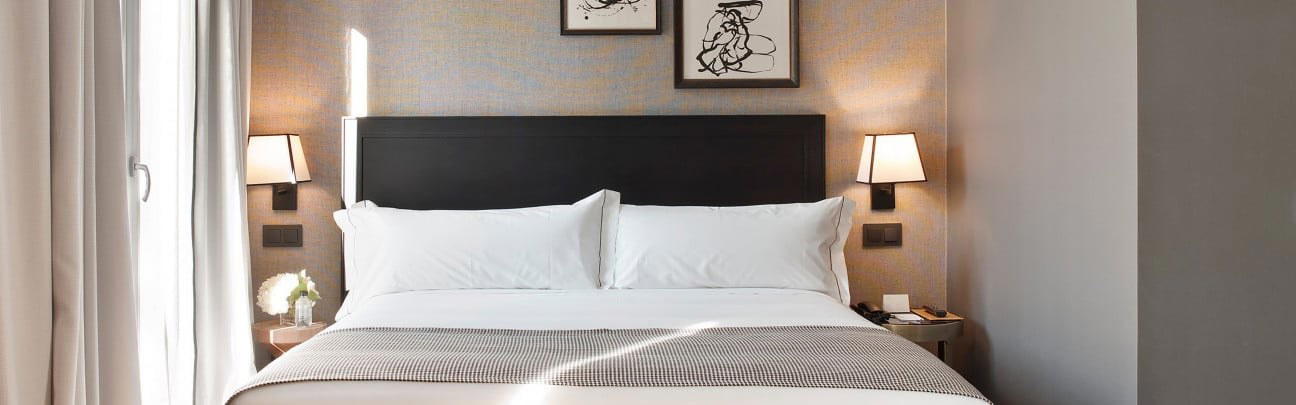
Refined and elegant atmosphere with attractive decor, energetic noise level, and terrace seating.
Know Before You Go
- Getting there
- Pl. del Callao, 1, Centro, 28013 Madrid, Spain