
Tabelog 100 #98
Our verdict
Curry Ya Nunkui belongs to Osaka’s serious curry circuit rather than its tourist-dining lane: small-scale, low-friction, and judged on depth of spice work rather than ceremony. Its Tabelog Curry WEST 100 selections in 2019, 2020, 2023, and 2024 place it within the region’s recognized curry cohort, with a compact Sakai setting that suits solo diners as much as small groups.

Pearl is the En Primeur Club membership app, where members save venues, book tables and use the concierge.
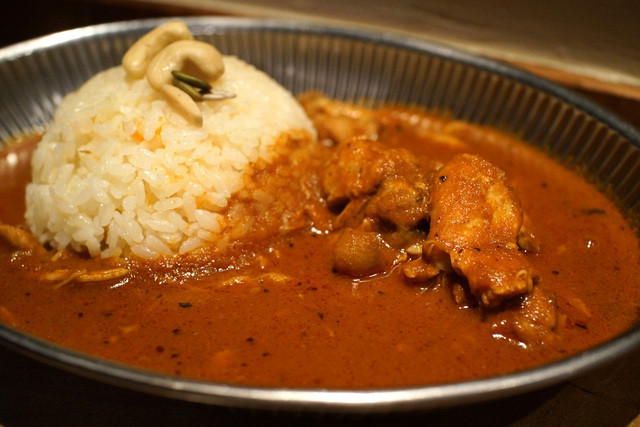
Approaching Curry Ya Nunkui in Osaka changes the tempo of a meal. The city’s louder food rituals, takoyaki steam, kushikatsu counters, department-store basements, sit elsewhere; here the signal is quieter: curry, Indian curry, café format, and a local audience that treats spice as a reason to travel beyond the most obvious dining circuits.
Osaka curry has never been a single tradition. It absorbs Japanese curry-rice comfort, South Asian spice grammar, café culture, and the city’s appetite for inexpensive specialization. Curry Ya Nunkui belongs to the specialist end of that spectrum, where the question is not luxury but concentration: how much character can fit into a modest plate, a focused service rhythm, and a format built for repeat eating rather than occasion dining.
Osaka curry culture rewards sourcing discipline over spectacle
The stronger curry addresses in Osaka tend to make ingredient sourcing visible through structure rather than announcement. Rice has to hold shape under sauce. Spice has to carry heat, bitterness, sweetness, and aroma without collapsing into generic warmth. Supporting elements, when used, need to read as part of the curry’s architecture rather than decoration. That is why small curry shops can command regional attention without the theatrical language attached to tasting-menu restaurants.
Curry Ya Nunkui’s 2024 recognition from Tabelog’s category-specific curry coverage matters because the frame is focused. It does not reward a restaurant for general polish across a broad menu; it places curry specialists into direct competition with other curry rooms. A 3.58 Tabelog score adds another useful signal, not as a universal verdict, but as evidence of sustained diner approval in a category where local repeat custom carries real weight.
The pricing tier also tells part of the story. Dinner and lunch are both listed at JPY 1,000 - JPY 1,999, so Curry Ya Nunkui competes less with hotel dining than with ramen, udon, tonkatsu, and set-meal counters, all formats where value is judged quickly and publicly. Compared with higher-spend Osaka rooms such as Nankai Grill Higashi ten, this is a different dining economy: fewer ceremonial cues, more pressure on the plate itself. Compared with casual staples such as Ginshari en or Honke Kojima, the appeal is narrower and more spice-led, which is exactly the point.
That makes the ingredient question central. Osaka diners are not short of carbohydrates, sauce, or comfort food; what separates a serious curry counter is the control of base, spice blend, and supporting elements. The available category tags, curry, Indian curry, and cafe, suggest a hybrid register rather than a strict reproduction of one national form. In Osaka, that hybridity is normal. The city has long treated imported foodways as working material, adjusting them to local rhythms without stripping away their core logic.
A focused format changes how the meal behaves
Specialist curry rooms shape the experience as much as the cooking. A focused format pushes the meal closer to a neighborhood specialist than a destination restaurant with layers of service. Curry culture in Japan is not merely functional; it can compress the distance between kitchen pace and diner attention. The format suits people eating alone, pairs who care more about the plate than the room, and travelers willing to look within Osaka for a sharper read on local taste.
That places the restaurant inside a familiar Japanese casual-dining pattern: turn up with patience, respect the room, and accept that popular specialist shops can operate within finite daily output. In dense city settings, good dining manners include not making a restaurant’s success a nuisance for its neighbors. That social contract is part of the culture around small, high-demand food rooms in Japan, and it is especially relevant when the attraction is focused, affordable, and local.
The Osaka setting also matters. This is not necessarily the Osaka most visitors consume in a two-night itinerary, where the route is often defined by entertainment districts and snack shorthand. Eating curry here frames Osaka as a metropolitan dining culture rather than a single entertainment core. For a broader map of where the city’s eating culture spreads, Our full Osaka restaurants guide is the useful next layer; city planning across hotels, bars, wineries, and experiences sits separately at Our full Osaka hotels guide, Our full Osaka bars guide, Our full Osaka wineries guide, and Our full Osaka experiences guide.
How it fits into a wider Osaka and Japan itinerary
For travelers building an Osaka food route, Curry Ya Nunkui works as a corrective to the city’s better-known snack mythology. It is not the obvious first stop for someone chasing neon and street-food shorthand; it is the more revealing stop for someone tracing how everyday formats become specialist culture. Pairing it mentally with other unnamed bakery, café, and casual dining addresses shows how broad Osaka’s mid-priced eating culture is: not one category, but a network of precise cravings.
The same logic travels across Japan. Curry specialists, rice-led formats, sake bars, and focused casual rooms often reveal more about local dining habits than grand rooms do. Useful comparison points can be found in other cities without needing to flatten them into a single style: focused rooms, short menus, and everyday price points often explain a place more clearly than spectacle. Even outside Japan, diaspora examples of narrow-format Japanese dining underline the same point: focused Japanese food often speaks clearest when the format is tight.
The editorial case for this Osaka curry shop is therefore specific. It is for diners who want Osaka beyond shorthand, who understand that regional recognition in a humble category can be as meaningful as formal awards in expensive rooms, and who are willing to let spice, sourcing discipline, and specialist etiquette define the meal.
Frequently asked questions
Can I bring kids to Curry Ya Nunkui?
The available information points to a focused curry, Indian curry, and cafe format, so the restaurant is best approached as a specialist stop rather than a broad family-style venue.
What is the atmosphere like at Curry Ya Nunkui?
Expect a focused Osaka curry restaurant where the experience feels contained and plate-led rather than broad or ceremonial.
What's the pricing like at Curry Ya Nunkui?
Pricing at Curry Ya Nunkui is listed as Dinner: JPY 1,000 - JPY 1,999; Lunch: JPY 1,000 - JPY 1,999.
What part of town is Curry Ya Nunkui in?
Osaka.
Comparable Spots, Quickly
Comparable venues at the same tier for side-by-side context.
| Venue | Cuisine | Price | Awards | Notes |
|---|---|---|---|---|
| Curry Ya NunkuiThis venue (the venue you are viewing) | Curry / Indian Curry | Not listed | Tabelog 100 #98 | Not listed |
| Nepal & Indian Manakamana | Nepalese & Indian Curry House | $10–20 | Tabelog 100 #32 | Chūō |
| Curry & Spice Warung | Osaka Spice Curry & Indian Curry | $10–20 | Tabelog 100 #57 | Nishi |
| Ganesh N | Indian home-style curry plates | $10–20 | Tabelog 100 #12 | Kita |
| Moriyama Ya | Indian-style Curry House | $10–20 | Tabelog 100 #60 | Kita |
| Niji no Hotoke | Osaka spice curry & Japanese-style Western curry | $10–20 | Tabelog 100 #48 | Tennōji |
Recognition history
Dated appearances from independent guides and award organizations, with the underlying list record or original source where available.
Tabelog 100 #98 · No. 98
Tabelog · Tabelog 100 - Curry - WEST - 2024
Continue exploring
More in Osaka
Restaurants in Osaka
All restaurants in Osaka →
Bars in Osaka
All bars in Osaka →

Hotels in Osaka
All hotels in Osaka →


Wineries in Osaka
Browse all →
Details
- Cozy
- Trendy
- Solo
- Casual Hangout
- Standalone
- Set Menu
- Counter Dining
Stylish and relaxing, with counter seating and a compact, hideout-like atmosphere.