Tabelog 100 #12
Our verdict
Ganesh N belongs to Osaka’s serious curry circuit: a compact Tenjinbashi address where Indian curry technique meets Japan’s ingredient-led lunch culture. Tabelog has selected it for Curry WEST “Tabelog 100” in multiple editions, including 2024, and the format is small, counter-led, and better suited to focused eating than lingering.

Pearl is the En Primeur Club membership app, where members save venues, book tables and use the concierge.
The menu
What to order
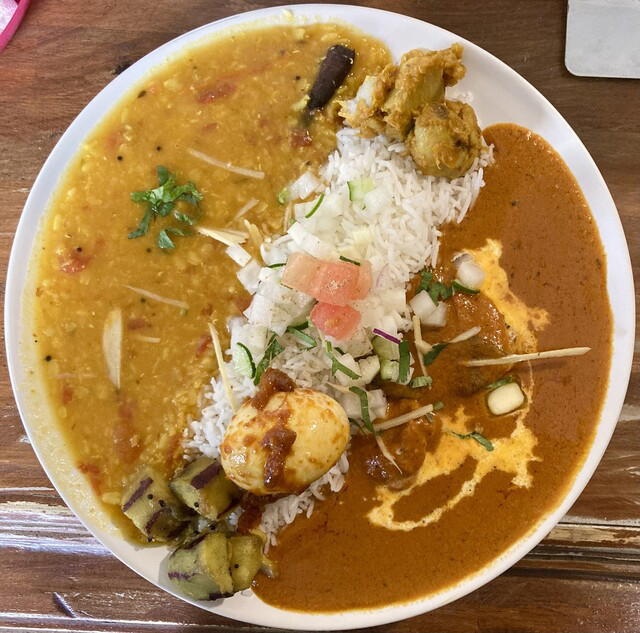
- Daily NonVeg curry plate
- Veg bean and vegetable curry
- Curry plate with sabzi and kachumber
- Chai
- Basmati rice curry set
Osaka’s dining rhythm is built on direct choices, everyday appetite, and restaurants that do not need ceremony to feel purposeful. Ganesh N fits that Osaka grammar: a curry specialist with the practical intimacy of a place defined around the plate rather than performance. The appeal is not theatrical dining, nor the hotel-restaurant version of spice. It sits closer to Osaka’s everyday specialist culture, where a single category can be pursued with the seriousness another city reserves for sushi or kaiseki.
Osaka has long been comfortable absorbing outside foodways and making them local through repetition, price discipline, and neighborhood loyalty. Curry is a strong example. Japanese curry houses, spice-curry counters, South Asian restaurants, and hybrid specialists all coexist across the city. The more interesting addresses are not trying to reproduce a single national template. They work through technique, heat, vegetables, rice, and portion logic in ways that make sense for local lunch habits and casual meals.
Indian curry technique filtered through Osaka's specialist-counter culture
The category listing here matters: Indian curry, curry, and Indian. That wording places the restaurant between imported method and local classification, which is exactly where much of Osaka’s curry energy sits. The city’s curry audience is unusually literate; diners compare spice structure, rice handling, vegetable use, and service speed with the same focus applied elsewhere to ramen broth or tempura batter. A specialist format encourages clarity, rewarding kitchens that know what they are trying to say.
The strongest clue to the restaurant’s point of view is its position inside Osaka’s curry conversation rather than a broad, all-purpose dining category. In Osaka, where casual staples and drinking rooms claim plenty of attention, a curry specialist occupies a different lane. It can be direct without being plain, and it can borrow Indian spice architecture while still fitting the Japanese preference for efficient meals. That intersection gives the restaurant its editorial value: global technique, local tempo, and a price band that keeps the cooking connected to ordinary city life rather than special-occasion dining.
Tabelog Hyakumeiten recognition gives the address a useful external marker. Ganesh N is listed for 2024 with a score of 3.70 and a price range of JPY 1,000 - JPY 1,999. In a category crowded with passionate independents, that kind of selection places the restaurant inside Osaka’s curry conversation, not merely as a convenience but as an address diners can use to understand the city’s curry standard.
A focused format changes the meal's pace
A dedicated curry room creates a different social contract from a casual chain counter. Service has to move, but the format also makes diners aware of craft and sequence. It is useful for a meal built around one clear craving, rather than a long, sprawling restaurant agenda. The point is concentration: curry as the main event, with the meal shaped by the immediacy of Osaka’s specialist dining culture.
This is where the comparison with other Osaka formats becomes useful. Yuni yumo operates in a higher spend band, Sakeya Sakana Yoshimura belongs to the izakaya register, L’angolo works in European territory, and Oryori Horikawa points toward Japanese dining at a more formal level. Cafe Toki ona shares a similar everyday price range, but the meal logic is different. Ganesh N is not competing for ceremony; it competes on focus. The decision is less about luxury than appetite: curry as the main event, served with enough clarity that hesitation feels unnecessary.
That focus is also why it pairs well with a day built around Osaka rather than a cross-city detour made only for dinner. The city rewards walking, grazing, and category hopping. A curry lunch can sit beside coffee, bakery stops, and casual Osaka staples without turning the day into a formal restaurant itinerary. For nearby planning, EP Club’s Osaka pages place this address among broader city options: Our full Osaka restaurants guide, Our full Osaka hotels guide, Our full Osaka bars guide, Our full Osaka wineries guide, and Our full Osaka experiences guide.
How to read it within Japan's wider casual-dining map
Japan’s strongest casual specialists often look modest from the outside because the discipline is in repetition, not display. That pattern cuts across categories: bakeries, coffee shops, take-away comfort food, and everyday counters all show how narrow formats can become serious cultural habits. Curry belongs in the same discussion because it shows how Japan absorbs technique, then lets neighborhood demand sharpen the format.
The national comparison is equally instructive. Curry specialists in other Japanese cities speak to the way regional dining scenes build their own curry identities, while imported cuisines across the country take on local scale and expectation. The same casual-specialist lens applies outside Japan too, where small, tightly edited food and drink formats can carry more identity than their size suggests. Ganesh N should be read in that wider pattern, while still remaining firmly an Osaka address.
The editorial read is clear: this is Osaka curry for diners who value specificity over spectacle. The 2024 recognition supplies credibility, the format encourages concentration, and the Indian-curry framing gives the meal a sharper identity than generic comfort food. It is the kind of address that makes sense when the goal is to understand how Osaka turns global methods into local habits, one focused curry stop at a time.
Frequently asked questions
Does Ganesh N work for a family meal?
It can, especially for diners looking for a casual curry meal. The listed price range of JPY 1,000 - JPY 1,999 also keeps it accessible.
What's the overall feel of Ganesh N?
Focused and practical rather than formal, which suits a curry stop in Osaka.
Is Ganesh N expensive?
Pricing at Ganesh N is listed as JPY 1,000 - JPY 1,999.
What are the operating hours at Ganesh N?
Check directly with Ganesh N before visiting, as operating hours are not provided here.
How do I find Ganesh N?
Osaka.
Category Peers
Comparable venues by cuisine and price in the same metro.
| Venue | Cuisine | Price | Awards | Notes |
|---|---|---|---|---|
| Ganesh NThis venue (the venue you are viewing) | Indian home-style curry plates | $10–20 | Tabelog 100 #12 | Not listed |
| Moriyama Ya | Indian-style Curry House | $10–20 | Tabelog 100 #60 | Kita |
| Spice Shokudo Nikki | Spice-focused Indian-style curry house | $10–20 | Tabelog 100 #7 | Nishi |
| Curry Ya Nunkui | Curry / Indian Curry | Not listed | Tabelog 100 #98 | Sakai Ward |
| curry bar nidomi | Sri Lankan‑influenced Curry Bar | $20–30 | Tabelog 100 #29 | Chūō |
| DIAMOND BIRYANI | Hyderabadi biryani specialist | Not listed | Tabelog 100 #53 | Kita |
Recognition history
Dated appearances from independent guides and award organizations, with the underlying list record or original source where available.
Tabelog 100 #12 · No. 12
Tabelog · Tabelog 100 - Curry - WEST - 2024