
COCHIN NIVAS gives Tokyo’s Indian curry conversation a small-room, high-frequency address in Nishishinjuku. The draw is the split personality: weekday lunch runs on set-menu efficiency, while dinner and weekends shift to à la carte, a format that changes both pacing and how much of the kitchen’s range comes into view.
Pearl is the En Primeur Club membership app — saves, bookings, and concierge access live there. Same editors, same standards.
- Address
- 5 Chome-9-17 Nishishinjuku, Shinjuku City, Tokyo 160-0023, Japan
- Phone
- +81 3-5388-4150
- Website
- cochinnivas.com
 Saves & bookings on Pearl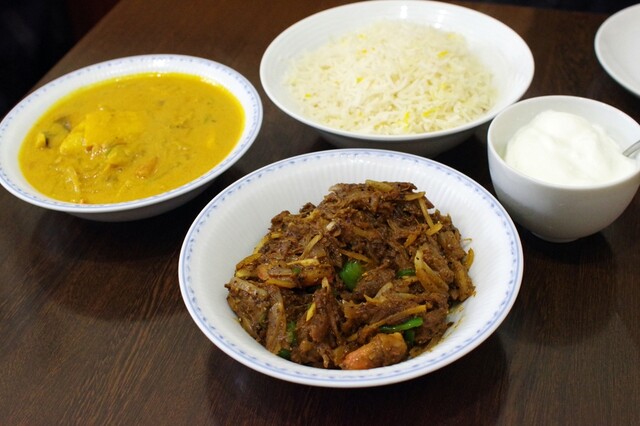
West of Shinjuku’s station crush, Nishishinjuku changes register: office blocks thin into quieter side streets, and small restaurants start to feel less like destinations than regular habits. COCHIN NIVAS belongs to that Tokyo category where scale is modest, turnover matters, and reputation travels through repeat dining rather than spectacle. Its recognition by Tabelog 100 for Asian and ethnic cuisine in Tokyo in 2024 places it in a selective local conversation, but the more telling point is format: this is Indian curry viewed through the rhythms of a compact Tokyo room.
Weekday lunch is the value play; dinner reveals the range
Tokyo’s curry culture is unusually layered. It includes Japanese curry shops built for speed, specialist South Asian rooms that obsess over spice structure, and hybrid neighborhood places where lunch and dinner can feel like different restaurants. The lunch-versus-dinner divide matters here because the restaurant changes its operating logic by service. Weekday lunch is built around a set menu, including a bento option, which makes sense in a business district where meals must fit the clock. Dinner and weekends move to à la carte, which slows the decision-making and gives the kitchen broader room to work within Indian and Indian curry categories.
That split is not a minor operational detail. It tells the diner how to use the place. Lunch suits a focused read on the cooking without turning the meal into an event. Dinner suits anyone trying to understand why a small Nishishinjuku Indian restaurant has stayed visible across multiple Tabelog 100 selections, including Asian and ethnic cuisine listings in 2022, 2023, and 2024, and earlier curry selections from 2017 through 2020. In a city where awards often cluster around sushi counters, kappo rooms, and tasting-menu temples, that continuity gives weight to an everyday category.
The comparison set in Tokyo is broad but not always fair. Ramen shops such as Eau de Vie and Raa Menya Shima can sit in similar casual-spend territory while playing by different rules: speed, noodle texture, broth concentration, and line discipline. La Strada occupies a higher dinner bracket, and Cuisine Michel Troisgros belongs to another kind of formal dining conversation altogether. COCHIN NIVAS is better understood inside Tokyo’s specialist casual tier, where a narrow room, repeat customers, and a clear cuisine identity do more work than décor or ceremony.
A small room changes the social contract
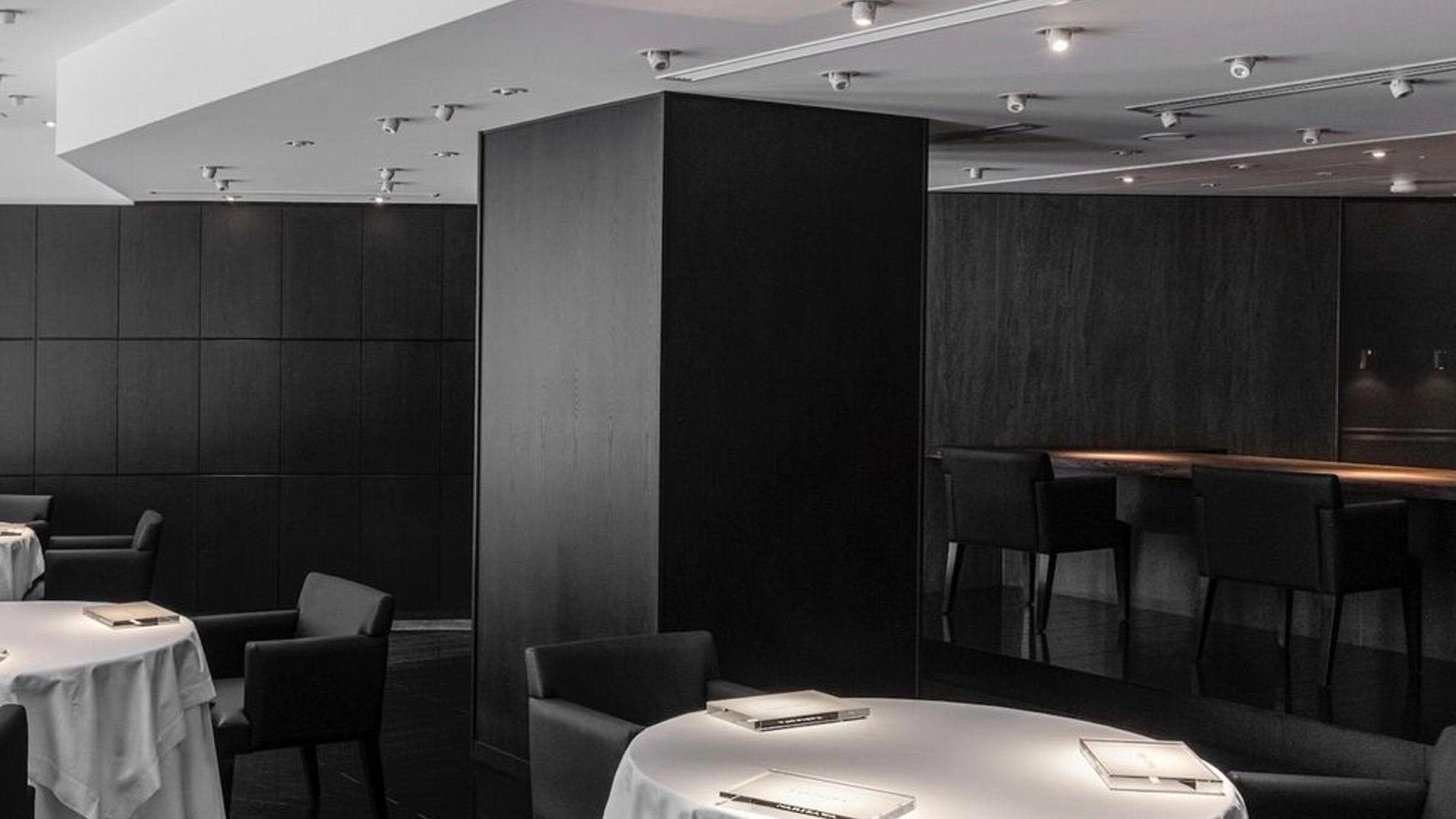
The room’s size shapes the experience before the food does. Eleven seats, including three counter seats and a handful of tables, create a dining style closer to Tokyo’s micro-restaurant culture than to the expansive curry houses found in other global cities. In a space this small, parties are naturally limited, pacing is more exposed, and a table can become a meaningful portion of the evening’s capacity. That makes the venue feel aligned with Tokyo’s broader affection for compact, owner-led rooms, where repetition and precision often matter more than scale.
Practical constraints also define the audience. The restaurant is non-smoking, offers take-out, and accepts credit cards, electronic money, and PayPay, details that make it easy to fold into a weekday routine. It is not a family-all-comers room: the small footprint means strollers and children are not accommodated. That is less a hospitality statement than a spatial reality, and it is common in Tokyo’s tighter neighborhood restaurants, where counter clearance and table spacing leave little margin.
For travelers building a Tokyo dining plan, the value is not that this replaces a formal reservation night. It fills a different slot: a serious casual meal with award-backed local credibility, especially useful when Shinjuku’s central dining choices start to feel either overbuilt or under-edited. Readers mapping the area can place it alongside 12/10 Shinjuku ten and 2D Cafe, then widen the lens through Our full Tokyo restaurants guide. For adjacent planning, EP Club’s city coverage also includes Our full Tokyo hotels guide, Our full Tokyo bars guide, Our full Tokyo wineries guide, and Our full Tokyo experiences guide.
Where it sits in Japan's curry map
Indian curry in Japan is not a single category. Tokyo diners move easily between Japanese-style curry counters, regional Indian cooking, spice-curry specialists, and restaurants that adapt South Asian frameworks to local service expectations. COCHIN NIVAS sits in the Indian and Indian curry lane rather than the Japanese curry-shop lane, but its lunch structure and compact Tokyo service model make it intelligible to local office diners as well as curry-focused visitors.
That dual readability is the point. The weekday set menu speaks to Nishishinjuku’s lunch economy; the à la carte evening format speaks to diners who want more control over the meal. It is also why the restaurant’s Tabelog score of 3.71 carries more signal than a casual glance might suggest. In Tokyo’s user-review culture, sustained selection across curry and Asian/ethnic categories points to consistency within a crowded field, not a one-season spike.
For a broader curry crawl, 3 Chome no Curry Ya San offers a useful Tokyo counterpoint, while [Curry Senmon Ten] Maruyama Kyoju. in Sapporo shows how the category changes outside the capital. Tokyo dining itineraries can also branch toward grill, yakitori, and seafood rooms such as. 鮪と炭火焼き うお炭 秋葉原店 and 124. KAGURAZAKA (Yakitori). Beyond Tokyo, the same editorial map runs through -Grilled beef Sukiyaki- KAMAKURA TANUKIAN 鎌倉 たぬき庵 in Kamakura.cafe in Osaka.know in Kumamoto, (Shoku) Vietnam in Kawasaki, and [ki:] in Kyoto. For readers tracking Japanese food culture abroad, Jōdo Saké Bar in Los Angeles and Onigiri Time in Pasadena extend the comparison overseas.
The editorial verdict is simple: use lunch for efficiency and value, use dinner for breadth. The restaurant’s small capacity and repeated Tabelog 100 recognition make it a serious Nishishinjuku address, but its real interest lies in how neatly it exposes Tokyo’s habit of turning casual categories into highly specific formats.
- Keema Nargisi (Keema Nargisi/Keema Nargisi curry)
- Keema Nargisi Curry Set
- Keema Nargisi with Lemon Rice
- Special Keema Nargisi half‑boiled egg curry
- Egg Keema
- Tomato Chicken (sweet stir-fried chicken and vegetable curry)
- Keema Nargisi Curry with Saffron Rice
- Signature “Keema Nargisi” curry with half‑boiled egg
Similar Picks
Comparable venues by cuisine and price in the same metro.
| Venue | Cuisine | Price | Notes |
|---|---|---|---|
| COCHIN NIVASThis venue — the venue you are viewing | South Indian curry house | $$ | Not listed |
| MAROLOGA Bhavan | Indian Curry House with Spice-Driven Drinks | $$ | Nakano |
| spice kitchen moona | Spice-driven Indian & Asian curry bar | $$ | Setagaya |
| Yappari India | Indian Curry House | $$ | Toshima |
| ERICK SOUTH Toranomon hiruzu ten | South Indian curry & biryani | $$ | Minato |
| Calical Shimbashi honten | Indian Curry | $$ | Minato |
Recognition history
Dated appearances from independent guides and award organizations, with the underlying list record or original source where available.
Tabelog 100 #26 · No. 26
Tabelog · Tabelog 100 - Asian cuisine / Ethnic cuisine - TOKYO - 2024













At a Glance
- Cozy
- Intimate
- Classic
- Solo
- Casual Hangout
- After Work
- Standalone
- Local Sourcing
Current opening hours
- Monday
- 11:30 AM–2:30 PM, 5:30–9:30 PM
- Tuesday
- Closed
- Wednesday
- 11:30 AM–2:30 PM, 5:30–9:30 PM
- Thursday
- 11:30 AM–2:30 PM, 5:30–9:30 PM
- Friday
- 11:30 AM–2:30 PM, 5:30–9:30 PM
- Saturday
- 11:30 AM–2:30 PM, 5:30–9:30 PM
- Sunday
- 11:30 AM–2:30 PM, 5:30–9:30 PM
Hours can change for holidays and private events. Last verified .
A small, homey "house restaurant" with just 11 seats, tucked into a corner of Nishi‑Shinjuku, filled with the warm aroma of freshly roasted spices and a relaxed, cozy atmosphere rather than formal decor.