
Tokyo curry culture has a serious low-price tier, and this Shimbashi basement address sits squarely inside it: curry and Indian curry, an 18-seat room, no reservations, and repeat Tabelog Curry 100 recognition. The draw is not ceremony but pace, proximity to the station, and a compact format built for office workers, commuters, and curry-focused diners.
Pearl is the En Primeur Club membership app — saves, bookings, and concierge access live there. Same editors, same standards.
- Address
- Japan, 〒105-0004 Tokyo, Minato City, Shinbashi, 2 Chome−20−15 新橋駅前ビル1号館B1F
- Phone
- +81 3-3574-7283
- Website
- tabelog.com
 Saves & bookings on Pearl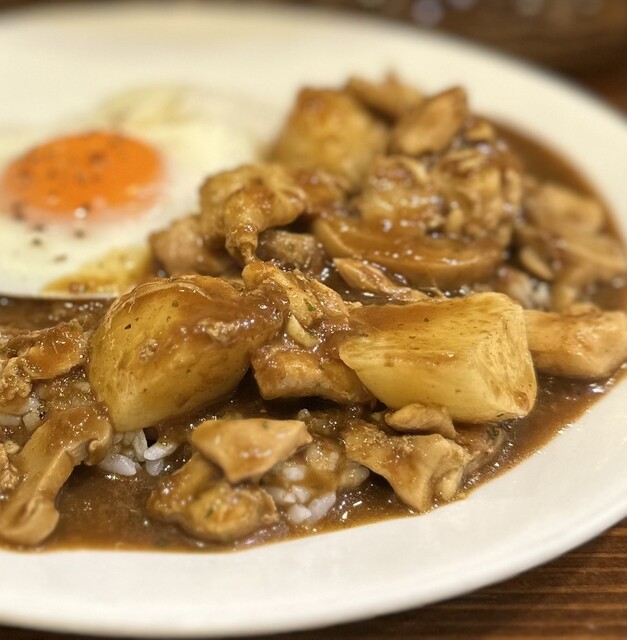
Shimbashi teaches appetite through infrastructure: ticket gates, underground corridors, office blocks, and basement restaurant floors where lunch has to move at commuter speed. In that setting, curry is not a secondary comfort category. It is one of Tokyo’s great urban meals, fast enough for a workday, serious enough to sustain specialist lists, and democratic enough to sit beside ramen, tonkatsu, soba, and yoshoku without apology.
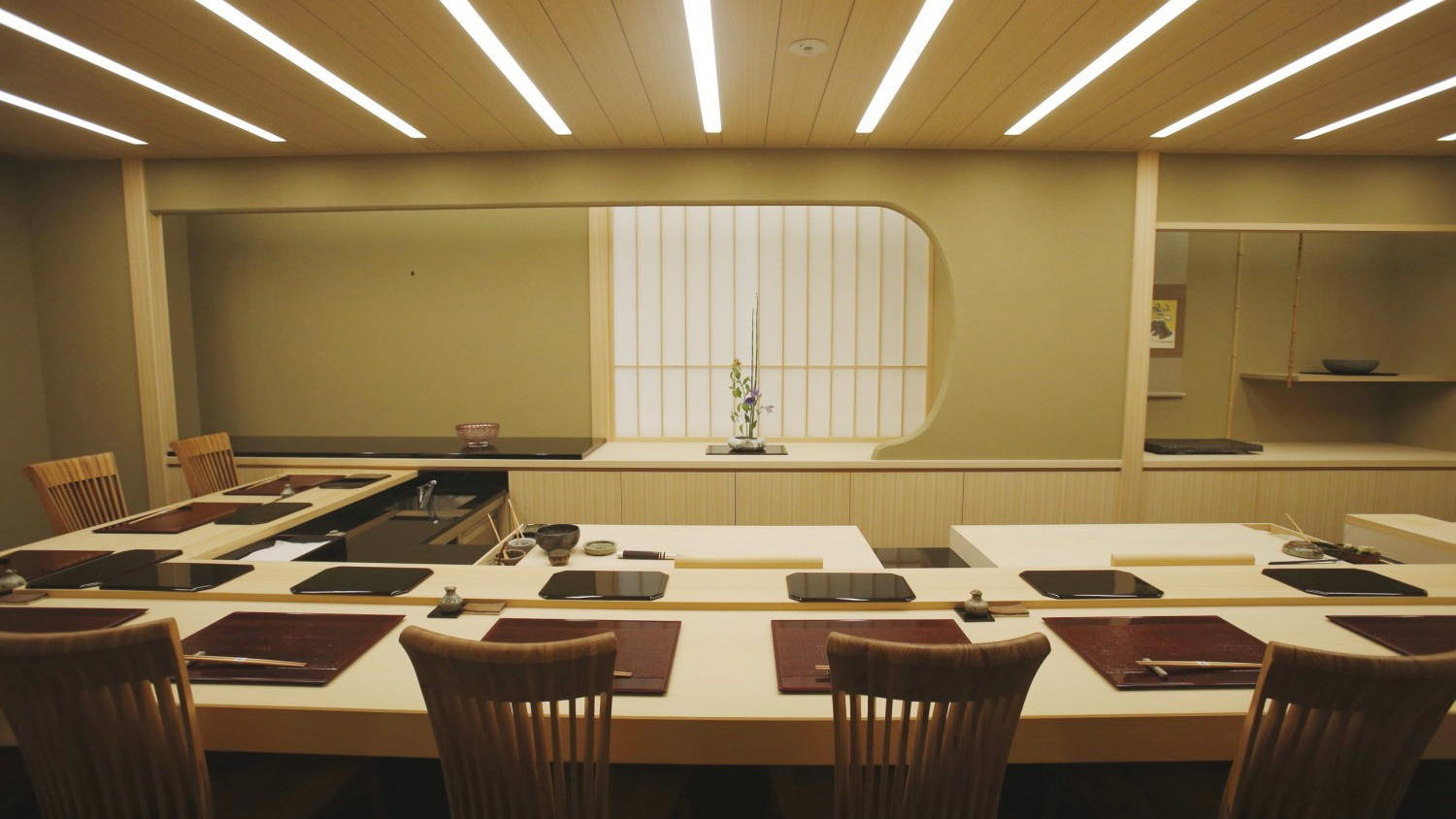
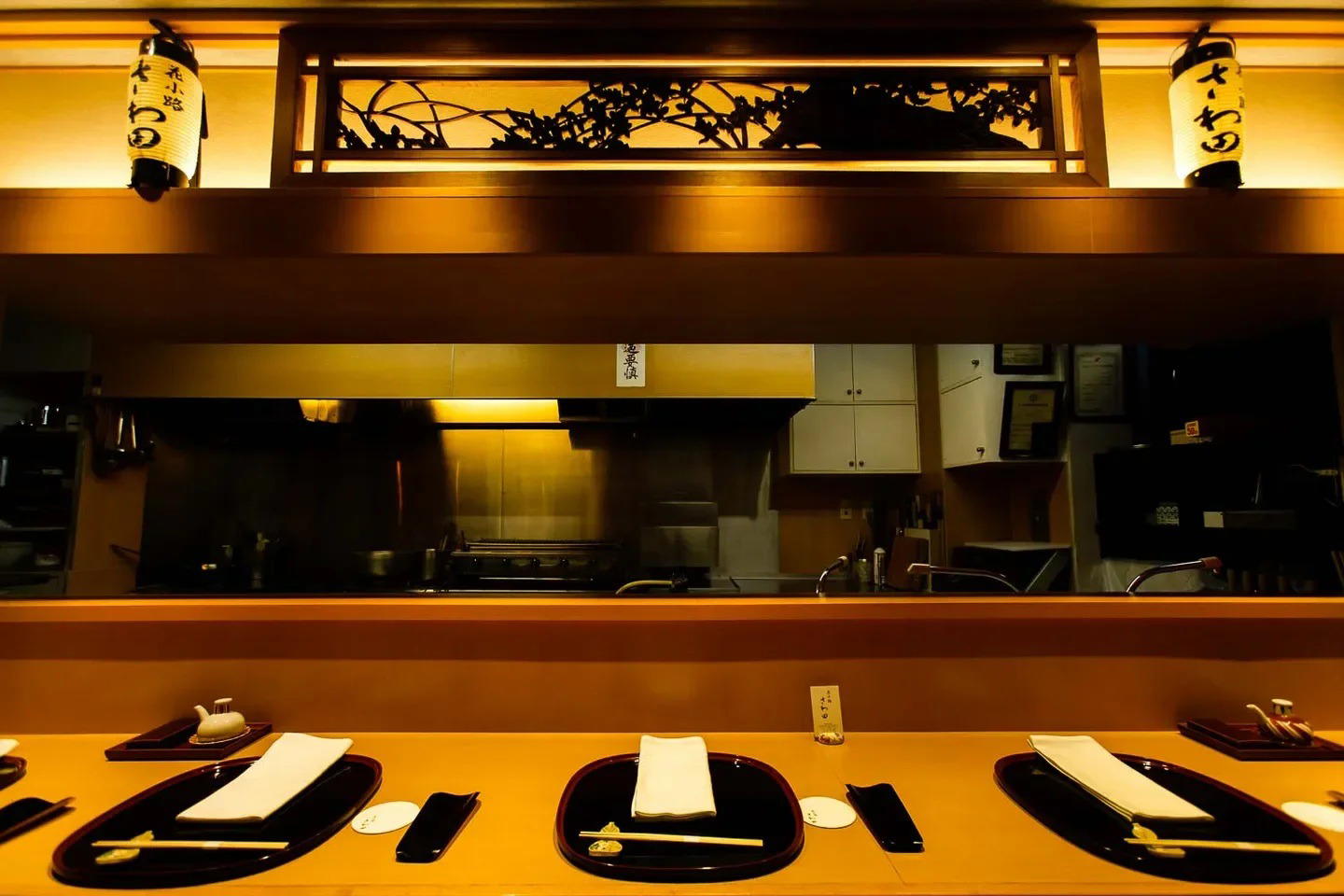
Calical Shimbashi honten belongs to that practical end of the curry spectrum. The room is small, with 18 seats across counter and table seating, and the format suits a neighbourhood where solo diners and short meal windows shape the rhythm. Reservations are unavailable, which matters less here than it would at a tasting counter: the point is turnover, timing, and knowing that the surrounding station district rewards diners who can eat with intent rather than linger.
Shimbashi curry, stripped of ceremony
Tokyo’s curry scene splits into several lanes. There are spice-led independents with long queues, old-school yoshoku rooms, South Asian specialists, and station-adjacent counters where curry functions as a daily working meal. Calical Shimbashi honten sits in the last category but with stronger recognition than the format might suggest. It was selected for Tabelog Curry TOKYO 100 in 2024, and its award history also includes Curry 100 selections in 2023 and 2022. That continuity is the useful signal: this is not a room trading on design or chef mythology, but a curry shop with enough consistency to stay visible in a crowded Tokyo category.
The comparison is instructive. HARU CHAN Ramen represents another low-price Tokyo comfort format, while Paris Ogawa Ken Shimbashi ten operates in a similar Shimbashi price band. TOKi sits in a different dining economy altogether, with contemporary Spanish cooking and a higher spend profile. Calical Shimbashi honten is better understood against the city’s everyday specialist counters: narrow menus, modest budgets, and the kind of repeat traffic that turns a station district restaurant into habit.
The cuisine listing is curry and Indian curry, a pairing that reflects how Tokyo has long absorbed and adapted curry rather than treating it as a single fixed tradition. Japanese curry culture carries British naval history, school-lunch memory, yoshoku technique, and South Asian influence in the same broad category. The stronger Tokyo addresses tend to be legible quickly: the room, the pace, the price, and the house style declare themselves before a diner has finished reading the menu.
The room works like the neighbourhood: compact, quick, close to the rails
Setting is part of the experience. Shimbashi is not a district of leisurely approach; it is a transfer point with salaryman bars, under-track food culture, and a dense after-work economy. A basement location in the Shinbashi Ekimae Building places the meal inside that flow. Sound and movement matter here: station foot traffic above, compact seating inside, and a service model that favours clarity over theatre.
That physical context changes how to read the restaurant. An 18-seat curry counter in Shimbashi does not need the vocabulary of luxury dining. It needs reliability, efficient pacing, and a price that makes repeat visits plausible. The listed lunch and dinner range of JPY 1,000 to JPY 1,999 puts it in a tier where the decision is low-friction but the competition is fierce. At that price, recognition from a curry-specific Tokyo list carries more weight than generic acclaim because it measures the venue against other specialists rather than against unrelated fine-dining rooms.
Practical comforts are not incidental. Non-smoking status, take-out service, wheelchair access, counter seating, table seating, card payments, transportation IC cards, and QR payments all make the format easier to use. Children are welcome, including babies, preschoolers, and school-age children, and strollers are accepted. That combination is more flexible than many compact Tokyo counters, especially around station dining where space can be tight.
How to place it in a Tokyo eating itinerary
This is a tactical Tokyo stop rather than a destination built around a long reservation arc. It makes sense before or after Ginza, Shiodome, Hibiya, or a rail transfer through Shimbashi. Sunday closure is the key timing constraint; the rest of the week runs on a broad daytime-to-evening schedule. Since reservations are unavailable, the smarter move is to treat it as a flexible meal slot and avoid forcing it into a tight pre-theatre or airport itinerary.
For readers mapping Tokyo by category, curry sits beside several other specialist traditions worth comparing across the city. Start with Our full Tokyo restaurants guide, then branch into nearby or contrasting formats such as 3 Chome no Curry Ya San, . 鮪と炭火焼き うお炭 秋葉原店, 12/10 Shinjuku ten, 124. KAGURAZAKA (Yakitori), and 2D Cafe. For broader planning, keep Our full Tokyo hotels guide, Our full Tokyo bars guide, Our full Tokyo wineries guide, and Our full Tokyo experiences guide alongside the food map.
Outside Tokyo, the same low-to-mid price discipline appears in different regional forms: -Grilled beef Sukiyaki- KAMAKURA TANUKIAN 鎌倉 たぬき庵 in Kamakura.cafe in Osaka.know in Kumamoto, (Shoku) Vietnam in Kawasaki, [Curry Senmon Ten] Maruyama Kyoju. in Sapporo, and [ki:] in Kyoto. For overseas Japanese-adjacent references, Jōdo Saké Bar in Los Angeles and Onigiri Time in Pasadena show how compact Japanese formats translate abroad.
The restaurant is strongest as a read on Tokyo’s everyday precision: modest spend, station adjacency, curry-specific recognition, and a room small enough that the meal remains focused. In a city where high-end dining often dominates visitor planning, this is the counterargument: a serious Tokyo food day can be built from quick rooms, specialist categories, and meals that cost less than a cocktail in a luxury hotel bar.
A Tight Comparison
Comparable venues for context, by category and price tier.
| Venue | Cuisine | Price | Notes |
|---|---|---|---|
| Calical Shimbashi hontenThis venue — the venue you are viewing | Minato, Indian Curry | $$ | Not listed |
| Eric South Toukyou gaaden terasu ten | Chiyoda, South Indian Curry & Biryani | $$ | Not listed |
| Garam Masala | Not listed | $$ | Setagaya, Creative Indian curry & spice dishes |
| KHAN KEBAB BIRYANI | Not listed | $$ | Chūō, Halal Indian & Pakistani Curries, Kebabs and Biryani |
| YOGORO | Shibuya, Japanese Curry | $$ | Not listed |
| MAROLOGA Bhavan | Not listed | $$ | Nakano, Indian Curry House with Spice-Driven Drinks |
Recognition history
Dated appearances from independent guides and award organizations, with the underlying list record or original source where available.
Tabelog 100 #51 · No. 51
Tabelog · Tabelog 100 - Curry - TOKYO - 2024



At a Glance
- Classic
- Cozy
- Solo
- Family
- Casual Hangout
- After Work
- Open Kitchen
- Standalone
- Beer Program
Current opening hours
- Monday
- 11 AM–10 PM
- Tuesday
- 11 AM–10 PM
- Wednesday
- 11 AM–10 PM
- Thursday
- 11 AM–10 PM
- Friday
- 11 AM–10 PM
- Saturday
- 11 AM–10 PM
- Sunday
- Closed
Hours can change for holidays and private events. Last verified .
A small, basement-level restaurant with counter seating and table seats that feels practical, busy, and unfussy rather than formal.