Our verdict
Cinnamon Ranelagh sits on one of Dublin's most settled residential dining strips, where the neighbourhood's appetite for serious food without ceremony has shaped a distinct local register. The address at 87 Ranelagh places it within a village-scale corridor that draws south Dublin diners who have moved past novelty and toward consistency. For those tracking Ireland's broader restaurant moment, it belongs to a city scene that now competes credibly on a European scale.

Pearl is the En Primeur Club membership app — saves, bookings, and concierge access live there. Same editors, same standards.
- Address
- 87 Ranelagh, Dublin 6, Ireland
- Phone
- +35319013020
- Hours
- Mon–Fri 8 AM–4 PMSat 9 AM–9:30 PMSun 9 AM–5:30 PM
- Website
- cinnamon.ie
- Directions
- Get directions
- Booking
- Book on OpenTable
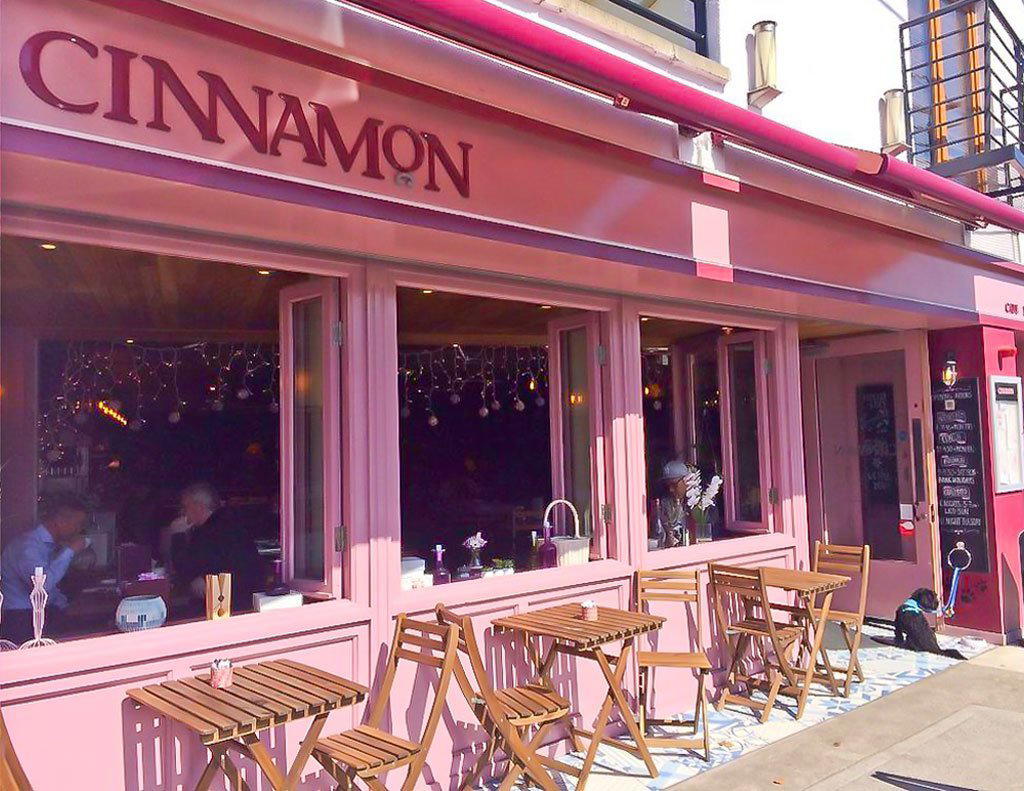
Ranelagh and the Quieter Side of Dublin's Restaurant Moment
Dublin's dining energy tends to get mapped onto its city-centre flash points: the Georgian rooms of Merrion Street, the canal-side ambition of spots like Bastible, the formal architecture of Patrick Guilbaud. But the suburb of Ranelagh, roughly two kilometres south of St Stephen's Green, operates on a different register. The streets here are wide and tree-lined, the pace is residential rather than tourist-driven, and the restaurants that take root tend to serve a local clientele that eats out regularly and without much fanfare. It is precisely this context that shapes what a place like Cinnamon Ranelagh is and what it is not.
The address — 87 Ranelagh, Dublin 6 — sits on the main village thoroughfare, a strip that has accumulated a credible density of independent restaurants over the past decade. Ranelagh's dining corridor is not a destination in the way that a Michelin-starred room might be, but it functions as one of the more reliable everyday-serious eating streets in the city. The crowd that fills these tables tends to know what they want, and the kitchens that survive here have learned to deliver it without theatrics.
The Sensory Character of the Room
Approaching Ranelagh village from the city, the shift in atmosphere is immediate. Traffic noise drops, the footpaths widen, and the shopfronts take on the slightly unhurried character of a neighbourhood that has been comfortable for a long time. Cinnamon Ranelagh occupies this register physically as much as contextually. The name signals a specific culinary orientation, spice-forward cooking of the kind that has found a confident foothold in Irish cities over the past two decades, as the Irish palate has broadened well beyond its Atlantic-protein defaults.
Inside, the sensory experience of a well-run neighbourhood Indian or South Asian restaurant in this part of Dublin tends to follow a particular logic: warm tones, the layered fragrance of whole spices bloomed in oil, a room pitched at conversation rather than performance. The city's South Asian restaurant tier has matured considerably since the early 2000s, moving from volume-led canteen formats toward kitchens with more considered sourcing and technique.
This broader shift is worth understanding as context. In cities like London or Manchester, South Asian fine dining has long occupied a distinct upper bracket, with tasting-menu formats and named-wine pairings. Dublin's version of this evolution is quieter and more neighbourhood-scaled, less interested in formal ceremony, more focused on getting the spice balance and the sourcing right. Ranelagh is a natural home for that quieter ambition.
Where Cinnamon Ranelagh Sits in the Dublin Dining Picture
Dublin's restaurant scene has undergone a significant compression at the leading end. Chapter One by Mickael Viljanen and Glovers Alley occupy the formal tasting-menu tier, priced and paced accordingly. D'Olier Street represents a newer wave of modern cuisine with city-centre energy. Cinnamon Ranelagh sits outside this bracket, not because it is lesser, but because it is doing something different: serving a neighbourhood that wants depth of flavour and reliability over occasion-dining theatre.
The comparison set for a place like this is less about starred rooms and more about the tier of serious independent restaurants that have made specific neighbourhoods in Dublin worth eating in regularly. In that sense, it belongs to the same civic function as the better independents in Blackrock, where Liath has made the south Dublin suburbs a destination in their own right, or the village-scale ambition found further afield at Bastion in Kinsale or Aniar in Galway. These are restaurants that anchor their neighbourhoods rather than extract diners from them.
For visitors building an itinerary that reaches beyond the city centre, Ranelagh is a sensible extension. The LUAS Green Line stops within easy walking distance, making it accessible from the city without requiring a taxi or significant navigation. The village itself rewards an early evening walk before dinner, particularly in the months between April and October when the light holds long enough to make the tree-lined streets genuinely pleasant.
Ireland's Wider Restaurant Moment
Understanding Cinnamon Ranelagh also means understanding the broader Irish restaurant context in which it operates. Ireland's food scene beyond Dublin has developed its own distinct nodes of seriousness: dede in Baltimore, Terre in Castlemartyr, Chestnut in Ballydehob, and Homestead Cottage in Doolin, each anchoring a different kind of regional ambition. In Kilkenny, Campagne has maintained a consistent level of French-influenced cooking for years. In Adare, The Oak Room operates in the formal country-house register. In Maynooth, The Morrison Room demonstrates how seriously regional towns outside the capital have begun to take their dining offer.
Against this backdrop, Dublin's neighbourhood restaurants are not the whole story of Irish food, but they are where the city's daily relationship with eating well actually plays out. For international visitors who have spent time in cities like New York, where places such as Le Bernardin define one kind of excellence, or San Francisco, where Lazy Bear has shaped a communal tasting format, the quieter neighbourhood scale of a Ranelagh dinner may feel like a different gear entirely, and that is not a criticism. Some of the most satisfying eating happens at exactly this level of ambition.
For the full picture of what Dublin offers across formats, price points, and neighbourhoods, our full Dublin restaurants guide maps the scene in detail.
Know Before You Go
- Address: 87 Ranelagh, Dublin 6, Ireland
- Getting There: The LUAS Green Line serves Ranelagh directly; the stop is a short walk from the main village strip
- Neighbourhood: Ranelagh village, Dublin 6, residential, walkable, well-served by independent restaurants
- Leading Timing: Ranelagh is most pleasant for a pre-dinner walk between April and October; the village is less congested than city-centre dining streets on weekday evenings
- Phone / Website:
Frequently asked questions
Where is Cinnamon Ranelagh in Dublin?
Cinnamon Ranelagh is located at 87 Ranelagh, Dublin 6, Ireland, Dublin.
Is Cinnamon Ranelagh a good option for a weeknight dinner in Dublin 6?
Located at 87 Ranelagh in Dublin 6, Cinnamon sits within walking distance of the Ranelagh Luas stop, making it accessible from the city centre in under ten minutes by tram. Weeknight footfall in the suburb is steady but lighter than weekends, so tables are generally available without advance planning. It fits the profile of a reliable local restaurant rather than a destination you would travel across the city specifically to reach.
What should I order at Cinnamon Ranelagh?
South Asian restaurants at the neighbourhood end of Dublin's dining spectrum tend to build menus around regional subcontinental dishes rather than a standardised curry-house format. Ask staff on arrival what the kitchen is running that day.
Should I book Cinnamon Ranelagh in advance?
Ranelagh's independent restaurants fill on Thursday through Saturday evenings, drawing a local clientele who eat here regularly rather than treating it as a special-occasion destination. A reservation for weekend dining is advisable. Midweek tables are typically easier to secure, and the shorter queue makes it a reasonable option for a spontaneous Tuesday or Wednesday dinner in Dublin 6.
What makes Cinnamon Ranelagh worth seeking out?
Its position on Ranelagh's main strip puts it on one of Dublin's most consistent streets for independent restaurants, away from the tourist-heavy city centre. The suburb draws residents who eat out frequently, which tends to keep neighbourhood kitchens honest. For visitors staying in Dublin 6 or arriving via the Luas Green Line, it is a logical first choice for South Asian cooking without going back into town.
Can Cinnamon Ranelagh adjust for dietary needs?
South Asian kitchens in the Irish restaurant tradition carry a wide range of vegetarian and plant-based dishes as a structural part of the menu, not an afterthought. Lentil, paneer, and vegetable preparations often account for a significant share of the offering.
What It’s Closest To
Comparable venues nearby, for context on price, style, and recognition.
| Venue | Cuisine | Price | Notes |
|---|---|---|---|
| Cinnamon RanelaghThis venue — the venue you are viewing | Irish Café Brunch | $20–30 | Not listed |
| Café en Seine | Modern Irish-European Gastropub | $20–30 | Mansion House B |
| Chequer Lane by Jamie Oliver | Modern Irish Gastropub | $30–50 | Royal Exchange A |
| L. Mulligan Grocer | Modern Irish Gastropub | $30–50 | Arran Quay B |
| Bartley's at The Grafton | Modern Irish Gastropub | $20–30 | Royal Exchange B |
| The Grayson | Contemporary Irish | $50–100 | Mansion House B |
Continue exploring
More in Dublin
Restaurants in Dublin
Browse all →
Bars in Dublin
Browse all →
Hotels in Dublin
Browse all →
Wineries in Dublin
Browse all →
Details
- Cozy
- Lively
- Brunch
- Family
- Casual Hangout
- Open Kitchen
- Craft Cocktails
- A La Carte
- Cocktails
- Vegetarian Friendly
- Vegan Options
- Gluten Free Options
Current opening hours
- Monday
- 8 AM–4 PM
- Tuesday
- 8 AM–4 PM
- Wednesday
- 8 AM–4 PM
- Thursday
- 8 AM–4 PM
- Friday
- 8 AM–4 PM
- Saturday
- 9 AM–9:30 PM
- Sunday
- 9 AM–5:30 PM
Hours can change for holidays and private events. Last verified .
Inviting and warm with a cozy atmosphere praised for relaxed dining.