
Tabelog 100 #43
Our verdict
Chuo Tei gives Numazu’s gyoza culture a compact, old-school reference point rather than a polished destination-dining performance. Its Tabelog 100 - Dumplings - 2024 selection, long local history, family-friendly setup, and low spend bracket place it in the everyday-specialist category: the kind of address that explains how serious Japanese casual dining can be without formal ceremony.

Pearl is the En Primeur Club membership app — saves, bookings, and concierge access live there. Same editors, same standards.
- Address
- 251-12 Soechicho, Numazu, Shizuoka 410-0803, Japan
- Phone
- +81 55-962-4420
- Hours
- Mon ClosedTue–Sun 11 AM–5 PM
- Website
- at-s.com
- Directions
- Get directions
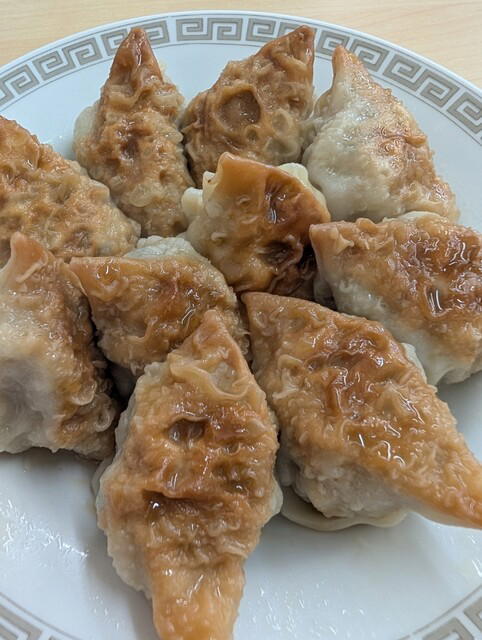
The menu
What to order
- Round pan-fried then steamed gyoza (6-piece)
- Gyoza (8-piece)
- Gyoza (10-piece)
- Rice
Numazu’s eating culture is shaped by proximity: port traffic, station commuters, family tables, and people wanting a focused meal rather than a staged dining event. Here, dumplings occupy a role distinct from sushi or unagi. They are not about ceremony, but repetition, local memory, and whether a small kitchen keeps standards steady across lunch trade, takeaway demand, and multi-generation customers.
Chuo Tei sits in that everyday-specialist tier. Read it not as a luxury destination, but as a compact argument for how regional Japanese food culture rewards narrow focus. Its selection for Tabelog 100 - Dumplings - 2024 gives the address a national signal, yet its appeal remains local: dumplings, families, takeaway, and a room built around tables rather than counter theatre.
Numazu gyoza as a local meal, not a performance
Japan’s dumpling culture has long sat between home cooking, town-centre lunch, and late-day takeaway. The category rewards places that repeat a few things well, not broad menus with decorative range. Numazu adds its own context. The city’s best-known food identity often starts with seafood, but its casual dining map is wider: ramen, gyoza, curry, izakaya cooking, and regional chains all compete for ordinary mealtimes. For a broader view, see Our full Numazu restaurants guide.
Within that field, Chuo Tei reads as specialist rather than generalist. The Tabelog dumpling recognition matters because gyoza is crowded in Japan, with strong regional loyalties and little tolerance for weak execution. A national Hyakumeiten selection does not make a table fine dining; it signals that a modest format has drawn attention beyond its neighbourhood. That is the point. Numazu does not need every serious meal to be expensive, long, or chef-led.
The ingredient-sourcing question is less about named farms than the grammar of the dish. Gyoza depends on everyday components handled well: wheat wrappers, chopped vegetables, minced filling, aromatics, oil, and heat. In Japan, a dumpling shop’s reputation is built on how those inputs behave together under pressure. The wrapper must hold; the filling must stay balanced; the cooking must suit both dine-in and takeaway. That discipline separates a neighbourhood staple from a casual snack.
Numazu has other low-to-mid priced specialists showing how focused formats anchor city dining. Yugawara Iida Shoten Rarapo-to numazu ten points to ramen’s mall-era reach, while Numazu Gyoza Nomiseko Taguchitei shows dumplings in a more drinking-adjacent register. Chuo Tei’s role is quieter: a gyoza address where the category, not the room, carries the weight.
A family-table format with national dumpling recognition
The room format matters because it tells the diner what kind of meal is offered. Thirty seats across nine tables, with no counter, place the experience closer to family dining than chef-facing performance. In Japan, counters often imply omakase precision, bar intimacy, or solo-diner efficiency. A table-led dumpling shop shifts the centre toward shared plates, children, and regular local use.
The venue’s history matters, though not as nostalgia alone. More than 70 years in business, including its earlier Otemachi phase, gives the dumpling program continuity newer concept-led restaurants cannot claim. The current opening date belongs to the present site, but the deeper lineage explains why the name carries local weight beyond one storefront. In a city where many meals are decided by habit, that continuity is a credential.
Payment and service style reinforce the practical character. This is not a room built around high-spend extras, wine pairing, or polished ceremony. The point is the dumpling format itself, supported by a family-friendly policy and takeaway service. For travellers, that makes it useful differently from destination tasting menus: it can fit a day shaped by the port, station area, or onward travel rather than making the evening orbit the restaurant.
Comparison sharpens the category. Unagi Sakuraya, outside Numazu, sits in a higher spend bracket and belongs to the eel-house tradition, where sourcing, sauce lineage, and grilling define value. BAR YUMOTO is a drinking format with separate expectations around pacing and atmosphere. Karaage Waka Tori speaks to fried-chicken specialization. Against these, Chuo Tei occupies the low-spend dumpling lane, where recognition comes from concentration rather than luxury signals.
How to place it in a Numazu itinerary
For an EP Club reader, the decision is not whether this is a grand meal. It is whether a Numazu trip should include a serious casual address that explains the city beyond seafood. Yes, when the itinerary has room for a focused dumpling stop, especially for travellers who value regional everyday food as much as formal dining. The case strengthens because the venue carries Tabelog 100 - Dumplings - 2024 recognition while staying rooted in a family-table format.
That makes it a useful counterpoint to other travel categories. A night in town can be planned through Our full Numazu hotels guide, while drinking options sit separately in Our full Numazu bars guide. Travellers building a wider food-and-drink route can scan Our full Numazu wineries guide and Our full Numazu experiences guide, though the dumpling stop belongs firmly to the restaurant map, not the leisure-experience category.
The wider Japan file shows how casual formats express place without expensive framing: -Grilled beef Sukiyaki- KAMAKURA TANUKIAN 鎌倉 たぬき庵 in Kamakura, . 鮪と炭火焼き うお炭 秋葉原店 in Tokyo.cafe in Osaka.know in Kumamoto, (Shoku) Vietnam in Kawasaki, [Curry Senmon Ten] Maruyama Kyoju. in Sapporo, [ki:] in Kyoto, #肉といえば松田 奈良本店 in Kashihara, and 1/3 HAMBURGER FACTORY in Kanazawa. Abroad, the same editorial question applies to Japanese casual formats in different markets, from Jōdo Saké Bar in Los Angeles to Onigiri Time in Pasadena: what survives when the format leaves its original neighbourhood logic?
Chuo Tei’s answer is restraint. It gives Numazu a dumpling address with a national recognition signal, long local memory, and a format that does not ask the diner to overthink the meal. In a premium itinerary, that stop has value precisely because it is not imitating luxury. It shows how a modest category can carry serious culinary information when city, format, and repetition align.
Frequently asked questions
Is Chuo Tei suitable for children?
Yes. the public record lists children welcome, including babies, preschoolers, and school-age children, and it notes a family-friendly occasion. Chuo Tei in Numazu also has 30 seats across nine tables, so it works as a casual family stop rather than a counter-style meal. Check the venue's official channels for the latest details.
What should I expect atmosphere-wise at Chuo Tei?
Expect a no-counter room with nine tables and a takeout-first rhythm, not a formal dining setup. The restaurant is non-smoking, opens from 11 AM on Tuesday to Sunday, and has over 70 years of history behind the current address in Numazu.
What's the pricing like at Chuo Tei?
Pricing at Chuo Tei is listed as - JPY 999.
When can I go to Chuo Tei?
Hours at Chuo Tei: Mon: Closed; Tue: 11 AM–5 PM; Wed: 11 AM–5 PM; Thu: 11 AM–5 PM; Fri: 11 AM–5 PM; Sat: 11 AM–5 PM; Sun: 11 AM–5 PM.
What's Chuo Tei's location?
Chuo Tei is located in Numazu.
How It Stacks Up
Comparable venues by cuisine and price in the same metro.
| Venue | Cuisine | Price | Awards | Notes |
|---|---|---|---|---|
| Chuo TeiThis venue — the venue you are viewing | Gyoza-focused Chinese dumpling house | $10–20 | Tabelog 100 #43 | Not listed |
| Yugawara Iida Shoten Rarapo-to numazu ten | Classic Japanese Ramen in LaLaport Numazu Food Court | $10–20 | Tabelog 100 #36 | Numazu |
| 北口亭 | Numazu Gyoza | $10–20 | Not listed | 杉崎町 |
| Numazu Gyoza Nomiseko Taguchitei | Numazu Gyoza Standing Bar | $10–20 | Not listed | Numazu Station area |
| Tokyo Doujiang Seikatsu | Traditional Taiwanese Breakfast & Fresh Soy Milk | Not listed | Not listed | Shinagawa |
| 虎ノ門PAIRON | Taiwanese Gyoza Izakaya | $20–30 | Not listed | Toranomon |
Recognition history
Dated appearances from independent guides and award organizations, with the underlying list record or original source where available.
Tabelog 100 #43 · No. 43
Tabelog · Tabelog 100 - Dumplings - 2024
Continue exploring
More in Numazu
Restaurants in Numazu
Browse all →
Bars in Numazu
Browse all →
Hotels in Numazu
Browse all →
Wineries in Numazu
Browse all →
Details
- Lively
- Classic
- Well Known
- Cozy
- Solo
- Family
- Casual Hangout
- After Work
- Group Dining
- Standalone
- Beer Program
- A La Carte
- Beer
Current opening hours
- Monday
- Closed
- Tuesday
- 11 AM–5 PM
- Wednesday
- 11 AM–5 PM
- Thursday
- 11 AM–5 PM
- Friday
- 11 AM–5 PM
- Saturday
- 11 AM–5 PM
- Sunday
- 11 AM–5 PM
Hours can change for holidays and private events. Last verified .