Our verdict
In Numazu, a port city where Suruga Bay tuna and fresh-caught seafood define the local table, Numazu Gyoza Nomiseko Taguchitei makes a case for gyoza as the meal rather than the accompaniment. The name signals the format: a drinking spot built around dumplings, where the food is the drink's equal. For visitors working through Shizuoka Prefecture's less-covered dining circuit, it belongs on the shortlist.

Pearl is the En Primeur Club membership app — saves, bookings, and concierge access live there. Same editors, same standards.
- Address
- Numazu, Japan
- Directions
- Get directions
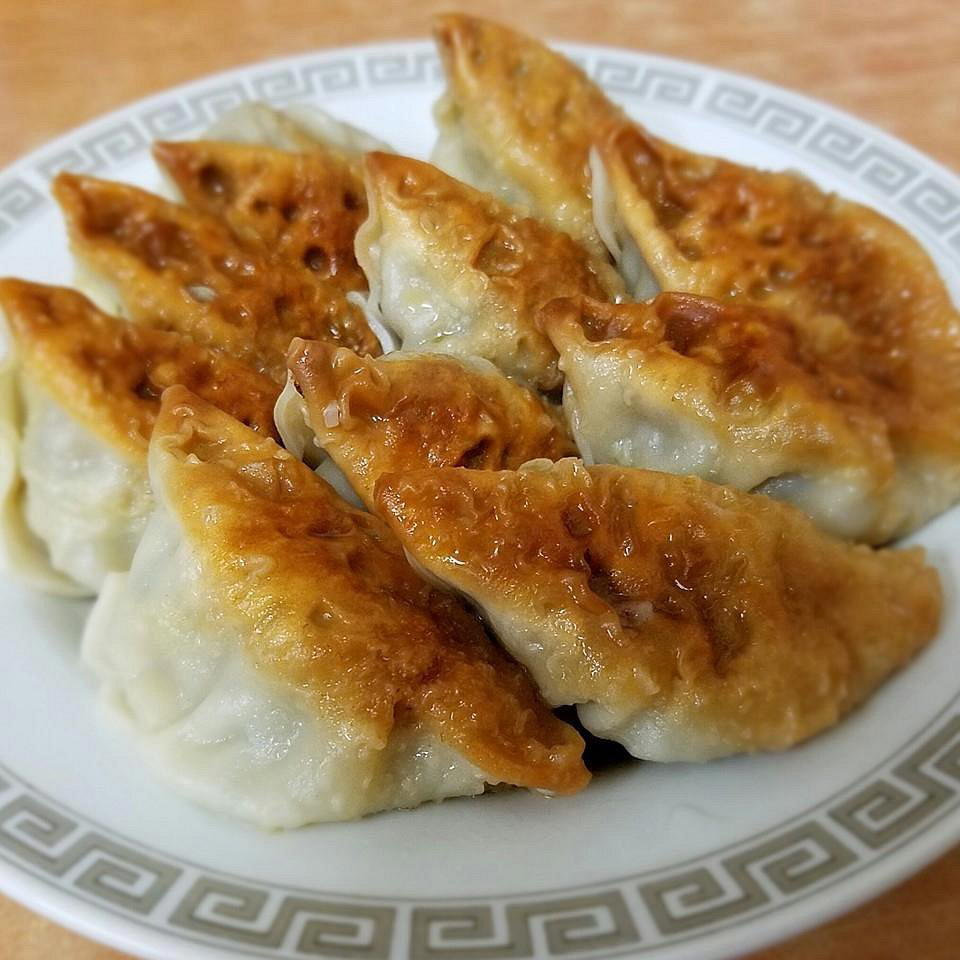
The menu
What to order
- Crispy gyoza
- Negiyaki gyoza
Gyoza as the Main Event: Numazu's Dumpling-Forward Drinking Culture
Most port cities in Japan organise their casual dining around whatever the boats bring in. Numazu, positioned at the base of the Izu Peninsula where Suruga Bay produces some of the country's most prized seafood, follows that logic in its izakayas and fish-market lunch counters. What makes Numazu Gyoza Nomiseko Taguchitei a different kind of stop is the deliberate inversion of that hierarchy. Here, gyoza is not the side order that arrives between rounds of beer and sashimi. It is the point of the visit.
The word nomiseko in the name is worth unpacking. It sits between izakaya and simple bar in Japanese hospitality vocabulary, suggesting a place where drinking and eating share equal weight but neither overwhelms the other. That framing shapes how a meal here unfolds: you are not at a restaurant that also serves drinks, nor at a bar that happens to have food. The format is its own category, and gyoza is the anchor that holds it together.
Where the Ingredients Come From — and Why That Matters in Shizuoka
Shizuoka Prefecture carries serious agricultural credentials that tend to be overshadowed by its proximity to Mount Fuji and the transit corridor between Tokyo and Osaka. The prefecture produces wasabi at scale along the Abe River valley, grows high-grade green tea across its hillside plots, and draws from Suruga Bay's cold, deep waters for fish that supply markets well beyond the region. For a gyoza-focused kitchen, that local sourcing infrastructure is not incidental. The filling ingredients, from pork and cabbage through to any seafood or regional variations a kitchen might incorporate, have a shorter path to the wrapper in Shizuoka than in many comparable Japanese cities.
Gyoza, as a category, has a long relationship with provenance-conscious cooking even if that connection is not always made explicit. The dish arrived in Japan via China, settled most visibly in cities like Utsunomiya and Hamamatsu where it developed distinct regional identities, and has since fragmented into local expressions across the country. Hamamatsu-style gyoza, for reference, tends toward cabbage-heavy fillings and a circular pan arrangement that produces a unified, lacy-bottomed disc. Numazu's own version does not have the same national profile, which is part of what keeps a venue like Taguchitei oriented toward locals and the more curious category of visitor rather than the tourist circuit. That lower profile is a function of geography as much as anything else: Numazu sits far enough off the standard Shinkansen itinerary that its casual dining spots remain calibrated for residents rather than pass-through traffic.
The Setting: A Drinking Den With Discipline
Nomiseko-style venues in Japan tend toward compact interiors, counter seating, and an atmosphere that sits closer to focused than festive. The design language is usually functional — surfaces that clean easily, lighting that does not demand attention, a menu that fits on a single laminated sheet or chalked board. That restraint is intentional. When the food format is as specific as gyoza-led drinking, the room is better served by simplicity. The dish itself provides the theater: the sound of dumplings hitting a hot iron pan, the wait for the crust to form, the moment the plate arrives with steam still rising.
For visitors arriving from outside the region, the practical rhythm of a nomiseko visit is worth understanding before you sit down. These are not venues that move at the paced, coursed tempo of a kaiseki counter like Gion Sasaki in Kyoto or an omakase room like Harutaka in Tokyo. The order cycle is faster, the expectation is that you will order in rounds, and the bill accumulates incrementally rather than arriving as a set price at the end. That structure makes it easy to eat lightly or substantially depending on appetite, and it is what makes this format work as both a quick stop and a longer evening.
Numazu in the Broader Japanese Dining Picture
Japan's regional dining scene has become considerably more accessible to international visitors over the past decade, but the attention remains concentrated on a handful of cities. Tokyo operations like Harutaka or Osaka destinations like HAJIME attract the reservation-intensive, award-aware traveller. Kyoto draws visitors to multi-generational kaiseki houses. Fukuoka has developed its own export identity through venues like Goh. Nara's quieter scene is charting its own course, with places like akordu representing the kind of considered dining that does not require metropolitan scale.
Numazu sits outside all of those established circuits. It does not appear on prefectural dining itineraries with the frequency of Shizuoka city or Hamamatsu, and it does not have the Michelin infrastructure that sends reservation-focused travellers to specific tables. What it has is a working port, a serious fish market, and the kind of neighbourhood casual dining that is harder to find in cities where gentrification has repriced informal food out of its original context. For those building an itinerary through central Honshu that extends beyond the standard Shinkansen stops, our full Numazu restaurants guide covers the wider picture.
Planning a Visit
Numazu is accessible from Tokyo via the Tokaido Line or the Kodama Shinkansen service to Mishima, from which local trains reach Numazu Station in under ten minutes. Nomiseko-format spots in Japan generally do not require advance reservations for small groups on weekday evenings, but weekend visits to popular neighbourhood spots can fill quickly. Arriving early in the evening or being prepared to wait briefly are the practical adjustments most visitors make. Pricing at this format of venue is typically modest by Japanese dining standards, making it accessible across most travel budgets without the planning overhead that higher-end destinations like Atomix in New York or Le Bernardin require.
Visitors covering more of Japan's mid-tier regional dining should consider pairing a Numazu stop with broader Shizuoka Prefecture exploration. The prefecture's food culture, anchored in its seafood, tea, and wasabi production, provides the sourcing depth that makes even casual neighbourhood venues more interesting than they might appear from the outside.
Frequently asked questions
Does Numazu Gyoza Nomiseko Taguchitei work for a family meal?
The nomiseko format at Taguchitei is built around counter seating and a drinking-den atmosphere, which tends to suit pairs and small groups of adults more naturally than families with young children. The gyoza-centred menu is approachable, but the compact, alcohol-oriented setting in Numazu is not designed around a family dining experience. If travelling with children, a sit-down izakaya with table seating would be a more practical fit.
What kind of setting is Numazu Gyoza Nomiseko Taguchitei?
Taguchitei follows the nomiseko model: a small, counter-forward space in Numazu where the focus is on drinking alongside specific food, in this case gyoza. Interiors in this format typically run compact and unfussy, with an atmosphere that leans purposeful rather than celebratory. It sits closer to a specialist drinking den than a casual restaurant.
How does Numazu Gyoza Nomiseko Taguchitei fit into Shizuoka's regional food culture?
Shizuoka Prefecture is one of Japan's more agriculturally self-sufficient regions, producing wasabi, green tea, and a range of vegetables that give local restaurants a distinct ingredient pool to draw from. Taguchitei sits within Numazu, a port city at the base of the Izu Peninsula where fresh seafood typically dominates casual dining. A gyoza-focused nomiseko in this context is a deliberate departure from the city's default, using a dumpling format to channel Shizuoka's land-based produce alongside the local drinking culture.
What's the signature dish at Numazu Gyoza Nomiseko Taguchitei?
Gyoza is the organising principle of the entire menu at Taguchitei, which positions Numazu's port-city produce within a dumpling-forward format uncommon for a coastal town. The venue's identity is built around gyoza as the main event rather than a side dish, which distinguishes it from the seafood-led casual dining that dominates the broader Numazu scene.
Do I need a reservation for Numazu Gyoza Nomiseko Taguchitei?
Counter-style nomiseko venues in Japan frequently operate on a walk-in basis, though compact seating means capacity fills quickly on weekday evenings and weekends. Contacting the venue directly before visiting is advisable, particularly for groups of more than two or three. No booking platform or phone number is currently listed in public records for Taguchitei.
What makes Numazu Gyoza Nomiseko Taguchitei worth seeking out?
Taguchitei applies the nomiseko concept to gyoza in a city better known for its fishing port than its dumplings, creating a format that has no obvious equivalent in the Numazu dining scene. Shizuoka Prefecture's agricultural credentials, including tea, wasabi, and local vegetables, give the ingredient base a regional specificity that generic gyoza chains lack. For visitors travelling the Tokaido corridor between Tokyo and Osaka, Numazu is a short detour that most skip, which keeps Taguchitei genuinely local in character.
Is Numazu Gyoza Nomiseko Taguchitei good for vegetarians?
Traditional gyoza fillings in Japan are predominantly pork-based, and nomiseko venues rarely maintain extensive meat-free alternatives as a matter of course. Without a published menu on record for Taguchitei, it is not possible to confirm specific vegetarian options. Visitors with dietary requirements should contact the venue ahead of arrival or approach with the expectation that choices may be limited.
A Quick Peer Check
| Venue | Cuisine | Price | Awards | Notes |
|---|---|---|---|---|
| Numazu Gyoza Nomiseko TaguchiteiThis venue — the venue you are viewing | Numazu Gyoza Standing Bar | $10–20 | Not listed | Not listed |
| HAJIME | Avant-Garde Japanese Fine Dining | $300–500 | 3 Michelin Stars · World's 50 Best #83 | French, Innovative |
| Harutaka | Edo-Style Omakase Sushi | $200–300 | 3 Michelin Stars · World's 50 Best #76 | Sushi |
| L'Effervescence | Modern French with Japanese Influences | $200–300 | 3 Michelin Stars · World's 50 Best #69 | French |
| RyuGin | Modern Kaiseki | $500+ | 3 Michelin Stars · World's 50 Best #41 | Kaiseki, Japanese |
| Crony | Modern French with Japanese Influences | $150–200 | 2 Michelin Stars · World's 50 Best #34 | Innovative, French |
Continue exploring
More in Numazu
Restaurants in Numazu
Browse all →
Bars in Numazu
Browse all →

Hotels in Numazu
Browse all →
Wineries in Numazu
Browse all →
Details
- Lively
- Cozy
- Casual Hangout
- After Work
- Late Night
- Open Kitchen
- Sake Program
- Beer Program
- A La Carte
- Counter Dining
- Beer
- Sake
Casual and energetic standing-room-only eatery with lively chatter and the sizzle of griddles.