
Tabelog 100 #48
Our verdict
CURRY UP belongs to Tokyo’s curry counter culture rather than its luxury dining circuit: compact, quick, and judged on repeat appeal. Its Tabelog Curry TOKYO 100 selection in 2024 gives it a credible place in the city’s crowded curry conversation, while the Jingumae setting makes it useful for a casual meal between Harajuku, Kita-Sando, and Sendagaya.

Pearl is the En Primeur Club membership app, where members save venues, book tables and use the concierge.
The menu
What to order
- Butter chicken curry
- Two-curry combo plate
- Additive-free spice curry
Tokyo rarely announces useful restaurants with grand entrances. Better casual meals often sit at street level or just off the pedestrian current, built for precision without ceremony. CURRY UP fits that Tokyo pattern: a focused curry stop with a format suited to a city where office workers, design-minded locals, tourists, and residents overlap at lunch.
Tokyo curry is broad, not one tradition: thick yoshoku-style curry rice, spice-forward shops with South Asian references, Japanese café curry, katsu curry, and contemporary interpretations that treat roux as a house signature rather than a default sauce. The city rewards specialists because curry is repeat food; diners return when rice, sauce, portion, and speed feel calibrated. Authority needs no tasting menu, only consistency and a clear reason to choose it over the next station-area option.
That is CURRY UP’s value argument. The draw is not excess, rarity, or chef-led narrative, but a focused curry format in an accessible Tokyo price tier, with enough recognition to stand apart from anonymous convenience dining. Its selection for Tabelog’s curry recognition in 2024 matters because the category is often judged by repeat visits rather than occasion spending. In a city where a serious meal can jump from casual counter to multi-course reservation, this sits in the useful middle: focused, accessible, and specific enough to justify a detour if the day already places you nearby in Tokyo.
Tokyo curry, judged by repeat value rather than ceremony
Read a Tokyo curry shop through frequency. High-end sushi and kappo build around scarcity, timing, and sequence; curry rooms live or fail by whether a plate can carry weekday lunch, quick dinner, or a low-commitment stop between appointments. Tabelog’s category recognition is a practical trust signal, placing the shop in a field where diners compare roux character, rice balance, portion, and reliability.
CURRY UP’s format helps because it is built around a direct, everyday proposition. These are not glamorous details, but they matter for curry in Tokyo: the meal should move efficiently without feeling disposable.
Tokyo adds context. The city is not only polished destination dining; it also contains offices, apartments, studios, shops, and casual stops that create a rhythm unlike the more formal reservation circuit. Curry belongs here because it is flexible: a solo meal before shopping, a quick table for two after an errand, or practical dinner when formal restaurants require planning.
Comparison clarifies the category. MOKUBAZA, another Tokyo curry name in the provided comparison set, sits in a casual-curry conversation, while Handmade buckwheat Matsunaga represents a different low-to-mid priced specialist tradition: soba rather than curry, speed and craft rather than ceremony. Convivio, Higuchi, and Inbosuko Jingumae operate in different registers, reminders that Tokyo compresses casual specialists and more formal reservations into the same dining map. Judge CURRY UP against curry and casual specialists, not formal tasting-menu dining.
A focused stop for the Tokyo curry circuit
The restaurant should be understood as part of Tokyo’s small-specialist dining culture, where diners often expect a focused menu, quick decision-making, and a meal that fits naturally into the day. For visitors, the appeal is less about ceremony than clarity: curry is familiar enough to be approachable, but each shop’s house style still gives the meal a local identity.
Approach the curry as a house-format meal, not a luxury performance. The kitchen’s identity rests on curry execution rather than imported ceremony. It fits a modern Tokyo current in which casual restaurants sharpen everyday foods. Ramen, soba, tonkatsu, curry, and onigiri share this pattern: narrow menus, modest footprints, repeat diners, and high expectations for food outsiders may misread as simple.
For travellers, the question is not whether curry belongs on a Tokyo itinerary; it does. The question is where it fits. CURRY UP is strongest when the day already moves through Tokyo and the meal needs efficiency without defaulting to a chain. It is less a cross-city pilgrimage than a precise answer to a common Tokyo problem: where to eat well, quickly, and with enough local credibility that the meal feels chosen rather than improvised.
Practicality strengthens the value proposition. Modern Tokyo casual dining can be uneven from one small specialist room to the next, so a recommendation works best when it is easy to understand and easy to slot into the day. That does not make it luxury. It makes it useful, often the difference between a good recommendation and one that collapses under travel logistics.
How it fits into a Tokyo dining day
CURRY UP works as a smart casual anchor in a day that might otherwise swing between convenience-store snacking and overplanned reservations. The Tokyo setting makes sense before or after shopping, errands, gallery time, or a design-led walk through the city. It is also a counterpoint to Tokyo’s elaborate food culture: not every worthwhile meal needs a reservation strategy, chef biography, or long-form beverage pairing.
For wider Tokyo planning, treat this as part of the city’s specialist-casual layer. For broader restaurant context, see Our full Tokyo restaurants guide, with other Tokyo dining rooms offering nearby and category contrasts across curry, casual meals, cafés, and specialist counters. For the city around the meal, pair that with Our full Tokyo hotels guide, Our full Tokyo bars guide, Our full Tokyo wineries guide, and Our full Tokyo experiences guide.
Japan’s casual-specialist map is wider than Tokyo, and the same logic travels. Readers comparing value, focus, and format can think generically about other curry shops, cafés, casual counters, and regional specialists across Japan and abroad. The useful comparison is not name-dropping, but asking whether a place has a clear format, repeat value, and enough precision to make a simple meal feel intentional.
The critical read is simple: this is a Tokyo curry specialist with documented category recognition, a focused setup, and a city position that rewards tactical use. Choose it for a grounded meal in Tokyo, not spectacle. In a city where value often comes from precision at small scale, that is the point.
Frequently asked questions
Is CURRY UP more mid-range or high-end?
Pricing at CURRY UP is listed as Dinner: JPY 1,000 - JPY 1,999; Lunch: JPY 1,000 - JPY 1,999.
What part of town is CURRY UP in?
Tokyo.
What are the operating hours at CURRY UP?
Current operating hours for CURRY UP should be checked directly before visiting.
What is CURRY UP known for?
CURRY UP is known for curry in Tokyo and has documented Tabelog category recognition in 2024.
Accolades, Compared
Comparable venues at similar price and category levels.
| Venue | Cuisine | Price | Awards | Notes |
|---|---|---|---|---|
| CURRY UPThis venue (the venue you are viewing) | Japanese curry house by NIGO in Harajuku | $10–20 | Tabelog 100 #48 | Not listed |
| Gyoza no Fukuho (餃子の福包) | Traditional Japanese Gyoza | $1–10 | Not listed | Shinjuku |
| Toki Ya Shinjuku odakyu haruku ten | Japanese sweets cafe | $1–10 | Tabelog 100 #33 | Shinjuku |
| Taiyaki Wakaba | Traditional Japanese taiyaki & wagashi shop | $1–10 | Tabelog 100 #1 | Shinjuku |
| Tokyo Rakkyo Brothers | Hokkaido-style soup curry & Japanese curry | $10–20 | Tabelog 100 #36 | Shinjuku |
| Pneuma Curry | Japanese Curry | $1–10 | Tabelog 100 #84 | Shinjuku |
Recognition history
Dated appearances from independent guides and award organizations, with the underlying list record or original source where available.
Tabelog 100 #48 · No. 48
Tabelog · Tabelog 100 - Curry - TOKYO - 2024
Continue exploring
More in Tokyo
Restaurants in Tokyo
All restaurants in Tokyo →


Bars in Tokyo
All bars in Tokyo →





Details
- Modern
- Trendy
- Cozy
- Solo
- Casual Hangout
- After Work
- Family
- Design Destination
- Standalone
- A La Carte
- Counter Dining
- Vegetarian Friendly
Current opening hours
- Monday
- 11:30 AM–8:30 PM
- Tuesday
- 11:30 AM–8:30 PM
- Wednesday
- 11:30 AM–8:30 PM
- Thursday
- 11:30 AM–8:30 PM
- Friday
- 11:30 AM–8:30 PM
- Saturday
- 11:30 AM–8:30 PM
- Sunday
- 11:30 AM–8 PM
Hours can change for holidays and private events. Hours as of .
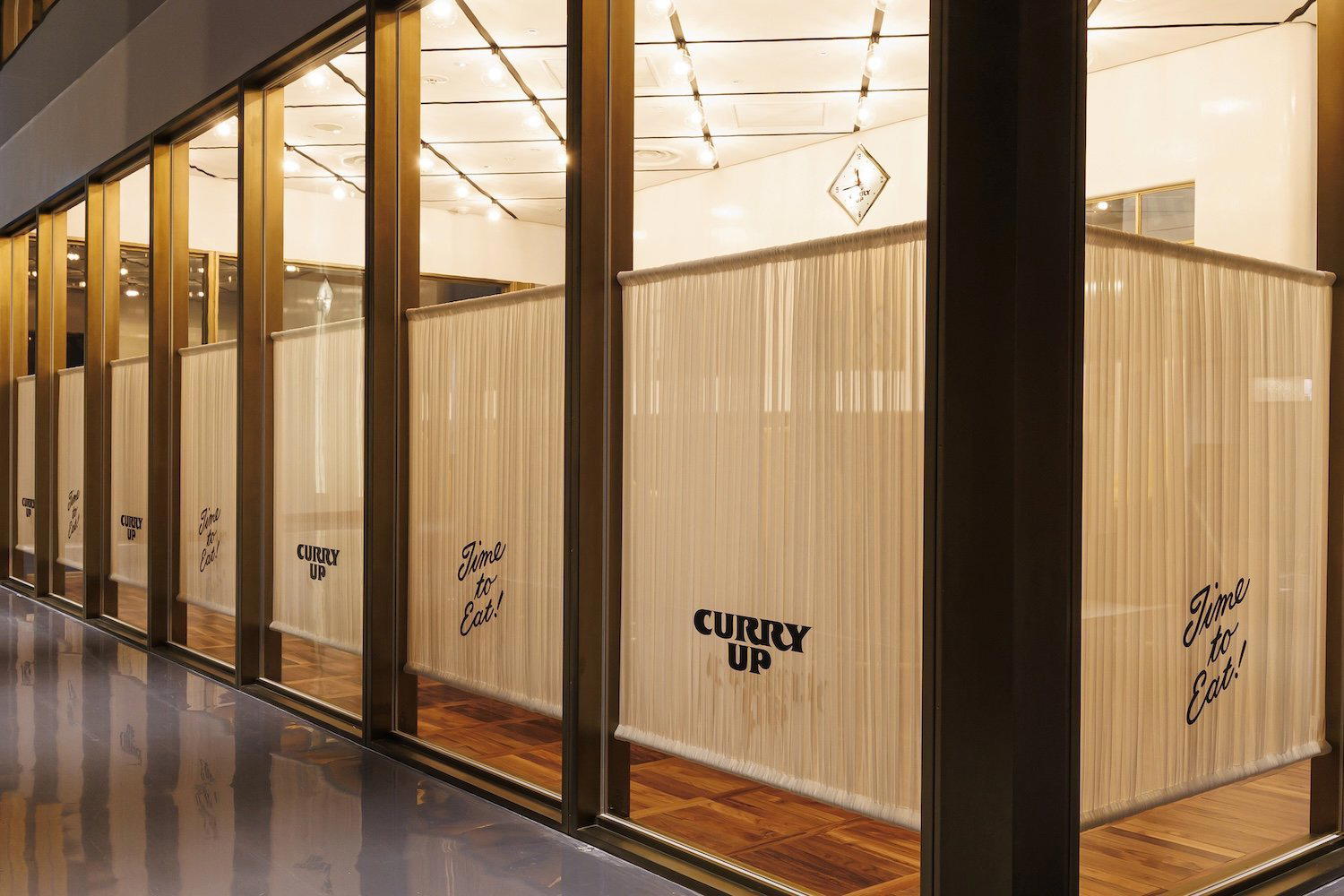
A small, clean and modern curry shop with simple graphic interiors, soft lighting and a relaxed, low‑key vibe that blends street culture aesthetics with casual counter dining.