
Michelin Plate
Our verdict
Located within Grand View Resort Beitou, Chinese Cuisine places Taiwanese culinary tradition at the centre of a resort dining experience shaped by mountain views and hot spring surroundings. The kitchen reworks familiar Taiwanese classics with precise, visually considered technique, radish carved into floral forms, osmanthus-steeped preparations, and a drinks list anchored in local wines and teas that trace the island's terroir.

Pearl is the En Primeur Club membership app, where members save venues, book tables and use the concierge.
Where Beitou's Thermal Character Meets the Dining Room
Beitou occupies a particular position in Taipei's geography and imagination. A short MRT ride north of the city centre, the district built its reputation on geothermal springs and hillside resort culture, a tradition that dates to the Japanese colonial period and has layered itself with successive waves of Taiwanese hospitality sensibility. Dining at Chinese Cuisine, inside the Grand View Resort at 30 Youya Road, means engaging with that layered context from the first moment: mountain ridgelines visible through the windows, the thermal district's quieter register replacing the street-level density of central Taipei, a setting that actively frames what arrives at the table.
Resort dining in Taiwan operates across a wide spectrum. At the lower end, it defaults to banquet formats that prioritise capacity over craft. At the upper end, the leading resort kitchens treat their remove from urban competition not as a limitation but as permission to go deeper into regional identity. Chinese Cuisine, by the evidence of its approach to ingredients, presentation, and pairing, belongs to the latter category.
Taiwanese Classics and the Logic of Reimagination
The cultural argument for transforming rather than simply reproducing Taiwanese culinary tradition is well-established across the island's serious kitchens. Taipei's own fine-dining scene makes this case repeatedly: Taïrroir runs Taiwanese ingredients through a French contemporary framework; logy applies a Modern European and Asian Contemporary sensibility to produce that is emphatically local. The impulse, in both cases, is to make the familiar strange enough to see it clearly again.
Chinese Cuisine's kitchen follows a related logic, though its frame of reference is the classical Chinese and Taiwanese canon rather than European technique. The chef, experienced in that tradition, working within a resort context that draws both domestic and international guests, applies precision and visual consideration to dishes rooted in recognisable flavour memory. The osmanthus white jade appetiser is the signal example in the public record: radish, a staple ingredient in Taiwanese home cooking and street food alike, carved into flower forms and steeped in home-brewed osmanthus wine. The result is floral in aroma, crunchy in texture, and calibrated to a sweet-and-sour balance that reads as both new and deeply familiar. That combination of craft, botanical knowledge, and restraint in sweetness is a reasonable proxy for the kitchen's wider intentions.
This approach places Chinese Cuisine in a different competitive set from Taipei's urban fine-dining addresses. Le Palais operates as a formal Cantonese house in a grand hotel setting, with the technical rigour and price point that entails. L'Atelier de Joël Robuchon Taipei and Molino de Urdániz operate in the European fine-dining register. Chinese Cuisine's proposition is different: it is anchored in Taiwanese and Chinese culinary identity, situated in a resort environment, and directed toward guests who are already in Beitou for the thermal experience rather than making a destination dining trip into the city.
Terroir on the Table: Wines, Teas, and the Question of Local Pairing
The drinks programme at Chinese Cuisine extends the kitchen's cultural argument into the glass. Local wines and teas are the stated pairing vehicles, and the combination reflects something real about Taiwan's beverage identity. The island's high-mountain oolongs, grown at elevations above 1,000 metres in areas like Ali Mountain and Li Mountain, produce teas with a depth of aromatic complexity and structural finesse that genuinely challenges European wine in the pairing context. The choice to foreground them alongside Taiwanese wines is not a consolation for the absence of a French cellar; it is a coherent curatorial stance about what this particular island's terroir looks like on the palate.
Taiwan's domestic wine industry remains modest in international recognition compared to its tea culture, but the decision to include it speaks to a programme that prioritises authenticity of provenance over prestige signalling. For guests arriving from abroad, this is arguably the more interesting choice: a meal at Chinese Cuisine can function as a legible map of what Taiwan produces, from the soil up.
This terroir-led thinking is not unique to Taipei's resort dining. Across Taiwan's serious kitchens, the conversation about local sourcing and island identity has become central. JL Studio in Taichung and GEN in Kaohsiung both engage with Taiwanese ingredient identity from different regional positions. Akame in Wutai Township goes furthest, working from indigenous Paiwan culinary roots. Chinese Cuisine's contribution to that wider conversation is specific to the Chinese culinary tradition as it has taken root and evolved in Taiwan, using classical techniques as its starting point rather than its endpoint.
The Resort Context as a Feature, Not a Caveat
There is a tendency among urban diners to treat resort restaurants as a secondary category, convenient for guests already on the property, but not worth a dedicated trip. Beitou complicates that assumption. The district's combination of thermal baths, mountain air, and relative calm is itself a reason to travel from central Taipei, and the restaurants that sit within its better resorts inherit that draw. Grand View Resort's position in the district is well-established; dining at Chinese Cuisine is already, for many guests, part of a longer stay that includes the hot spring facilities and the mountain views that the awards record explicitly cites.
That context matters for understanding what the dining room is actually doing. The pace is unhurried. The visual environment extends beyond the plate. Guests arriving from a thermal bath experience will encounter a room calibrated to continuation rather than contrast. This is a different register from the compressed intensity of an urban counter or the theatre of a city tasting menu, and for the right trip, it is precisely what makes the experience cohere.
For visitors building a wider picture of Taiwan's dining geography, the full range is worth consulting: our Taipei restaurants guide maps the city's dining scene across categories, and our Taipei hotels guide covers where to stay. For drinking, the Taipei bars guide and Taipei wineries guide are useful companions. Beyond Taipei, Zhu Xin Ju in Tainan and Volando Urai Spring Spa and Resort in Wulai District offer further reference points for resort and regional dining across the island. For something closer to home after the meal, A Gan Yi Taro Balls in New Taipei represents a very different register of Taiwanese food culture, and is worth including on any serious itinerary. Further afield, high-end coastal cooking at Le Bernardin in New York City and the American regional tradition represented by Emeril's in New Orleans offer instructive comparisons in how established culinary traditions get reimagined within an institution. Also worth exploring: our Taipei experiences guide for context on the broader cultural offer.
Planning a Visit
Chinese Cuisine sits within Grand View Resort Beitou at 30 Youya Road, Beitou District, accessible by Taipei MRT to Xinbeitou Station, followed by a short taxi or shuttle ride up into the hills. Given the resort's position and the district's popularity for weekend thermal stays, booking ahead is advisable, particularly for Friday and Saturday dinner services when the resort draws guests combining an overnight stay with dining. Guests planning a Beitou hot spring trip will find the meal integrates naturally into a longer day rather than requiring a separate planning effort. Pricing, hours, and reservation details are best confirmed directly with the resort, as these are subject to change.
Frequently asked questions
Where is Chinese Cuisine located?
Chinese Cuisine is located at Grand View Resort Beitou, 30 Youya Road, Beitou District, Taipei.
Is Chinese Cuisine Michelin-listed?
Chinese Cuisine has received recognition including: The food alone would be reason enough to visit this resort, breath-taking mountain views and hot spring baths aside. The experienced chef reimagines Taiwanese classics with novel twists. His strikingly styled appetiser, osmanthus white jade….
What do regulars order at Chinese Cuisine?
The osmanthus white jade appetiser has become a reference point for the kitchen's approach: radish carved into flowers, steeped in house-brewed osmanthus wine, delivering floral notes, crunch, and a sweet-sour balance in a single dish. Pairing it with one of the local Taiwanese teas on the drinks list extends that sensory logic further.
Should I book Chinese Cuisine in advance?
Chinese Cuisine sits inside Grand View Resort Beitou at 30 Youya Road, a destination property that draws both resort guests and Taipei diners making a dedicated trip north. Reserving ahead is advisable, particularly on weekends when the thermal district attracts day visitors alongside hotel guests.
What's the signature at Chinese Cuisine?
The osmanthus white jade is the dish that defines the kitchen's point of view: a Taiwanese radish preparation transformed through precise carving and home-brewed osmanthus wine into something that functions as both technique statement and flavour argument. It signals what the rest of the menu does with Taiwanese culinary tradition.
Cost Snapshot
Comparable venues nearby, for context on price, style, and recognition.
| Venue | Cuisine | Price | Awards | Notes |
|---|---|---|---|---|
| Chinese CuisineThis venue (the venue you are viewing) | Modern Chinese Dim Sum | Not listed | Michelin Plate | Not listed |
| Sansan Bistro | Modern Sichuan Bistro | $30–50 | Michelin Plate | Huxiao, Modern Sichuan Bistro |
| Chuan Mu Yuan | Traditional Chinese Dim Sum and Noodles | $10–20 | Michelin Plate | Shuanglian, Traditional Chinese Dim Sum and Noodles |
| Shi | Seasonal Contemporary Taiwanese | $50–100 | Michelin Plate | Heng'an, Seasonal Contemporary Taiwanese |
| Mochi Baby | Taiwanese Street Food Mochi | $1–10 | Michelin Plate | Songshan District, Taiwanese Street Food Mochi |
| Taiwan Rice Dining Hall | Taiwanese Rice Dining | $20–30 | Michelin Plate | Longyuan, Taiwanese Rice Dining |
Recognition history
Dated appearances from independent guides and award organizations, with the underlying list record or original source where available.
Michelin Plate
Michelin
Continue exploring
More in Taipei
Restaurants in Taipei
All restaurants in Taipei →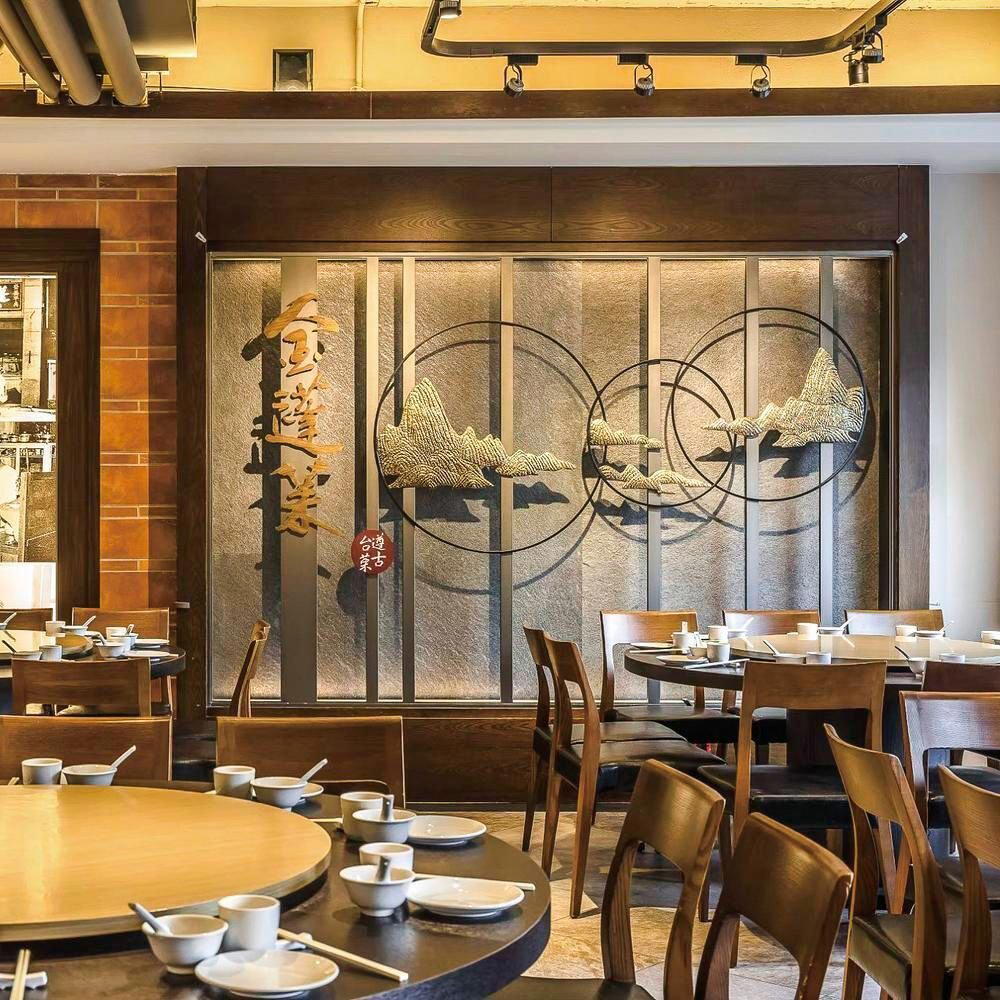
Bars in Taipei
All bars in Taipei →
Hotels in Taipei
All hotels in Taipei →
Wineries in Taipei
Browse all →
Details
- Lively
- Date Night
- Special Occasion
- Hotel Restaurant
- Skyline
- A La Carte
Current opening hours
- Monday
- 11:30 AM–2 PM, 6–9 PM
- Tuesday
- 11:30 AM–2 PM, 6–9 PM
- Wednesday
- 11:30 AM–2 PM, 6–9 PM
- Thursday
- 11:30 AM–2 PM, 6–9 PM
- Friday
- 11:30 AM–2 PM, 6–9 PM
- Saturday
- 11:30 AM–2 PM, 6–9 PM
- Sunday
- 11:30 AM–2 PM, 6–9 PM
Hours can change for holidays and private events. Hours as of .
Sophisticated hotel atmosphere with magnificent presentation and gorgeous panoramic views.