Sichuan cooking in Vienna's 22nd district occupies a different register than the city's parade of modern Austrian and creative European tasting menus. China Sichuan Restaurant, located at Arbeiterstrandbadstraße 122, represents the kind of regional Chinese specificity that remains genuinely sparse in the Austrian capital, a counterpoint to the €€€€ fine-dining tier that dominates Vienna's international recognition.
Pearl is the En Primeur Club membership app — saves, bookings, and concierge access live there. Same editors, same standards.
- Address
- Arbeiterstrandbadstraße 122, 1220 Wien, Austria
- Phone
- +434312633713
- Website
- sichuan.at
- Directions
- Get directions
 Saves & bookings on Pearl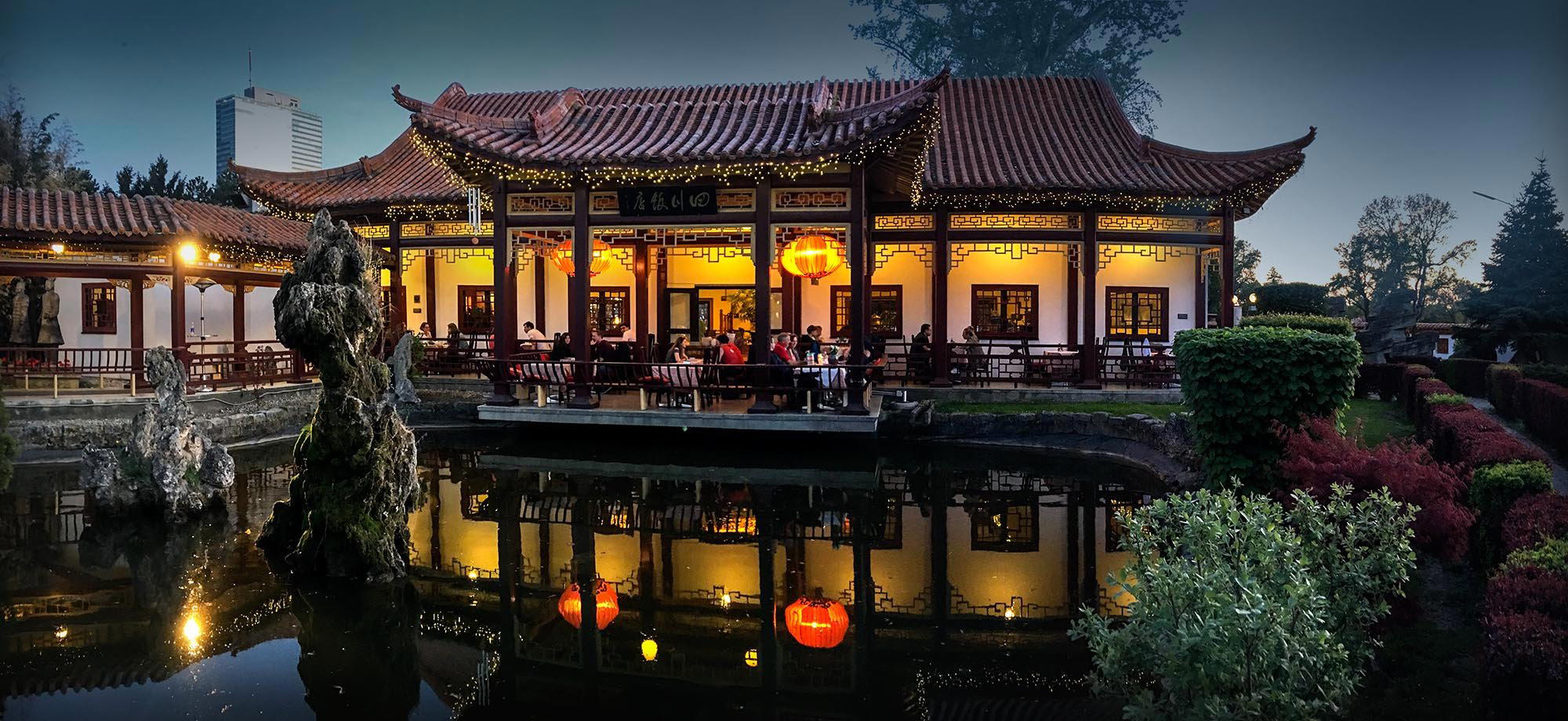
Sichuan in the 22nd: A Different Kind of Vienna Dining
Vienna's dining conversation is dominated by a cluster of creative European restaurants operating at the highest price tier. Steirereck im Stadtpark, Amador, and Konstantin Filippou define the city's international profile, tasting menus, wine pairings, Michelin recognition. Against that backdrop, a Sichuan-focused restaurant in the 22nd district, far from the Innere Stadt, operates in a different register entirely. It is not competing for the same table. It is answering a different question: where, in a city that does Austrian and Central European cooking at a high level, can you find the particular heat, numbing spice, and fermented depth that characterises one of China's most technically demanding regional cuisines?
That question matters because Sichuan cooking is not interchangeable with the generalised Chinese restaurant format that spread across European cities in the latter half of the 20th century. The cuisine is built around a specific flavour principle, the combination of dried chillies and Sichuan peppercorn that produces mala, a simultaneously hot and numbing sensation with no real European parallel. Executing it honestly requires access to specific ingredients and a willingness to calibrate heat and spice at a level that casual pan-Asian menus rarely attempt. In a city where the highest-profile non-European cooking tends to be Japanese, a restaurant committed to this particular regional tradition occupies a narrow but coherent position.
The Space and What It Signals
China Sichuan Restaurant sits at Arbeiterstrandbadstraße 122 in Vienna's 22nd district, the Donaustadt, a sprawling residential and commercial area on the east bank of the Danube. The address itself is an editorial statement. This is not a restaurant positioned for the tourist circuit or the after-opera crowd. The 22nd district is where Vienna's working population lives, where larger apartment blocks and suburban infrastructure replace the Ringstrasse grandeur of the centre. A restaurant here is making a bet on regulars, on community, on the kind of repeat custom that comes from a neighbourhood rather than from TripAdvisor foot traffic.
That geographical positioning shapes the physical experience before you enter. The approach along Arbeiterstrandbadstraße, a long, functional road that leads toward the old Arbeiterstrandbad, one of the Danube's historic public bathing areas, is not scenic in any conventional sense. But it is genuinely Viennese in its own way, the kind of district that the city's fine-dining guides rarely map. Walking in, the space signals the same priorities: this is a room designed for eating, not for photography. The interior logic of a committed regional Chinese restaurant in this tier tends toward efficient seating, clear sightlines to the kitchen, and the kind of deliberate simplicity that lets the food lead. Round tables suited to shared ordering, banquet-style service rhythms, and a room temperature that rises with the cooking, these are design choices as much as practical ones, reflecting the way Sichuan food is actually meant to be eaten: communally, in sequence, with dishes arriving as they're ready rather than in the choreographed progression of a European tasting menu.
Compare this spatial logic to the formal dining rooms of Mraz and Sohn or Doubek, where the room itself is part of the product, lighting calibrated, table spacing generous, the whole environment engineered toward a particular kind of concentrated attention. A Sichuan restaurant in the 22nd is doing something structurally different: the architecture of the meal is horizontal rather than vertical, built around abundance and sharing rather than sequence and restraint. Neither is superior. They are solving different problems.
Regional Chinese Cooking in the Austrian Context
Austria's fine-dining geography is weighted heavily toward the Alpine and Danubian traditions. The country's most recognised restaurants, from Döllerer in Golling an der Salzach to Obauer in Werfen and Landhaus Bacher in Mautern an der Donau, draw on Central European produce and technique. Even the country's more experimental rooms, like Gourmetrestaurant Tannenhof in Sankt Anton am Arlberg or Stüva in Ischgl, operate within a European reference system.
This is the context in which China Sichuan Restaurant's address in Donaustadt becomes interesting rather than inconvenient. Vienna's 22nd district has a more mixed residential character than the inner districts, and that demographic reality tends to support the kind of unpretentious, ingredient-focused regional cooking that doesn't require a marketing budget or a central location to sustain itself. The model is closer to what you find in London's outer boroughs or in the arrondissements of Paris beyond the first eight than to anything operating inside the Ringstrasse. For the kind of diner who tracks this type of restaurant, the ones who travelled to Le Bernardin in New York or Lazy Bear in San Francisco not for prestige but for specificity, the 22nd district address is a feature, not a drawback.
Planning Your Visit
For a fuller picture of where this restaurant sits within Vienna's dining options, see our full Vienna restaurants guide.
| Venue | Cuisine | District | Price Tier | Format |
|---|---|---|---|---|
| China Sichuan Restaurant | Sichuan (regional Chinese) | 22nd (Donaustadt) | Not confirmed | Communal / à la carte |
| Steirereck im Stadtpark | Creative Austrian | 3rd (Stadtpark) | €€€€ | Tasting menu / à la carte |
| Konstantin Filippou | Modern European | 1st (Innere Stadt) | €€€€ | Tasting menu |
| Mraz and Sohn | Modern Austrian / Creative | 20th (Brigittenau) | €€€€ | Tasting menu |
A Lean Comparison
Comparable venues nearby, for context on price, style, and recognition.
| Venue | Cuisine | Price |
|---|---|---|
| China Sichuan RestaurantThis venue — the venue you are viewing | Donauturm, Authentic Sichuan Chinese | $$ |
| China Kitchen | Wieden, Authentic Sichuan Chinese | $$ |
| Feine Sichuan Küche | Inner City, Authentic Sichuan Chinese | $$ |
| LiuLiu | Wahring, Asian Fusion | $$ |
| laolao | Westbahnhof, Hand-Pulled Chinese Noodles | $$ |
| Chilidorf | Doebling, Authentic Sichuan Chinese | $$ |
Continue exploring
More in Vienna
Restaurants in Vienna
Browse all →
Bars in Vienna
Browse all →
Hotels in Vienna
Browse all →

At a Glance
- Cozy
- Family
- Casual Hangout
- Group Dining
Current opening hours
- Monday
- 11 AM–2:30 PM, 5:30–11 PM
- Tuesday
- 11 AM–2:30 PM, 5:30–11 PM
- Wednesday
- 11 AM–2:30 PM, 5:30–11 PM
- Thursday
- 11 AM–2:30 PM, 5:30–11 PM
- Friday
- 11 AM–2:30 PM, 5:30–11 PM
- Saturday
- 11 AM–11 PM
- Sunday
- 11 AM–11 PM
Hours can change for holidays and private events. Last verified .