Our verdict
Occupying the 13th and 14th floors of the Old Bank of China Building in Central, China Club is a private members' institution that has shaped the conversation around serious Cantonese dining in Hong Kong for decades. Open Monday through Saturday from 7:30am to midnight.

Pearl is the En Primeur Club membership app, where members save venues, book tables and use the concierge.
The menu
What to order
- Peking Duck
- Barbecue pork
- Dim sum
Central's Colonial Frame, Cantonese at Its Centre
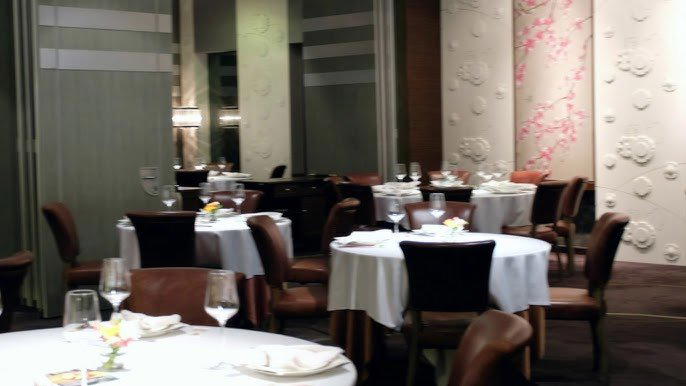
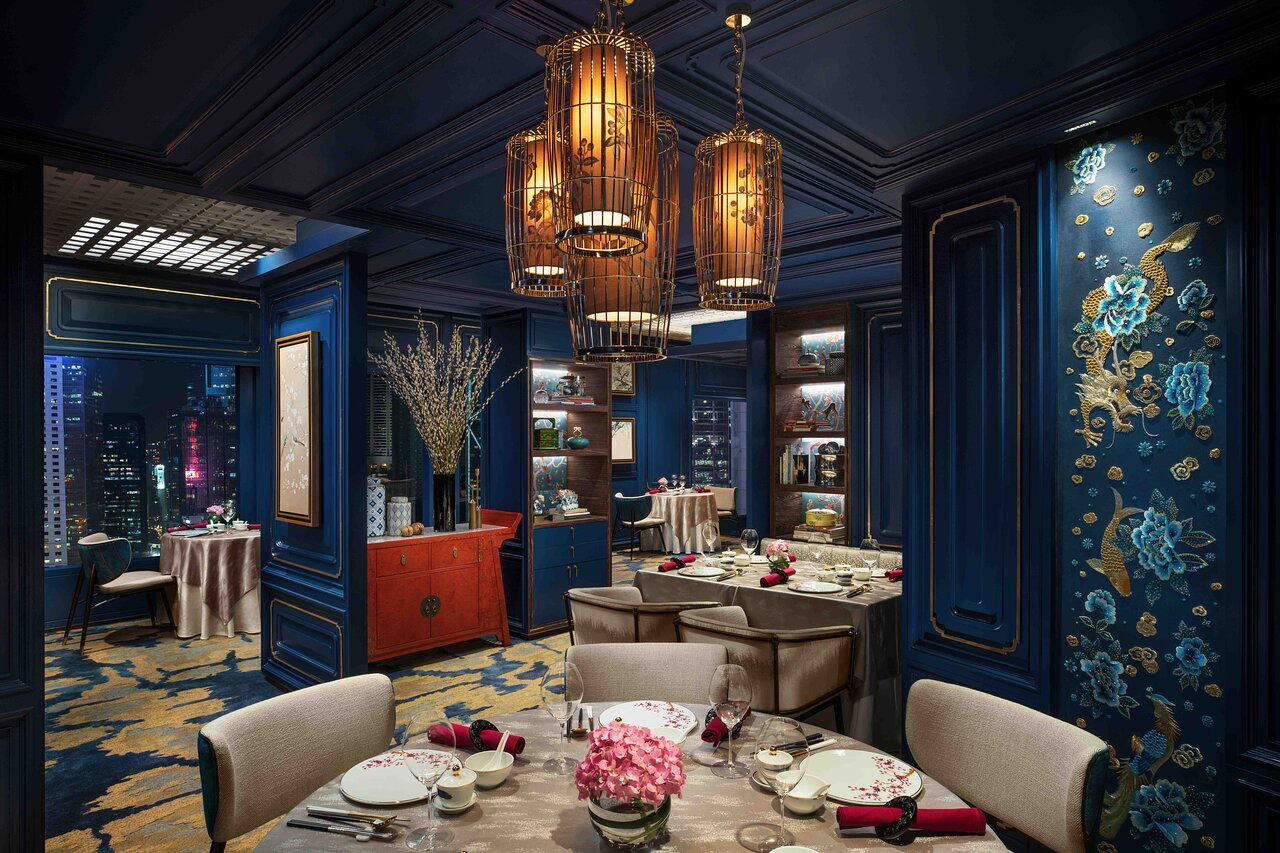
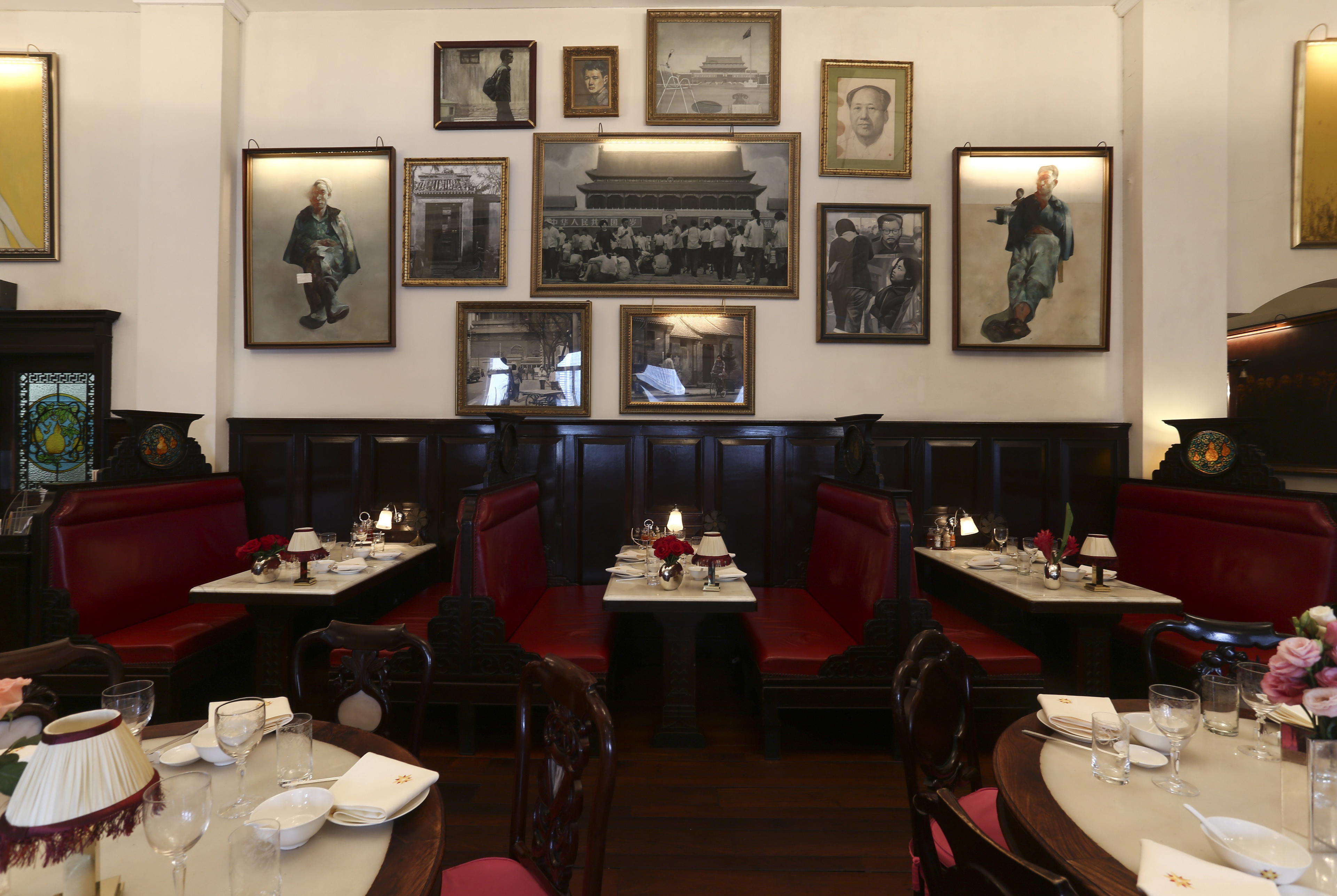
The Old Bank of China Building on Bank Street sits inside one of Hong Kong's most architecturally loaded blocks, a short walk from the glass towers of contemporary Central but belonging to a different era entirely. The building's neoclassical facade signals a particular kind of institutional gravity, and China Club, occupying the 13th and 14th floors, does nothing to undercut that impression. The approach, an elevator ride into rooms dressed in 1930s Shanghai-influenced chinoiserie, lacquered screens, and pre-war portraiture, places the diner inside a very specific argument about what Chinese cultural life in Hong Kong looks like when it dresses formally. This is not a setting designed to fade into the background, and the Cantonese food served here is framed accordingly.
Central's dining geography has shifted considerably over the past decade. The neighbourhood now contains some of Hong Kong's most technically demanding kitchens, from Michelin-decorated French addresses to innovative fusion formats. Where venues like Lung King Heen or Lai Ching Heen compete inside the Michelin framework, China Club operates partly outside it, drawing a membership-oriented clientele for whom the room and its associations carry as much weight as the plate.
The Cantonese Tradition in a Members' Context
Serious Cantonese cooking in Hong Kong has always occupied a dual register: the technical refinement of dim sum and seafood preparations on one hand, and the social ritual of the dining room on the other. Private clubs in Central have historically been where those two registers converge most openly. The format rewards regulars; dishes arrive in the cadence of a kitchen that knows its audience, and the menu reflects the kind of Cantonese canon that has been honed over generations rather than reinvented for trend cycles.
That canon includes the roast preparations, the wok-tossed crustacean dishes, the steamed fish work, and the dim sum repertoire that define Cantonese cooking at its most considered. The result is a kitchen with depth across its range rather than a menu built around individual signature moments.
For Cantonese comparison across the region, the tradition shows up in different registers elsewhere: Jade Dragon in Macau operates within a luxury hotel format, Le Palais in Taipei takes the imperial banquet approach, and Summer Pavilion in Singapore situates Cantonese cooking inside a five-star hotel framework. China Club belongs to none of those categories; the private club model gives it a different relationship with its diners and a different standard of measure.
Recognition and Position in the Asia Rankings
Hong Kong's dining scene carries enough critical infrastructure that placement in the Opinionated About Dining rankings provides a meaningful positional signal. China Club appeared at #294 in the 2025 OAD Leading Restaurants in Asia in 2024, then moved to #225 in the 2025 edition, a directional improvement that indicates growing recognition among the serious dining community. OAD rankings are driven by surveyed professional eaters with regional expertise, so upward movement in consecutive years reflects accumulating critical weight rather than a single moment of attention.
That ranking places China Club in a different tier from the Michelin three-star addresses in Hong Kong, including the French kitchens and the most-decorated Cantonese rooms. But it places it squarely within the broader conversation about where serious Chinese food happens in Asia in 2025, alongside institutions across Shanghai, Macau, Taipei, and Singapore. For context on how that conversation extends to Shanghai specifically, 102 House and Bao Li Xuan represent the Cantonese tradition as it plays out in a mainland context, while Chef Tam's Seasons in Macau and Imperial Treasure Fine Chinese Cuisine in Guangzhou show how the cuisine evolves across different regulatory and cultural environments.
The Room as Part of the Argument
Hong Kong dining rooms that lean into their own history tend to do so at two extremes: stripped-back heritage preservation or maximalist nostalgia. China Club sits closer to the latter, with interiors that reference Shanghai's 1930s artistic and political elite through portraiture, ink paintings, and period furniture. The effect is deliberate and cumulative rather than decorative. Dining in this room involves engaging with a particular reading of Chinese modernity, one that insists on the pre-war period as a cultural reference point rather than a colonial footnote.
That context matters because it shapes what the food means in context. Cantonese cooking served here arrives inside a room that is itself making an argument about Chinese cultural continuity. Venues like T'ang Court or Forum take different approaches to situating serious Cantonese cooking, the former through luxury hotel positioning, the latter through decades of roast goose reputation, and the comparison clarifies what China Club is doing: it is less interested in one signature dish or a trophy address than in sustaining a complete dining environment with institutional weight behind it.
The club also houses art collections and hosts cultural programming, which means the 13th and 14th floors function as more than a restaurant. That broader role reinforces the dining room's position as a social institution rather than simply a kitchen with tables.
Planning Your Visit
China Club operates Monday through Saturday, opening at 7:30am and closing at midnight; the kitchen is closed on Sundays. The address is 13-14/F, Old Bank of China Building, Bank Street, Central, close to Central MTR station and within walking distance of other Central dining addresses. Given its private members' club structure, access arrangements are worth confirming in advance. The hours suggest a kitchen that serves across breakfast, lunch, and dinner services, though the evening format is where the full scope of the Cantonese menu is most likely to be in play.
For planning the broader Hong Kong trip around dining, our full Hong Kong restaurants guide covers the city's range across cuisines and price tiers. For hotels, bars, and experiences across the city, see our full Hong Kong hotels guide, our full Hong Kong bars guide, our full Hong Kong wineries guide, and our full Hong Kong experiences guide. For Cantonese dining across the region, the Canton 8 (Huangpu) entry in Shanghai offers a useful point of comparison for how the tradition travels. Rún in Hong Kong represents another angle on the city's serious Chinese dining options.
What to Order at China Club
What the OAD ranking, the institutional format, and the Cantonese culinary tradition together suggest is that the kitchen's strength lies across the core repertoire: roast preparations, wok work, steamed seafood, and dim sum. In a club dining room of this type and standing, the safer approach is to ask staff for that day's recommendations rather than arriving with a fixed order in mind.
Frequently asked questions
What's China Club's location?
China Club is located at 13-14/F, Old, Bank Of China Building, Bank St, Central, Hong Kong, Hong Kong.
What awards or recognition does China Club have?
China Club has received recognition including: Opinionated About Dining Top Restaurants in Asia Ranked #225 (2025); Opinionated About Dining Top Restaurants in Asia Ranked #294 (2024).
What should I order at China Club?
China Club's menu sits within the Cantonese tradition, which at this tier typically means refined dim sum, whole fish preparations, and roasted meats executed to technical standard. The kitchen operates across a long service window, 7:30am to midnight Monday through Saturday, suggesting a menu built to span morning dim sum through late dinner. The club's placement at #225 in the 2025 Opinionated About Dining Asia rankings signals a kitchen worth interrogating beyond the printed menu.
What style of cooking does China Club do?
Is China Club open every day?
Hours at China Club: Hours: Monday 7:30 am–12 am Tuesday 7:30 am–12 am Wednesday 7:30 am–12 am Thursday 7:30 am–12 am Friday 7:30 am–12 am Saturday 7:30 am–12 am Sunday Closed.
Who runs the kitchen at China Club?
The chef associated with China Club is Various.
Price and Positioning
A quick peer list to put this venue’s basics in context.
| Venue | Cuisine | Price | Awards | Notes |
|---|---|---|---|---|
| China ClubThis venue (the venue you are viewing) | Classic Cantonese Fine Dining | Not listed | Not listed | Not listed |
| 8 1/2 Otto e Mezzo Bombana (Hong Kong) | 3 Michelin-Star Italian Fine Dining | $200–300 | 3 Michelin Stars · World's 50 Best #94 | Italian |
| Ta Vie | Modern French-Japanese Fine Dining | $300–500 | 3 Michelin Stars · World's 50 Best #68 | Japanese - French, Innovative |
| Caprice | Contemporary French Fine Dining | $200–300 | 3 Michelin Stars · World's 50 Best #35 | French, French Contemporary |
| Feuille | Modern Vegetable-Forward French | $200–300 | 1 Michelin Star · World's 50 Best #93 | French Contemporary |
| Neighborhood | Modern French with Asian Influences | $50–100 | 1 Michelin Star · World's 50 Best #24 | International, European Contemporary |
Recognition history
Dated appearances from independent guides and award organizations, with the underlying list record or original source where available.
Opinionated About Dining Top Restaurants in Asia Recommended
Opinionated About Dining
Full recognition history (3 entries)
Opinionated About Dining Top Restaurants in Asia Ranked #225
Opinionated About Dining
Opinionated About Dining Top Restaurants in Asia Ranked #294
Opinionated About Dining