





Holding two Michelin stars since at least 2024 and ranked among Asia's top Cantonese tables by Opinionated About Dining, Lai Ching Heen at the Regent Hong Kong has long been a reference point for refined Cantonese cooking in Tsim Sha Tsui. Chef Lau Yiu-fai leads a room where front-of-house precision and kitchen craft operate at the same register, making it among the more coordinated dining experiences in the city.
Pearl is the En Primeur Club membership app — saves, bookings, and concierge access live there. Same editors, same standards.
- Address
- 18 Salisbury Rd, Tsim Sha Tsui, Hong Kong
- Phone
- +852 2313 2313
- Website
- hongkong.regenthotels.com
- Directions
- Get directions
 Saves & bookings on Pearl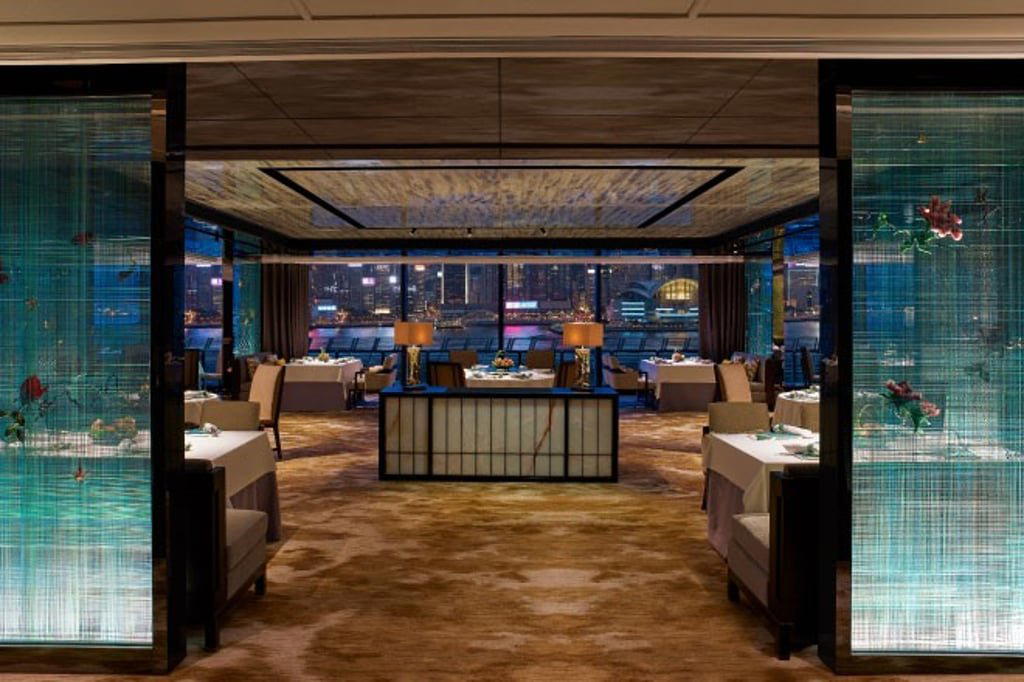
Where Tsim Sha Tsui's Cantonese Tradition Meets Harbour-Side Formality
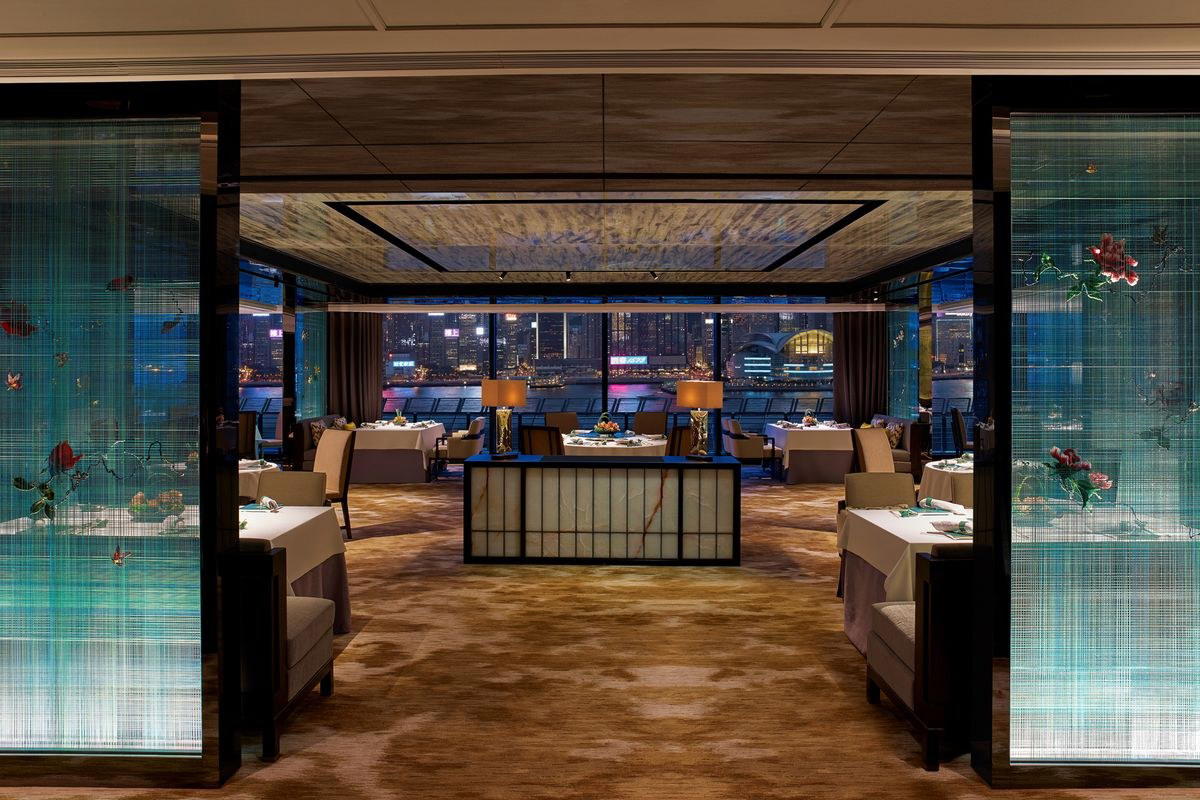
The approach to Lai Ching Heen sets the tone before a dish arrives. A long corridor lined with pale jade resin walls, inlaid with mother-of-pearl etchings that trace Hong Kong's skyline, acts as a slow decompression from Salisbury Road's traffic and ferry noise. It is an architectural statement about register: you are moving from the city's pace into something more deliberate. That transition is not incidental. It is the opening move of a dining experience built on calibrated restraint, where every element of the room, the service, and the kitchen has been tuned to a single frequency.
Tsim Sha Tsui's waterfront corridor has always carried a particular weight in Hong Kong's dining hierarchy. The neighbourhood sits across Victoria Harbour from Central's financial concentration, drawing a mix of international hotel guests, mainland Chinese visitors, and local business diners who treat this stretch of Salisbury Road as a neutral but prestigious ground. Cantonese fine dining here operates at a higher formality threshold than, say, Sheung Wan or Sham Shui Po's neighbourhood specialists. The expectations are different, the price points reflect that, and the room at Lai Ching Heen, inside the Regent Hong Kong, confirms it immediately.
The Coordination That Makes Two Stars Mean Something
Michelin's two-star designation signals a level of consistency that goes beyond a talented kitchen. At this tier, what examiners are testing is not just the food: it is the coherence between what the kitchen produces and what the dining room delivers. Lai Ching Heen's recognition across multiple systems, a Black Pearl 2 Diamond award in 2025, 92 points from La Liste's 2026 ranking, and placement at #79 in Opinionated About Dining's Asia rankings for 2025 (up from #85 in 2023), suggests that coherence is sustained rather than intermittent.
Chef Lau Yiu-fai's role is the kitchen anchor, but the editorial angle here is less about individual authorship and more about how a high-performing Cantonese room functions as a system. In rooms operating at this level, the sommelier's wine pairings must speak to the delicacy of Cantonese seasoning rather than overpower it, a different challenge than pairing for French or Italian cooking, where bolder flavour compounds tolerate more assertive wine. Front-of-house in formal Cantonese dining also carries specific responsibilities: pacing a shared-format meal across a table of varied appetites, managing lazy-Susan choreography without interrupting conversation, and guiding diners who may be less familiar with classical technique through a menu that rewards prior knowledge. The OAD improvement from 2023 to 2025 hints at a team that is tightening its coordination year on year rather than resting on accumulated status.
For comparison within Hong Kong's Cantonese fine dining tier, Lung King Heen at Four Seasons holds three Michelin stars and operates on the Central waterfront, while Tin Lung Heen at The Ritz-Carlton carries two stars in the ICC tower above Kowloon. T'ang Court at The Langham, a short walk from Lai Ching Heen, also operates in the two-star bracket. What distinguishes these rooms from each other is less a hierarchy of quality than a difference in composition: the specific blend of technique, room character, and team dynamic that each has developed over time. The restaurant's jade corridor and harbour-adjacent address give it a distinct atmospheric profile within this peer group.
Cantonese at the Formal End of the Spectrum
Cantonese cuisine at this level operates according to a different logic than the more theatrical end of Hong Kong's dining scene. The cooking tradition values clarity, restraint in seasoning, and the expression of ingredient quality through technique rather than transformation. Steaming, gentle stir-frying at high wok heat, and long-cooked broths are the tools. The goal is not to surprise with contrast but to reveal what a premium ingredient tastes like when handled precisely. That philosophy makes the chef's sourcing decisions and the kitchen's temperature discipline more visible than in cuisines where saucing or spicing can compensate for variation.
At the two-Michelin-star bracket, Cantonese kitchens also tend to carry a wider repertoire than their European counterparts at the same level. Where a two-star French kitchen might focus a tasting menu around eight to twelve courses with a single through-line, a formal Cantonese room typically spans roasted meats, dim sum at lunch, whole seafood preparations, wok dishes, and soup courses, each demanding different technical skills and different kitchen organisation. Managing that breadth at consistent quality is part of what the award system is measuring. Diners who approach the restaurant expecting a European-style progression will find a different grammar: more texture variation, more shared decision-making at the table, and a pace that accommodates conversation rather than imposing a sequence.
For those exploring how the same culinary tradition reads in neighbouring cities, Jade Dragon in Macau and Chef Tam's Seasons represent the Cantonese fine dining tier across the Pearl River Delta. In Shanghai, 102 House, Bao Li Xuan, and Imperial Treasure Fine Chinese Cuisine sit within the same tradition, while Canton 8 (Huangpu) offers a more accessible entry point. In Taipei, Le Palais carries the tradition at three-Michelin-star level, and in Singapore, Summer Pavilion represents a comparable formal register. Cross-referencing these rooms helps calibrate what makes Hong Kong's expression of Cantonese cooking distinctive: the city's access to specific live seafood, its roasting traditions, and the sheer density of competing kitchens that keeps standards under constant peer pressure.
Placing Lai Ching Heen in Hong Kong's Broader Dining Map
Kowloon's Tsim Sha Tsui carries a different energy than Hong Kong Island's restaurant clusters. Central and Wan Chai attract more expense-account European and Japanese fine dining, while Tsim Sha Tsui's hotel row tilts toward Cantonese and Shanghainese formality, with a larger share of mainland Chinese clientele shaping the room's ambient register. That context affects everything from wine list composition to the pace of service and the proportion of à la carte versus set-menu ordering at the table.
Within the Regent Hong Kong specifically, the restaurant sits inside a property that has been a fixture of the city's luxury hotel scene since before the 1997 handover. The hotel's harbour views, available from certain positions in the dining room, add an environmental dimension that few other formal Cantonese rooms in the city can match. Diners seated at window tables during evening service look across to Hong Kong Island's skyline, a sight that has become as much a part of the restaurant's identity as its food.
For those building a broader Hong Kong itinerary, Forum and Rùn represent different registers of Chinese cooking in the city.
Know Before You Go
- Address: 18 Salisbury Rd, Tsim Sha Tsui, Hong Kong (inside the Regent Hong Kong)
- Price range: $$$$
- Hours: Monday to Saturday 12:00 to 2:30 pm and 6:00 to 10:00 pm; Sunday 11:30 am–2:30 pm and 6:00 to 10:00 pm
- Awards: Michelin 2 Stars (2024, 2025); Black Pearl 2 Diamond (2025); La Liste 92pts (2026); OAD Asia #79 (2025)
- Booking: Advance reservations are essential, particularly for weekend dim sum lunch and peak evening service
Style and Standing
Comparable venues nearby, for context on price, style, and recognition.
| Venue | Cuisine | Price | Awards | Notes |
|---|---|---|---|---|
| Lai Ching HeenThis venue — the venue you are viewing | Refined Cantonese Fine Dining | $$$$ | Michelin 2 Star | Not listed |
| Tin Lung Heen | Refined Authentic Cantonese | $$$$ | Michelin 2 Star | Yau Tsim Mong South |
| Feuille | Modern Vegetable-Forward French | $$$$ | Michelin 1 Star | Central |
| Felix | Modern European | $$$$ | World's 50 Best #17 | Yau Tsim Mong South |
| L'Envol | Modern French Fine Dining | $$$$ | Michelin 2 Star | Wan Chai |
| Tate Dining Room and Bar | Modern French-Chinese Fusion | $$$$ | Michelin 2 Star | Central |
Recognition history
Dated appearances from independent guides and award organizations, with the underlying list record or original source where available.
Forbes Recommended
Forbes
La Liste Top Restaurants
La Liste
Michelin 2 Stars
Michelin
Opinionated About Dining Top Restaurants in Asia Recommended
Opinionated About Dining
Opinionated About Dining Top Restaurants in Asia Ranked #90
Opinionated About Dining
SCMP 100 Top Tables Restaurants
SCMP 100 Top Tables
Black Pearl 2 Diamond
Black Pearl
Michelin 2 Stars
Michelin
Opinionated About Dining Top Restaurants in Asia Ranked #79
Opinionated About Dining
Michelin 2 Stars
Michelin
Opinionated About Dining Top Restaurants in Asia Ranked #85
Opinionated About Dining
Continue exploring
More in Hong Kong
Restaurants in Hong Kong
Browse all →
Bars in Hong Kong
Browse all →
At a Glance
- Elegant
- Sophisticated
- Intimate
- Special Occasion
- Business Dinner
- Celebration
- Hotel Restaurant
- Private Dining
- Panoramic View
- Extensive Wine List
- Sake Program
- Waterfront
- Skyline
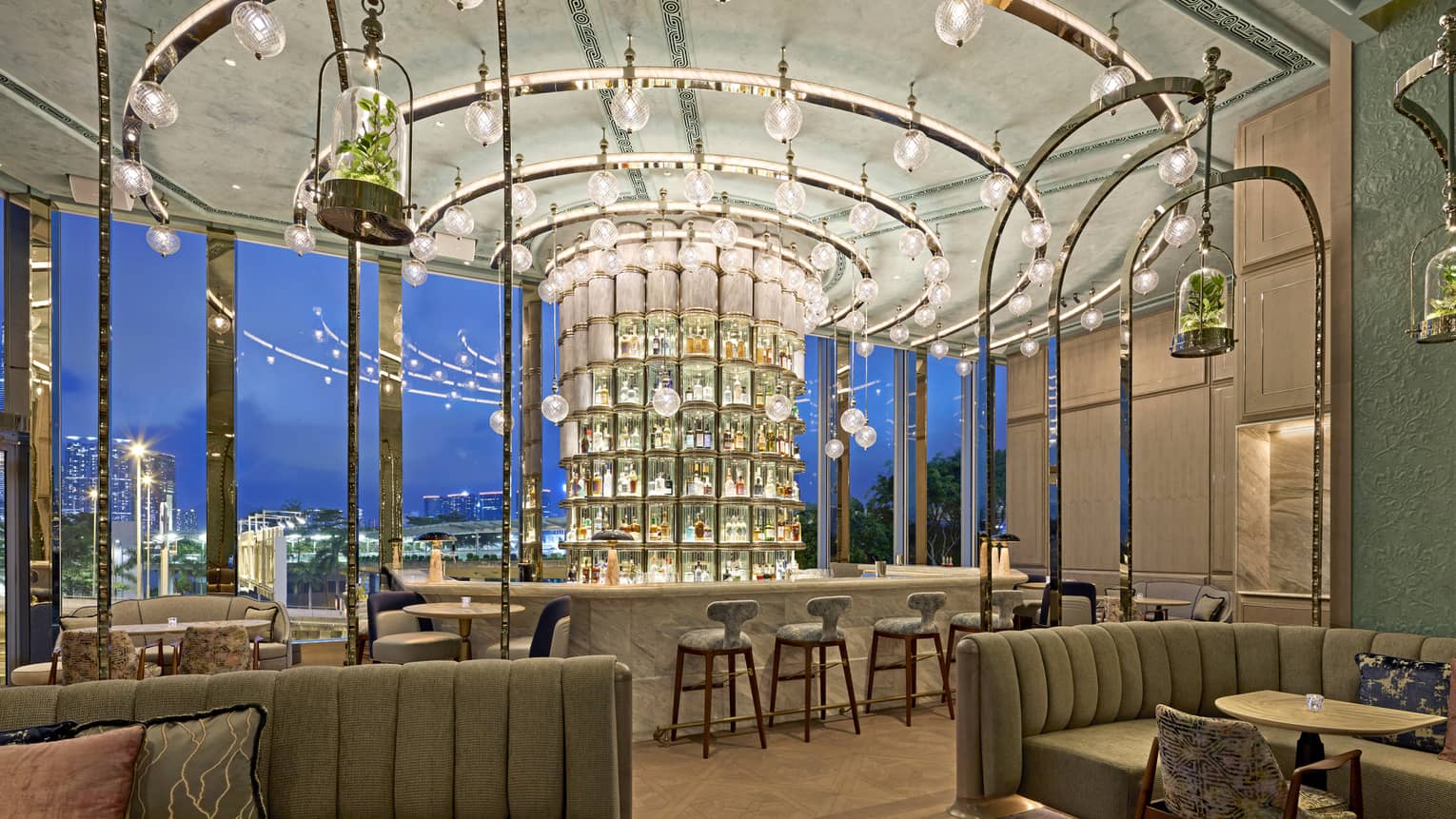
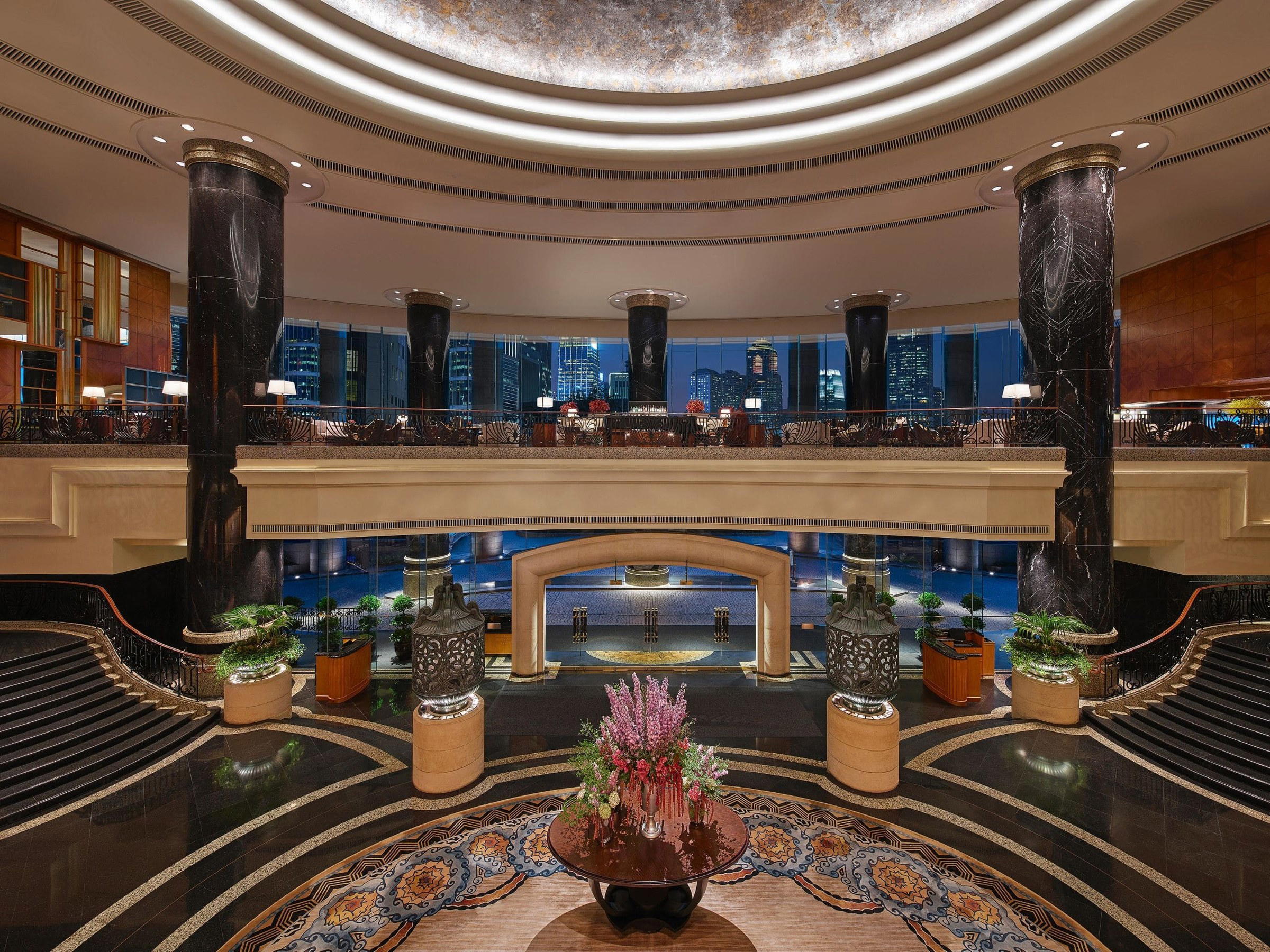
Elegant décor inspired by a jade jewellery box with dramatic harbour views, creating a sophisticated and refined atmosphere.