Our verdict
On a quiet stretch of Schottenfeldgasse in Vienna's Seventh District, Chili & Pfeffer takes a deliberate position in a city that rarely leads with heat. The name is a culinary statement: spice as structure, not accent. In Neubau's dense field of independent restaurants, that specificity marks a clear point of difference from the neighbourhood's broader offer.

Pearl is the En Primeur Club membership app, where members save venues, book tables and use the concierge.

Schottenfeldgasse and the Spice-Forward Tradition in Vienna's Seventh District
The Seventh District, Neubau, operates on a different register from Vienna's grander dining precincts. Where the First District leans on ceremony and the institutional weight of venues like Steirereck im Stadtpark or Amador, Neubau trades in neighbourhood density: streets of independent businesses, a resident population that eats out frequently, and a dining culture that rewards specificity over spectacle. Schottenfeldgasse sits toward the quieter western edge of this district, past the design studios and record shops, where the foot traffic thins and the signage gets smaller. It is the kind of address where a restaurant earns its place through the quality of what it serves rather than through location advantage.
Chili & Pfeffer occupies that address at number 86. The name signals a direct editorial position: heat and pepper, spice as a structural element rather than an afterthought. In a city where the dominant dining tradition runs from Wiener Schnitzel to the refined modern-Austrian tasting menus at places like Mraz & Sohn or Konstantin Filippou, a restaurant that leads with chili and pepper as its identity occupies a clearly differentiated space.
The Sensory Register: What Spice-Led Cooking Feels Like as a Dining Experience
Spice-forward restaurants work differently from kitchens where heat is an accent. The experience is cumulative: the first course calibrates your palate, and subsequent dishes build on that foundation. Aromas in the room shift as dishes arrive at neighbouring tables, chili oil, toasted peppercorn, roasted alliums, and the atmosphere takes on a warmth that is partly thermal and partly olfactory. This is not the hushed, climate-controlled restraint of a high-ticket tasting menu counter; it is food that announces itself.
That sensory directness tends to produce a specific dining rhythm. Conversations happen at a slightly higher pitch. Tables linger over shared dishes. The experience is participatory rather than observational. For a Vienna neighbourhood restaurant on a side street in the Seventh, that energy fits the context: this is a local room serving a local crowd, with food that gives you something to talk about.
Vienna's spice-led restaurant sector is less developed than its equivalents in London or Amsterdam, where Southeast Asian, South Asian, and Levantine traditions have established deep roots in the mid-market dining scene. The comparison set for Viennese diners who want heat and complexity at the neighbourhood level is short.
Neubau as a Dining District: Context and Position
Neubau has consolidated over the past decade as Vienna's most consistent neighbourhood for independent restaurants. The district lacks the tourist infrastructure of the First and the institutional density of the Third, which positions it as a working dining neighbourhood where repeat customers and local reputation matter more than passing trade. Restaurants on streets like Schottenfeldgasse operate in a mode closer to Paris arrondissement dining than to central-Vienna destination eating.
This context shapes what Chili & Pfeffer is. It is not positioned against the city's formal fine-dining tier, against venues like Doubek or the tasting-menu houses that define Vienna's upper bracket, but against the broader ecosystem of neighbourhood restaurants competing for regular custom. In that context, culinary specificity is a competitive advantage. A name that commits to a flavour profile is a positioning statement.
Austria's broader restaurant scene, accessible through our coverage of Döllerer in Golling an der Salzach, Obauer in Werfen, Landhaus Bacher in Mautern an der Donau, and alpine destinations such as Gourmetrestaurant Tannenhof in Sankt Anton am Arlberg and Stüva in Ischgl, trends toward precision and restraint at the upper end, and hearty regional tradition at the accessible end. The spice-forward middle ground is genuinely underoccupied.
Planning a Visit: What the Address Tells You
Schottenfeldgasse 86 is in the western part of Neubau, reachable on foot from the U3 line at Zieglergasse or from the U6 at Burggasse-Stadthalle. The neighbourhood is compact enough that the walk from either station takes under ten minutes. This is not a location that benefits from being adjacent to a major attraction; the address works because the restaurant earns the visit on its own terms.
For broader Vienna dining planning, our full Vienna restaurants guide maps the city's dining character across districts and price tiers. Readers interested in Austrian regional cooking beyond the capital will find useful reference points at Restaurant 141 by Joachim Jaud in Mieming, Ois in Neufelden, Kräuterreich by Vitus Winkler in Sankt Veit im Pongau, Taubenkobel in Schützen am Gebirge, and Schwarzer Adler in Hall in Tirol. For international comparison points in the spice-forward and flavour-intensive category, Le Bernardin in New York City and Lazy Bear in San Francisco represent different expressions of culinary commitment in the premium neighbourhood-restaurant mode.
Logistics at a Glance
| Detail | Chili & Pfeffer | Neighbourhood Peer (Neubau avg.) | Vienna Fine Dining (€€€€ tier) |
|---|---|---|---|
| District | 7th (Neubau) | 7th / 6th | 1st / 3rd |
| Price tier | Not confirmed | €€ – €€€ | €€€€ |
| Booking | Not confirmed | Walk-in or same-week | Weeks to months ahead |
| Nearest transit | U3 Zieglergasse / U6 Burggasse | U3 / U6 corridor | U1/U2/U4 central |
| Format | Not confirmed | À la carte | Tasting menu / set format |
Frequently asked questions
What's the address for Chili & Pfeffer?
Chili & Pfeffer is located at Schottenfeldgasse 86, 1070 Bez, Austria, Vienna.
How does Chili & Pfeffer compare to other spice-led restaurants in Vienna?
Vienna's spice-forward dining options have historically been concentrated in South Asian and Southeast Asian restaurants, many operating in outer districts rather than Neubau. A kitchen on Schottenfeldgasse 86 that positions chili and pepper as its central concept within the Seventh District places itself in a relatively sparse peer group at that address.
What should I eat at Chili & Pfeffer?
The name is a reliable guide: chili and pepper are structural flavour elements here, not garnish. Focus on dishes where heat or pepper is doing primary work rather than dishes where those elements play a supporting role. Chili & Pfeffer sits on Schottenfeldgasse 86 in Neubau, a district where kitchens tend to run specific rather than broad, so the menu's spice-led logic is likely consistent across courses rather than confined to one section.
Should I book Chili & Pfeffer in advance?
Neubau is Vienna's densest concentration of independent restaurants, and venues in the district fill faster on weekday evenings than comparable spots in the First or Third districts. A kitchen committed to a named flavour concept tends to build a loyal local following quickly. Booking ahead of your visit to Schottenfeldgasse 86 is advisable, particularly on Thursday through Saturday.
What's the defining dish or idea at Chili & Pfeffer?
The restaurant's name functions as a culinary position statement: chili and pepper treated as primary flavour architecture rather than accent. In Vienna's restaurant culture, which has historically centred on Central European tradition, that level of commitment to heat and pepper as structural elements is relatively rare at the neighbourhood level. The address in Neubau, where independent kitchens tend to run focused concepts, supports that reading.
Can Chili & Pfeffer accommodate dietary restrictions?
Kitchens organised around chili and pepper as dominant flavour profiles frequently offer natural flexibility for plant-based and gluten-free diners, since spice-led cooking often relies on vegetables, legumes, and aromatics as the base rather than wheat or dairy.
Is Chili & Pfeffer worth it?
Vienna's Neubau district has a dense independent-restaurant tier, and culinary specificity is what separates the places worth returning to from those that blur into the neighbourhood. A kitchen that names its flavour philosophy in the restaurant's own title is making a commitment that narrows the menu but sharpens the identity. For anyone who eats with heat and pepper in mind, Schottenfeldgasse 86 is a more purposeful address than a generalist alternative.
Peers Worth Knowing
| Venue | Cuisine | Price | Awards | Notes |
|---|---|---|---|---|
| Chili & PfefferThis venue (the venue you are viewing) | Szechuan Chinese Fusion | $20–30 | Not listed | Not listed |
| Steirereck im Stadtpark | Modern Austrian Fine Dining | $200–300 | 3 Michelin Stars · World's 50 Best #33 | Creative |
| Konstantin Filippou | Modern Fish-Led Fine Dining | $200–300 | 2 Michelin Stars · La Liste Top Restaurants | Modern European, Modern Cuisine |
| Mraz & Sohn | Contemporary Austrian Fusion | $150–200 | 2 Michelin Stars · La Liste Top Restaurants | Modern Austrian, Creative |
| Silvio Nickol Gourmet Restaurant | Modern Austrian Fine Dining | $300–500 | 2 Michelin Stars · La Liste Top Restaurants | Modern Cuisine |
| APRON | Modern Austrian Fine Dining | $150–200 | 1 Michelin Star · Falstaff Restaurant - 95 Falstaff Points | Austrian, Creative |
Continue exploring
More in Vienna
Restaurants in Vienna
All restaurants in Vienna →

Bars in Vienna
All bars in Vienna →

Details
- Cozy
- Relaxed
- Group Dining
- Casual Hangout
- A La Carte
- Vegetarian Friendly
- Vegan Options
Current opening hours
- Monday
- Closed
- Tuesday
- 11:30 AM–2:30 PM, 5–11 PM
- Wednesday
- 11:30 AM–2:30 PM, 5–11 PM
- Thursday
- 11:30 AM–2:30 PM, 5–11 PM
- Friday
- 11:30 AM–2:30 PM, 5–11 PM
- Saturday
- 12–11 PM
- Sunday
- 12–10 PM
Hours can change for holidays and private events. Hours as of .
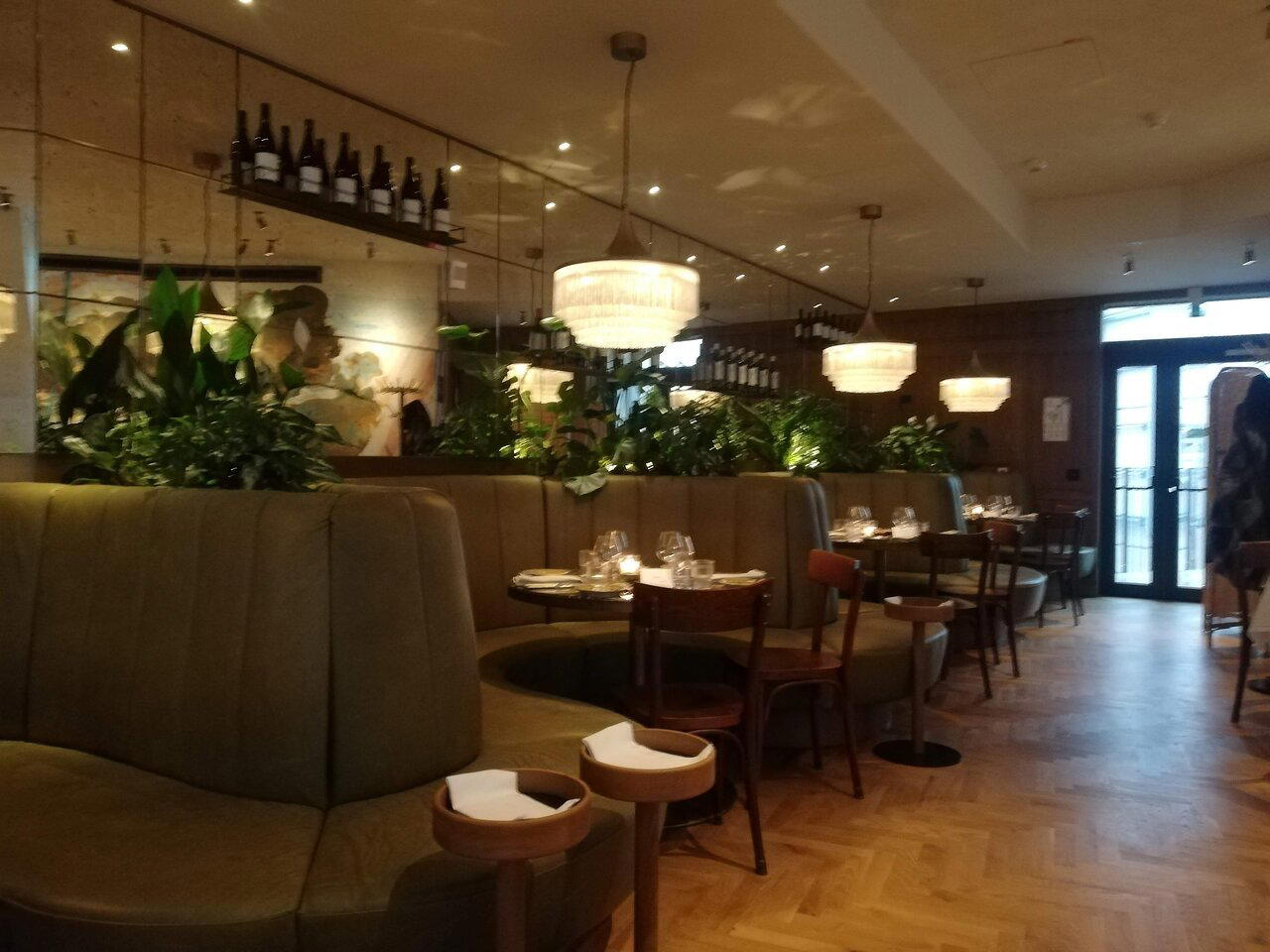
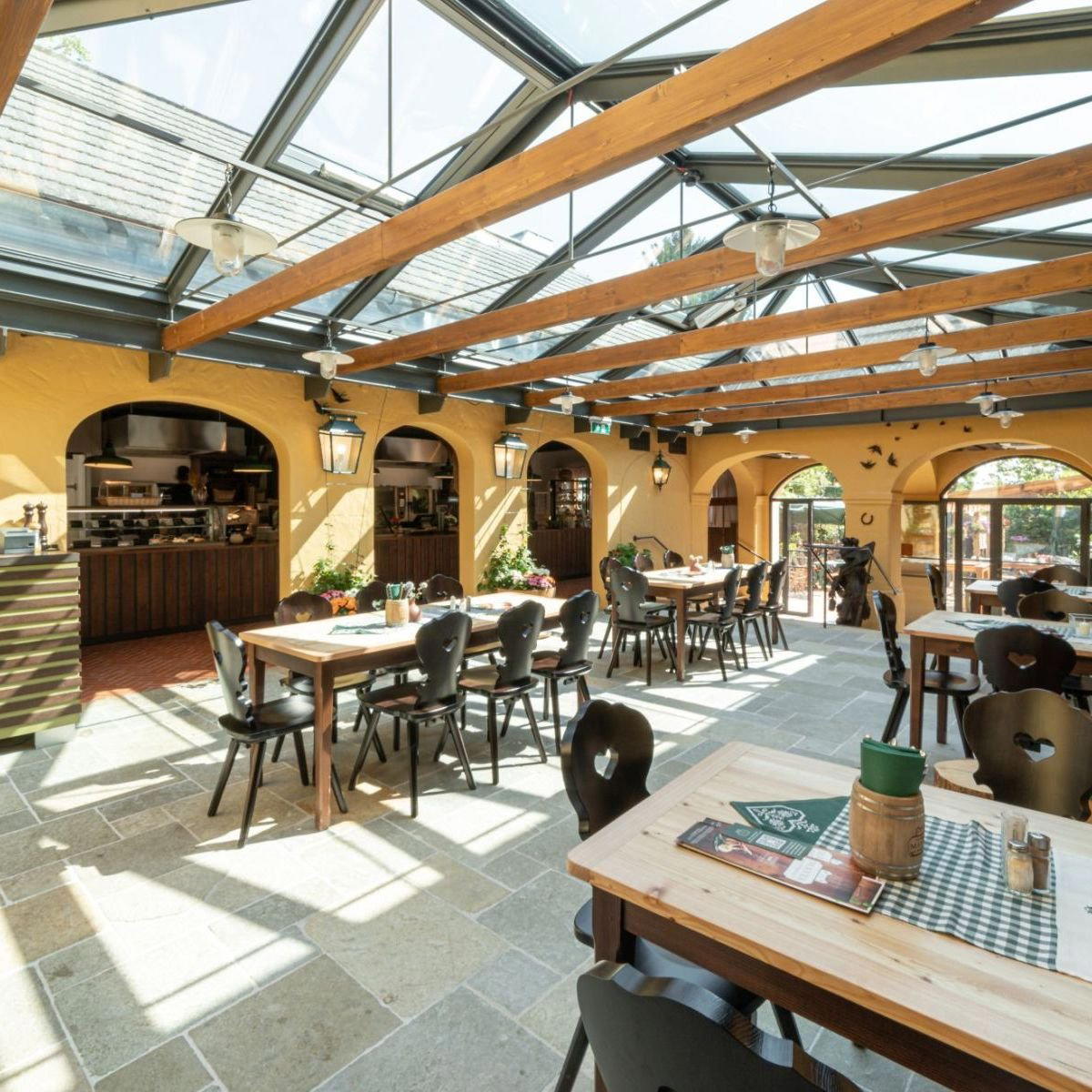
Cozy and relaxed atmosphere with pure simplicity in layout, warm and slightly romantic lighting per guest reviews.