Chicken Farm sits within Guilin's broader tradition of countryside dining, where the gap between the farm and the table is measured in metres rather than supply chains. Set against the karst backdrop that defines this corner of Guangxi province, it represents the category of rural-edge restaurants where ingredient provenance is the central organising principle. Practical details including booking and hours are best confirmed directly with the venue.
Pearl is the En Primeur Club membership app — saves, bookings, and concierge access live there. Same editors, same standards.
- Address
- Guilin, China
- Directions
- Get directions
 Saves & bookings on Pearl
Where Guangxi's Farm-to-Table Tradition Has Its Oldest Roots
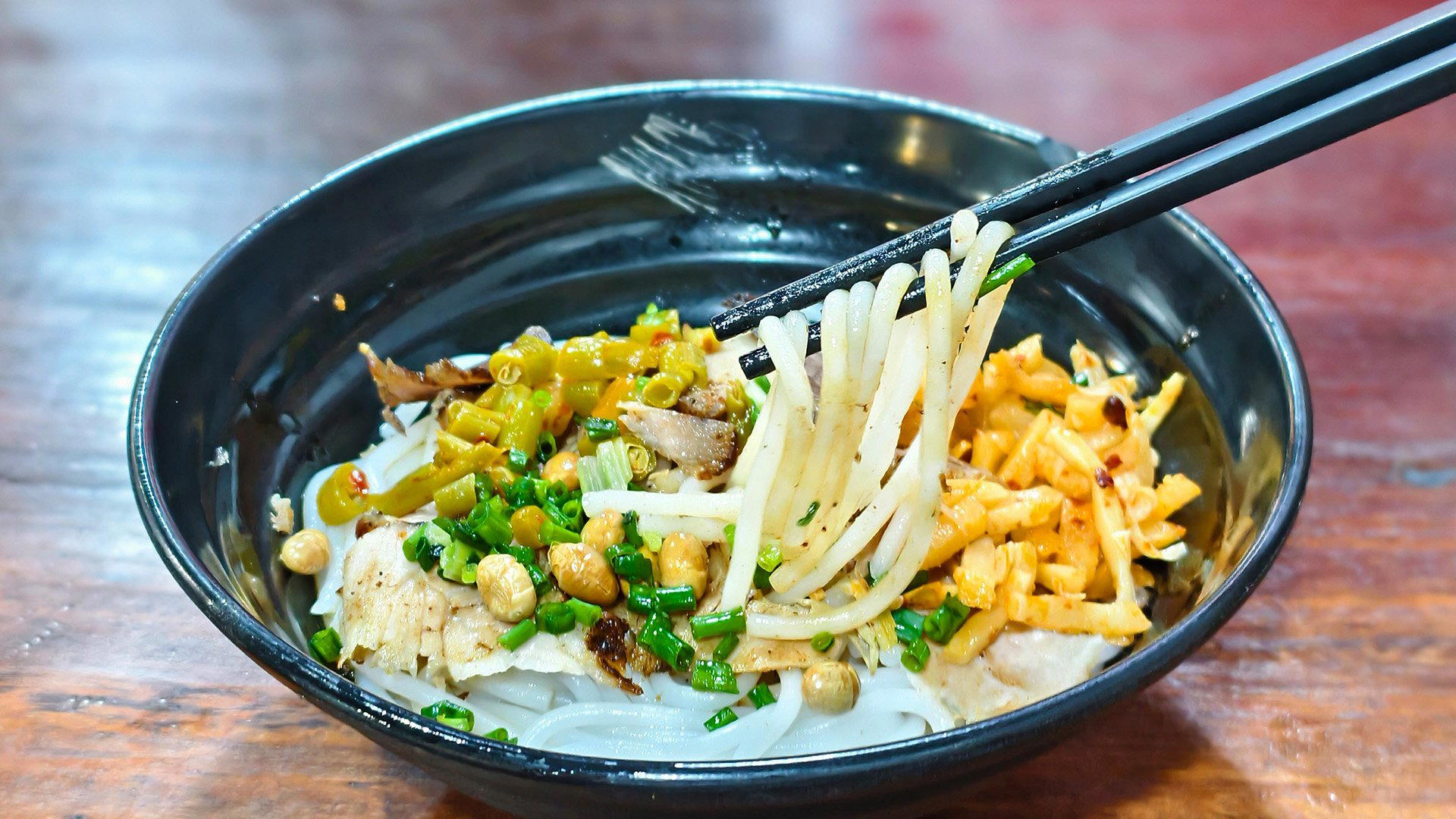
Long before the phrase "farm-to-table" became a global hospitality cliché, rural Guangxi was operating on a simpler logic: cook what grows nearby, serve it the same day. The restaurants that cluster around Guilin's countryside, particularly those that have organised themselves around poultry farming, belong to a dining tradition that predates any trend cycle. These are places where the provenance of a bird is not a marketing claim but a geographic fact visible from the dining table. Chicken Farm is a Guilin restaurant serving Guilin Rice Noodles at a price tier of 1.
Guilin's food culture is frequently overshadowed by its scenery. Visitors arrive for the Li River and the karst peaks, and they eat rice noodles at counters near their hotels. The deeper register of Guilin cooking, rooted in Guangxi's Zhuang culinary traditions, emphasising preserved ingredients, river fish, and free-range poultry raised on grain rather than compound feed, receives considerably less international attention. That gap between what tourists eat and what the local food culture actually contains is where places like Chicken Farm operate.
The Cultural Weight of the Farmyard Chicken in Southern Chinese Cooking
In Guangxi and across the broader Lingnan food region, the free-range farmyard chicken carries a cultural significance that goes well beyond protein. The texture of the meat, firmer, with more developed muscle from movement, is the defining quality. Cantonese cooking at its most precise, as seen in institutions like Imperial Treasure Fine Chinese Cuisine in Guangzhou, treats the poached or steamed whole chicken as a benchmark dish precisely because it reveals the quality of the bird with nowhere for technique to hide. The same philosophy operates in rural Guangxi, though without the formal dining room around it.
This stands in contrast to the kind of produce-agnostic cooking that characterises urban casual dining. The Sichuan-inflected restaurants further west, the refined tasting formats of Chef Tam's Seasons in Macau, and the contemporary Chinese approaches at 102 House in Shanghai all operate within a different register, one where sourcing is one variable among many. At a farmyard restaurant in Guilin's hinterland, the sourcing is the cooking. How the chicken was raised determines what the meal can be. Technique serves the ingredient rather than transforming it.
The broader Guilin dining scene reflects this tension between the accessible and the rooted. Li Hong Guilin Rice Noodle represents the city's most democratic and widely-eaten food tradition, while Longji Rice Farm gestures toward the agricultural heritage of the surrounding terraces. Chicken Farm occupies a third position in this local spectrum: ingredient-led, rurally situated, and built around the kind of cooking that requires proximity to a working farm rather than a professional kitchen.
Farmyard Dining Across China's Culinary Geography
The farmyard restaurant format is not specific to Guilin. Across China, the concept of nongjiafan, literally "farmhouse rice" or farmhouse cooking, has developed from a purely local phenomenon into a recognised dining category, particularly as urban populations seek out what industrial food systems have largely removed from their daily diet. In Hangzhou, restaurants like Ru Yuan draw on Jiangnan traditions of seasonal and produce-led cooking. In Chengdu, Xin Rong Ji operates within a premium interpretation of regional sourcing. Even within Fujian, venues like Fleurs Et Festin in Xiamen engage with ingredient provenance as a core editorial idea.
What distinguishes the Guilin farmyard category from these urban or semi-urban iterations is scale and formality. There is no tasting menu format, no sommelier programme, no architectural concept. The dining proposition is direct: here is the farm, here is the bird it produced, here is how we cooked it. This is the format in its least mediated form, and for a certain kind of traveller, that directness carries more value than the refinement available at Xin Rong Ji in Beijing or the coastal precision of Jiangnan Wok·Rong in Fuzhou.
The comparison is not meant to diminish either end of the spectrum. Le Bernardin in New York City and Atomix in New York City sit at the furthest point of formal, technique-driven dining. The restaurant sits at the opposite pole, where the value is in the absence of mediation. Both have their logic. The question is which logic matches what you are looking for on a given trip.
Visiting Guilin's Countryside Dining Circuit
Guilin's karst countryside extends outward from the city in multiple directions, with working farmland occupying the valleys between the limestone peaks. Countryside restaurants in this zone tend to operate at lunch and early dinner, aligned with agricultural rhythms rather than urban service hours. Getting there typically requires a taxi, a hired car, or the kind of local knowledge that comes from asking at accommodation rather than consulting a map application. The journey is itself part of the format: the further you travel from the city centre, the more the dining experience connects to its agricultural context.
The restaurant is walk-in friendly, with no formal reservation process noted. Hotel concierges and guesthouse owners in the area generally maintain working knowledge of which farmyard restaurants are currently operating and how to reach them. It is walk-in friendly and suited to casual visits.
Travellers seeking a casual Guilin meal will find the restaurant direct and local. The restaurants discussed in our Guilin guide, including the more accessible formats at Li Hong Guilin Rice Noodle, provide the baseline. Places like Chicken Farm provide the depth.
Budget and Context
Comparable venues nearby, for context on price, style, and recognition.
| Venue | Cuisine | Price | Notes |
|---|---|---|---|
| Chicken FarmThis venue — the venue you are viewing | Downtown, Guilin Rice Noodles | $ | Not listed |
| Li Hong Guilin Rice Noodle | Guilin city center, Guilin Rice Noodles | $ | Not listed |
| Sugarhouse Restaurant | Yangshuo, Modern Local Chinese | $$$$ | Not listed |
| Longji Rice Farm | Not listed | $$ | Longji Town, Traditional Zhuang Rice Terrace Cuisine |
| 味全米粉Wei Quan Noodle | 桂林市, Guilin Rice Noodles | $ | Not listed |
| Captain Ma Beef Noodle Soup | Linxia, Hand-Pulled Mutton Noodles | $ | Not listed |

At a Glance
- Casual Hangout