
A Michelin-starred address in the Salerno hinterland, Cetaria draws its identity from hyperlocal sourcing: a nearby vegetable garden and a small family farm in Calabria supply much of what arrives on the plate. The room is intimate, the seafood-forward contemporary cooking is precise, and a 2024 Michelin Service Award marks the front-of-house as one of southern Italy's more thoughtful dining experiences.
Pearl is the En Primeur Club membership app — saves, bookings, and concierge access live there. Same editors, same standards.
- Address
- Piazza della Repubblica, 9, 84081 Baronissi SA, Italy
- Phone
- +39 089 296 1312
- Website
- cetariaristorante.it
- Directions
- Get directions
 Saves & bookings on Pearl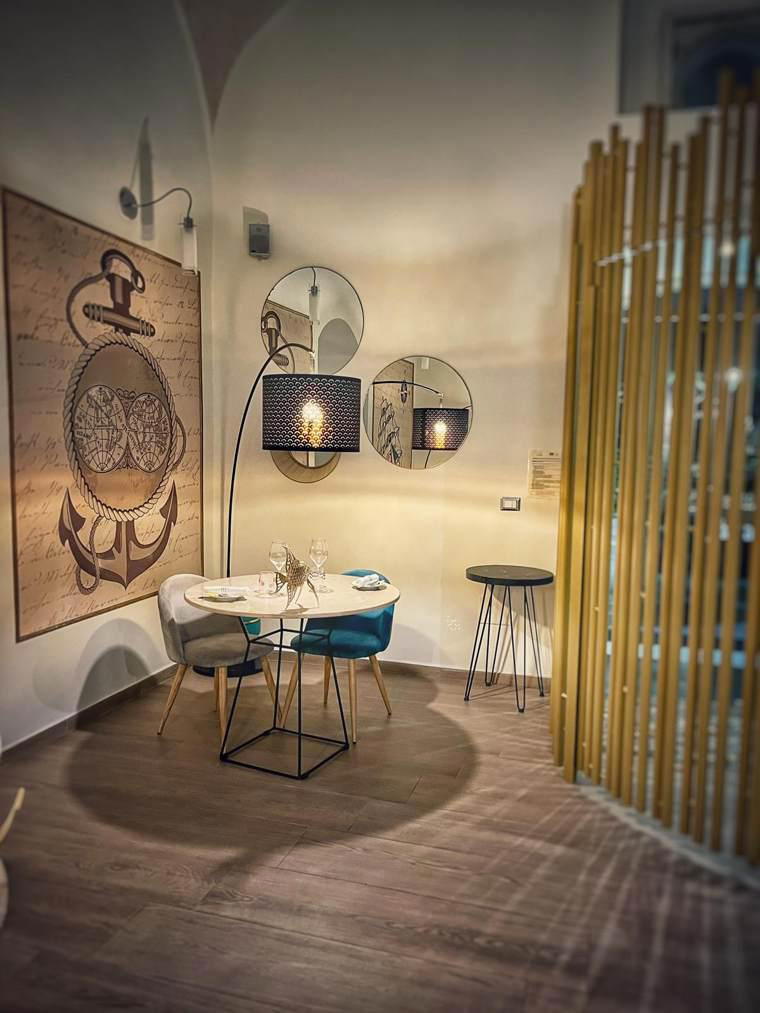
Piazza della Repubblica, After Dark
Baronissi sits inland from Salerno, far enough from the Amalfi Coast circuit that visitors arriving at Piazza della Repubblica are almost always there with purpose. The building that houses Cetaria carries the proportions of something older than its current use: high ceilings, stone-era bones, a handful of glass-topped tables arranged beneath what feels like generous vertical space. That restraint is the room's argument. There is no theatrical lighting, no ambient soundtrack calibrated to the price point. The intimacy arrives through editing rather than decoration, and the two canvases on the dining room walls, painted by the front-of-house, give the space a biographical texture that no interior designer could have sourced.
The Supply Chain as Editorial Statement
Contemporary Italian cooking at this tier increasingly splits between two philosophies: the internationalist approach, where premium ingredients travel from wherever they are leading grown, and the territorialist approach, where the sourcing radius itself becomes the creative constraint. Cetaria belongs firmly to the second category, and it takes that position seriously enough to maintain a nearby vegetable garden and a working family farm in Calabria, the latter being the origin of the front-of-house. This is not incidental provenance labelling. It means the kitchen has a direct channel to specific soils, specific growing decisions, and produce that does not pass through a distributor. In the broader context of southern Italian fine dining, this kind of vertical integration at a small, independent restaurant is less common than the menus that invoke local ingredients rhetorically while sourcing through conventional supply chains.
The Calabrian connection also explains why the menu extends beyond Campanian references. The farm supplies ingredients that reflect a different southern Italian agricultural tradition, and those raw materials surface alongside the predominantly seafood-based cooking that anchors the menu. For a restaurant of this scale operating at this price point, controlling the input quality at origin rather than at the market is a meaningful structural choice, and it shows in what reaches the table.
Among the Italian restaurants holding a comparable star tier and a similar commitment to provenance-led sourcing, it is instructive to compare Cetaria's approach with addresses like Reale in Castel di Sangro, or Uliassi in Senigallia. The question in all these cases is not whether the sourcing story is true but whether the cooking earns it, at Cetaria, the Michelin recognition confirms that the kitchen's technique is meeting the quality of its raw materials.
Seafood, Contemporary Technique, and the Southern Italian Frame
The predominant direction of the menu is seafood, interpreted through contemporary technique rather than through regional tradition alone. Southern Italy has a deep grammar of seafood cooking, crudo preparations, brodetti, grilled whole fish, pasta with shellfish, and the tension between honoring that grammar and departing from it is where contemporary cooking in this zone tends to find its interest. Cetaria works from that tension: the presentations are described as playful and refined, which in practice means the kitchen is comfortable using modernist techniques without abandoning the logic of the local ingredient as starting point.
This positions Cetaria in a different category from the three-star Italian houses listed elsewhere. Places like Osteria Francescana in Modena, Le Calandre in Rubano, or Dal Pescatore in Runate operate at a higher price point and at a scale of institutional recognition that Cetaria is not yet competing with. The single star, the €€€ pricing, and the intimate room all signal something else: a restaurant at an earlier point in its own trajectory, with sourcing discipline and technique already in place, in a location that has not historically drawn the kind of critical attention that Campania's coastal restaurants receive.
For readers who want to trace the range of contemporary Italian fine dining, Piazza Duomo in Alba, Enrico Bartolini in Milan, and Enoteca Pinchiorri in Florence cover the northern end of that spectrum, while Quattro Passi in Marina del Cantone represents the coastal Campanian version of high-level seafood cooking that Cetaria is working in dialogue with.
The Front-of-House as a Structural Asset
Michelin's 2024 Service Award for Cetaria is not a secondary credential. In the guide's scoring logic, the front-of-house at a small room with limited covers carries a proportionally higher weight than it would at a large restaurant with a full brigade of floor staff. At a few glass-topped tables, every interaction is visible. The award signals that the service here meets a standard the guide considers notable enough to name separately from the star itself.
The wine list, managed with what Michelin describes as thoughtful storytelling and strong by-the-glass selections, is another signal worth reading carefully. Wine programs at this tier in southern Italy vary widely: some rely on the strength of Campanian producers (Fiano di Avellino, Greco di Tufo, Taurasi) while others reach more broadly into Italian and international bottles. The by-the-glass depth suggests a list built for engaged diners rather than for efficiency, which aligns with the room's overall register. A small operation that invests in a considered glass program is betting on a guest who wants to engage with the wine rather than simply order a bottle and move on.
Getting There and Planning the Visit
Cetaria operates Tuesday, Thursday, and Friday evenings from 7:30 PM to 10:30 PM, with extended Saturday service running a lunch sitting from 12:30 PM to 2:30 PM before resuming for dinner through 11:30 PM. Sunday follows the same lunch-and-dinner pattern, closing at 10:30 PM. Wednesday is dark. The address at Piazza della Repubblica, 9, places the restaurant in central Baronissi, accessible from Salerno, roughly a fifteen-minute drive inland, making it viable as an evening destination from the city or from accommodation along the Salerno coast. For visitors spending time in Campania who want to extend beyond the Amalfi and Ravello circuit, the Salerno hinterland offers a different register of the region, and Cetaria is the clearest reason to make that detour. Reservation is strongly advised; given the limited covers, the room fills quickly, particularly on weekend evenings. The price range of €€€ positions the meal at about $120 per person.
For readers curious how Cetaria's contemporary format compares with similar programs outside Italy, César in New York City and Jungsik in Seoul represent the same contemporary-fine-dining register applied in different city contexts. And for those drawn to the Italian creative tradition at its most ambitious, Atelier Moessmer Norbert Niederkofler in Brunico and Casa Perbellini 12 Apostoli in Verona show how the sourcing-first philosophy operates at three-star scale.
At-a-Glance Comparison
Comparable venues nearby, for context on price, style, and recognition.
| Venue | Cuisine | Price | Awards | Notes |
|---|---|---|---|---|
| CetariaThis venue — the venue you are viewing | Contemporary Campanian Seafood | $$$ | Michelin 1 Star | Not listed |
| Il Papavero | Modern Italian Seafood | $$$ | Michelin 1 Star | historic centre |
| President | Modern Italian Fine Dining with Campania Roots | $$$$ | Michelin 1 Star | Pompeii |
| Cannavacciuolo Countryside | Modern Italian Fine Dining | $$$$ | Michelin 1 Star | Ticciano |
| Osteria Arbustico | Modern Italian Fine Dining | $$$$ | Michelin 1 Star | Paestum |
| Oasis - Sapori Antichi | Contemporary Campanian | $$$ | Michelin 1 Star | Vallesaccarda |
Recognition history
Dated appearances from independent guides and award organizations, with the underlying list record or original source where available.
Michelin 1 Star
Michelin
Michelin 1 Star
Michelin
Michelin 1 Star
Michelin
Continue exploring
More in Baronissi
Restaurants in Baronissi
Browse all →
Bars in Baronissi
Browse all →
Hotels in Baronissi
Browse all →

At a Glance
- Intimate
- Elegant
- Cozy
- Sophisticated
- Date Night
- Special Occasion
- Open Kitchen
- Extensive Wine List
- Sommelier Led
- Farm To Table
- Local Sourcing
Current opening hours
- Monday
- 7:30–10:30 PM
- Tuesday
- 7:30–10:30 PM
- Wednesday
- Closed
- Thursday
- 7:30–10:30 PM
- Friday
- 7:30–10:30 PM
- Saturday
- 12:30–2:30 PM, 7:30–11:30 PM
- Sunday
- 12:30–2:30 PM, 7:30–10:30 PM
Hours can change for holidays and private events. Last verified .
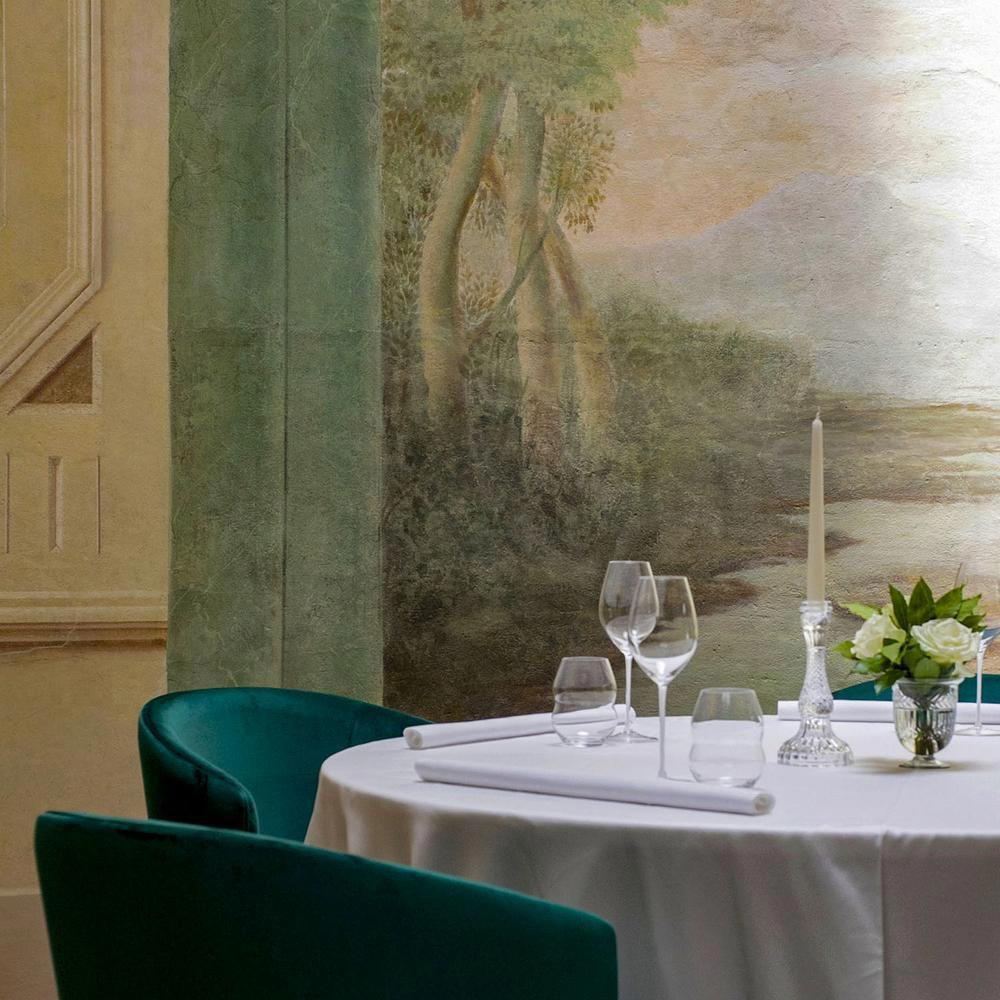
Intimate dining room with few glass tables under a high ceiling evoking historic palazzo character, featuring Federica's personal artwork on the walls and warm, exclusive atmosphere.