A fish shop and standing imbiss on Thaliastraße in Vienna's 16th district, Cervenka Fischgeschäft & Imbiss represents the older, utilitarian strand of Viennese fish retail: a counter format where the product does the work. In a city where elaborate tasting menus dominate food conversation, this kind of focused neighbourhood operation occupies a different but durable position in the local food culture.
Pearl is the En Primeur Club membership app — saves, bookings, and concierge access live there. Same editors, same standards.
- Address
- Thaliastraße 84, 1160 Wien, Austria
- Phone
- +434314811933
- Website
- fisch1160.at
- Directions
- Get directions
 Saves & bookings on Pearl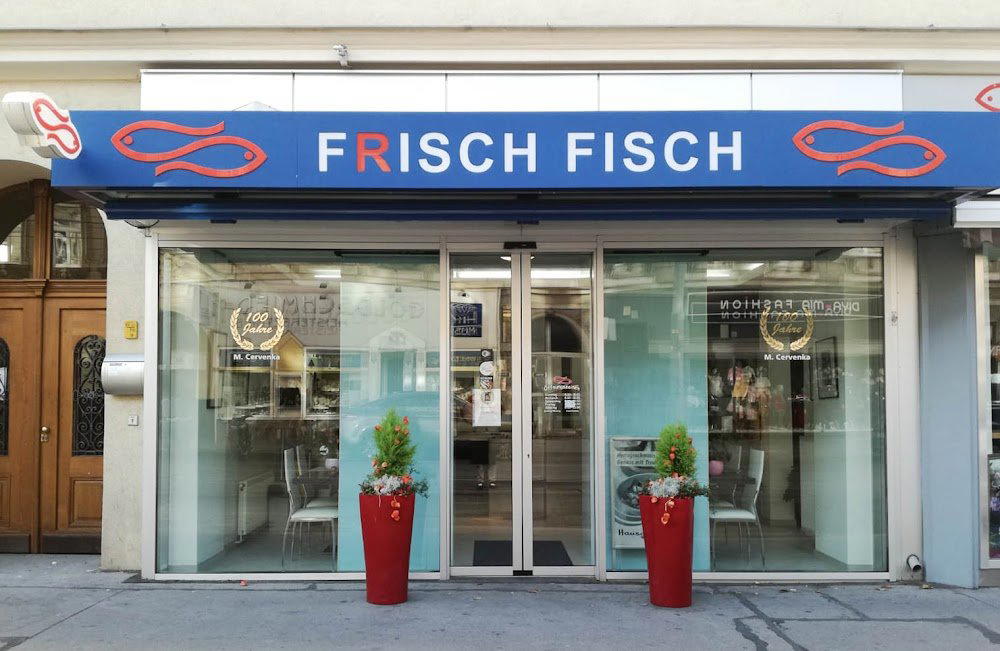
Fish at the Counter: Vienna's Working-Class Food Tradition
Vienna's food reputation is built on two poles that rarely touch: the grand Beisl tradition of slow-braised meats and the city's higher-end dining scene, represented by operations like Steirereck im Stadtpark and Konstantin Filippou. Between them sits a category that shapes daily eating for many of the city's residents: the specialist food shop with a standing imbiss counter. Cervenka Fischgeschäft & Imbiss on Thaliastraße 84 in the 16th district belongs firmly to that second tradition.
The Fischgeschäft format, a retail fish shop that also serves prepared food to eat standing at the counter, is one of Central Europe's more pragmatic contributions to urban food culture. It predates the modern restaurant concept in this region. Before refrigerated logistics democratised access to seafood, specialist fishmongers were the gatekeepers of anything that came out of fresh water or the sea, and the impulse to cook and sell alongside the raw product was a natural extension of that position. The format survives because it answers a genuine demand: quality protein, minimal ceremony, low cost, fast service.
The 16th District and What It Tells You
Thaliastraße runs through Ottakring, one of Vienna's more densely populated and culturally mixed inner districts. It has not attracted the restaurant investment that the 7th or 1st districts have seen, which means the eating options here tend to be functional rather than aspirational. That's not a criticism. Functional food culture, when it works well, is characterised by repeat customers, competitive pricing, and product that doesn't need a narrative to sell it. A fish counter in this environment survives on the quality of its sourcing and the reliability of its preparation, not on Instagram presence or seasonal tasting menus.
The contrast with Vienna's upper dining tier is informative. Restaurants like Amador and Mraz & Sohn operate in a world of multi-course progression, wine pairings, and advance reservations. Cervenka operates in a world where the transaction is immediate and the format does not require a booking. These are not competing for the same occasion; they serve different functions in the same city's food system. Understanding both is more useful than ranking one against the other.
The Cultural Roots of Central European Fish Retail
Austria is a landlocked country, which historically made saltwater fish a luxury and freshwater fish a staple. Carp, trout, pike, and zander (Zander, or pike-perch) formed the backbone of Central European freshwater cooking for centuries, with carp reaching particular prominence as the traditional Christmas Eve dish across Austria, the Czech Republic, and much of the former Habsburg territory. The specialist fishmonger became a fixture of urban food infrastructure partly because sourcing and handling freshwater fish requires knowledge that general grocery operations rarely carry.
Smoked fish, pickled herring, and prepared fish salads also occupy a significant place in the Viennese food tradition, influenced by both the city's Central European geography and its historical connections to the German-speaking north. A fish counter that covers both the raw retail and the prepared imbiss side of this tradition is operating in a format with deep local roots, even if those roots are rarely discussed in the same breath as Schnitzel or Tafelspitz.
For a broader view of how this tradition fits into Austria's wider food culture, operations outside Vienna provide useful reference points. Restaurants such as Landhaus Bacher in Mautern an der Donau and Obauer in Werfen have long drawn on Austrian freshwater fish within formal fine-dining contexts, which illustrates how the same product category can occupy different positions depending on format and setting. The ingredient is shared; the execution and occasion differ entirely.
Where Cervenka Sits in the Broader Picture
Vienna's fish retail and prepared-fish sector is a part of the city's food scene that deserves more attention. The practical reality is that counter-service fish operations like Cervenka serve a segment of the population that eats fish regularly, on a budget, without ceremony. That segment is large, and the operations that serve it well tend to be long-standing and locally embedded in ways that newer restaurant formats rarely achieve.
Internationally, the closest analogues are the fishmonger-imbiss hybrid found in Hamburg's Fischmarkt area, the smoked eel counters of Amsterdam's market halls, or the prepared-fish counters of Tokyo's depachika food halls. Each of these formats operates on the same basic logic: product expertise, low overhead, standing or minimal seating, and pricing that reflects the absence of full restaurant service. Le Bernardin in New York City represents the opposite end of that spectrum, where fish is the subject of the same technical ambition applied to any luxury ingredient. Both formats are valid expressions of serious engagement with seafood; they just address different parts of the market and different eating occasions.
For those exploring Austria's wider food scene beyond Vienna, the country's alpine dining tier, including Döllerer in Golling an der Salzach, Gourmetrestaurant Tannenhof in Sankt Anton am Arlberg, and Stüva in Ischgl, regularly incorporates regional freshwater fish into seasonal menus, showing how the same culinary raw material is interpreted at formal price points. Closer to the Viennese register but in a rural context, Taubenkobel in Schützen am Gebirge and Ois in Neufelden demonstrate how regional Austrian cooking continues to evolve.
Planning Your Visit
Cervenka Fischgeschäft & Imbiss is located at Thaliastraße 84, 1160 Wien. The 16th district is accessible via U-Bahn line U3 (Ottakring station) and multiple tram lines running along Thaliastraße. As a neighbourhood retail and imbiss operation, no advance booking is expected or required.
Format Comparison: Fish Counter vs. Vienna's Formal Dining Tier
| Format | Typical price | Booking required | Occasion type |
|---|---|---|---|
| Fischgeschäft & Imbiss (Cervenka) | Low (counter retail) | No | Weekday lunch, casual |
| Beisl / mid-market Austrian | €€ | Recommended | Dinner, weekend lunch |
| Creative fine dining (Doubek) | €€€ | Yes | Special occasion |
| Michelin-tier Vienna (Steirereck, Filippou) | €€€€ | Weeks in advance | Destination dining |
Price and Positioning
Comparable venues nearby, for context on price, style, and recognition.
| Venue | Cuisine | Price | Notes |
|---|---|---|---|
| Cervenka Fischgeschäft & ImbissThis venue — the venue you are viewing | Not listed | $ | Not listed |
| Ghörig | Josefstadt, Vorarlberg Street Food | $ | Not listed |
| Vienna Sausage | Inner City, Austrian Hot Dogs & Sausages | $ | Not listed |
| Duran | Not listed | $ | Favoriten, Austrian Open-Faced Sandwiches |
| Würstlstand | Not listed | $ | Alsergrund, Traditional Viennese Sausage Stand |
| Rinderwahn am Markt | Wieden, Gourmet American Burgers | $ | Not listed |
Continue exploring
More in Vienna
Restaurants in Vienna
Browse all →
![[aend] restaurant in Vienna](https://cdn.enprimeurclub.com/storage/v1/object/public/images/locations/recsVyRkMfzCxPmp0/hero2.jpg?width=3840&quality=75)
Bars in Vienna
Browse all →

Hotels in Vienna
Browse all →



At a Glance
- Rustic
- Well Known
- Casual Hangout
- Standalone
- Local Sourcing
Current opening hours
- Monday
- Closed
- Tuesday
- 8 AM–6 PM
- Wednesday
- 8 AM–6 PM
- Thursday
- 8 AM–6 PM
- Friday
- 8 AM–6 PM
- Saturday
- 8 AM–1 PM
- Sunday
- Closed
Hours can change for holidays and private events. Last verified .
Casual fish shop and imbiss atmosphere for quick bites.