

Inside an 18th-century house in the hazelnut country of Riudoms, Celler d'en Joan Pàmies holds two consecutive Michelin Plates for cooking that keeps one foot in Catalan tradition and the other in the present. The kitchen sources locally and cooks from the land outward, offering à la carte alongside several tasting menus, including a market-and-fish-auction option that tracks the season rather than the calendar.
Pearl is the En Primeur Club membership app — saves, bookings, and concierge access live there. Same editors, same standards.
- Address
- Restaurant Celler Joan Pamies. Per aparcament l'hort del coques, 43330 Riudoms, Tarragona, Spain
- Phone
- +34 977 85 00 82
- Website
- cellerjoanpamies.com
- Directions
- Get directions
 Saves & bookings on Pearl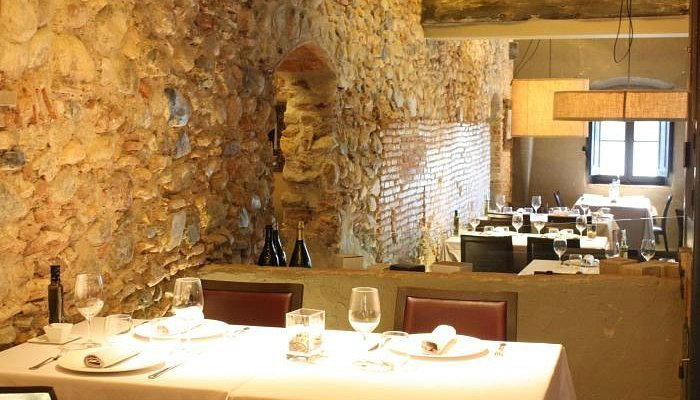
An 18th-Century House and the Logic of the Land
Walk up to Celler d'en Joan Pàmies and the architecture tells you something the menu later confirms: this is a place where age is not embarrassment but credential. The large 18th-century house in Riudoms sits in the Camp de Tarragona, a stretch of southern Catalonia where hazelnut groves, olive trees, and small fishing ports compress into a short radius. That geography is not incidental to what happens in the dining room. It is the operating premise. The kitchen sources from what the surrounding land and the nearby coast produce, and the menus are structured around that supply rather than around a fixed creative brief that could apply anywhere.
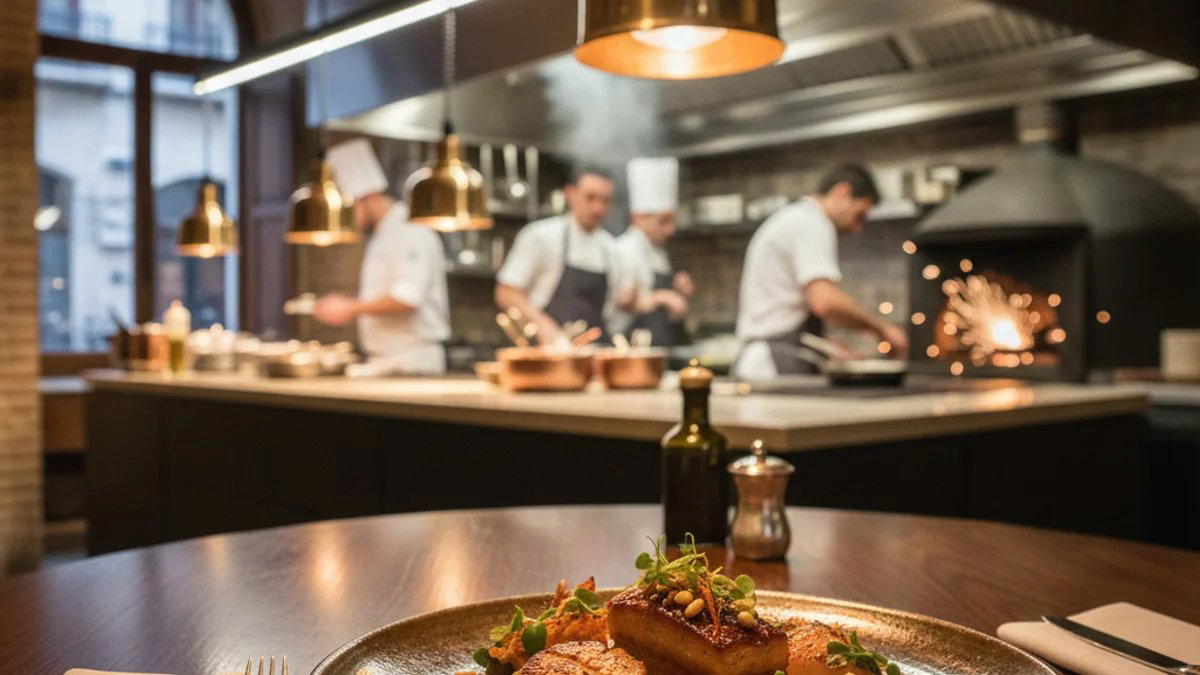
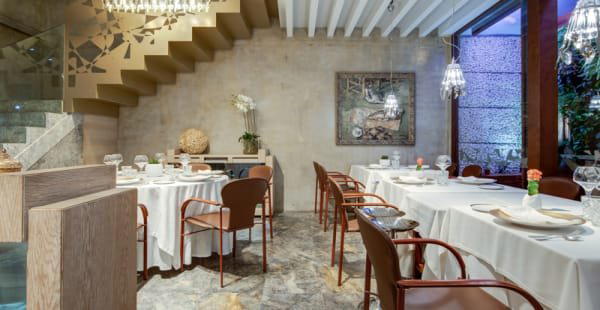
Inside, the dining room anchors itself with an open fireplace that shifts the register from formal to inhabited. Fresh vegetables are displayed in the space, not as decoration but as a transparency device: what you see is roughly what you will eat. In a period when many regional restaurants signal local sourcing through text on the menu alone, the physical presence of produce in the room is a deliberate editorial choice about how the restaurant communicates its relationship with the land.
The Sourcing Logic Behind the Menus
Camp de Tarragona gives a kitchen unusual proximity to different ingredient categories simultaneously. The province's interior produces hazelnuts, olives, carob, and stone fruit. The coast, a short drive from Riudoms, supplies whatever the day's fish auction yields. Catalan cuisine has always operated on this dual axis of interior and coast, and the menu structure at Celler d'en Joan Pàmies maps directly onto it. The weekday menu and the market-and-fish-auction menu are not the same format marketed twice: they represent different sourcing moments, one more agricultural, the other more maritime and immediate.
The third option, the "Homage" menu (subtitled "One Day is One Day"), operates at a different register entirely. Where the market menu tracks availability, the Homage menu reads more like an argument for continuity: Catalan techniques and preparations from earlier eras, revisited rather than archived. The restaurant's stated maxim, of "not rejecting the cooking of bygone days, but adding to it with imagination and vitality," is a reasonable description of what this format attempts. It is also a coherent position in a Spanish dining context where the more conspicuous move has been rupture, not continuation.
Spain's highest-profile kitchens, from El Celler de Can Roca in Girona to Azurmendi in Larrabetzu, Arzak in San Sebastián, Aponiente in El Puerto de Santa María, and DiverXO in Madrid, operate at the €€€€ tier with creative or progressive frameworks that treat tradition as raw material for transformation. Celler d'en Joan Pàmies occupies a different position: €€€ pricing and a stated commitment to building forward from tradition rather than deconstructing it. The comparable set is not the three-star circuit. It is closer to restaurants like Ricard Camarena in València, Atrio in Cáceres, or Quique Dacosta in Dénia at their more regionally grounded register, and to European counterparts like Fahr in Künten-Sulz and Gannerhof in Innervillgraten, where local ingredient logic drives menu architecture in regions that tourism has not yet homogenised.
Service and the Room
The format here leans away from the invisible service model common to restaurants in higher award tiers. Chef Joan Pàmies takes orders in person, a practice that compresses the distance between kitchen and table without performative theatre. It is a logistical choice with a secondary effect: questions about sourcing, preparation, or the reasoning behind a menu option can be answered by the person who made those decisions, not relayed through a front-of-house intermediary. In a restaurant where ingredient provenance is the central argument, that access has specific value.
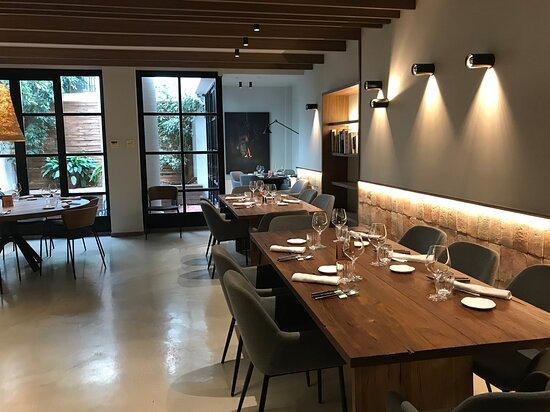
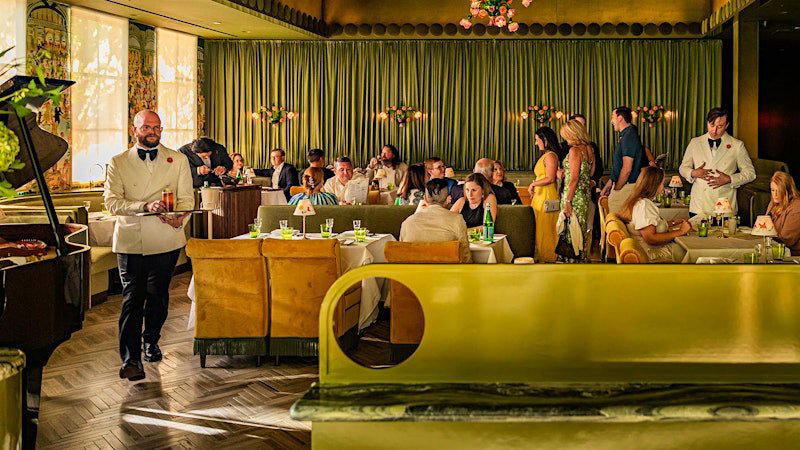
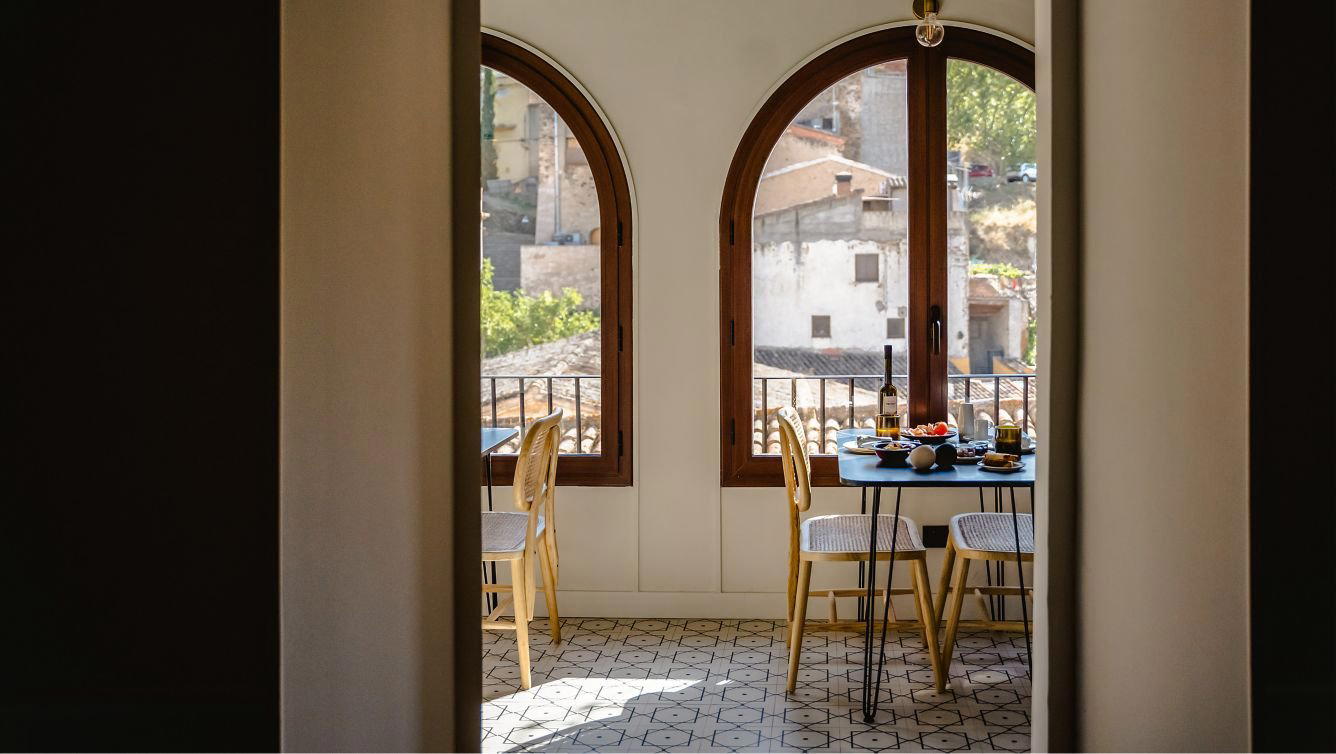
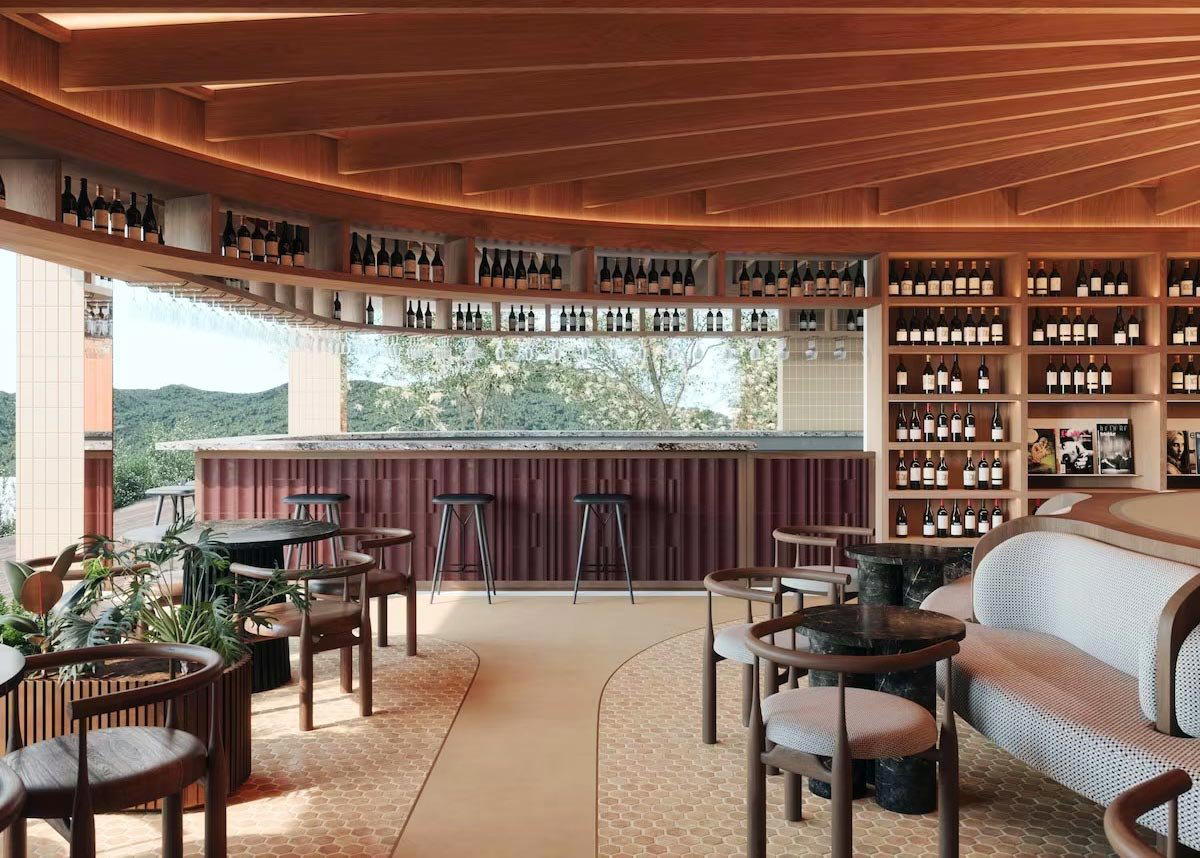
The open fireplace and the vegetable display give the room a domestic coherence that functions as spatial context for the food. This is not a neutral container. The 18th-century house positions every dish inside a continuity that the architecture has already established before the first course arrives. Whether that registers as charm or conviction depends on what the reader is looking for, but it is a considered environment, not a default one.
Planning a Visit to Riudoms
Riudoms sits within the Tarragona province of Catalonia, accessible from the A-7 motorway and within reasonable driving distance of Tarragona city and the coastal towns of the Costa Daurada. Parking is available at the restaurant, which the address references specifically (l'hort del coques). The à la carte format alongside multiple tasting menu options means the restaurant accommodates different appetite levels and budgets within the €€€ range, from a shorter weekday menu to the full Homage format. Booking ahead is advisable, particularly for weekend sittings and the longer tasting menu formats.
Among Martin Berasategui in Lasarte-Oria, Cocina Hermanos Torres in Barcelona, and Mugaritz in Errenteria, Spain's high-end dining circuit concentrates heavily in the Basque Country, Madrid, and Barcelona. The restaurant represents the case for Catalonia's interior: a kitchen working from a specific territory, at a price point that does not require a special-occasion budget, with consecutive Michelin recognition that places it in a credible peer tier without overstating the comparison.
A Quick Peer Check
Comparable venues nearby, for context on price, style, and recognition.
| Venue | Cuisine | Price | Awards | Notes |
|---|---|---|---|---|
| Celler d'en Joan PàmiesThis venue — the venue you are viewing | Traditional Catalan with Modern Touch | $$$ | Michelin Plate | Not listed |
| Windsor | Modern Catalan | $$$ | Michelin Plate | la Dreta de l'Eixample |
| Trumfes | Modern Catalan Fine Dining | $$$ | Michelin Plate | Llívia old town |
| Torre Simón | Modern Spanish Fine Dining | $$$ | Michelin Plate | Tona |
| L'Hort | Traditional Terra Alta with Contemporary Touch | $$$ | Michelin Plate | Arnés |
| El Racó | Traditional Catalan | $$ | Michelin Plate | casc antic |
Recognition history
Dated appearances from independent guides and award organizations, with the underlying list record or original source where available.
Guía Repsol 1 Sol
Guía Repsol
Michelin Plate
Michelin
Michelin Plate
Michelin
Michelin Plate
Michelin

At a Glance
- Elegant
- Romantic
- Classic
- Cozy
- Date Night
- Special Occasion
- Celebration
- Group Dining
- Historic Building
- Open Kitchen
- Terrace
- Extensive Wine List
- Sommelier Led
- Farm To Table
- Organic
- Local Sourcing
Current opening hours
- Monday
- Closed
- Tuesday
- Closed
- Wednesday
- 10 AM–5:30 PM
- Thursday
- 10 AM–5:30 PM
- Friday
- 10 AM–5:30 PM
- Saturday
- 10 AM–5:30 PM
- Sunday
- 10 AM–5:30 PM
Hours can change for holidays and private events. Last verified .
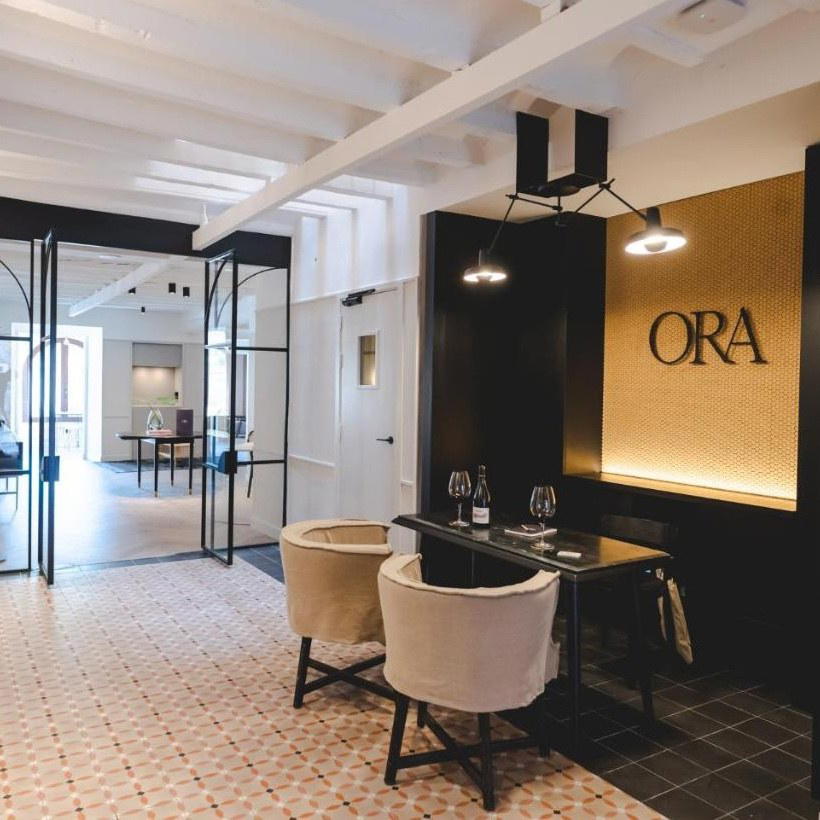
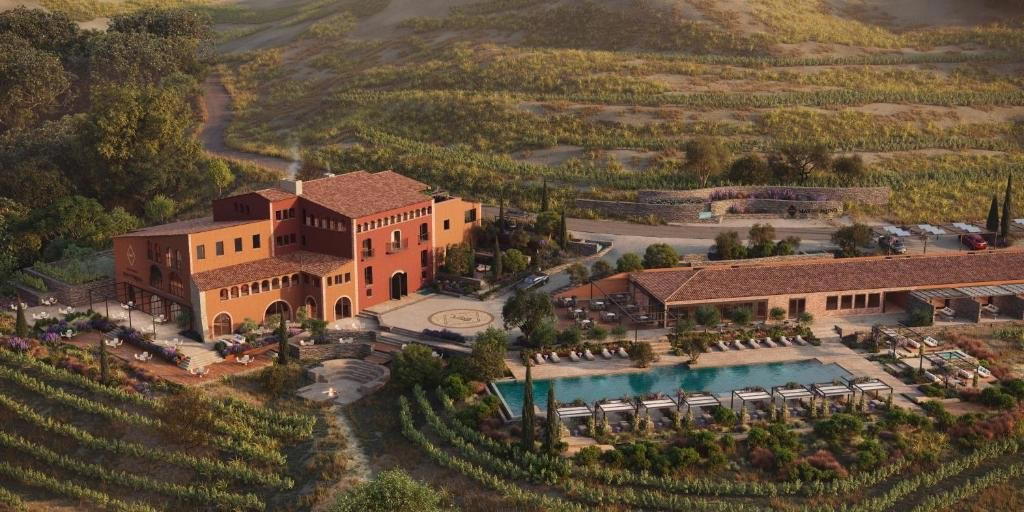
Elegant yet welcoming atmosphere with modernized rustic style, featuring an open fireplace, tastefully decorated dining room, and a space displaying fresh vegetables from local sources.