


Rincón de Diego holds a Michelin star on Cambrils' working waterfront, where Diego and Rubén Campos pair the town's signature rice dishes and local seafood with a contemporary register shaped by Asian techniques. The result sits in Cambrils' small cluster of serious restaurants, priced at €€€ and open for lunch and dinner Tuesday through Sunday, steps from the Club Nàutic.
Pearl is the En Primeur Club membership app — saves, bookings, and concierge access live there. Same editors, same standards.
- Address
- Carrer de les Drassanes, 19, 43850 Cambrils, Tarragona, Spain
- Phone
- +34 977 36 13 07
- Website
- rincondediego.com
 Saves & bookings on Pearl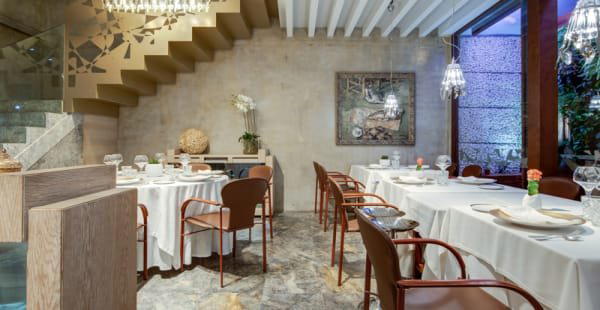
Where the Marina Meets a Michelin Kitchen
Cambrils is a coastal dining destination in Tarragona, Spain, and Rincón de Diego is its 1-Michelin-starred restaurant. The Costa Daurada port has a small but serious cluster of restaurants drawing on some of the leading fish and shellfish landings on the Spanish Mediterranean coast, and Rincón de Diego, on Carrer de les Drassanes just a short walk from the Club Nàutic de Cambrils and Regueral beach, sits at the top of that local tier, holding a Michelin star in 2024.
The address itself frames the experience before you step inside. Carrer de les Drassanes is part of the working waterfront zone, not a polished dining boulevard. That proximity to the docks is deliberate: in Cambrils, the seafood that reaches serious kitchens travels short distances, and a restaurant positioned this close to the marina is making a clear statement about where its ingredients come from. The two-floor space carries a contemporary interior that contrasts with the utilitarian port surroundings, which gives the meal a dual quality: you are in a fishing town, but the room and the kitchen both pull in a different direction from the casual chiringuito set that lines the beaches nearby.
Cambrils' Culinary Position on the Costa Daurada
To understand what Rincón de Diego represents, it helps to map Cambrils' restaurant scene against the broader Catalan coast. The town has historically built its dining reputation on rice dishes and seafood rather than the modernist cuisine that defines Girona or Barcelona. That tradition runs deep enough that Cambrils markets itself as a gastronomic destination in its own right, and the local fishing fleet supports a supply chain that larger cities struggle to replicate with the same freshness. Within this context, a Michelin-starred address on the waterfront is the clearest signal that the town's ambitions have moved beyond local pride and into a competitive conversation with the wider Spanish dining tier.
The local comparison set makes this clearer. Can Bosch, also in Cambrils, operates in the same €€€ traditional cuisine bracket and provides the town's other serious anchor. Bresca and Hiu (Fusion) cover the middle tier at €€, the former in traditional cuisine and the latter bringing a fusion approach. Rincón de Diego is positioned above that middle tier in price and formal recognition, sitting alongside Can Bosch as one of the two addresses in town where the cooking is aimed at a national rather than purely local audience.
The Kitchen: Traditional Foundations, Asian Edge
Spanish coastal cooking has always absorbed outside influence at the margins, and the kitchen at Rincón de Diego provides a local example of how that process works when handled with discipline. The base is firmly Cambrils: fish and shellfish sourced from the local fleet, monkfish suquet built from the town's established repertoire, rice dishes using Mediterranean red lobster that have defined the area's cooking for generations. This is not a kitchen that has abandoned its roots in favour of novelty.
What makes the menu notable is what sits alongside it. Rubén Campos, who works with Diego Campos in the kitchen, has incorporated techniques and flavour references from Thailand, Singapore, China, and Japan into a selection of the contemporary dishes. Red tuna tartare arrives with dashi, guacamole, and wasabi ice cream. Thai sea bass pairs with Jerusalem artichoke purée. These are not decorative touches: they represent a genuine splice between Mediterranean produce and Asian cooking logic, applied to high-quality local fish that can support the additional layers. In Spain's broader Michelin conversation, this kind of measured fusion is more common at the higher end of the star range, where chefs at places like DiverXO in Madrid push it to its most extreme expression. At Rincón de Diego, the approach is more restrained, applied selectively to a menu where the traditional dishes remain the structural core.
The format supports both directions. Three set menus run alongside the à la carte: Del Cava, Gastronómico, and Súmmum. This structure is common at Spanish starred restaurants and allows the kitchen to show its range in a controlled sequence, while the à la carte gives diners the option to anchor a meal in the rice and seafood dishes that represent the most direct local argument. For comparison within Spain's starred traditional coastal register, Aponiente in El Puerto de Santa María and Quique Dacosta in Dénia both work the Mediterranean seafood tradition at a higher star level, giving a sense of the trajectory this style of cooking can reach.
Placing Rincón de Diego in the National Starred Conversation
A single Michelin star in a Spanish coastal town of Cambrils' size carries different weight than a star in Madrid or Barcelona, where the inspection pool is denser. In towns like Cambrils, a star signals that the kitchen has cleared a quality threshold meaningful enough to register with inspectors covering a region where options are fewer, but also where the local produce argument can be made with genuine force. The coastal Catalonia strip produces some of Spain's most consequential seafood-focused cooking; the fact that Rincón de Diego holds recognition in that zone places it in serious company without overstating its position against multi-star peers.
For context at the upper end of Spain's Michelin scale, El Celler de Can Roca in Girona, Arzak in San Sebastián, Martin Berasategui in Lasarte-Oria, Azurmendi in Larrabetzu, and Disfrutar in Barcelona represent the tier where the national conversation concentrates at two and three stars. Rincón de Diego is not competing with that group, but it serves a different function: a serious one-star address at a coastal destination where the local produce narrative is convincingly lived out in the plate, rather than claimed for marketing purposes. For readers looking at traditional cuisine comparisons beyond Spain, Auberge Grand'Maison in Mûr-de-Bretagne and Auga in Gijón both work the traditional-cuisine-with-regional-produce format in different European coastal contexts.
Planning a Visit
The restaurant is closed on Mondays and operates two services daily Tuesday through Sunday: lunch from 1:30 PM to 3:30 PM and dinner from 8:30 PM to 10:30 PM. At €€€, a meal here is priced at about $80 per person. The space across two floors with a contemporary interior can accommodate a range of group sizes, and the menu format, with three tasting options plus à la carte, allows some flexibility in how much you spend. The address at Carrer de les Drassanes 19 puts you a short walk from the marina and Regueral beach, within the part of Cambrils where the waterfront gives way to the more residential side streets.
A Tight Comparison
Comparable venues nearby, for context on price, style, and recognition.
| Venue | Cuisine | Price | Notes |
|---|---|---|---|
| Rincón de Diego | Cambrils Port, Modern Spanish Seafood | $$$ | |
| Bresca | Cambrils, Contemporary Mediterranean | $$$ | |
| Can Bosch | Cambrils, Traditional Catalan Seafood | $$$$ | |
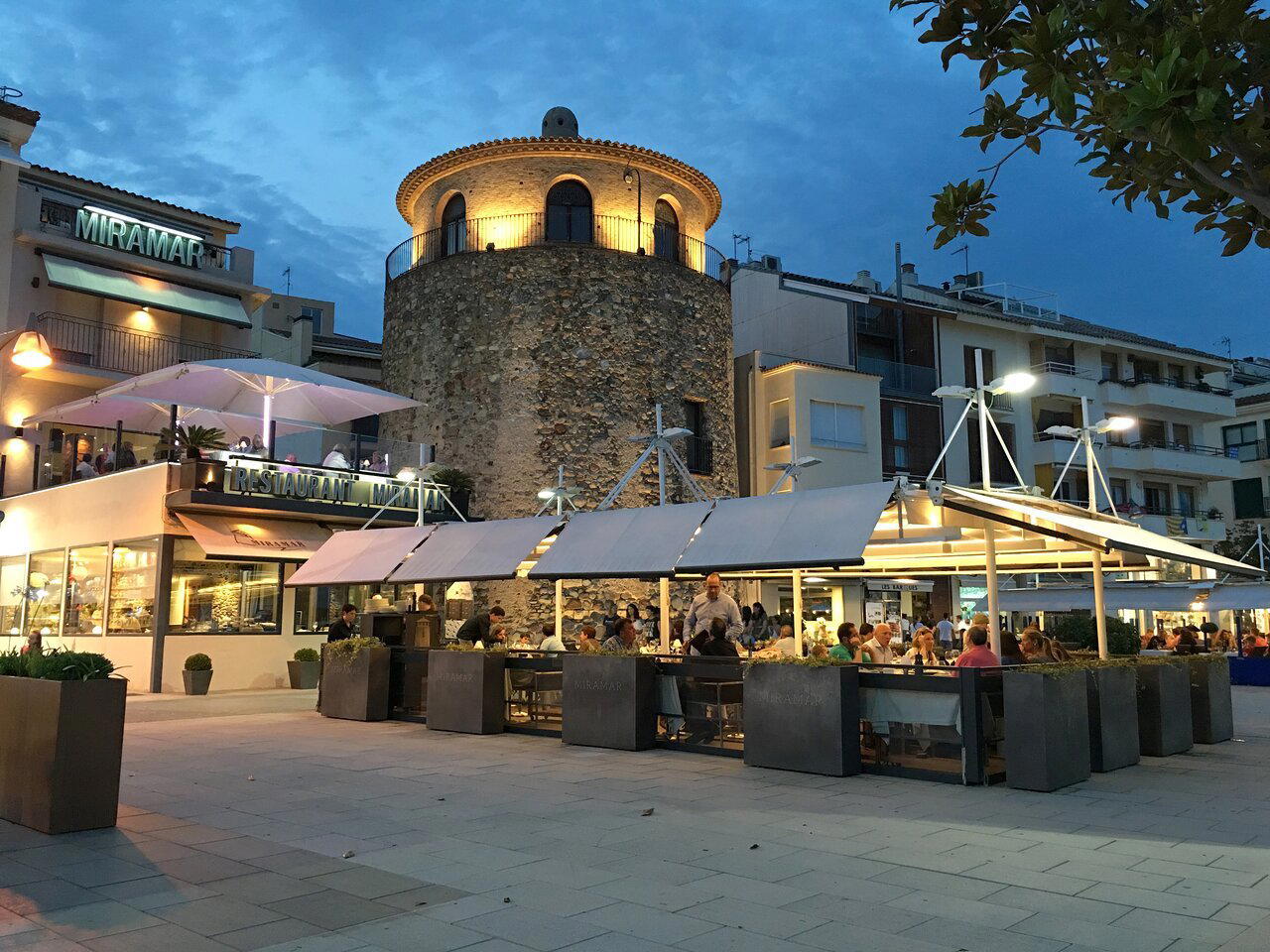
| Miramar | $$$ | Cambrils Port, Traditional Catalan Seafood | |
| Miramar | $$$ | / Cambrils harbour / Torre del Port area, Traditional Catalan seafood and rice restaurant with tasting menus | |
| Hiu | Baix Camp, Modern Catalan-Thai Fusion | $$$ |
Continue exploring
More in Cambrils
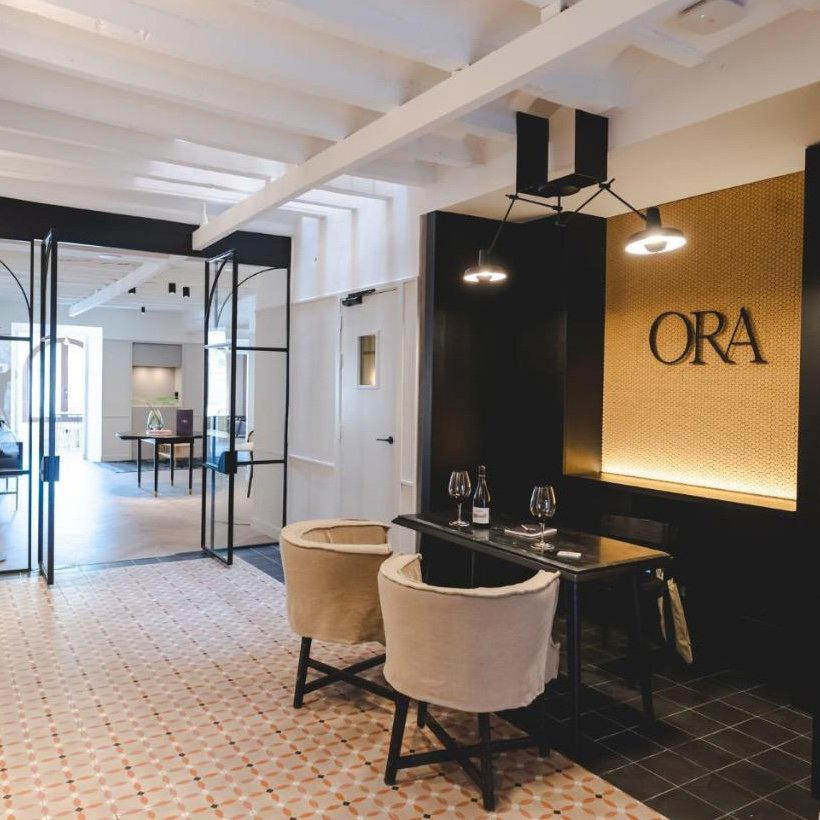
Restaurants in Cambrils
Browse all →
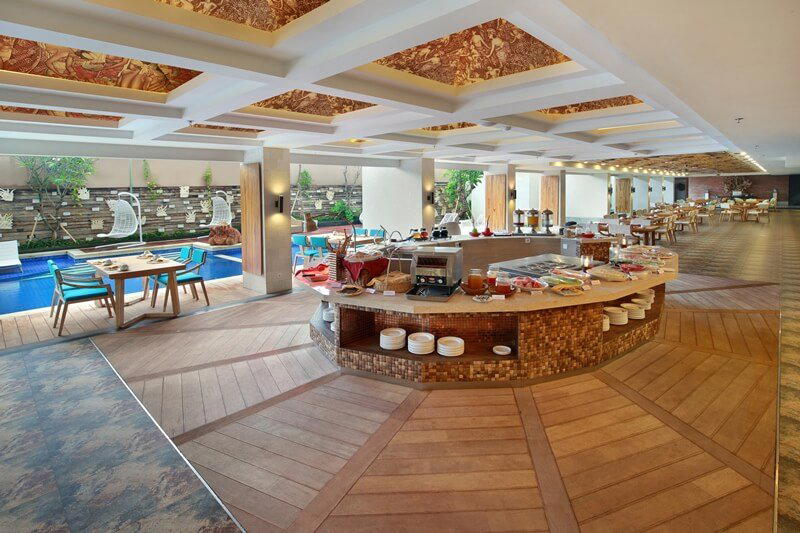
Hotels in Cambrils
Browse all →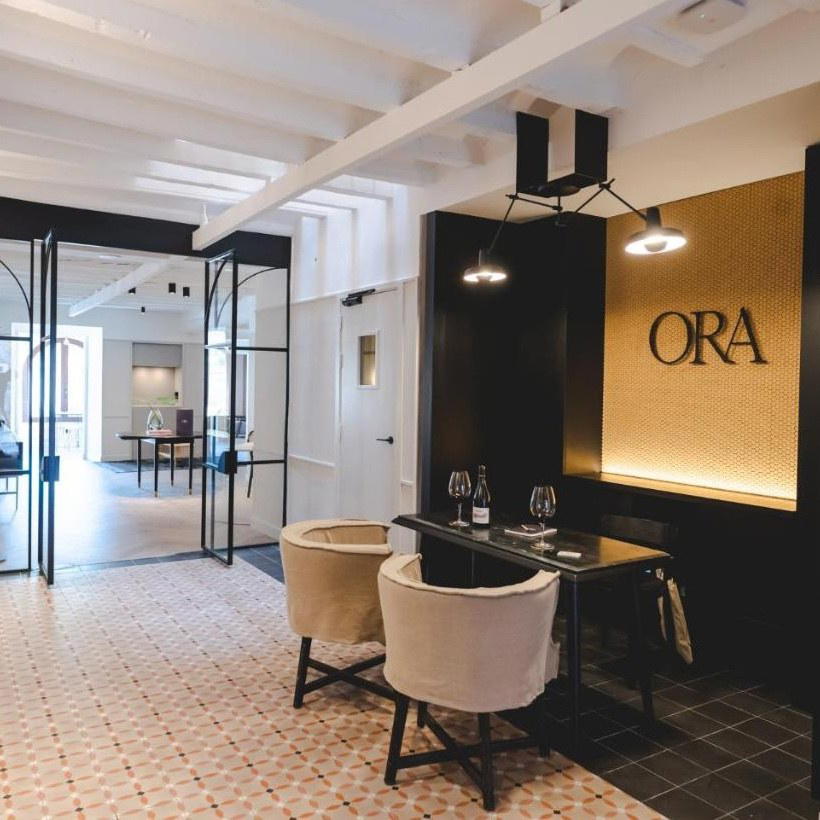
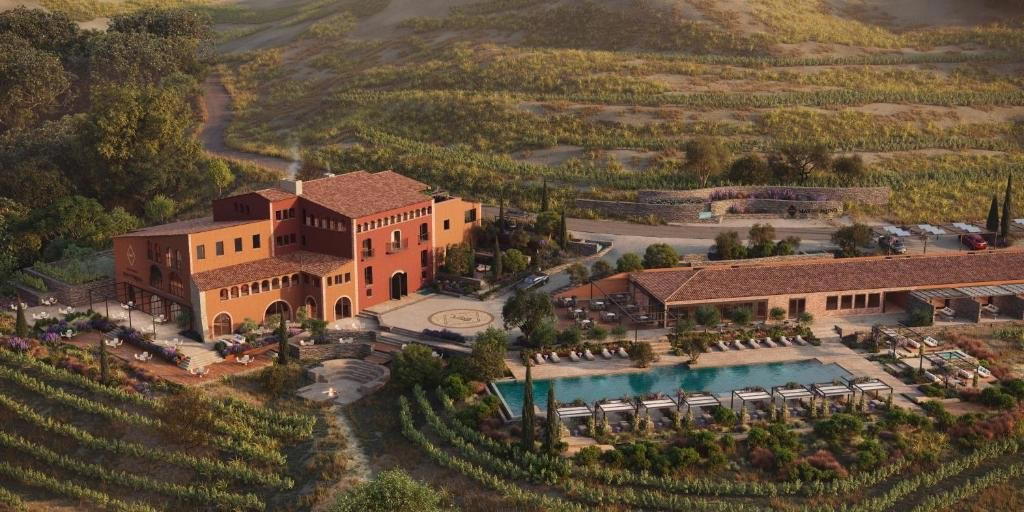
Wineries in Cambrils
Browse all →
At a Glance
- Elegant
- Cozy
- Sophisticated
- Modern
- Special Occasion
- Date Night
- Celebration
- Open Kitchen
- Extensive Wine List
- Local Sourcing
Contemporary and cozy with nice decoration, comfortable seating on two floors, pleasant atmosphere suitable for conversation.