Castillo de Montemayor


Inside the walls of a medieval castle in rural Salamanca, Castillo de Montemayor serves traditional Castilian cooking with a precise contemporary edge. Signature dishes like revolconas with pork tongue and chestnut-stuffed oxtail meatballs draw on the agriculture and livestock traditions of the Salamanca interior.
Pearl is the En Primeur Club membership app — saves, bookings, and concierge access live there. Same editors, same standards.
- Address
- C. Castillo, 10, 37727 Montemayor del Río, Salamanca, Spain
- Phone
- +34 923 16 18 18
- Directions
- Get directions
 Saves & bookings on Pearl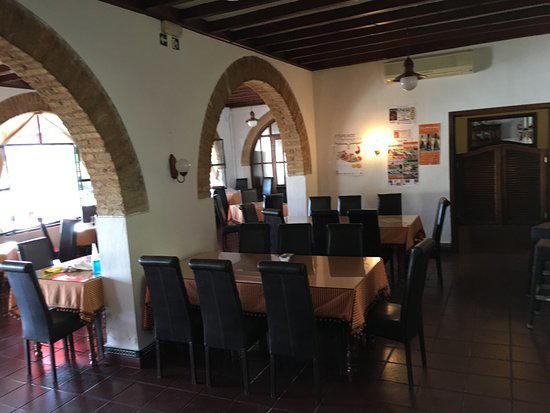
Stone Walls, Salamanca Soil
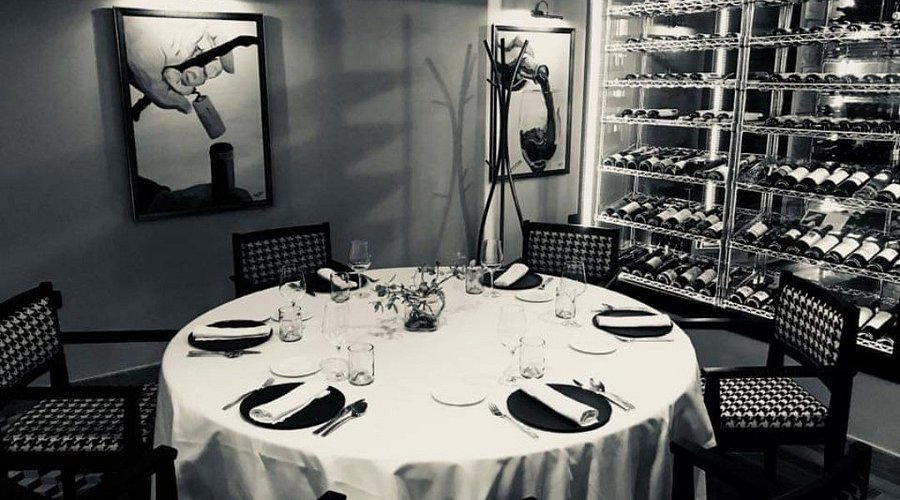
Approach Montemayor del Río on the road from Béjar and the castle announces itself before the village does. The structure sits above the Cuerpo de Hombre river valley on the southern edge of Salamanca province, where the land begins its descent toward Extremadura. Entering the restaurant means passing through fortified walls that have been standing since the medieval period, and the dining room inherits that weight. This is a historic setting. The stone is original, the scale is genuine, and the architecture frames what arrives on the plate: food drawn from the same territory the castle once governed.
Castilian cooking at this latitude has always been tied to what the land produces rather than what can be imported cheaply. The Salamanca interior is cattle country, known across Spain for its veal and its cured pork traditions. Revolconas, the mashed potato dish thickened with paprika and lard and served with pork products, is among the more grounded expressions of that tradition. At Castillo de Montemayor, the version pairs revolconas with pork tongue, fried bacon, and green peppers. That combination reflects a clear understanding of the dish's structural logic: the potato base needs fat and acid to work, and each accompaniment is chosen to deliver one or the other. It is a regional recipe taken seriously rather than reduced to a curiosity.
Where the Ingredients Come From
The Salamanca table has specific raw materials behind it that are worth understanding before you sit down. Charra veal, referenced in the restaurant's oxtail meatball dish, refers to cattle raised in the Salamanca countryside under traditional extensive farming conditions. The Charra denomination connects directly to the Sierra de Francia and surrounding sierra territory, where grazing land is abundant and the cattle develop slowly. Slow-raised beef in this region has a depth of flavour that factory-reared equivalents cannot replicate, and it shows particularly in braised preparations where collagen and fat render over time. The oxtail meatballs stuffed with chestnuts use that beef as a base and add a further local signal: chestnut cultivation has been part of the Sierra de Francia economy for centuries, with the Valle del Alagón and nearby villages maintaining chestnut groves that supply both domestic cooking and small-scale commercial production.
Arzak in San Sebastián, El Celler de Can Roca in Girona, and Quique Dacosta in Dénia operate at the country's highest technical register and price tier. DiverXO in Madrid, Azurmendi in Larrabetzu, Aponiente in El Puerto de Santa María, Cocina Hermanos Torres in Barcelona, Mugaritz in Errenteria, Martin Berasategui in Lasarte - Oria, and Ricard Camarena in València all compete in that same upper bracket. Castillo de Montemayor occupies a different position entirely: a single-price-tier (€) address in the Salamanca sierra that earns its relevance not through technical complexity but through ingredient honesty and regional specificity. The comparison worth making is not with those destination restaurants but with what traditional Castilian cooking looks like when it is handled with accuracy and local knowledge, as seen also at Atrio in Cáceres and, in a French parallel, Auberge Grand'Maison in Mûr-de-Bretagne, where regional produce similarly drives the menu's identity. Auga in Gijón offers another point of reference for traditional cooking that stays grounded in its immediate territory.
The Menu Structure
The format splits between a full à la carte and a daily menu available midweek between October and June. That seasonal availability matters: the weekday set menu aligns with the agricultural calendar and with the practicalities of a restaurant in a small village, where consistent daily trade requires predictability on both the supply and the service side. The à la carte carries the signature preparations year-round, but the October-to-June window for the daily menu corresponds with the colder months when this part of Salamanca province sees more domestic tourism from visitors using the sierra as a weekend destination.
The contemporary touch in the kitchen is applied selectively rather than systematically. Revolconas is not reconstructed or deconstructed; it is served in a recognisable form with considered additions. The chestnut-stuffed oxtail meatballs follow the same logic: a traditional braise format applied to a quality local cut, with the chestnut functioning as both texture and regional marker. That restraint is appropriate. In a setting where the architecture already carries significant historical weight, the food works well when it confirms rather than competes with the context.
Beyond the Dining Room
Castle complex includes a local interpretation centre focused on medieval and monastic life in the region. Visiting before or after a meal adds a layer of context to the setting that a dining experience alone cannot provide. Montemayor del Río sits within the Sierra de Francia natural park territory, and the village itself is part of the broader network of historic settlements in this corner of Salamanca province. For visitors making a day trip from Salamanca city or from Béjar, combining the restaurant with the interpretation centre and a walk through the village is the more complete use of the journey. For those planning an overnight stay, our full Montemayor del Río hotels guide covers accommodation options in the area.
Planning Your Visit
Price tier (€) places Castillo de Montemayor firmly in the accessible range for Spanish dining, making it practical for most budgets without any trade-off in the quality of the core ingredients. Montemayor del Río is a small village, so arriving with a reservation is the sensible approach, particularly on weekends and during the warmer months when the castle setting draws visitors from across the region. Reservations are recommended. For a fuller picture of eating and drinking in the area,
Comparison Snapshot
Comparable venues nearby, for context on price, style, and recognition.
| Venue | Cuisine | Price | Awards | Notes |
|---|---|---|---|---|
| Castillo de MontemayorThis venue — the venue you are viewing | Traditional Spanish in a Castle | $$$ | Michelin Plate | Not listed |
| Mirasierra | Traditional Castilian Spanish | $$$ | Michelin Plate | Mogarraz |
| Casa Pacheco | Traditional Spanish | $$$ | Michelin Plate | Vecinos |
| Curioso | Contemporary Spanish Fusion | $$$ | Michelin Plate | Plaza del Coso |
| Don Fadrique | Traditional Spanish | $$ | Michelin Plate | Alba de Tormes |
| Cepa 21 | Modern Spanish Cuisine | $$$ | Michelin Plate | Castrillo de Duero |
Recognition history
Dated appearances from independent guides and award organizations, with the underlying list record or original source where available.
Macarfi 7.4 Food Rating
Macarfi
Michelin Plate
Michelin
Michelin Plate
Michelin
Michelin Plate
Michelin
Continue exploring
More in Montemayor del Río
Restaurants in Montemayor del Río
Browse all →
Wineries in Montemayor del Río
Browse all →
At a Glance
- Romantic
- Rustic
- Historic
- Elegant
- Cozy
- Date Night
- Family
- Special Occasion
- Historic Building
- Terrace
- Local Sourcing
- Mountain
Cozy and welcoming dining room in a historic castle setting with terrace views of natural surroundings.