Google: 4.3 · 1,895 reviews
Casa Mono & Bar Jamon



Casa Mono and Bar Jamon occupy adjacent addresses on Irving Place, together forming one of Manhattan's most considered Spanish wine and food formats. The restaurant holds a White Star from Star Wine List and 3-Star Accreditation from World of Fine Wine, placing its cellar program among a small peer group of serious wine-focused dining rooms in the city. The menu draws from the Spanish tradition of small, shareable plates built around a deep Iberian wine list.
 Discover on Pearl
Pearl is the En Primeur Club membership app — saves, bookings, and concierge access live there. Same editors, same standards.
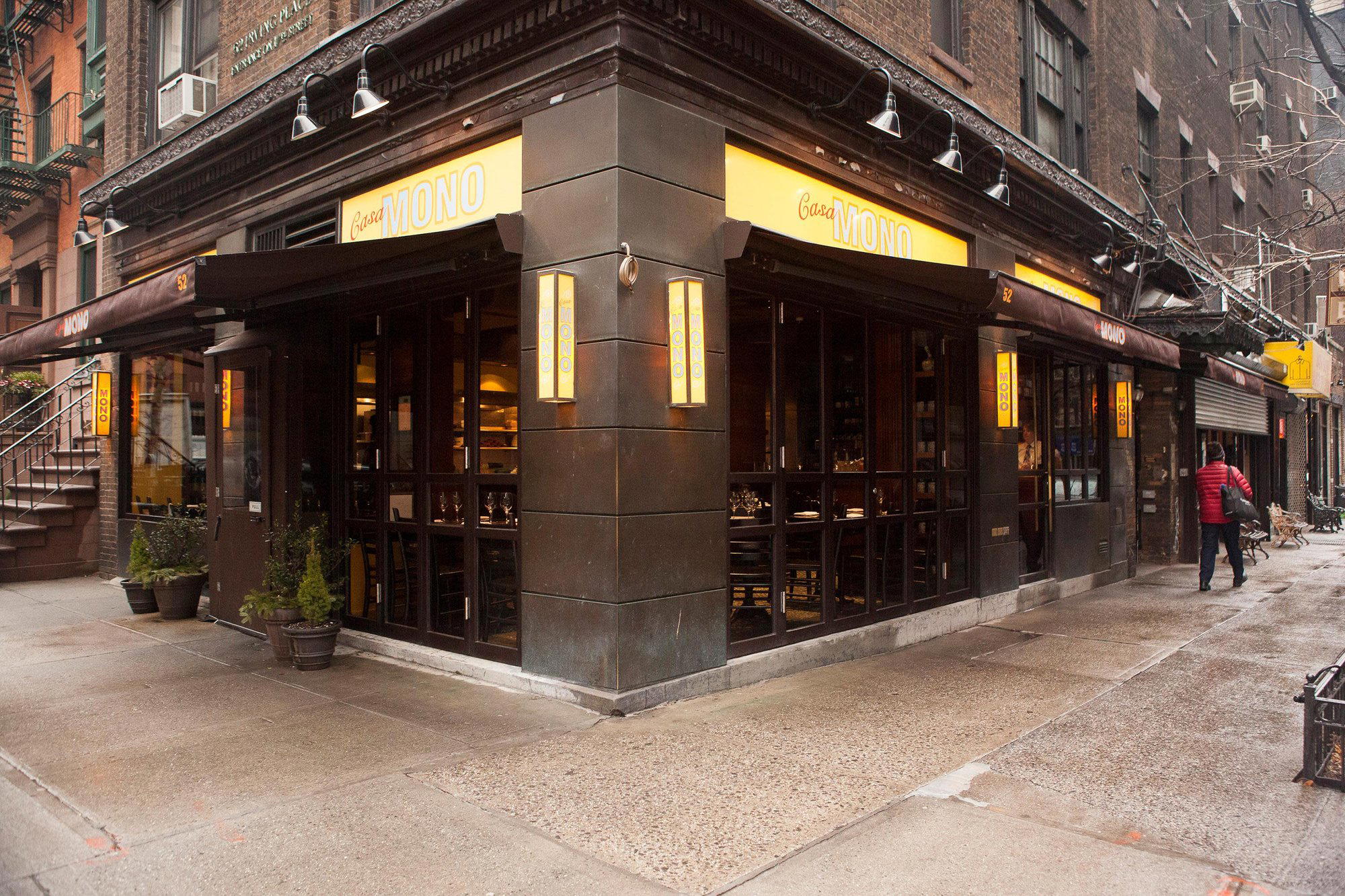
Irving Place and the Spanish Tapas Format in Manhattan
The corner of Irving Place and 17th Street does not announce itself loudly. The blocks here run quieter than the Flatiron rush two avenues west, and the buildings hold the low-scale character of a neighborhood that has not been comprehensively redeveloped. Into that setting, Casa Mono and its adjacent wine bar Bar Jamon have occupied a specific niche in Manhattan's dining geography for long enough that their presence now reads as structural rather than fashionable. This is where a particular kind of Spanish-inflected evening has been codified: small plates, Iberian wine depth, and a format that does not require a reservation architecture or a tasting menu contract to deliver something serious.
Spanish tapas has always presented a structural challenge in New York. The cuisine's logic is social and accumulative, built around multiple small dishes arriving across an unhurried sitting, but the economics of Manhattan real estate push operators toward either high-volume casualness or prix-fixe discipline. Casa Mono holds a middle position: the menu is ordered a la carte, the dishes are small and share-oriented, but the wine program carries a credential weight that aligns the room with a more serious peer set than a standard tapas bar. That dual register is what makes the format here worth understanding on its own terms, separate from any single dish or booking.
How the Menu Is Structured — and What That Reveals
The editorial logic of the Casa Mono menu is Spanish in architecture but not in any folkloric sense. The kitchen works through ingredients in a way that reflects Spanish technique — preserved, cured, roasted, simply dressed , without resorting to the kind of generic Iberian shorthand that fills out lesser menus. Dishes arrive in a sequence the diner assembles rather than one the kitchen imposes, which demands some literacy from the table. You are expected to build your own progression: lighter preparations first, richer ones following, a plate of charcuterie or cheese interspersed at whatever interval you choose.
This structure places Casa Mono closer to the Spanish bar tradition than to the contemporary small-plates format that has spread through American restaurants over the past decade. At restaurants like Le Bernardin or Per Se, the kitchen controls sequencing absolutely; the tasting menu is the grammar. At Masa, the omakase format similarly removes menu-building from the guest. Casa Mono inverts that dynamic , the guest composes, the kitchen executes. For diners accustomed to being led through a progression, the format can feel like it asks more than expected. For those who find tasting-menu discipline restrictive, it offers a different kind of engagement entirely.
Bar Jamon, the wine bar next door, extends the format further toward informality. The room is smaller and the food list tighter, weighted toward cured meats and cheeses alongside a wine selection that overlaps with but is not identical to the main restaurant. The effect is of two rooms calibrated for different entry points into the same culinary logic: Bar Jamon for a glass and a board, Casa Mono for a longer, more composed sitting. Together they cover a wider range of occasions than either could independently, which reflects a considered approach to how people actually use neighborhood dining rather than how operators prefer to program it.
The Wine Program: Recognition and What It Signals
The clearest external signal about where Casa Mono sits in the New York restaurant hierarchy comes from its wine credentials rather than its kitchen accolades. A White Star designation from Star Wine List, published in August 2022, and a 3-Star Accreditation from World of Fine Wine both indicate a cellar program that has been formally assessed against peers and found to operate at a high level. These are not restaurant awards in the conventional sense; they are specific to the wine offering, which means the recognition is targeted at something the room is genuinely built around rather than a supplementary list attached to a food-first concept.
In New York's Spanish dining context, that wine focus matters because the Iberian wine canon is still less broadly understood by American diners than French or Italian programs. Rioja and Ribera del Duero anchors are familiar enough, but the depth of the Spanish cellar , Priorat, Bierzo, the sherries of Jerez, the oxidative whites of Galicia , requires a program that is actively curated rather than passively assembled. The recognition from both Star Wine List and World of Fine Wine suggests that depth is present and maintained. For diners who approach a restaurant through the wine list first, those signals are more informative than a food review.
This positions Casa Mono in a peer set that includes serious wine-program restaurants across the city rather than only Spanish or Mediterranean concepts. Comparison with other recognized wine programs in New York , or internationally, at places like Alain Ducasse at Louis XV or 8½ Otto e Mezzo Bombana in Hong Kong , underlines that serious wine accreditation is a consistent marker of rooms where the beverage program is considered a first-order priority, not a support function for the kitchen.
Irving Place, Gramercy, and the Room's Neighborhood Logic
The Gramercy Park area has historically supported a particular kind of dining: neighborhood-anchored, repeat-visit oriented, less prone to the theatrical openings that characterize Meatpacking or NoMad. Casa Mono fits that character. The address on Irving Place is walkable from Gramercy Park hotel, close enough to the Union Square transit hub to draw from across the borough, but not positioned on a street that generates foot traffic from tourists or commuters in large numbers. The room functions on the basis that people seek it out rather than stumble across it.
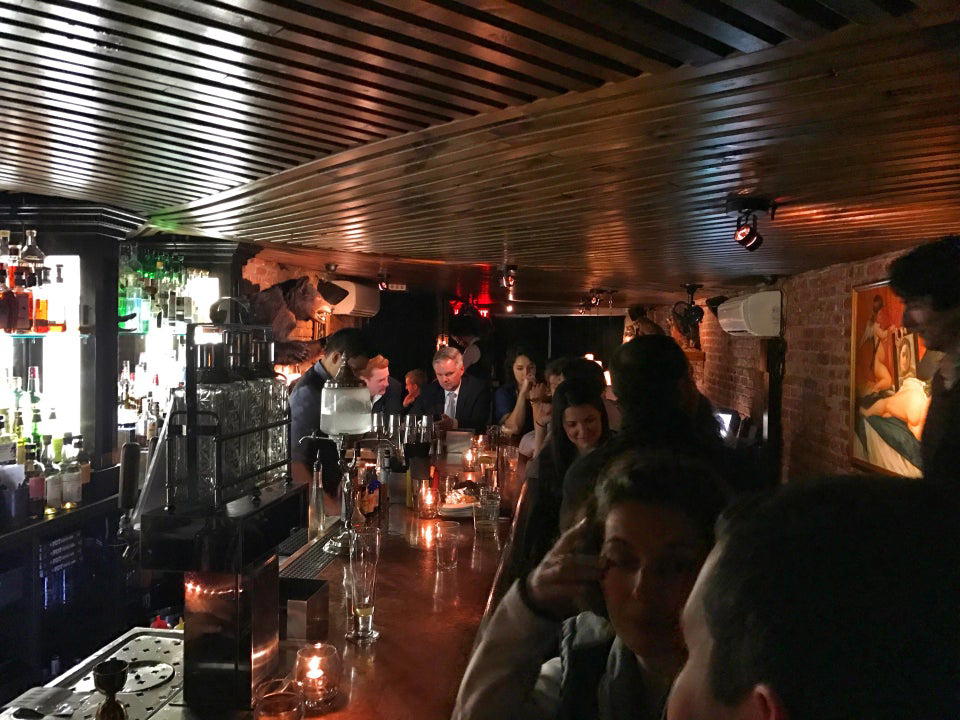
That self-selection shapes the experience inside. The dining room at Casa Mono is not large. Tight seating, a counter format for solo diners or pairs, and a room that fills quickly on weekend evenings means the atmosphere is built by proximity rather than design spectacle. It is the kind of room where noise levels rise with occupancy and where being physically close to other tables is understood as part of the format rather than a compromise. Diners who find that register uncomfortable will find the room challenging. Those who do not will find it generates the kind of momentum that empty dining rooms with beautiful interiors rarely can.
Planning a Visit: Timing and Approach
Casa Mono at 52 Irving Place is reachable on foot from the L, N, Q, R, W, 4, 5, and 6 trains at Union Square, a short walk southeast. The room's size and recognition mean that booking ahead is advisable for dinner, particularly on Thursday through Saturday evenings. Bar Jamon, as a walk-in wine bar format, offers more flexibility and functions as a reasonable contingency if the main room is fully committed. For those building a broader New York evening, the New York City bars guide covers options in adjacent neighborhoods, and the full New York City restaurants guide maps the wider dining context across Manhattan and the boroughs.
For visitors constructing a multi-night itinerary, the New York City hotels guide covers properties across relevant neighborhoods. Those interested in wine-focused dining more broadly can cross-reference with César and Saga, both of which hold recognized programs in the city. Further afield, serious wine-forward restaurants at the level of Single Thread Farm in Healdsburg or The French Laundry in Napa offer a point of comparison for what a fully integrated food-and-wine program looks like at the far end of the category.
Where the Accolades Land
A quick peer reference to anchor this venue in its category.
| Venue | Awards | Cuisine | Notes |
|---|---|---|---|
| Casa Mono & Bar Jamon | Casa Mono & Bar Jamon is a wine bar venue.without_translation_and restaurant… | This venue | |
| Le Bernardin | Michelin 3 Star | French, Seafood | French, Seafood, $$$$ |
| Masa | Michelin 3 Star | Sushi, Japanese | Sushi, Japanese, $$$$ |
| Per Se | Michelin 3 Star | French, Contemporary | French, Contemporary, $$$$ |
| The Chefs Table at Brooklyn Fare | Michelin 2 Star | Japanese - French, Contemporary | Japanese - French, Contemporary, $$$$ |
| Estela | Michelin 1 Star | Mediterranean, Contemporary | Mediterranean, Contemporary, $$$$ |
Continue exploring
More in New York City
Restaurants in New York City
Browse all →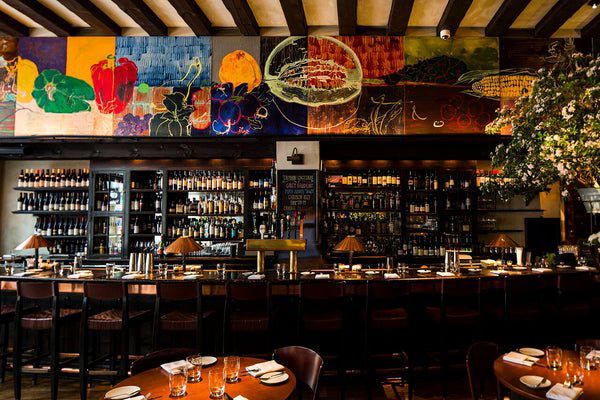
Bars in New York City
Browse all →
Hotels in New York City
Browse all →




At a Glance
- Cozy
- Intimate
- Lively
- Elegant
- Date Night
- Special Occasion
- Open Kitchen
- Extensive Wine List
- Sommelier Led
Cozy and buzzy with dim lighting, tightly spaced tables, open kitchen views, and an energetic, festive atmosphere.