
Michelin Plate
Our verdict
Capasanta brings sea-driven modern cooking to the shadow of Pompei's famous shrine, with chef Paolo Del Giudice turning Gulf of Naples ingredients into precise, contemporary plates. The minimalist marine-inspired space suits the cooking's register: focused, clean, and ingredient-led. Crudo selections and scallops wrapped in lardo with spring pea purée and buffalo stracciatella are the signatures to know before you sit down.

Pearl is the En Primeur Club membership app, where members save venues, book tables and use the concierge.
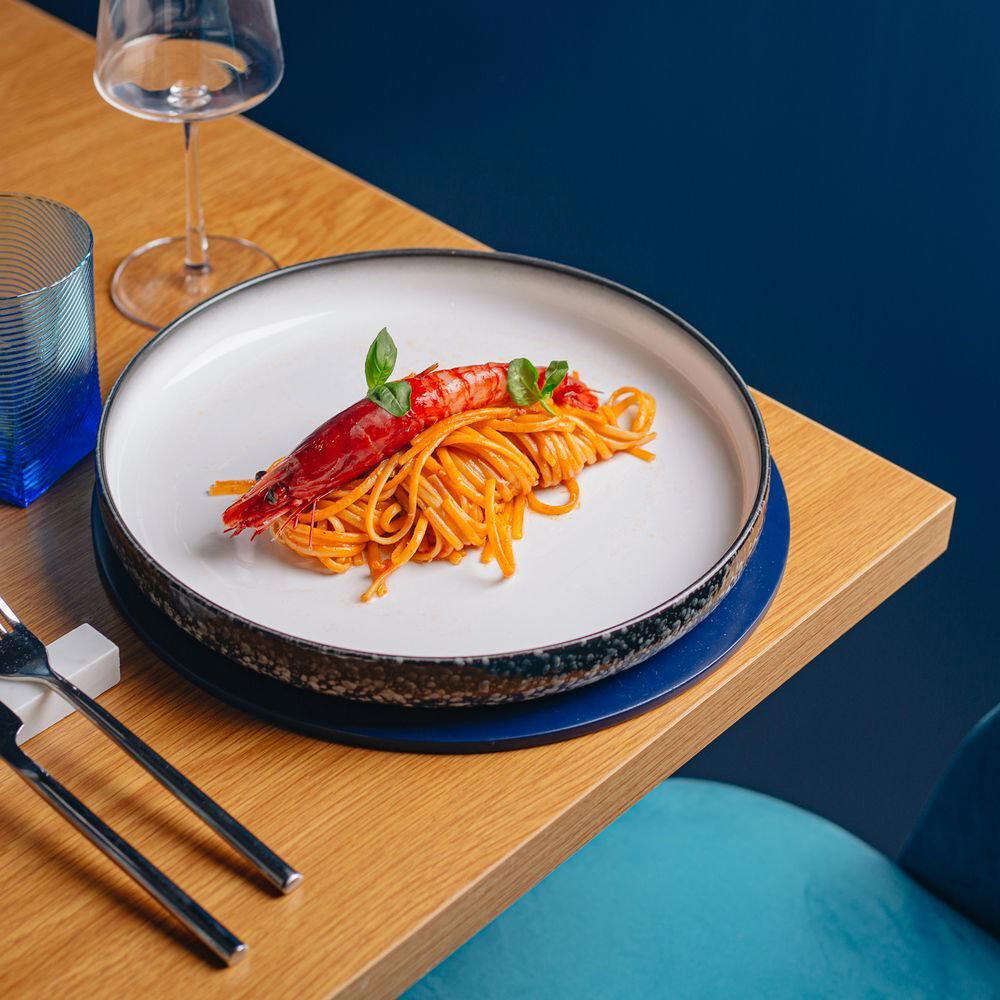
Where the Sea Meets the Ruins
Pompei's dining scene has long been shaped by the gravitational pull of the archaeological site, which generates a predictable tourist economy and, with it, a predictable tier of restaurants. What makes Via Carlo Alberto, 14 worth noting is precisely what it pushes against: a focused, sea-forward kitchen operating at a register more consistent with the coastal trattorias of Naples or Pozzuoli than with the souvenir-district norm. The Shrine of Our Lady of the Rosary sits steps away, and the foot traffic it brings is considerable, yet Capasanta reads the room as a neighbourhood restaurant first and a tourist-facing destination second.
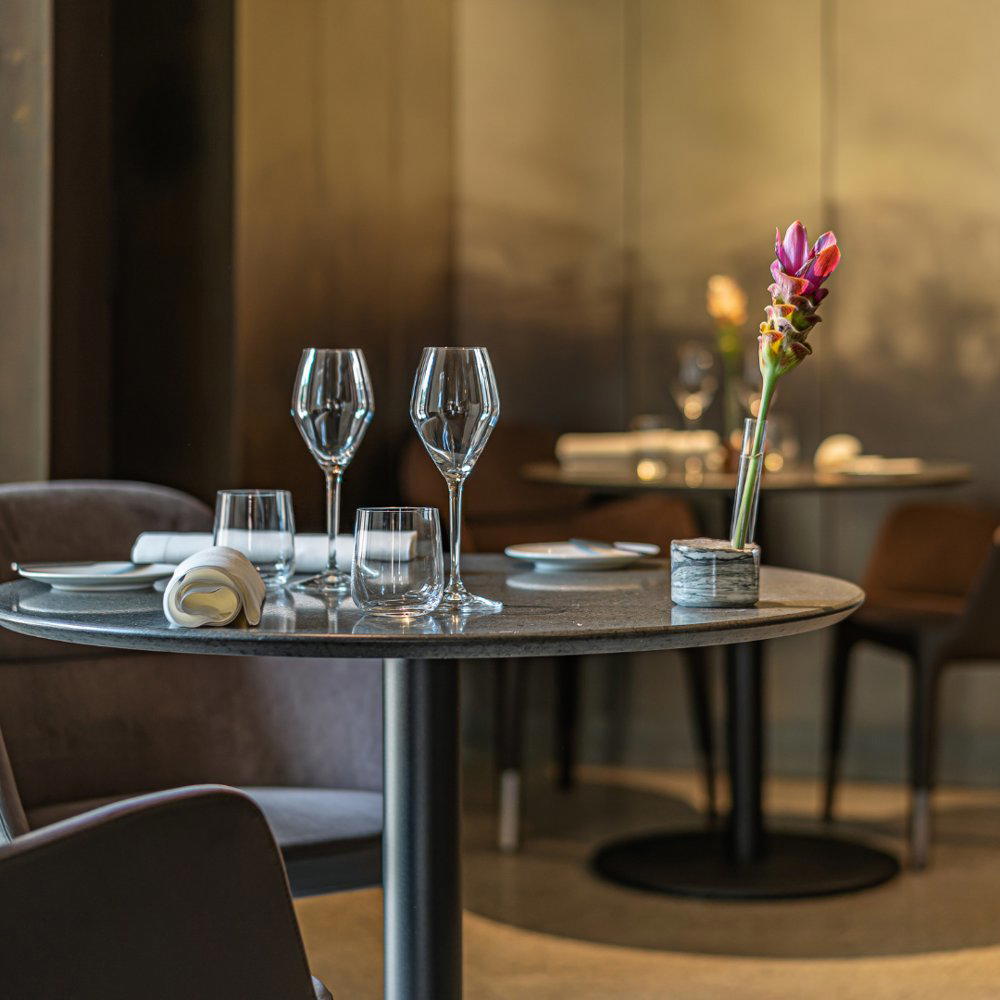
The dining room carries a minimalist, marine-inspired fit-out that signals intent before a plate arrives. Stripped-back interiors have become the standard visual language for ingredient-focused kitchens across southern Italy, and Capasanta speaks it fluently: the space makes a deliberate case that the product on the plate should occupy the eye, not the decor surrounding it. For a city that can default toward theatrical Vesuvian kitsch, the restraint reads as a meaningful editorial choice.
The Sourcing Argument Behind the Menu
Southern Campania sits on one of Italy's most compelling ingredient maps. The Gulf of Naples supplies fish and shellfish within hours of service; the Agro Nocerino-Sarnese plain, among the most fertile stretches of European agricultural land, produces tomatoes, greens, and legumes that carry regional appellation status. Buffalo mozzarella and stracciatella from the Caserta hinterland travel short distances to reach kitchens in this corridor. What distinguishes a kitchen like Capasanta from its peers in Pompei is not the availability of these materials, which are broadly accessible to anyone cooking here, but the discipline with which they are handled and the restraint that allows each to register clearly on the plate.
Chef Paolo Del Giudice has built a menu that treats sourcing as the structural argument, not the marketing footnote. The crudo selections are the clearest expression of this: raw or lightly dressed fish requires ingredients at their peak, and no amount of technique papers over produce that isn't right. This is the category where young chefs who understand provenance separate themselves from those who don't. Comparing Capasanta's approach to the territory-first philosophy at Atelier Moessmer Norbert Niederkofler in Brunico or the product-led rigour at Dal Pescatore in Runate places this kitchen in a lineage of Italian cooking where the source material carries the argument.
The Signature Plates
The scallops wrapped in lardo with spring pea purée and buffalo stracciatella have become the dish most associated with Capasanta, and the combination illustrates why the kitchen's sourcing logic matters. Scallops from these waters are sweet and firm; lardo, particularly from quality Campanian producers, carries sufficient delicacy to complement rather than smother; the spring pea purée introduces a vegetal freshness that cuts the fat; and the buffalo stracciatella, from dairies less than an hour's drive north, provides the creamy, slightly acidic counterpoint that pulls the plate together. The architecture is modern, but the ingredients are doing the talking.
The crudo selections deserve equal attention. In the broader context of Italian coastal fine dining, crudo has become a benchmark category: at Le Bernardin in New York City, raw and barely-touched seafood formats have defined decades of critical conversation about what restraint in fish cookery can achieve. Capasanta's crudo program operates on a smaller scale and at a different price tier, but the underlying principle, that exceptional raw material, handled minimally, speaks more clearly than elaborate preparation, runs through both kitchens.
Where Capasanta Sits in Pompei's Dining Set
Pompei supports a narrower range of serious restaurants than its visitor numbers might suggest. Il Principe operates at the €€ tier with a modern cuisine format; CENERE - Museum & Bistrot occupies the Campanian register at the same price point; Cosmo Restaurant runs modern cuisine also at €€; while President anchors the Mediterranean end at the €€€ level. Capasanta's sea-driven, contemporary positioning places it in a distinct pocket of this market: more focused than the Mediterranean generalists, more contemporary in technique than the traditional Campanian kitchens, and deliberately narrower in scope than the formal dining rooms that anchor the city's upper tier.
For comparison points beyond Pompei, the ingredient-first ethos running through Osteria Francescana in Modena, the technical precision at Le Calandre in Rubano, or the produce-led southern Italian argument at Piazza Duomo in Alba all illuminate different facets of the broader tradition Del Giudice is working within. At the national level, Enoteca Pinchiorri in Florence and Enrico Bartolini in Milan represent the upper ceiling of Italian fine dining ambition; Atomix in New York City offers a useful international parallel for how a small, focused kitchen with a clear sourcing philosophy can build outsized critical reputation. Capasanta is not operating at those scales, but the underlying discipline points in the same direction.
Planning Your Visit
The restaurant sits on Via Carlo Alberto, 14, a short walk from the Pompei Scavi train station on the Circumvesuviana line, which connects the city to Naples in roughly 35 minutes and to Sorrento in around 30. Given the proximity to the shrine and the excavation site, the surrounding streets carry significant midday and early-evening traffic, particularly between April and October; dinner service tends to offer a quieter experience in the room. Capasanta carries an excellent wine program alongside a cocktail list, which makes it a reasonable single-destination evening rather than a quick lunch stop. Booking in advance is advisable, particularly during the high-season tourist window. The broader Pompei food and drink scene is covered in our full Pompei restaurants guide, while our Pompei hotels guide, bars guide, wineries guide, and experiences guide cover the rest of the city's offer.
Frequently asked questions
What part of town is Capasanta in?
Capasanta is located at Via Carlo Alberto, 14, 80045 Pompei NA, Italy, Pompei.
What's Capasanta known for in terms of accolades?
Capasanta has received recognition including: Just steps from the Shrine of Our Lady of the Rosary, young, talented chef Paolo Del Giudice delights with sea-driven, modern cooking. In a minimalist, marine-inspired space, he serves vibrant, flavorful dishes grounded in contemporary tech….
What's the best thing to order at Capasanta?
The crudo selections are the clearest expression of what chef Paolo Del Giudice is doing here: sourcing Gulf of Naples fish and presenting it with minimal interference. The scallops wrapped in lardo with spring pea purée and buffalo stracciatella have attracted the most attention and are the obvious starting point for a first visit.
Can I walk in to Capasanta?
Capasanta is a small, focused restaurant in Pompei with a chef, Paolo Del Giudice, whose cooking has generated a following beyond the immediate tourist circuit. Walk-ins are a gamble, particularly at dinner and during high season when the archaeological site draws visitors to the area. Booking ahead is the practical approach.
What's the defining dish or idea at Capasanta?
The scallops wrapped in lardo with spring pea purée and buffalo stracciatella concentrate everything Del Giudice is working with: Campanian shellfish, cured pork fat from the region, and buffalo dairy from the plains south of Naples. The combination has become the dish most associated with the restaurant and the clearest shorthand for its approach.
Is Capasanta allergy-friendly?
The menu at Capasanta is anchored in seafood and Campanian dairy, including raw fish preparations and buffalo stracciatella, so guests with shellfish, fish, or dairy allergies should flag requirements when booking.
How does Capasanta compare to other serious restaurants in Pompei?
Pompei has a narrower serious dining set than its visitor numbers suggest. Il Principe operates at a comparable tier with a more formal register; Capasanta, under chef Paolo Del Giudice, takes a younger, more marine-focused approach in a minimalist space on Via Carlo Alberto. For diners whose priority is contemporary technique applied to Gulf of Naples seafood, Capasanta occupies a specific position in that short list.
In Context: Similar Options
Comparable venues nearby, for context on price, style, and recognition.
| Venue | Cuisine | Price | Awards | Notes |
|---|---|---|---|---|
| CapasantaThis venue (the venue you are viewing) | Modern Seafood | Not listed | Michelin Plate | Not listed |
| CENERE - Museum & Bistrot | Modern Italian Bistrot | Not listed | Michelin Plate | Pompeii |
| Cosmo Restaurant | Modern Italian Fine Dining | $50–100 | Michelin Plate | Pompei |
| Il Principe | Modern Campanian Fine Dining | Not listed | Michelin Plate | Pompei |
| President | Modern Italian Fine Dining with Campania Roots | Not listed | 1 Michelin Star | Pompeii |
| I Lustri Lab | Contemporary Seafood | $50–100 | Michelin Plate | center |
Recognition history
Dated appearances from independent guides and award organizations, with the underlying list record or original source where available.
Michelin Plate
Michelin
Continue exploring
More in Pompei
Restaurants in Pompei
All restaurants in Pompei →
Bars in Pompei
Browse all →

Details
- Elegant
- Modern
- Intimate
- Cozy
- Date Night
- Special Occasion
- Extensive Wine List
- Local Sourcing
- A La Carte
Current opening hours
- Monday
- 6 PM–12 AM
- Tuesday
- Closed
- Wednesday
- 6 PM–12 AM
- Thursday
- 6 PM–12 AM
- Friday
- 6 PM–12 AM
- Saturday
- 12 PM–12 AM
- Sunday
- 12 PM–12 AM
Hours can change for holidays and private events. Hours as of .
Minimalist yet studied furnishings with evocative whitewashing that evokes the sea, elegant and welcoming atmosphere with cool decor.