Google: 4.9 · 339 reviews
.png)
Cosmo Restaurant sits on Viale G. Mazzini in Pompei, where two young chefs work Campanian ingredients into technically ambitious, creative plates — earning a Michelin Plate in 2025. At a mid-range price point for the city, it occupies a distinct position: serious modern cooking in a town better known for archaeological tourism than dining ambition. Google reviewers rate it 4.9 from 306 reviews.
 Discover on Pearl
Pearl is the En Primeur Club membership app — saves, bookings, and concierge access live there. Same editors, same standards.
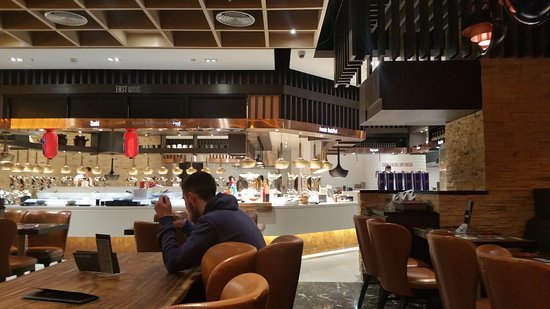
Where Pompei's Dining Ambition Shows Up
Pompei draws millions of visitors annually, almost all of them oriented toward the excavation site rather than the restaurant scene. The dining options clustered around the archaeological park reflect that reality: the majority pitch themselves at tourist throughput, with regional classics served at volume and little incentive to push craft. Against that backdrop, the city's small cohort of serious modern kitchens operates in a different register entirely. Cosmo Restaurant, on Viale G. Mazzini, belongs to that cohort — a mid-range address in price tier but a more demanding proposition in terms of kitchen ambition, working Campanian ingredients into dishes that the Michelin Guide characterises as elaborate, creative, and technically complex.
That Michelin Plate recognition in 2025 locates Cosmo precisely within its competitive set. In the southern Italian modern cuisine category, a Plate signals a kitchen operating above casual-regional level without yet landing a star — a meaningful distinction in a region where the gap between tourist-facing trattorias and genuinely creative cooking can be wide. For Pompei specifically, where President holds the established fine-dining position at a higher price tier (€€€) and CENERE - Museum & Bistrot anchors the Campanian-traditional end of the mid-range, Cosmo's modern-creative approach fills a gap that is easy to miss if you're scanning the city only for archaeology and pizza.
The Campanian Foundation, Pushed Further
Campanian cooking has some of Italy's most specific raw-material advantages: buffalo mozzarella from the plains around Caserta, San Marzano tomatoes grown in volcanic soil north of Pompei, local seafood from the Bay of Naples, and the produce of smallholder farms that have been working this land for centuries. The established tradition is to let those ingredients carry the dish with minimal interference , a logic that works because the ingredients are strong enough to sustain it.
What distinguishes Cosmo's positioning is the decision to use that foundation differently. The kitchen, led by two young chefs, applies more elaborate technique and creative framing to the same Campanian materials. This is not a rejection of the regional tradition but a conversation with it , the kind of move that Italian modern cuisine at its most coherent has always made, from Osteria Francescana in Modena reworking Emilian classics to Piazza Duomo in Alba building on Piedmontese terroir. At Cosmo's price point, the same impulse plays out in a more accessible register, which is part of what makes it worth attention: ambition and accessibility rarely sit at the same table in this country.
Italy's broader modern cuisine tier , covering everything from Enoteca Pinchiorri in Florence to Enrico Bartolini in Milan and Le Calandre in Rubano , tends to reward patience and deliberate pacing. The meal at these kitchens is structured to unfold; courses arrive with intent, and the rhythm of service is part of how the food communicates. Cosmo, operating at a more accessible price tier, shares that structural sensibility even if the scale differs from the starred houses above it.
The Ritual of the Meal Here
Campanian dining has its own tempo, distinct from the faster-paced lunch culture of Rome or the multi-course formality of Milanese fine dining. In this part of southern Italy, dinner is expansive rather than rushed , a sequence of dishes that builds slowly, with conversation, wine, and deliberate attention to each plate. Cosmo's creative-modern format fits that rhythm more naturally than it might first appear. The elaborateness the Michelin Guide describes is not a departure from the local eating culture; it is that culture expressed through a different technical vocabulary.
What this means practically: arrive with time. A meal structured around creative courses, prepared by two chefs working at a technical level the Guide acknowledges, is not designed for 45-minute turnover. The Google rating of 4.9 from 306 reviews , a figure that holds across a meaningful sample for a city of Pompei's dining size , suggests the room responds to that unhurried contract consistently. High ratings sustained over several hundred reviews in a tourist-heavy city indicate a kitchen that performs reliably, not just on good nights.
The price tier (€€) sits in the same band as Il Principe and CENERE, and below President, which means access to Michelin-recognised modern cooking here does not require the higher spend that comparable ambition demands at starred addresses elsewhere in Campania or at the national level , places like Atelier Moessmer Norbert Niederkofler in Brunico or Dal Pescatore in Runate, where the investment is considerably steeper.
Pompei Beyond the Ruins
For visitors structuring a day around the excavation site, the instinct is often to treat the meal as secondary , a refuelling stop before the drive to Naples or the Amalfi Coast. Cosmo's positioning challenges that instinct. A Michelin Plate in a €€ restaurant in a city whose dining scene is largely undersold means that the table merits planning in its own right, not as an afterthought to the morning at the archaeological park.
The Pompei food scene beyond Cosmo covers a wider range than most visitors anticipate. Capasanta adds to the mix, and the full scope of what the city offers across restaurants, bars, and wineries is mapped in our full Pompei restaurants guide. For those spending more than a day in the area, our full Pompei hotels guide covers accommodation options, while our full Pompei bars guide, our full Pompei wineries guide, and our full Pompei experiences guide round out the picture. For the modern cuisine category specifically, the contrast with northern European interpretations , Frantzén in Stockholm or FZN by Björn Frantzén in Dubai , illustrates how differently the same broad genre reads depending on the regional ingredient base and dining culture it is rooted in. Cosmo's version is distinctly southern Italian: technique in service of terroir, formality in service of the table's pleasure, not the kitchen's ego.
Planning Your Visit
Cosmo is located at Viale G. Mazzini, 103, 80045 Pompei. The address places it on one of the city's main arterial streets, accessible from the archaeological park and central Pompei without significant difficulty. Given the 4.9 rating across more than 300 reviews and the Michelin Plate recognition, demand at this price point in a city with limited high-quality creative dining means that booking in advance is advisable, particularly during the peak archaeological tourism season between spring and early autumn. No booking contact details are available in our database at time of publication; check current booking channels directly with the venue.
Cuisine Lens
A compact peer snapshot based on similar venues we track.
| Venue | Cuisine | Awards | Notes |
|---|---|---|---|
| Cosmo Restaurant | Modern Cuisine | Although the cuisine at Cosmo is influenced by the ingredients and culinary trad… | This venue |
| Il Principe | Modern Cuisine | Modern Cuisine, €€ | |
| President | Mediterranean Cuisine | Mediterranean Cuisine, €€€ | |
| CENERE - Museum & Bistrot | Campanian | Campanian, €€ | |
| Capasanta |
Continue exploring
More in Pompei
Restaurants in Pompei
Browse all →
Bars in Pompei
Browse all →
Hotels in Pompei
Browse all →
At a Glance
- Elegant
- Modern
- Sophisticated
- Intimate
- Date Night
- Special Occasion
- Celebration
- Open Kitchen
- Sommelier Led
- Local Sourcing
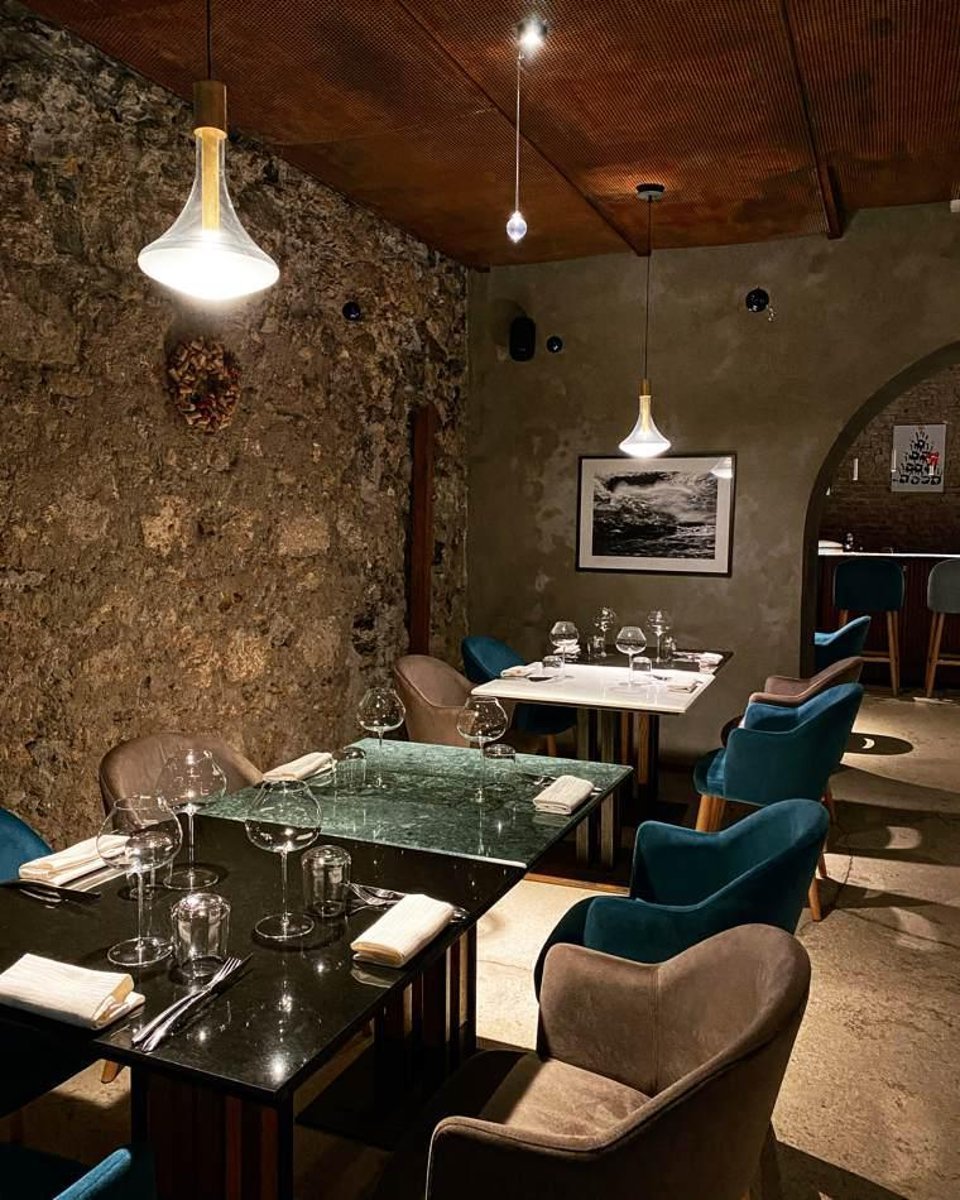
Modern, well-furnished interior with pleasant atmosphere; not overly formal. Warm, welcoming environment enhanced by open kitchen visibility and attentive service.