Canaima Grill Fusión sits in Villaverde, one of Madrid's southern working-class districts, where the city's Latin American diaspora has built a distinct food culture largely ignored by the centro gastronómico circuit. The restaurant operates at the intersection of grilled-meat tradition and fusion cooking, a format that has gained ground across Madrid's peripheral neighbourhoods as those communities establish their own culinary identity.
Pearl is the En Primeur Club membership app — saves, bookings, and concierge access live there. Same editors, same standards.
- Address
- C. de Berrocal, 1, Local 5, Villaverde, 28021 Madrid, Spain
- Phone
- +34917232825
- Website
- canaimafusion.com
- Directions
- Get directions
 Saves & bookings on Pearl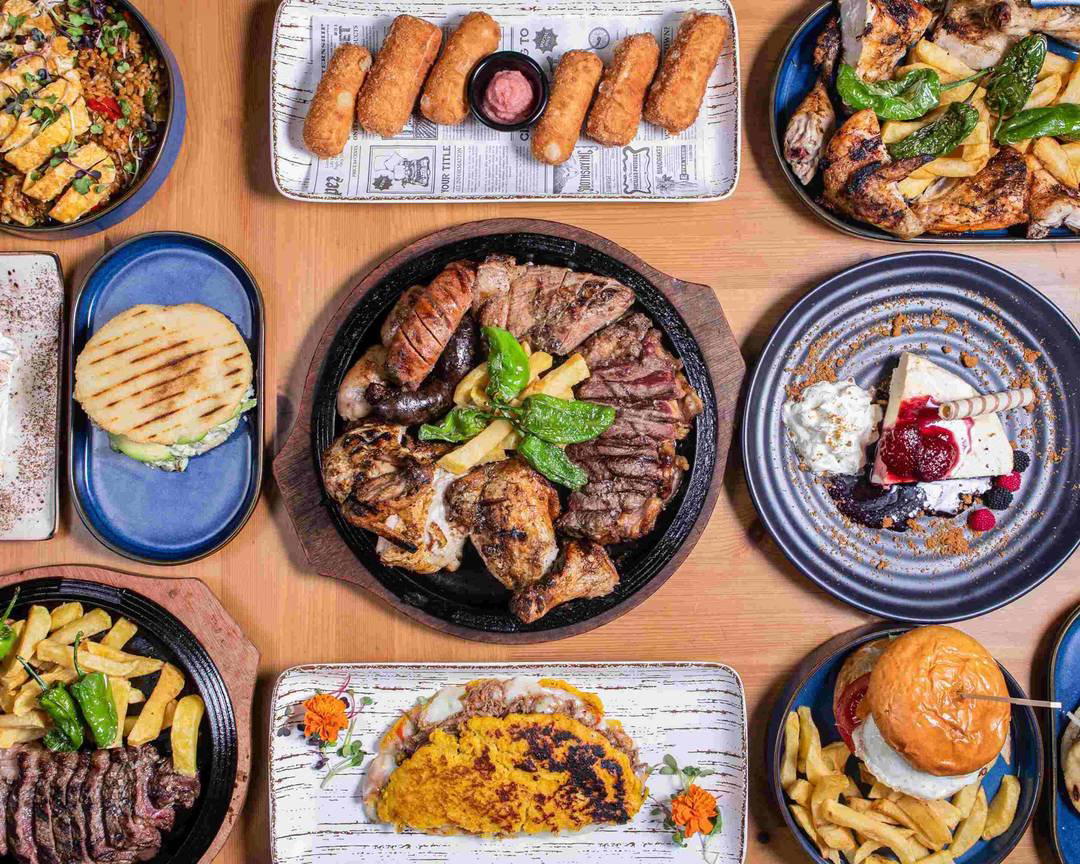
Villaverde and the Peripheral Dining Shift
Canaima Grill Fusión is a Venezuelan Fusion Grill in Villaverde, Madrid, at C. de Berrocal, 1, Local 5, and is open daily. That concentration has created blind spots. Villaverde, a southern district with deep roots in Madrid's industrial past and a large Latin American and African residential population, has developed its own restaurant culture largely outside that critical frame. Canaima Grill Fusión operates from Calle de Berrocal, within a neighbourhood where the dining proposition is built around community rather than tourism, and where a grill-fusion format speaks directly to the tastes and backgrounds of local residents rather than to a visiting food press.
That geographic position is worth understanding before arriving. That distance is not a deficiency; it reflects how a city of nearly 3.5 million people actually eats, across dozens of distinct neighbourhood economies, each with its own reference points.
The Grill-Fusion Format in Madrid's South
Fusion cooking in Madrid's peripheral districts tends to follow a different logic than the creative fusion at rooms like Deessa or DSTAgE. Where centre-city fusion is technique-led and often built around tasting menus designed for food-literate clientele, the fusion format in areas like Villaverde is typically ingredient-led, drawing on the produce, spices, and preparations that Latin American and Caribbean communities cook at home. The grill is the common grammar across both traditions: Spanish asador culture and South American parrilla culture share a foundational commitment to live fire and quality cuts, which makes the hybrid format coherent rather than arbitrary.
Across Spain, the grill tradition has produced some of the country's most serious cooking. Mugaritz in Errenteria and Azurmendi in Larrabetzu each engage with Basque fire traditions at a high technical level, while Arzak in San Sebastián has spent decades demonstrating how regional identity and creative ambition can develop in parallel. At the neighbourhood level, the calculus is different: the reference point is satisfaction and authenticity to a specific cultural community, not critical validation.
A Format That Has Evolved With Its Neighbourhood
The editorial angle that matters most at a venue like Canaima Grill Fusión is not static description but trajectory. Fusion restaurants in immigrant-majority neighbourhoods across European capitals have followed a recognisable arc over the past two decades: they open as community anchors, serving diaspora cooking that prioritises familiarity; they adapt over time as second-generation customers and curious visitors from other parts of the city begin to arrive; and the better ones develop a more considered menu that holds onto its original cultural logic while expanding its range. That evolution is the difference between a restaurant that merely survives and one that becomes a neighbourhood institution.
Villaverde itself has undergone that kind of gradual shift. What was once primarily an industrial dormitory has developed a more mixed economic and cultural character, and its restaurant scene has followed. The grill-fusion format at venues like Canaima positions them at an interesting mid-point: accessible enough for regulars who grew up eating this food, considered enough to attract visitors willing to cross the city for something they cannot find in Chueca or Malasaña.
For comparison, the same pattern has played out in cities far from Madrid. Lazy Bear in San Francisco built its identity on communal, fire-forward cooking that was rooted in a specific local sensibility before receiving wider critical recognition. Le Bernardin in New York City represents a different endpoint of that arc entirely, where a cuisine born from a specific cultural tradition becomes a reference point for an entire city's dining culture. Neither trajectory is guaranteed, but both begin with the same premise: a clear identity and a defined community.
Where This Sits Relative to Madrid's Wider Scene
Madrid's awarded dining tier operates at price points that exclude most of the city's population. The Paco Roncero tasting menu, the multi-course formats at Deessa, and the experience at El Celler de Can Roca in Girona or Quique Dacosta in Dénia require significant expenditure and advance planning. Neighbourhood grill-fusion venues occupy a completely different tier, one where the value proposition is daily relevance rather than occasion dining.
That distinction matters for how a visitor from outside Madrid should think about Canaima. It is a separate kind of restaurant value, one that reflects how Madrid's residential majority actually eats. It belongs to a different category of restaurant value, one that reflects how Madrid's residential majority actually eats, and one that the city's international dining profile systematically underrepresents.
Visitors who want to understand the full range of Madrid's food culture, rather than its awarded peak, will find Villaverde more instructive than another pass through the Salamanca restaurant corridor. For the wider Madrid picture, the EP Club Madrid restaurants guide maps both the fine dining tier and the neighbourhood context. Spain's broader restaurant geography, from Aponiente in El Puerto de Santa María to Atrio in Cáceres and Martín Berasategui in Lasarte-Oria, confirms that serious cooking happens across a wide range of formats and price points, not only in awarded rooms.
Know Before You Go
- Address: C. de Berrocal, 1, Local 5, Villaverde, 28021 Madrid, Spain
- District: Villaverde, southern Madrid, outside the main tourist and gastronomy circuits
- Price range: About $25 per person
Fast Comparison
Comparable venues nearby, for context on price, style, and recognition.
| Venue | Cuisine | Price | Notes |
|---|---|---|---|
| Canaima Grill FusiónThis venue — the venue you are viewing | Venezuelan Fusion Grill | $$ | Not listed |
| El Jefe Traveling Food | Traveling Fusion Street Food | $$ | Cuatro Caminos |
| Babel Terraza Restaurante | Modern Fusion International | $$ | Corralejos |
| La Vagú | Fusion / Eclectic | $$ | Pilar |
| El Social | International Fusion | $$ | Chueca |
| Zen Asian Supper Club | Asian Fusion - Chinese, Japanese & Thai | $$ | El Viso |
At a Glance
- Lively
- Modern
- Casual Hangout
- Group Dining
- Open Kitchen