Our verdict
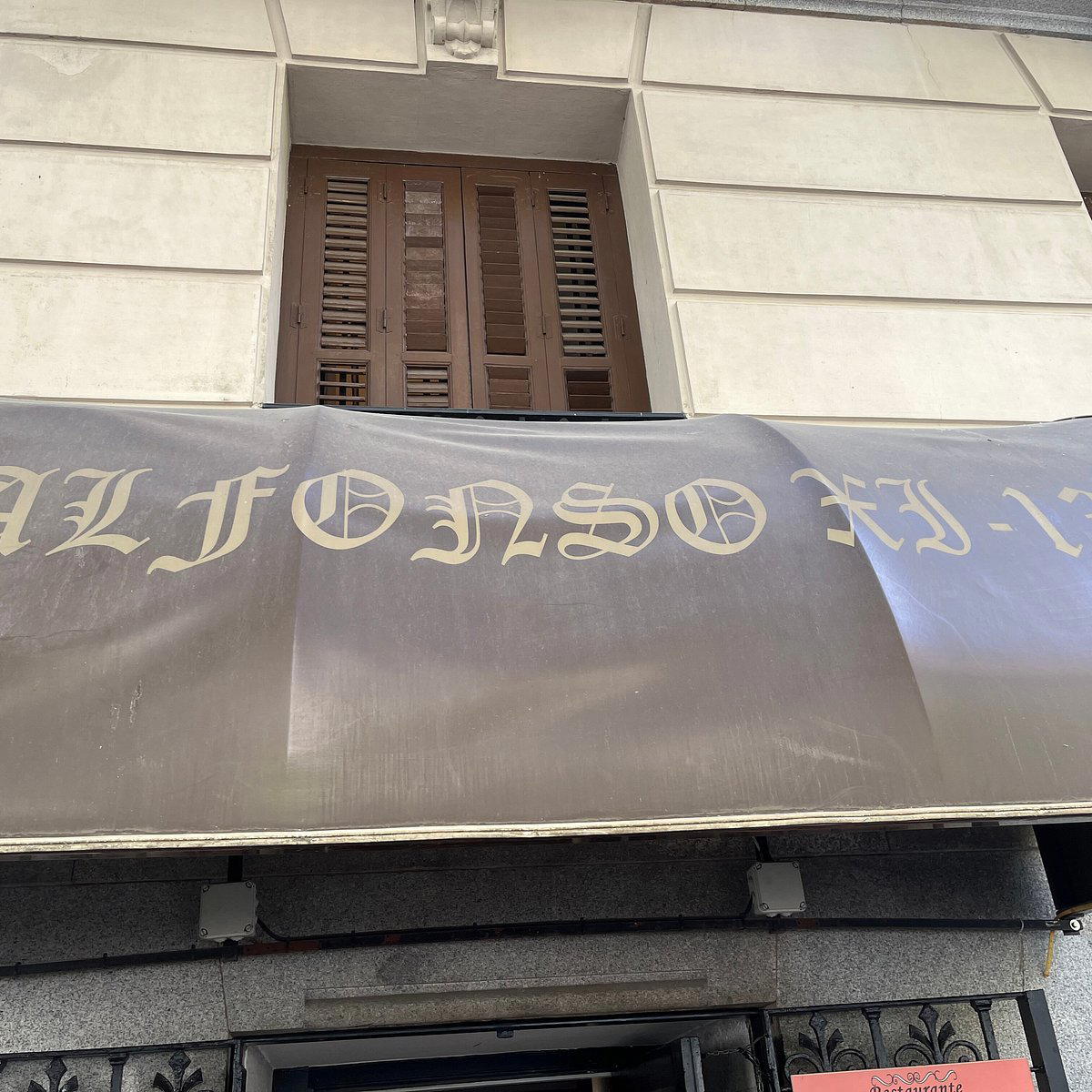
A neighbourhood cafetería on Calle Alfonso XI in Madrid's Retiro district, operating in a format that defines a particular stratum of Madrid dining: daily-menu service, local clientele, and a kitchen that works within the traditions of Spanish middle-class cooking. Its position in the Retiro quarter places it among residential streets rather than tourist circuits, making it a reference point for understanding how everyday Madrid eats.

Pearl is the En Primeur Club membership app, where members save venues, book tables and use the concierge.
The Retiro Quarter and the Cafetería Format
Madrid's Retiro district sits on the eastern edge of the city's historic core, bordered by the park on one side and the broad avenues of the Salamanca grid on another. The streets that run through it, Alfonso XI among them, carry a particular residential density: pharmacies, hardware shops, local bars, and the kind of cafetería that opens at seven in the morning and closes when the last lunch diner has finished his coffee. This is not the Madrid of tasting menus and starred kitchens. It is the Madrid that feeds itself, every day, in the same way it has for decades.
The cafetería-restaurante format occupies a distinct and often misread position in Spanish urban dining. It is not a café in the French sense, nor a full-service restaurant in the way that term travels internationally. It is a hybrid: counter service in the morning, a fixed-price menú del día at lunch, and a carta available for those who want to order à la carte outside the set menu window. The format is deeply functional and, at its finest, deeply good. The menú del día, which by law must include bread, a drink, and two courses, remains one of the most rational inventions in European dining culture, and in Retiro's residential blocks it survives largely unchanged by the pressures that have reshaped it in more touristic neighbourhoods.
Where Technique Meets the Larder
The editorial angle worth applying to a place like Cafetería Restaurante Alfonso XI is not the chef's biography or the room's design. It is the question of what a kitchen in this format and location is actually doing with Spanish ingredients, and how that compares to the louder conversations happening elsewhere in Madrid's dining scene.
Current conversation in Spanish gastronomy tilts hard toward technique: at the top of the market, kitchens like DiverXO and Coque apply international methodology to Spanish produce at a level that draws global attention. Places like Deessa, DSTAgE, and Paco Roncero sit in a creative middle tier where Spanish identity is refracted through contemporary technique. But the cafetería format operates below all of that, on a different set of imperatives entirely: daily volume, consistent pricing, and a clientele whose benchmark is yesterday's menú, not last month's review in a food publication.
What this means in practice is a kitchen that applies inherited technique, braising, roasting, frying, stewing, to whatever the market offers that week. Castilian cooking relies on this rhythm: cocido madrileño built from chickpeas and mixed meats, callos a la madrileña from offal, bacalao prepared in any of several classical forms. The ingredient quality in this tier varies by kitchen, but the techniques themselves are not simple. A good cocido requires three days and multiple pots. A proper callos demands sourcing and timing. The cafetería format does not lower the technical bar so much as it shifts its priorities.
Across Spain, this interplay between imported cooking methodology and indigenous products has produced some of the country's most intellectually interesting kitchens. Quique Dacosta in Dénia built a three-Michelin-star practice around Mediterranean coastal produce. Arzak in San Sebastián has applied Basque technique to Basque ingredients across four decades. El Celler de Can Roca in Girona, Azurmendi in Larrabetzu, Martin Berasategui in Lasarte-Oria, and Aponiente in El Puerto de Santa María each represent versions of this local-ingredients, evolved-technique argument at high altitude. The cafetería in Retiro is not in that conversation, but it draws from the same deep well of Spanish larder logic, just with different economic and format constraints shaping the outcome.
The Retiro Address and What It Signals
Calle Alfonso XI runs through a residential block in Retiro that sits between the neighbourhood's more transited axes. It is the kind of street where a cafetería survives because the surrounding apartments generate enough daily foot traffic to sustain a lunch service without needing to capture tourists from the park or day-trippers from the museum mile to the north. This geographic insularity is not a weakness; it is what allows these establishments to price for their actual clientele rather than for visitors with different reference points.
For the reader constructing a Madrid itinerary around food, the distinction matters. The high-technique tier, DiverXO, Coque, Deessa, and their peers, requires planning weeks or months in advance and budgeting at €€€€ price points. That tier is covered fully in our full Madrid restaurants guide. Places like Cocina Hermanos Torres in Barcelona, Ricard Camarena in València, Mugaritz in Errenteria, and Atrio in Cáceres each represent distinct regional approaches to the local-technique intersection. But the everyday cafetería tier demands no advance booking strategy and no special dress code; it demands showing up at the right hour.
Internationally, the closest analogies are the working lunch formats that serious cities preserve alongside their tasting-menu culture: the brasserie lunch in Paris, the trattoria service in Rome, the counter lunch in Tokyo's business districts. At the global fine-dining level, Le Bernardin in New York City and Lazy Bear in San Francisco represent how far the technique-ingredient argument can travel in the other direction. The cafetería sits at the opposite end of the same axis: maximum access, minimum ceremony, maximum ingredient fidelity.
Know Before You Go
| Address | C. de Alfonso XI, 13, Retiro, 28014 Madrid, Spain |
|---|---|
| District | Retiro, Madrid |
| Format | Cafetería-restaurante (counter service, menú del día, à la carte) |
| Price range | |
| Reservations | |
| Phone / Website | Not publicly listed, visit in person or check local directories |
| Awards |
Frequently asked questions
What's the address for Cafetería Restaurante Alfonso XI?
Cafetería Restaurante Alfonso XI is located at C. de Alfonso XI, 13, Retiro, 28014 Madrid, Spain, Madrid.
Is Cafetería Restaurante Alfonso XI a good option for lunch near Parque del Retiro in Madrid?
Calle Alfonso XI, 13 sits in the Retiro residential quarter, placing it within practical walking distance of the park without sitting directly on its tourist-facing perimeter. That address puts it closer to the daily rhythms of the neighbourhood than to the visitor circuit along the Paseo del Prado. No cuisine type or menu details are formally documented, so the kitchen's precise offer is best confirmed on arrival.
What dish is Cafetería Restaurante Alfonso XI famous for?
Given its format as a cafetería on Calle Alfonso XI in Madrid's Retiro district, the kitchen likely leans on the Spanish cafetería canon: platos combinados, bocadillos, and daily lunch menus that rotate with the market. Confirming any house speciality requires a direct visit or contact with the venue.
How hard is it to get a table at Cafetería Restaurante Alfonso XI?
No booking data or reservation policy is documented for Cafetería Restaurante Alfonso XI. Cafeterías in residential Retiro blocks like Calle Alfonso XI, 13 typically operate on a walk-in basis, drawing a local crowd at midday rather than tourists queuing from abroad. Availability at peak lunch hour on weekdays may be tighter than the format suggests.
Cost and Credentials
Comparable venues nearby, for context on price, style, and recognition.
| Venue | Cuisine | Price | Awards | Notes |
|---|---|---|---|---|
| Cafetería Restaurante Alfonso XIThis venue (the venue you are viewing) | Traditional Spanish Cafeteria | $10–20 | Not listed | Not listed |
| Cachivache Taberna | Modern Spanish Tapas | $30–50 | Macarfi 6.7 Food Rating | Hispanoamerica, Modern Spanish Tapas |
| casabula | Asturian Parrilla | $50–100 | Not listed | Nueva Espana, Asturian Parrilla |
| Akiba Madrid | Traditional Spanish Tapas | $30–50 | Not listed | Valdebebas, Traditional Spanish Tapas |
| La Finca de Susana | Traditional Spanish Mediterranean | $20–30 | Not listed | Sol, Traditional Spanish Mediterranean |
| la Falda | Modern Spanish tavern & tortilla bar | $30–50 | Not listed | Lavapiés, Modern Spanish tavern & tortilla bar |