Cafe Mogador
Our verdict
Cafe Mogador at 101 St Marks Place has anchored the East Village's North African dining scene for decades, drawing a loyal crowd with Moroccan-inflected dishes in a setting that reads as neighbourhood institution rather than destination restaurant. Its longevity on one of Manhattan's most changeable blocks is itself a form of editorial comment on what sustained cooking and consistent identity can achieve in a city that rewards novelty.

Pearl is the En Primeur Club membership app, where members save venues, book tables and use the concierge.
The menu
What to order
- Vegetable Tagine
- Lamb Tagine
- Crispy Skin Salmon
- Hummus
A St Marks Fixture in a City That Rarely Holds Still
Most blocks on St Marks Place in the East Village have turned over multiple times since the 1980s. Cafe Mogador, at 101 St Marks Pl, has not. That kind of stability in a neighbourhood defined by churn is not accidental. It reflects the dynamics of a restaurant that has built its reputation through consistency rather than reinvention, and through a cuisine, Moroccan and broader North African, that Manhattan's dining establishment has historically underrepresented relative to its actual depth. If you are approaching a visit to Cafe Mogador through the lens of booking logistics and planning, the good news is that this is not a three-month-ahead situation. The challenge is different: timing your arrival to avoid waits, understanding what the room offers versus what it does not, and knowing where it sits relative to New York City's wider dining options, from the four-star French institutions along Midtown's power corridors to the neighbourhood-rooted spots that define the city's actual daily eating culture.
How the East Village Frames What Cafe Mogador Is
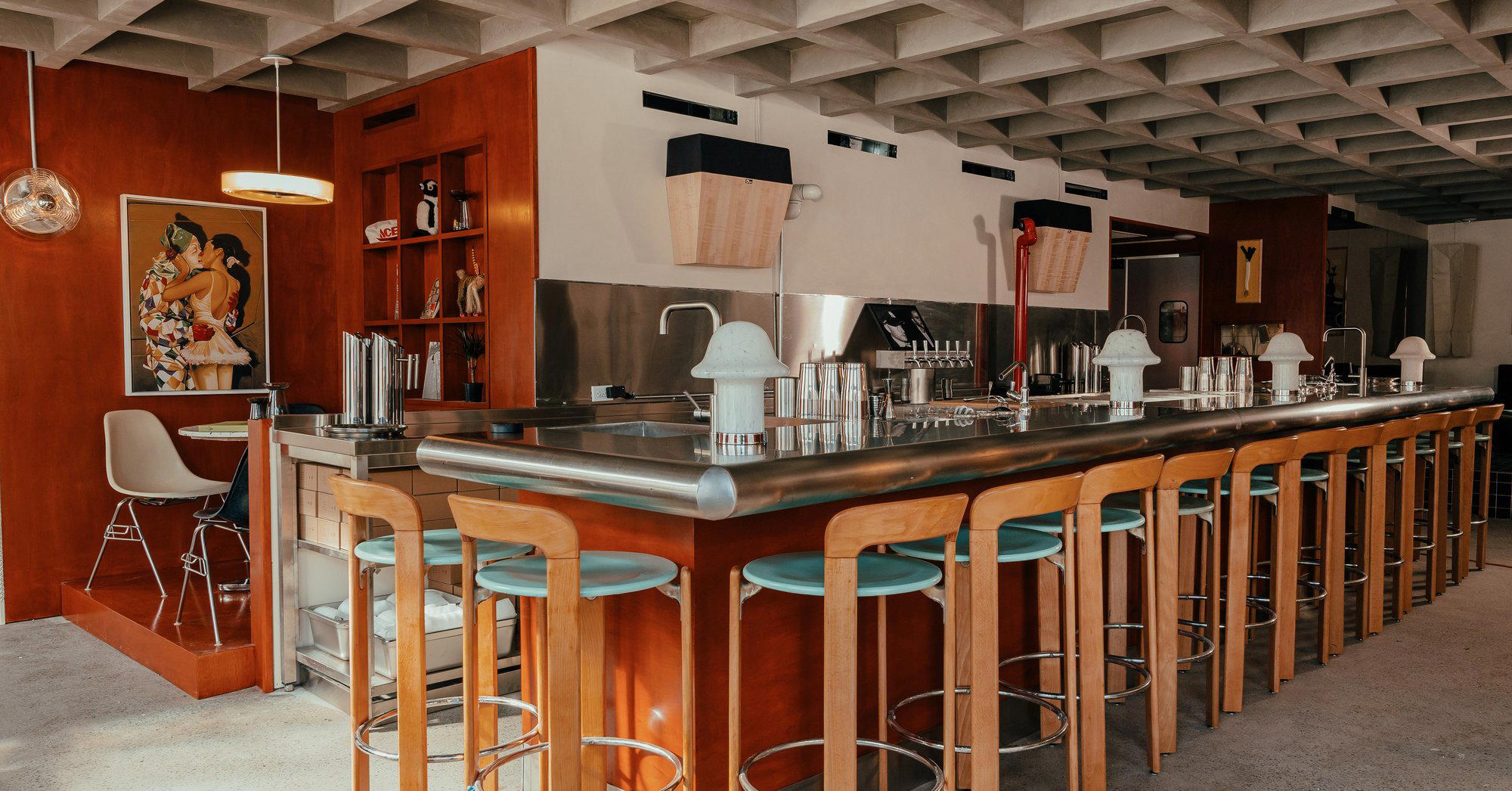
The East Village has always operated as a counterweight to the aspirational dining scene centred further uptown or in neighbourhoods like Tribeca and the West Village. Restaurants here draw from a tradition of affordable, culturally specific cooking served in rooms that prioritise atmosphere over formality. Cafe Mogador fits that model directly. Moroccan cuisine, with its braised tagines, spiced eggs, and mint tea service, is well suited to this format: it translates well at mid-scale price points, rewards repeat visits as preferences sharpen, and carries an inherent warmth of presentation that works in a room built for lingering.
That positioning matters when you are comparing Cafe Mogador against New York City's wider restaurant spectrum. The city's most discussed dining addresses, places like Le Bernardin, Atomix, Eleven Madison Park, Masa, and Per Se, operate in an entirely different category of investment, planning, and occasion. Cafe Mogador is not competing in that tier, nor is it trying to. It occupies a different and equally valid position: the neighbourhood anchor with a culinary tradition that gives it cultural specificity without demanding tasting-menu commitment from its guests.
The Booking Experience: What to Actually Expect
Cafe Mogador does not have the kind of reservation architecture that characterises New York's most demand-heavy restaurants. There is no six-week release window, no lottery system, no credit card guarantee required weeks in advance. The practical challenge is more familiar to anyone who has eaten in the East Village on a weekend: walk-in waits during peak hours, particularly on Saturday and Sunday mornings when the brunch crowd extends onto the pavement. Weekday visits, particularly for lunch or early dinner, tend to offer a more relaxed entry. The room itself is compact, with the kind of close table spacing that characterises the neighbourhood's older dining stock, which means waits can build quickly when the dining room fills.
For visitors who are building a New York itinerary around multiple dining experiences, Cafe Mogador functions well as a low-friction entry point. It does not require the forward planning that defines a visit to, say, Blue Hill at Stone Barns outside the city, or the kind of occasion-specific scheduling that shapes dinner at The French Laundry in Napa, Smyth in Chicago, or Providence in Los Angeles. It sits at a different point on the planning curve, one that rewards spontaneity more than strategy.
Moroccan Cuisine in a City of Competing Reference Points
North African cooking has a modest footprint in New York relative to the city's appetite for global cuisines. The tagine-centred tradition, with its slow-cooked lamb, preserved lemon, and olive combinations, its spiced vegetable dishes, and its hospitality-coded tea service, occupies space between Middle Eastern and Mediterranean cooking in how most New Yorkers encounter it. Cafe Mogador has been one of the primary reference points for that cuisine in the East Village for long enough that it has shaped what local diners expect from the format.
This matters for vegetarians and for guests with dietary considerations. Moroccan cuisine has a strong tradition of vegetable-forward dishes: spiced chickpeas, egg preparations, couscous, and roasted vegetable combinations that are not adapted-for-the-menu afterthoughts but structural parts of the cuisine itself. Anyone approaching the menu from a plant-based or vegetarian perspective is working with a cuisine that accommodates that position naturally, rather than one that retrofits it. For specific current menu details and dietary accommodations, the restaurant's own channels are the appropriate first stop, as menus and preparation details change.
Where Cafe Mogador Sits in a Broader American Dining Context
New York City rewards restaurants that hold identity across decades, and the East Village specifically has a history of producing them. Cafe Mogador's longevity places it in a category that newer, concept-driven openings cannot claim regardless of their early critical reception. That track record is not a substitute for quality, but it is a form of evidence that the room and its cooking have found a durable audience.
For visitors building a broader American itinerary, the contrast is instructive. A meal at Cafe Mogador represents a completely different proposition from dinner at Lazy Bear in San Francisco, Emeril's in New Orleans, Single Thread Farm in Healdsburg, Addison in San Diego, The Inn at Little Washington, or Frasca Food and Wine in Boulder. Those are destination restaurants built around occasion dining. Cafe Mogador is built around daily life in a specific neighbourhood, and that is what gives it its character. For those extending their travels internationally, the same neighbourhood-institution dynamic appears at places like Atelier Moessmer Norbert Niederkofler in Brunico and Dal Pescatore in Runate, where longevity and a specific regional culinary identity define the proposition as much as any single dish.
Our full New York City restaurants guide covers the broader range of dining options across price tiers and neighbourhoods, from the East Village's neighbourhood-rooted spots to the city's most formally structured tasting-menu destinations.
Planning Your Visit
Cafe Mogador is at 101 St Marks Place in the East Village, a short walk from the L train at First Avenue and the 6 train at Astor Place. Both stops put the restaurant inside a five-minute walk, making it accessible from most Manhattan points without requiring a crosstown effort. Weekend mornings carry the highest foot traffic, and arriving before the main brunch rush or after its peak, rather than at its centre, tends to produce a more comfortable experience in a room of this size.
Frequently asked questions
How do I find Cafe Mogador?
Cafe Mogador is located at 101 St Marks Pl, New York, NY 10009, New York City.
How long has Cafe Mogador been open on St Marks Place in the East Village?
Cafe Mogador at 101 St Marks Pl has been operating since the 1980s, making it one of the longer-running independent restaurants in the East Village, a neighbourhood with a high rate of turnover. In New York City terms, that duration across a single address is a meaningful credential in itself. The restaurant's Moroccan identity has remained consistent across that span, which is relatively unusual in a city where menus and concepts shift with ownership and trend cycles.
What do people recommend at Cafe Mogador?
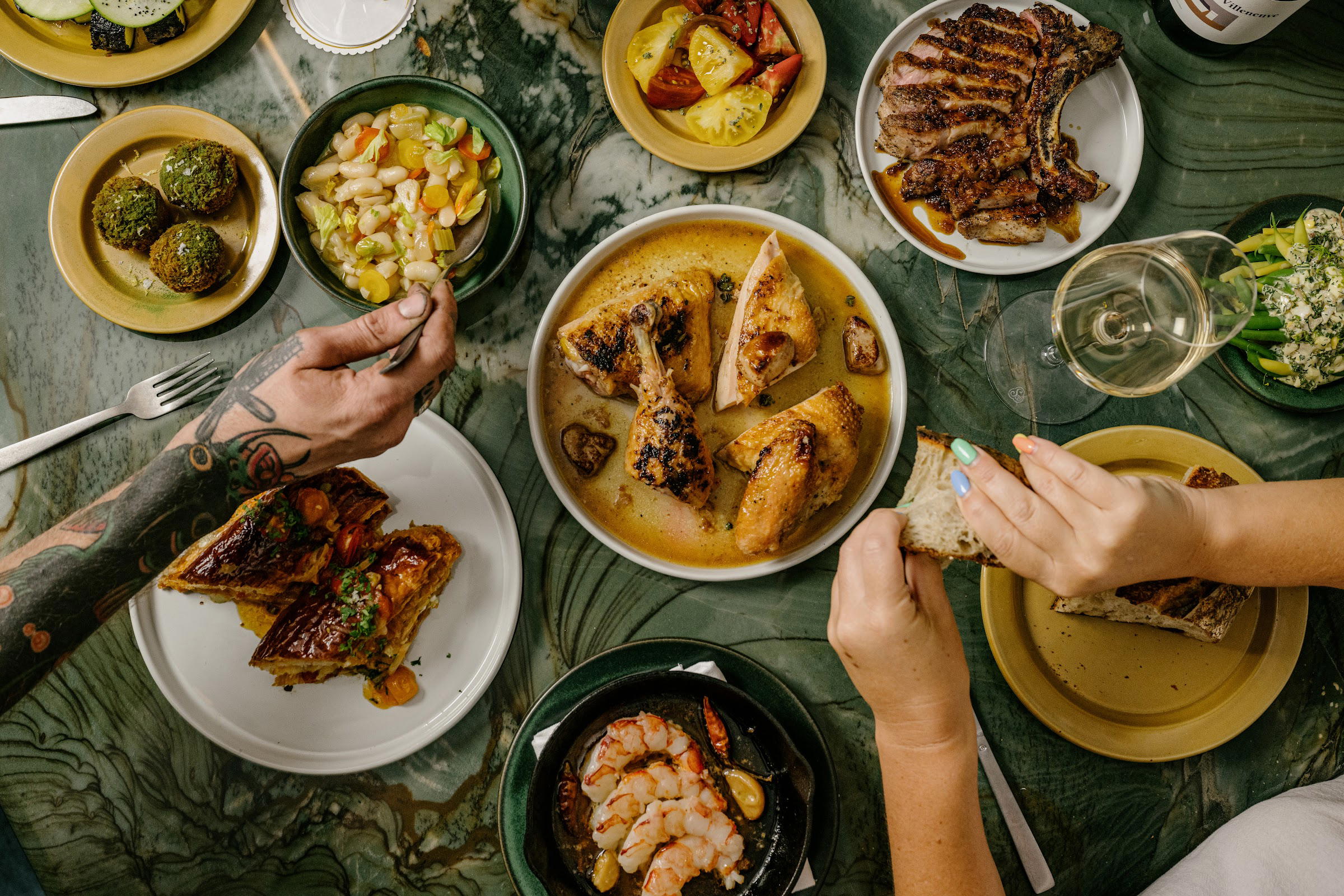
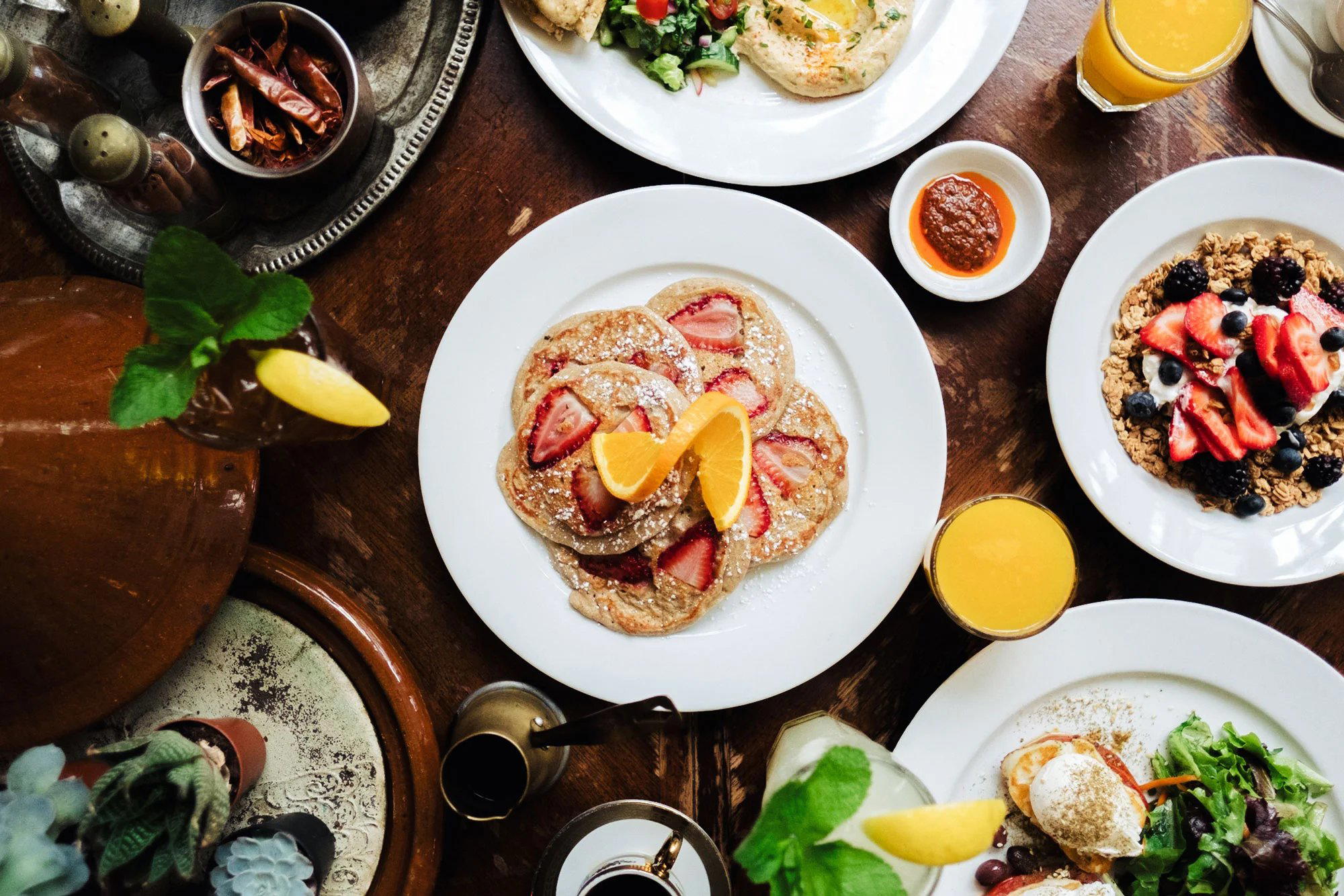
Tagines are the dishes most closely associated with Cafe Mogador's Moroccan identity on St Marks Place, and the eggs with merguez have become a brunch reference point for the East Village over many years. The menu draws on North African tradition with couscous, harissa, and spiced lamb appearing across multiple preparations. Given the longevity of the restaurant at 101 St Marks Pl, regulars tend to order around those anchors rather than rotating specials.
How hard is it to get a table at Cafe Mogador?
Cafe Mogador does not operate a high-demand reservation system comparable to New York's most sought-after dining rooms. Walk-ins are a realistic option at many sittings, though weekend brunch in the East Village draws queues. The St Marks Place location has high foot traffic, so arriving early or timing around off-peak hours is the most reliable approach.
What's the signature at Cafe Mogador?
The tagine format defines the kitchen's Moroccan identity, slow-cooked and spiced in the North African tradition. Cafe Mogador on St Marks Place has served this style of cooking long enough that it functions as one of New York City's established reference points for the dish. The brunch menu, particularly eggs prepared with Moroccan spicing, is equally cited by the East Village regulars who have tracked the restaurant across decades.
Is Cafe Mogador good for vegetarians?
Moroccan cuisine carries a broader vegetarian tradition than many Mediterranean or Middle Eastern equivalents, built around couscous, lentils, roasted vegetables, and chickpea preparations. Cafe Mogador's menu at 101 St Marks Pl reflects that structure, giving vegetarians more substantive options than a cursory side-dish treatment. It is not a dedicated vegetarian restaurant, but the cuisine type accommodates non-meat diners without requiring workarounds.
Is Cafe Mogador good value for money?
Cafe Mogador has historically operated in the mid-range bracket for New York City dining, consistent with the East Village's position as a neighbourhood where independent restaurants hold prices closer to the ground than Tribeca or the Upper East Side. The price-per-dish for tagines and couscous sits below what comparable Moroccan cooking would cost in a more formal Manhattan setting. For the St Marks Place area, it represents reasonable value relative to the longevity and consistency of the kitchen.
Peers in This Market
Comparable venues nearby, for context on price, style, and recognition.
| Venue | Cuisine | Price | Awards | Notes |
|---|---|---|---|---|
| Cafe MogadorThis venue (the venue you are viewing) | Moroccan & Mediterranean | $20–30 | Not listed | Not listed |
| Kish Kash | Traditional Moroccan Couscous | Not listed | Not listed | West Village |
| Dean Fryer | British Seafood Pub | Not listed | Not listed | New York City |
| L’Industrie | Modern Italian Pizza Slices | $10–20 | 50 Top Pizza World #71 · Eater 38 #33 | Little Italy |
| Good Time Country Buffet | Southern Country Buffet | $20–30 | Not listed | East Village |
| Westville East | Vegetable-Forward American Comfort | $20–30 | Not listed | East Village |