Café Imperial occupies a landmark position on Vienna's Ringstrasse, where the grand café tradition meets the formality of the imperial city. The room itself does most of the talking: high ceilings, gilded detailing, and a measured pace that places it squarely in the classical Viennese coffeehouse tier rather than the contemporary dining scene reshaping the city's inner districts.
Pearl is the En Primeur Club membership app — saves, bookings, and concierge access live there. Same editors, same standards.
- Address
- Kärntner Ring 16, 1010 Wien, Austria
- Phone
- +43150110389
- Website
- cafe-imperial.at
- Directions
- Get directions
 Saves & bookings on Pearl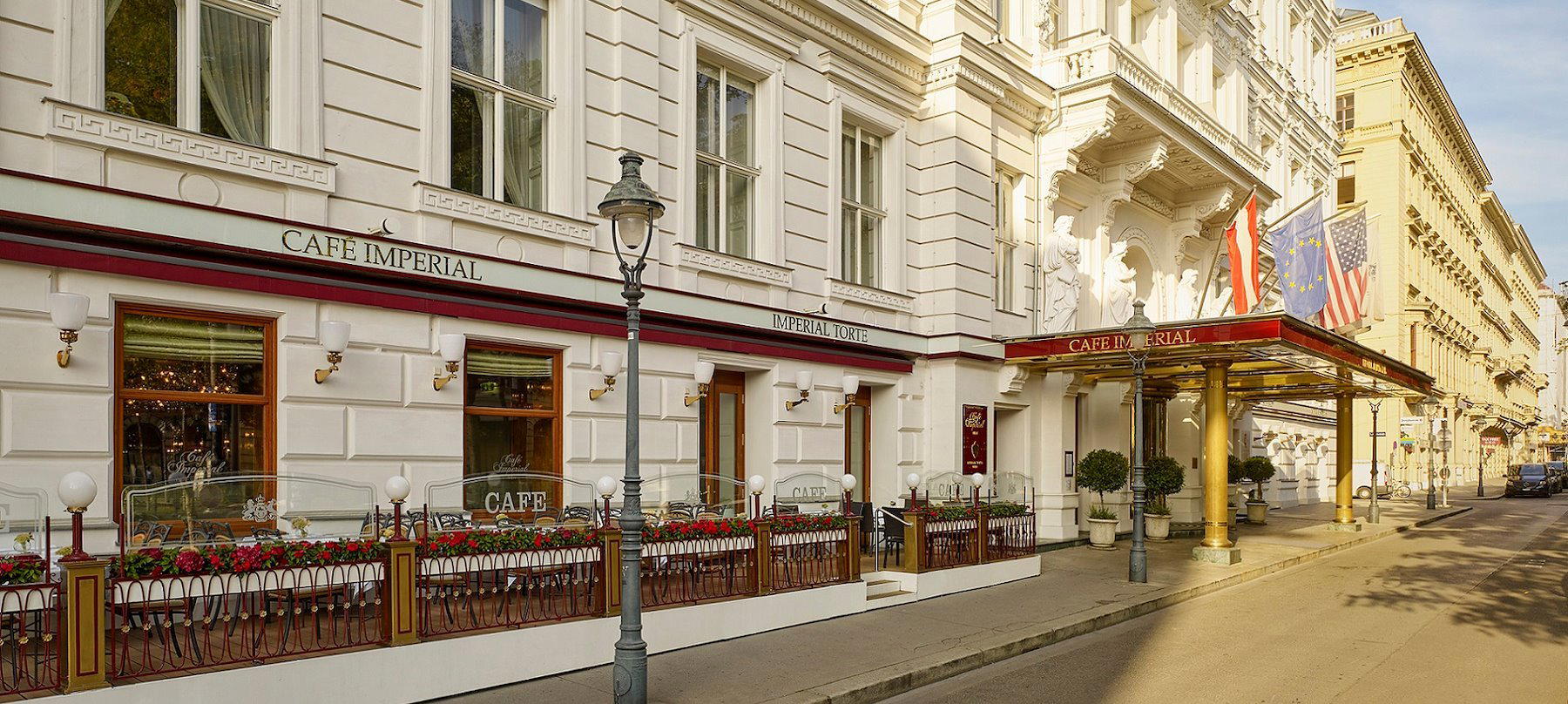
The Room as Argument
Vienna's Ringstrasse was built as an argument in stone and plaster, a deliberate statement that the Habsburg capital could match Paris, Berlin, and London in civic grandeur. The buildings that line it were designed not merely to function but to signal. Café Imperial is a restaurant in Vienna serving Classic Viennese Café fare at Kärntner Ring 16, 1010 Wien, Austria. Café Imperial, on Kärntner Ring 16, sits inside that logic. The café occupies part of the Hotel Imperial, and the interior carries that origin without apology. The ceiling height, the chandeliers, the proportions of the dining room, these belong to a specific Viennese moment when architecture was understood as civic performance.
This matters because the room is not a decorative backdrop. It is the primary editorial fact of the place. In a city where contemporary restaurants like Steirereck im Stadtpark and Amador have built their reputations on modern spatial design and tasting-menu precision, Café Imperial operates in a different register entirely. The physical container here is not minimalist or chef-forward. It is maximalist in the nineteenth-century sense: layered, weighted, and built for a certain kind of lingering.
The Viennese Coffeehouse Tradition and Where Imperial Sits Within It
UNESCO's recognition of the Viennese coffeehouse culture as intangible cultural heritage formalised what locals had long understood. It is closer to a social institution, a semi-public room where time moves differently and the obligation to order and leave does not apply. The Viennese coffeehouse, historically a place for newspapers, chess, and conversation that stretched across an afternoon, produced a specific kind of interior design in response. Tables spaced for discretion, seating built for duration, light calibrated to neither energise nor fatigue. The restaurant works within that tradition.
Within Vienna's coffeehouse tier, the address places it in a sub-category: the grand café attached to or closely associated with a historic hotel property. This is a different animal from the neighbourhood Kaffeehaus, and a different animal again from the progressive dining rooms that define Vienna's current Michelin conversation. Places like Konstantin Filippou and Mraz & Sohn address a reader whose primary interest is in the kitchen. The restaurant addresses a reader whose primary interest is in the room, the hour, and the ritual.
Architecture of a Sitting
The seating arrangement in a classical Viennese café is a spatial argument about how people should occupy time together. Banquettes run along walls to allow observation of the room without direct confrontation. Tables are close enough to register the presence of others but spaced enough to maintain the fiction of privacy. The restaurant room follows this grammar while amplifying it through the scale and finish of a hotel property built to receive emperors and diplomats. The columns, the wall treatments, the weight of the tableware, these are not decorative choices made for Instagram. They are the residue of a design culture that took material substance seriously as a form of hospitality.
That seriousness of material is worth pausing on. Contemporary dining design in Vienna's progressive tier has largely moved toward restraint, clean lines, natural materials, spaces that defer to the food. The interior approach at a place like Café Imperial runs in the opposite direction. Here the room competes with the menu for attention, and this is by design rather than accident. The experience of sitting in the space is itself a form of content, in the oldest sense of that word.
The Wider Austrian Table
Vienna sits at the centre of an Austrian fine dining scene that extends well beyond the Ringstrasse. The country's serious kitchens range from Döllerer in Golling an der Salzach to Obauer in Werfen, from Landhaus Bacher in Mautern an der Donau to Taubenkobel in Schützen am Gebirge. Alpine dining rooms like Gourmetrestaurant Tannenhof in Sankt Anton am Arlberg and Stüva in Ischgl operate in their own spatial register, where the mountain view performs a function similar to what a historic interior performs in Vienna. Elsewhere, Schwarzer Adler in Hall in Tirol, Restaurant 141 by Joachim Jaud in Mieming, Ois in Neufelden, and Kräuterreich by Vitus Winkler in Sankt Veit im Pongau each represent the pull of regionality and product-driven cooking that characterises Austrian dining outside the capital. The restaurant sits apart from all of these, not competing on menu innovation, but on a different axis entirely.
For context from beyond Austria's borders, the comparison set for a grand hotel café of this vintage is closer to the historic rooms of Paris or London than to the progressive dining rooms of Le Bernardin in New York City or the community-format energy of Lazy Bear in San Francisco. The operating logic is categorically different. Readers looking for Vienna's contemporary kitchen ambition will find it more readily at Doubek or elsewhere in the city's modern dining tier. Our full Vienna restaurants guide maps the broader scene.
Know Before You Go
| Address | Kärntner Ring 16, 1010 Wien, Austria |
|---|---|
| Getting There | The Kärntner Ring address sits on the inner Ringstrasse, within walking distance of the Staatsoper U-Bahn station (U1, U2, U4) and the Karlsplatz interchange. The location is central enough that most visitors staying in the first district will arrive on foot. |
| Booking | Reservations are recommended. |
| When to Visit | The coffeehouse tradition in Vienna is not strongly seasonal in the way restaurant menus can be. That said, the Ringstrasse in autumn and winter carries a specific atmosphere, lower light, heavier coats, that suits the formality of the interior. Summer sees tourist traffic increase significantly along this stretch of the first district. |
Reputation Context
Comparable venues nearby, for context on price, style, and recognition.
| Venue | Cuisine | Price | Notes |
|---|---|---|---|
| Café ImperialThis venue — the venue you are viewing | Classic Viennese Café | $$$$ | Not listed |
| Plachutta Stammhaus Hietzing | Classic Viennese Cuisine | $$$ | Hietzing |
| Heu & Gabel | Austrian Seasonal Organic | $$$ | Gaudenzdorf |
| Lokal im Hof | Modern Austrian with International Influences | $$$ | Favoriten |
| Gugumuck Bistro & Gartenbar | Viennese Escargot Farm-to-Table Bistro | $$$ | Per Albin Hansson Siedlung |
| Goldener Baum | Traditional Austrian | $$ | Baumgarten |
Continue exploring
More in Vienna
Restaurants in Vienna
Browse all →
Bars in Vienna
Browse all →
Hotels in Vienna
Browse all →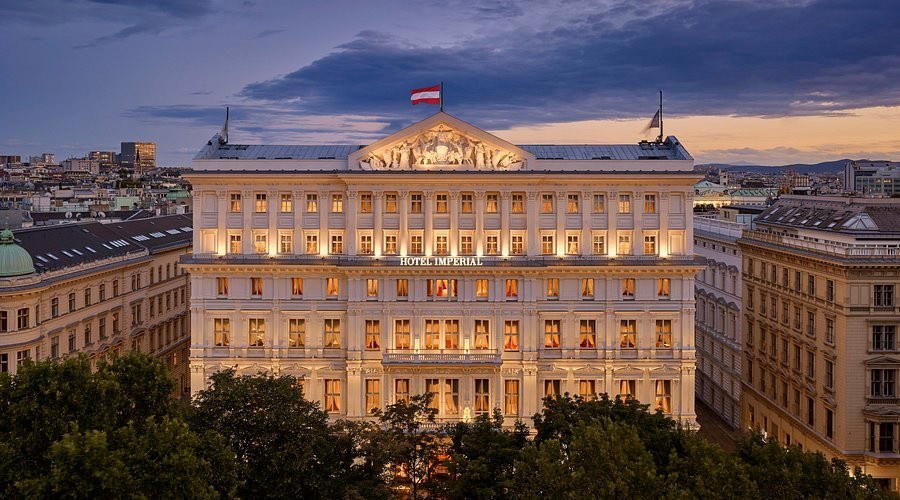
At a Glance
- Classic
- Elegant
- Historic
- Well Known
- Sophisticated
- Brunch
- Special Occasion
- Historic Building
- Hotel Restaurant
Current opening hours
- Monday
- 7 AM–11 PM
- Tuesday
- 7 AM–11 PM
- Wednesday
- 7 AM–11 PM
- Thursday
- 7 AM–11 PM
- Friday
- 7 AM–11 PM
- Saturday
- 7 AM–11 PM
- Sunday
- 7 AM–11 PM
Hours can change for holidays and private events. Last verified .
Traditional ornate atmosphere with graceful restoration evoking imperial history and frequented by notable figures like composers and Freud.