Our verdict
Buswells sits on Molesworth Street in Dublin 2, steps from Leinster House and the National Museum, placing it at a long-established intersection of politics, culture, and hospitality. The property has served as a meeting point for Dublin's professional class for generations, making it one of the city's most historically grounded addresses. For visitors oriented around the Georgian core, it functions as both a base and a point of entry into the neighbourhood's layered character.

Pearl is the En Primeur Club membership app — saves, bookings, and concierge access live there. Same editors, same standards.
- Address
- 23-27, Molesworth St, Dublin 2, D02 CT80, Ireland
- Phone
- +353 1 614 6500
- Website
- buswells.ie
- Directions
- Get directions
- Booking
- Book on OpenTable
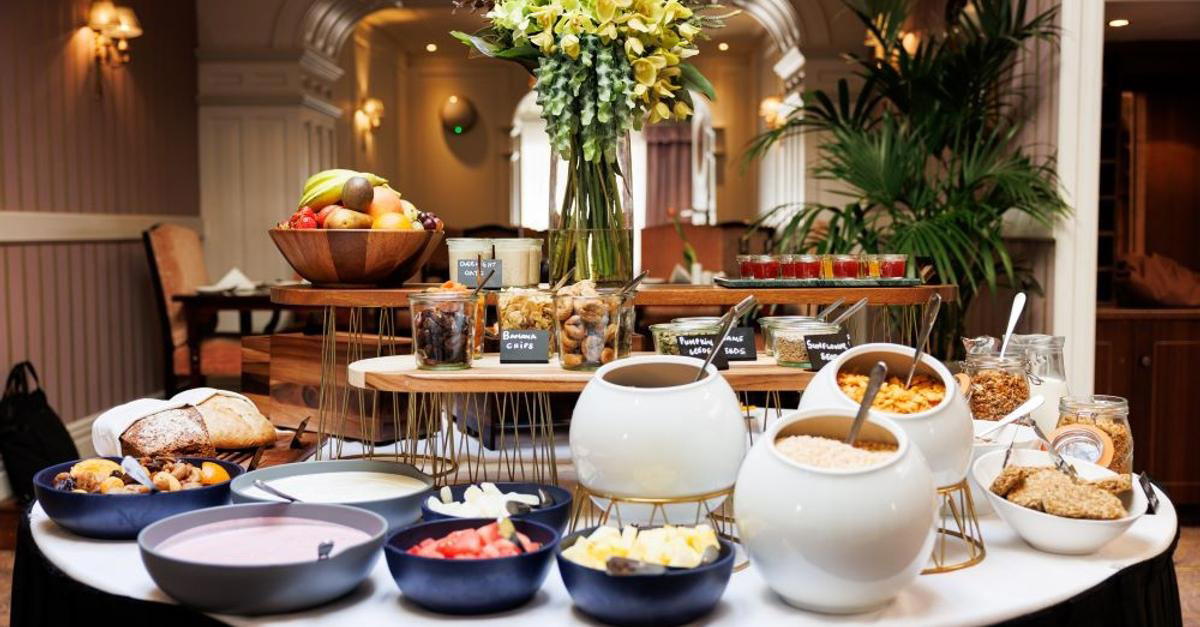
A Georgian Address and What It Carries
Molesworth Street occupies a particular position in Dublin's civic geography. Running between Kildare Street and Dawson Street, it sits within a block of Leinster House, the Dáil, the National Museum, and the Royal Irish Academy, which means the street has functioned for most of its modern life as a corridor for politicians, civil servants, academics, and the lawyers who tend to circulate among all three. The buildings on Molesworth Street are predominantly Georgian terraces, and Buswells, occupying numbers 23 to 27, is no exception. The property spans several joined townhouses, and the accumulated scale of that arrangement gives the building a presence that single-period structures rarely achieve.
That specific urban address matters because it shapes everything about how the hotel operates and who it serves. Dublin 2 hotels divide roughly into two categories: the larger international properties clustered around St Stephen's Green and the Liffey quays, and the smaller, more characterful addresses embedded in the Georgian grid. Buswells belongs firmly to the second group. For context on how Dublin's dining and hospitality scene sits across the city's different neighbourhoods, our full Dublin restaurants guide maps the broader picture.
The Physical Container: Rooms, Proportions, and the Georgian Inheritance
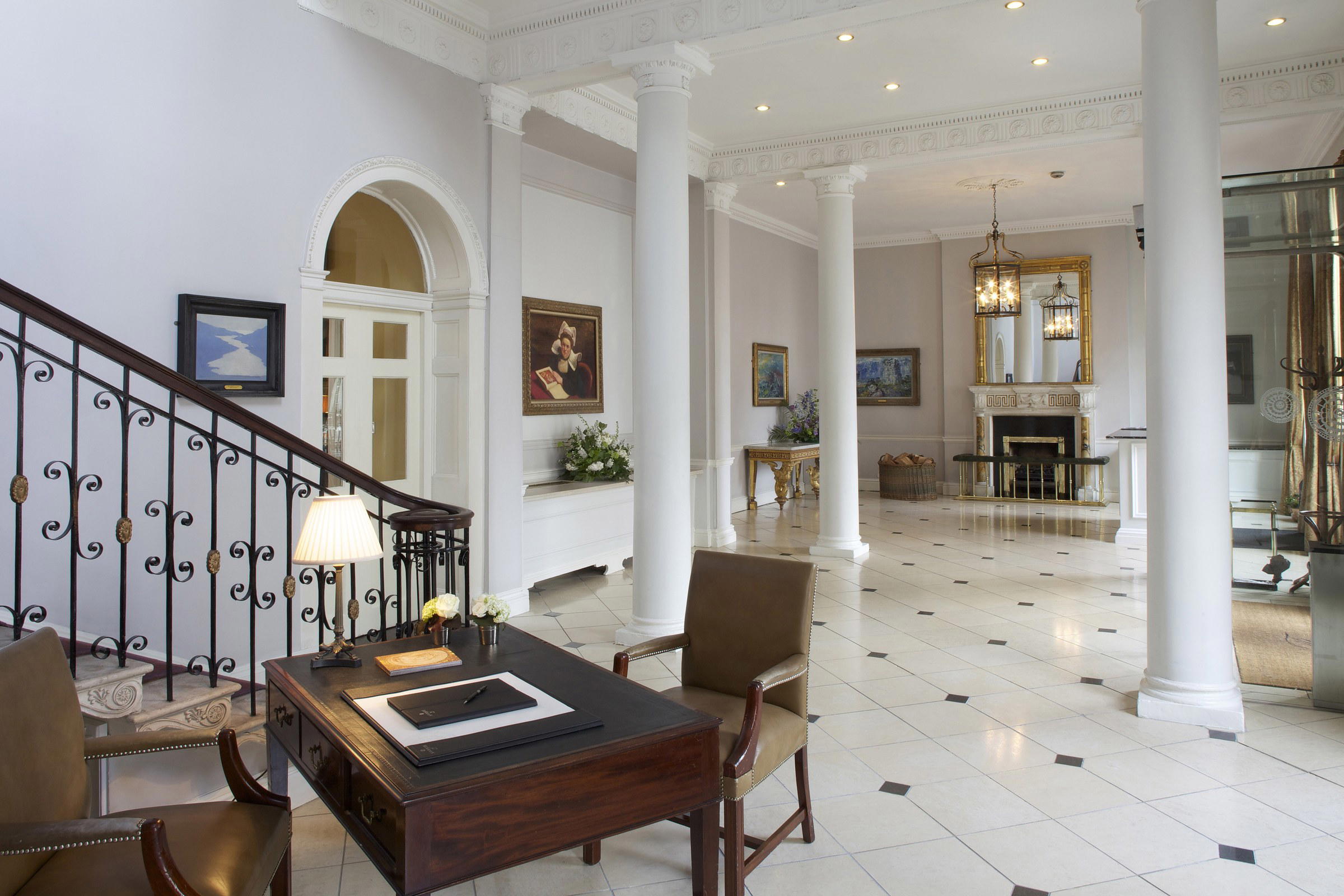
Georgian Dublin presents a consistent set of spatial conditions: tall sash windows, high ceilings, deep cornicing, and room proportions calibrated for a domestic scale that feels generous without crossing into grandeur. Buswells inherits all of that. The public rooms reflect the original townhouse geometry, which means the spaces work differently from purpose-built hotel lobbies. Seating areas have corners and natural divisions rather than open-plan continuity, and the overall effect is one of accumulated furnishing rather than designed installation.
For travellers accustomed to the spare, open-concept aesthetic that defines much of contemporary hotel design, this is a deliberate contrast. The material register here runs to traditional upholstery, framed portraiture, and the kind of decorative density that accumulates over decades rather than being installed at once. That character places Buswells in a European tradition of politically adjacent hotels where the atmosphere is considered an asset rather than a backdrop. Comparable properties in other European capitals tend to attract a clientele that values proximity to institutional life and a certain patina of continuity. The hotel's position on Molesworth Street makes it the Dublin iteration of that type.
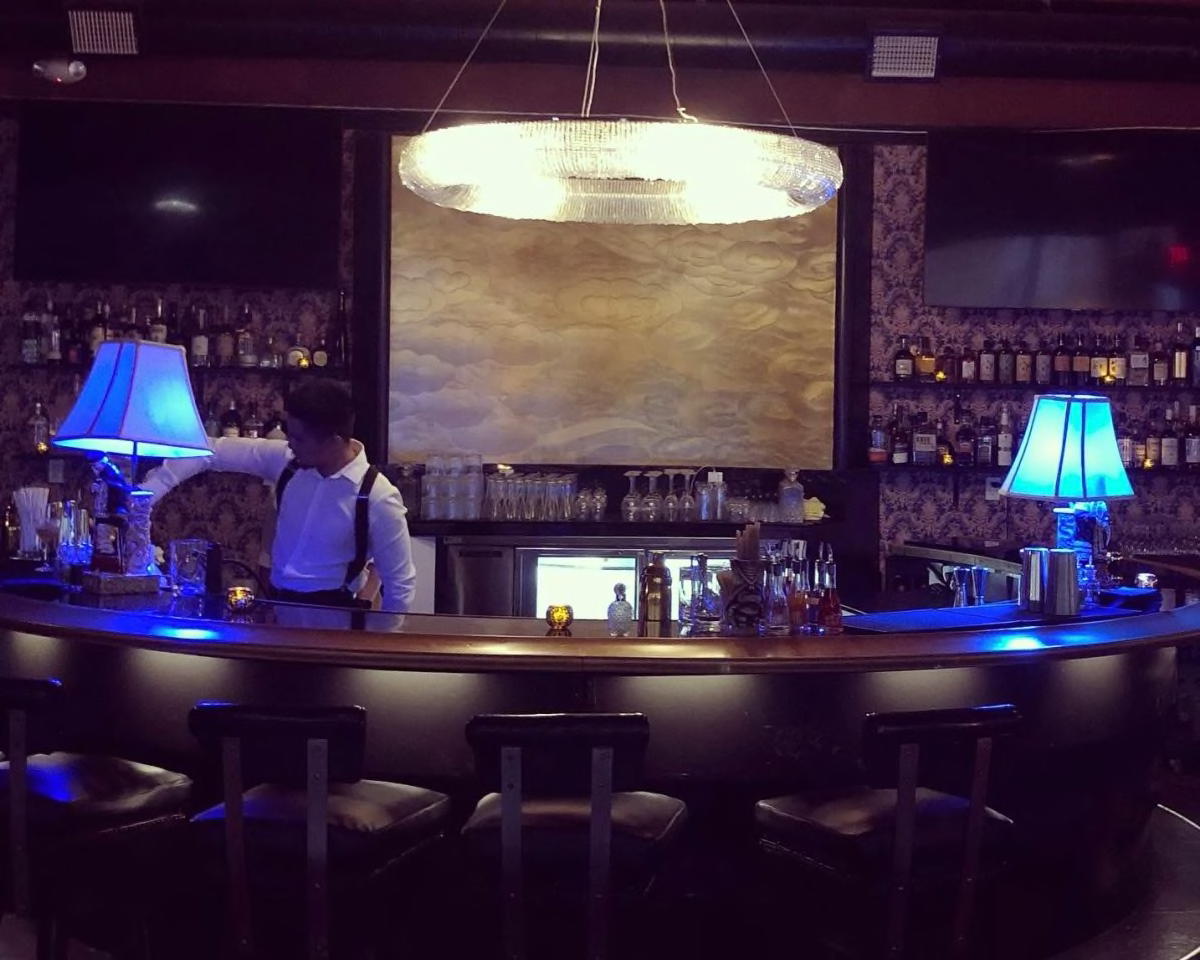
The bar, in particular, functions as a local institution rather than a hotel amenity. Bars attached to politically adjacent hotels in capital cities tend to develop an identity that exists independently of the accommodation offering, drawing regulars from the surrounding institutions rather than relying on hotel guests. Buswells' bar has that quality. It is the kind of room where conversations about the day's parliamentary proceedings have been happening for a long time, and the physical arrangement, with its lower lighting and defined seating areas, supports exactly that use.
Where Buswells Sits in the Broader Dublin Scene
Dublin's restaurant and hospitality scene has expanded significantly at the upper end over the past decade. The city now supports several Michelin-starred addresses, including Chapter One by Mickael Viljanen and Patrick Guilbaud, alongside a strong cohort of ambitious modern Irish kitchens such as Bastible and Glovers Alley. The city's contemporary dining identity has shifted toward Irish produce handled with technical confidence, a trajectory also visible in places like Liath in Blackrock and Aniar in Galway.
Buswells occupies a different register from that fine-dining cohort. Its dining offer is oriented toward the hotel's core constituency: guests staying on the property, political and professional visitors from the surrounding institutions, and a local regular trade built over many years. That is not a limitation so much as a definition. The hotel does not compete with D'Olier Street or the destination dining addresses that attract visitors specifically for the food. It competes on the basis of its address, its physical character, and the particular kind of ease that comes from a hotel whose staff and regulars share a long institutional memory.
Ireland's hospitality scene beyond Dublin has also expanded in interesting directions. Properties like Terre in Castlemartyr, The Oak Room in Adare, and the more village-scale operations such as Chestnut in Ballydehob and Homestead Cottage in Doolin demonstrate how Irish hospitality has diversified across formats and geographies. Against that broader map, Buswells represents the urban, institutionally embedded end of the spectrum. Bastion in Kinsale, dede in Baltimore, Campagne in Kilkenny, and The Morrison Room in Maynooth each represent distinct regional expressions; Buswells is distinctly Dubliner, and distinctly of its particular Dublin postcode.
Planning a Stay
Molesworth Street is a short walk from both the DART at Pearse Station and the main bus corridors on Nassau Street and St Stephen's Green, making the location workable without a car for most city-focused itineraries. The National Museum of Ireland on Kildare Street and the National Gallery on Merrion Square are both within a few minutes on foot, as is Trinity College. For visitors structuring a stay around Dublin's cultural institutions and Georgian architecture, the address positions the hotel as a working base rather than a destination that requires travel to reach the things worth seeing. Given the sparse publicly available operational data for the property, including hours, current pricing, and booking process, the hotel's own channels are the appropriate first point of contact for current availability and rates.
Frequently asked questions
What is the signature dish at Buswells?
The hotel's dining offer is oriented toward its in-house guests and the professional trade from the surrounding institutions on Molesworth Street. For the city's most discussed dishes, the Michelin-recognised kitchens at Chapter One by Mickael Viljanen and Patrick Guilbaud are the more appropriate reference points.
Is Buswells reservation-only?
Dublin 2 hotels in this category typically take reservations through their own websites and third-party platforms. If the property holds particular significance for your itinerary, contacting the hotel directly via its own channels will give you the most accurate current information on availability and format.
What do critics highlight about Buswells?
The hotel's longer-term reputation rests on its address and its historical association with Dublin's political and professional life rather than on awards-track dining or design-led hospitality. Its Molesworth Street location, adjacent to Leinster House, is the credential most consistently noted in general references.
Is Buswells allergy-friendly?
Irish hospitality operators are required under EU food information regulations to provide allergen information on request, so contacting the hotel directly before arrival is the appropriate route. The hotel's own website or phone line will have current kitchen protocols.
Does Buswells justify its prices?
In the context of Dublin 2, where hotels with comparable Georgian addresses and proximity to Leinster House command a location premium, the value case rests primarily on position and character rather than on amenity scale or F&B; credentials. For travellers prioritising those factors, the address is its own argument.
How does Buswells compare to other historically significant Dublin hotels as a base for first-time visitors?
Buswells occupies a specific niche among Dublin hotels: it is embedded in the Georgian civic core rather than positioned on a major tourist corridor, which makes it a stronger base for visitors whose itinerary centres on the National Museum, Leinster House, Trinity College, and the surrounding cultural institutions. Hotels on St Stephen's Green or the Liffey quays offer broader pedestrian access to the main tourist circuit, but Buswells' Molesworth Street address puts several of Dublin's most historically significant buildings within a two-minute walk. For visitors making a second or third trip to the city and looking to engage more specifically with its institutional and architectural fabric, that positioning carries practical weight.
Price Lens
A compact comparison to help you place this venue among nearby peers.
| Venue | Cuisine | Price | Awards | Notes |
|---|---|---|---|---|
| BuswellsThis venue — the venue you are viewing | Classic Irish Gastropub | $20–30 | Not listed | Not listed |
| Patrick Guilbaud | Modern French Fine Dining | $150–200 | 2 Michelin Stars · La Liste Top Restaurants | Irish - French, Modern French |
| Bastible | Modern Irish | $100–150 | 1 Michelin Star · The Sunday Times Ireland’s 100 Best Restaurants | Modern Cuisine |
| Host | Modern Italian | $50–100 | Michelin Plate | Nordic, Modern Cuisine |
| mae | Modern Irish Fine Dining | $50–100 | Michelin Plate · The Sunday Times Ireland’s 100 Best Restaurants | Southern, Modern Cuisine |
| Matsukawa | Authentic Edomae Omakase | $100–150 | Michelin Plate · La Liste Top Restaurants | Kaiseki, Japanese |
Continue exploring
More in Dublin
Restaurants in Dublin
Browse all →
Bars in Dublin
Browse all →

Hotels in Dublin
Browse all →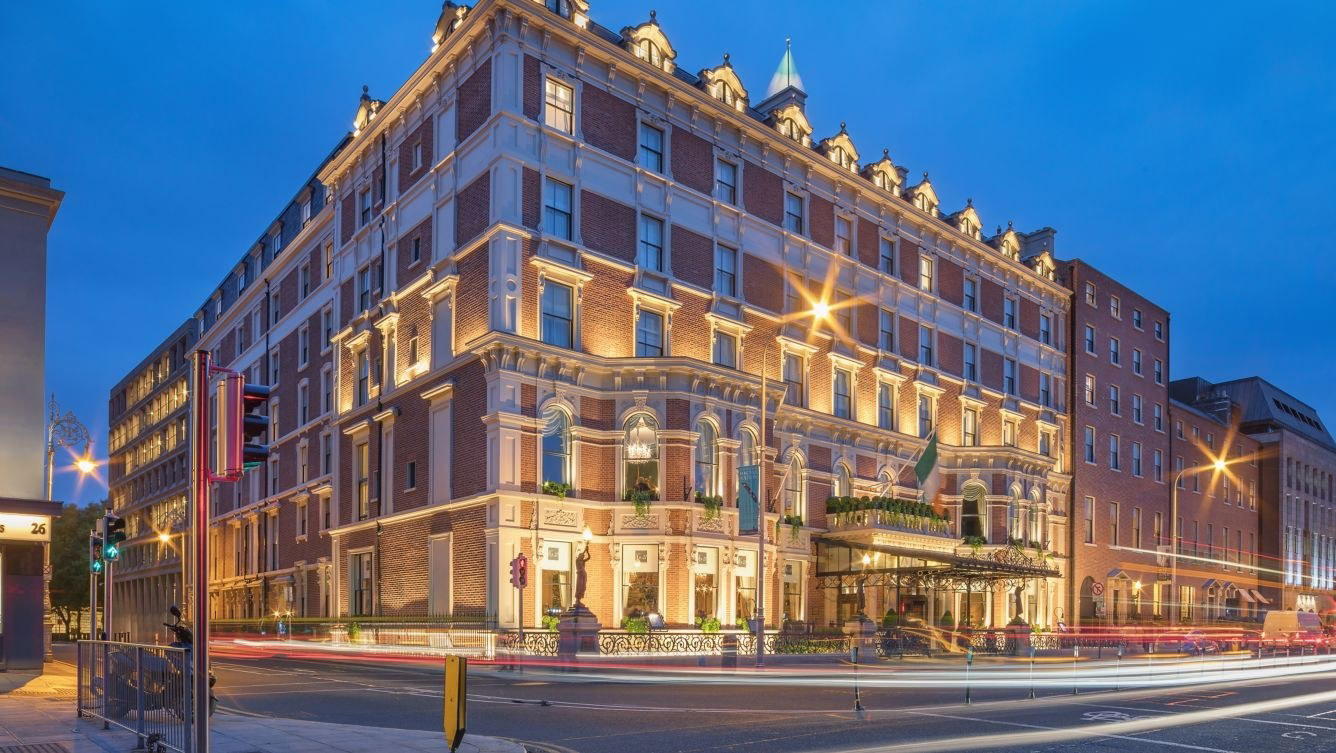
Wineries in Dublin
Browse all →

Details
- Classic
- Cozy
- Elegant
- Business Dinner
- Casual Hangout
- After Work
- Historic Building
- Hotel Restaurant
- Beer Program
- Local Sourcing
- A La Carte
- Beer Program
- Vegetarian Friendly
Cosy and inviting with elegant wood-paneled décor, plush leather sofas, armchairs, and a warm, relaxed traditional Irish pub atmosphere.