Tabelog 100 #36
Our verdict
Burgaz Ada occupies a third-floor address in Azabu-Juban, one of Tokyo's most established dining neighbourhoods, where Turkish and Mediterranean culinary traditions meet a local precision-dining culture. For occasions that demand a setting with genuine character rather than hotel-corridor polish, the address sits in a residential pocket of Minato City that has long attracted serious independent restaurants.

Pearl is the En Primeur Club membership app, where members save venues, book tables and use the concierge.
The menu
What to order
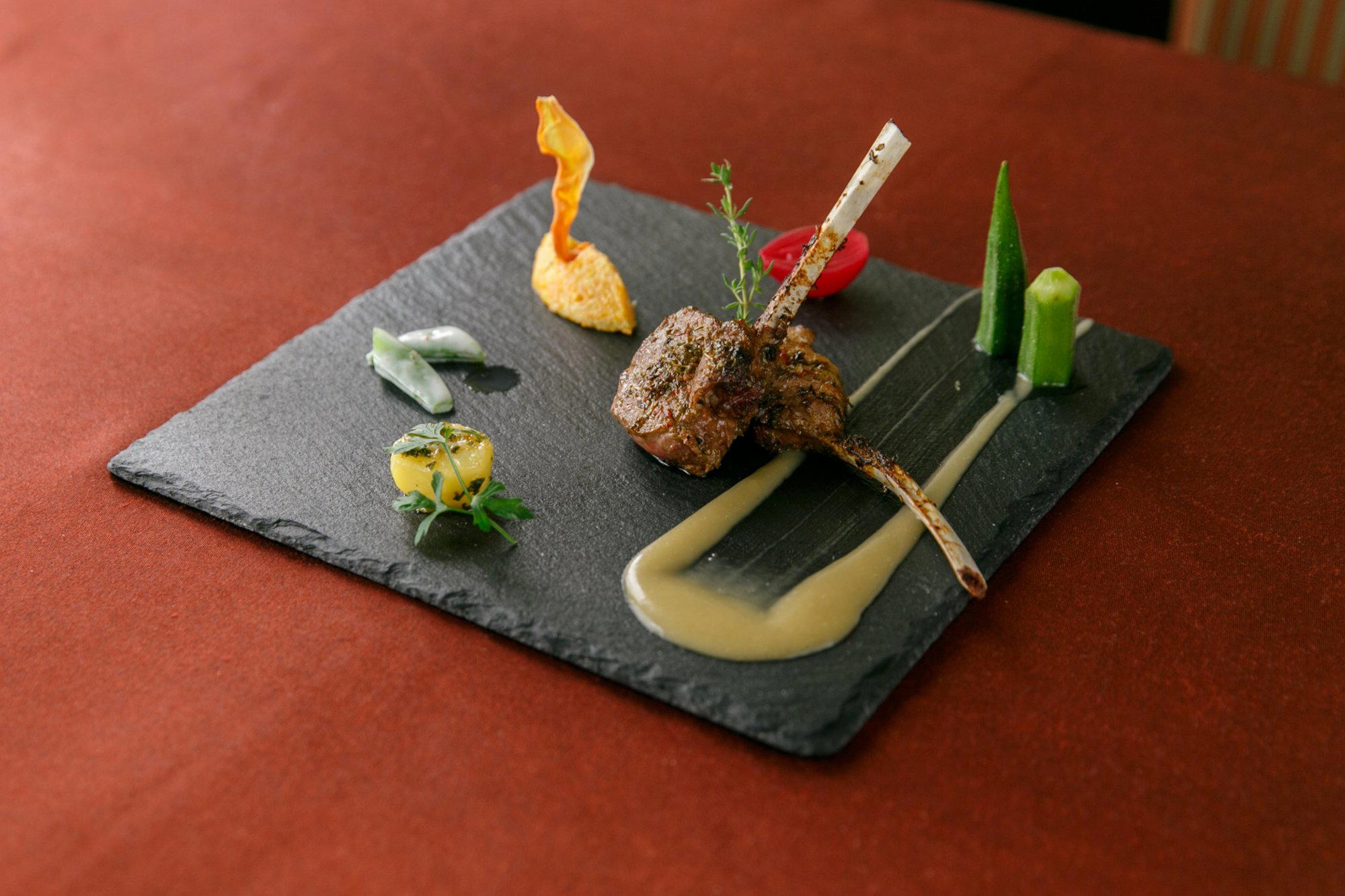
- Grilled_spring_lamb_chops
- 12_variety_appetiser_platter
Third Floor, Azabu-Juban: What the Address Tells You
Azabu-Juban is one of Tokyo's most quietly serious dining districts. It lacks the Michelin-density theatre of Ginza or the chef-celebrity atmosphere of Roppongi Hills, but that relative restraint is precisely what makes it work for a certain kind of occasion. The neighbourhood draws residents with money and patience, and the restaurants that endure here tend to do so on the strength of a returning clientele rather than tourist traffic. A third-floor address on Azabujuban 3-chome, the kind you reach by a narrow staircase rather than a lobby, signals immediately that the room is not built for walk-through volume.
That physical positioning matters when you are choosing where to mark something significant. Restaurants that require a deliberate ascent, a decision to climb rather than to drift in from the street, tend to have a different relationship with their guests than ground-floor operations. The commitment is visible before you have even sat down.
Where Burgaz Ada Sits in Tokyo's Special-Occasion Market
Tokyo's premium dining spectrum runs from the formal kaiseki counter, where ceremony and sequence govern the entire experience, through French-influenced tasting menus built around seasonal Japanese ingredients, to a smaller cohort of international-cuisine specialists who have built serious local followings. Venues like RyuGin and Sézanne anchor the high end of that French-Japanese axis at the ¥¥¥¥ price tier, while L'Effervescence and Crony occupy adjacent territory with their own distinct approaches to French technique in a Japanese context.
Burgaz Ada operates at a remove from that axis. The name references Büyükada, the largest of Istanbul's Princes' Islands, and the venue brings a Turkish and broader Mediterranean register into a city where that cuisine has no established critical mass. In the context of occasion dining specifically, this distinction matters: the question is not which Tokyo omakase counter to choose, but whether a different culinary tradition can hold the weight of a milestone meal. In Tokyo's international-resident community, concentrated heavily in Minato City, the answer to that question has sustained restaurants drawing on non-Japanese European and Mediterranean traditions for decades.
The Case for Occasion Dining Outside the Tasting-Menu Format
There is a pattern in how Tokyo's high-spending diners approach milestones. The default gravitates toward the omakase or tasting-menu format: a fixed sequence, a single chef's vision, a room configured for silence and attention. Harutaka in Ginza represents that tradition at its most concentrated, with counter seating and a programme built entirely around the chef's decisions. It is a format that transfers its own meaning onto the occasion.
But a different kind of celebration calls for a different kind of room, one where the meal is shaped by the guests rather than the chef's sequence, where dishes arrive through conversation and selection rather than prescribed order. Mediterranean dining formats, with their emphasis on shared plates and gradual accumulation rather than timed progression, carry their own occasion logic. The table becomes the event rather than the vehicle for watching someone perform.
This is where a restaurant like Burgaz Ada occupies a space that the kaiseki or French tasting-menu tier does not. For a birthday dinner where the point is the group, an anniversary where the conversation matters more than the ceremony, or a farewell dinner for an expat colleague, the Mediterranean format offers a different emotional architecture. The food still needs to be serious, the neighbourhood and the price expectations of Azabu-Juban demand it, but the frame around it is built differently.
Azabu-Juban as a Dining Destination
The district has long been the address of choice for Tokyo's international community, and the restaurant mix reflects that history. Alongside long-established Japanese venues, there is a concentration of European and international restaurants that have sustained themselves through a loyal base rather than viral attention cycles. This is a neighbourhood where restaurants that survive tend to survive for years, and where a third-floor address with no ground-level signage can develop a following that younger, more prominent-location venues never achieve.
For visitors planning around a significant meal, Azabu-Juban is also practically manageable. The Azabu-Juban station on the Namboku and Oedo lines puts the area within direct reach of central Tokyo, and the neighbourhood's relative calm compared to Roppongi, a ten-minute walk away, means arriving and leaving without the friction that higher-traffic areas impose. For our full Tokyo restaurants guide, the district appears repeatedly as a neighbourhood where independent restaurants hold ground that chain concepts and hotel dining rooms cannot easily occupy.
Beyond Tokyo, Japan's dining culture extends well beyond the capital's concentration of internationally recognised venues. HAJIME in Osaka, Gion Sasaki in Kyoto, and akordu in Nara each anchor their respective cities in ways that invite multi-city itineraries. For those extending further, Goh in Fukuoka, Abon in Ashiya, affetto akita in Akita, Aji Arai in Oita, Ajidocoro in Yubari District, and Akakichi in Imabari show how seriously the country's regional dining culture takes the same occasion-dining tradition that Tokyo concentrates most visibly. Aki Nagao in Sapporo is a further reference point for those moving through Hokkaido. Internationally, Le Bernardin in New York City and Lazy Bear in San Francisco represent the same impulse toward occasion-calibre dining in their respective cities.
Know Before You Go
- Address: Azabujuban 3-7-4, 3F, Minato City, Tokyo 106-0045
- Getting There: Azabu-Juban Station (Namboku Line / Oedo Line) is the nearest station; the address is within walking distance
- Booking: Contact details not confirmed at time of publication, approach directly through search or mapping services
- Price Range: Not confirmed at time of publication; Azabu-Juban pricing norms for independent restaurants typically reflect the neighbourhood's premium residential character
- Hours: Not confirmed at time of publication, verify before visiting
- Occasion Suitability: Third-floor setting with residential-district calm; suited to occasions where privacy and atmosphere matter more than high-visibility addresses
Frequently asked questions
Where exactly is Burgaz Ada?
Burgaz Ada is located at Japan, 〒106-0045 Tokyo, Minato City, Azabujuban, 3 Chome−7−4 麻布å å 3F, Tokyo.
Is Burgaz Ada in Azabu-Juban a Turkish restaurant in Tokyo?
Azabu-Juban has historically supported internationally oriented restaurants drawing on the district's expatriate community. If Turkish cooking is the focus, it would occupy a genuinely rare position in Tokyo's premium dining market, where that cuisine has minimal representation at the occasion-dining tier.
What should I order at Burgaz Ada?
Given its Azabu-Juban address and occasion-dining positioning, the kitchen is likely built around a focused à la carte or set format rather than a long omakase sequence. Ask the floor staff on arrival what is running that evening.
Do they take walk-ins at Burgaz Ada?
No booking policy is documented for Burgaz Ada. Third-floor venues in Azabu-Juban with a premium positioning typically operate on reservations, particularly for weekend evenings. check the venue's official channels before visiting to confirm availability.
What makes Burgaz Ada worth seeking out?
Burgaz Ada occupies a third-floor address in Azabu-Juban, a district that attracts serious diners precisely because it sits outside the Michelin-theatre circuits of Ginza and Roppongi. The neighbourhood's long-standing international character means restaurants here tend to sustain a regular clientele rather than relying on destination tourism. That context shapes the kind of atmosphere that milestone diners often prefer.
Do they accommodate allergies at Burgaz Ada?
Standard practice at Tokyo's occasion-dining venues is to request dietary information at the time of booking. Call or message ahead to confirm what the kitchen can adjust.
Is Burgaz Ada good value for money?
The district generally supports mid-to-high pricing, with equivalent special-occasion venues in the area running from ¥15,000 to well over ¥30,000 per head depending on format. Verify current pricing with the restaurant before booking.
The Quick Read
Comparable venues nearby, for context on price, style, and recognition.
| Venue | Cuisine | Price | Awards | Notes |
|---|---|---|---|---|
| Burgaz AdaThis venue (the venue you are viewing) | Ottoman Turkish Court Cuisine | $100–150 | Tabelog 100 #36 | Not listed |
| Arakawa (Kyoto) | Not listed | Not listed | Not listed | Nakagyo Ward / Kawaramachi, Traditional Kyoto yakiniku (Japanese BBQ) |
| Otona | French-Italian Bistro | $50–100 | Not listed | Kinshicho, French-Italian Bistro |
| Au Gamin de Tokio | French Bistro | $50–100 | Not listed | Ebisu, French Bistro |
| Soba Mitate | Not listed | Not listed | Not listed | Minato, Soba kappo counter with seasonal course menu |
| Niku Gatou Roppongi hiruzu ten | Modern Wagyu Yakiniku | $100–150 | Tabelog 100 #71 | Minato, Modern Wagyu Yakiniku |
Recognition history
Dated appearances from independent guides and award organizations, with the underlying list record or original source where available.
Tabelog 100 #36 · No. 36
Tabelog · Tabelog 100 - Asian cuisine / Ethnic cuisine - TOKYO - 2024