


Michelin Plate · Star Wine List
Our verdict
bu:r in Milan delivers a tightly focused Modern Italian experience rooted in 100% Italian ingredients. Chef Eugenio Boer serves must-try moments such as an elevated spaghetti with clams and parsley, the meat-led I Classici tasting menu, and the seasonal Lo Stagionale tasting. Recognized in the Michelin Guide and anchored in Milan’s Ticinese district on Via Mercalli, bu:r pairs restrained, precise plates with an all-Italian wine list selected by Leandro Cunha. Expect seven-table intimacy, warm front-of-house hospitality from Carlotta Boer, and dishes that favor clarity, texture and coastal freshness in every bite.

Pearl is the En Primeur Club membership app, where members save venues, book tables and use the concierge.
![[bu:r] restaurant in Milan, Italy](https://cdn.enprimeurclub.com/storage/v1/object/public/images/restaurants/d843f498-b3ce-4779-9965-232b5eaf50cf/hero1.jpg?width=3840&quality=75)
The menu
What to order
- Pigeon in Vineyard
- Octopus & Grouper
- Lobster
- Garibaldi Sandwich
Quiet Precision in Milan's Fine-Dining Circuit
Via Mercalli sits south of the Duomo, in a part of central Milan where the architecture is less photographed but the buildings no less serious. The room at [bu:r] takes its cues from the neighbourhood: subdued lighting, restrained surfaces, and a spatial logic that makes conversation feel contained rather than overheard. Nothing about the entrance announces itself. That calibrated understatement is not accidental, it is, in this city and at this price tier, a positioning statement.
Milan's creative fine-dining scene has developed around a cluster of €€€€ addresses that each argue a different case for what contemporary Italian cooking should be. Enrico Bartolini operates at the three-Michelin-star register. Andrea Aprea and Seta hold two stars each. Cracco in Galleria occupies a high-visibility post in the Galleria Vittorio Emanuele II. [bu:r], with a Michelin Plate and a rank of 180 in the Opinionated About Dining Leading Restaurants in Europe for 2024, positions itself as a different kind of proposition: intimate, deliberate, and 100% Italian in its sourcing without defaulting to nostalgia.
The Milanese Frame for Creative Italian Cooking
Understanding [bu:r] requires understanding the specific pressure that Milan places on its serious restaurants. The city is cosmopolitan in a way that Naples or Florence is not, it hosts international money, fashion weeks, and a permanent population of executives who eat at comparable addresses in Paris and Tokyo. That exposure creates a more demanding comparative frame. A restaurant operating at the €€€€ tier in Milan is priced against European peers, not just regional Italian ones.
At the same time, the city has a food identity that runs deeper than its international reputation suggests. Risotto alla Milanese, cotoletta, ossobuco: the Milanese culinary canon is specific and well-documented, and the most interesting kitchens in the city have found ways to take those foundations seriously without becoming museum pieces. This is the tension that creative Italian cooking at this level is designed to work inside, honouring regional specificity while extending it through technique and perspective.
Chef Eugenio Boer's approach at [bu:r] addresses that tension directly. The menu is structured around Italian identity, drawing on local ingredients and small-scale producers, but the intent is not preservation. The kitchen treats regional tradition as a creative starting point rather than a constraint, combining historical reference with contemporary execution in a way that invites comparison with similar arguments being made at Osteria Francescana in Modena and Piazza Duomo in Alba, restaurants working at a different scale but inside the same broad conversation about Italian cooking's relationship to its own past.
Menu Structure: Flexibility as a Design Choice
The format at [bu:r] runs counter to the single-path tasting menu orthodoxy that has dominated fine dining globally for the past fifteen years. Guests can choose between a concise à la carte and two distinct tasting menus. The first, "I Classici," is built around meat-based dishes. The second, "Le Aromatiche," takes a less conventional angle: aromatic plants move from supporting role to structural element, reshaping the flavour logic of the meal. That second menu in particular signals a kitchen interested in what Italian cuisine can be, not just what it has been.
The flexibility is worth noting as a structural position within Milan's fine-dining bracket. At the two- and three-star level in the city, tasting menus tend to be fixed or near-fixed. The combination of à la carte access and two menu paths at [bu:r] gives the room a different social character, it can host a solo diner working through the Aromatiche menu alongside a table using the à la carte for a shorter dinner, without either feeling out of place.
For context on how this menu architecture fits into the broader northern Italian creative scene, the contrast with more format-rigid addresses like Le Calandre in Rubano or Villa Crespi in Orta San Giulio is instructive. Those restaurants operate fixed-format tasting programs as a matter of principle. [bu:r] makes the opposite argument: that flexibility is itself a form of hospitality intelligence.
Regional Identity and the Small-Producer Question
The sourcing commitment at [bu:r], 100% Italian ingredients, with emphasis on small-scale producers, places it in a category of restaurants making an explicit supply-chain argument. This is now common language across European fine dining, but it carries specific weight in Italy, where the gap between industrial production and artisan tradition remains unusually wide and the geography of regional ingredients unusually specific.
Northern Italy has its own version of this: the Po Valley's dairy and rice production, Lombardy's freshwater fish, the cured meats of Emilia. A kitchen working exclusively inside Italian borders has access to enormous variation without reaching further, and the discipline of that constraint tends to produce menus with regional coherence even when the techniques are international in origin. The approach connects [bu:r] to a lineage that includes Dal Pescatore in Runate and, at a different register, Atelier Moessmer Norbert Niederkofler in Brunico, both of which have built sustained reputations on the argument that Italian regional specificity is itself a form of culinary ambition.
The Opinionated About Dining ranking (No. 180 in Europe, 2024) and the Michelin Plate signal a restaurant that the specialist critical community takes seriously without placing it in the starred tier. That position is not a deficit, it describes a specific kind of restaurant: one where critical attention exceeds mainstream recognition, which often correlates with a more technically engaged dining room and a menu that rewards familiarity with the genre. For comparison, OAD's European list draws heavily from readers who eat at this level regularly across multiple countries, making a ranking in the top 200 a more peer-reviewed credential than a single national award.
Verso Capitaneo and the wider creative tier in Milan offer context: [bu:r] sits among a group of serious €€€€ addresses that are shaping what Milanese fine dining looks like below the starred flagship level. Torre del Saracino in Vico Equense and Enoteca Pinchiorri in Florence represent the starred southern and Tuscan counterparts to this northern urban model, useful references for placing [bu:r] in the national picture.
Planning Your Visit
[bu:r] is located at Via Mercalli 22, in the 20122 postal district of central Milan, within walking distance of the Porta Romana and Crocetta areas. The kitchen operates Thursday through Friday from 7:30 to 10 pm (evenings only), with Saturday and Sunday running two services: a lunch sitting from 12:30 to 1:30 pm and an evening service from 7:30 to 10 pm. The restaurant is closed Monday and Tuesday. The lunch window on weekends is narrow at one hour, which means it functions more as a formal lunch than a leisurely midday meal, something to factor into pacing. The €€€€ price tier is consistent with the Milan creative fine-dining bracket. For the broader context of where to stay, drink, or explore further during a Milan visit, EP Club's full Milan restaurants guide, hotels guide, bars guide, wineries guide, and experiences guide cover the rest of the city at the same editorial register.
Frequently asked questions
What should I eat at [bu:r]?
Is [bu:r] formal or casual?
Is [bu:r] a family-friendly restaurant?
| Venue | Cuisine | Price | Awards | Notes |
|---|---|---|---|---|
| [bu:r]This venue (the venue you are viewing) | Modern Italian Fine Dining | $100–150 | Michelin Plate · Star Wine List | Not listed |
| Enrico Bartolini | Modern Italian Fine Dining | $300–500 | 3 Michelin Stars · World's 50 Best #85 | Creative |
| Cracco in Galleria | Modern Italian Fine Dining | $150–200 | 1 Michelin Star · World's 50 Best #33 | Modern Cuisine |
| Andrea Aprea | Modern Italian Fine Dining | $200–300 | 2 Michelin Stars · La Liste Top Restaurants | Modern Italian, Italian Contemporary |
| Seta | Modern Italian Fine Dining | $150–200 | 2 Michelin Stars · La Liste Top Restaurants | Modern Italian |
| Contraste | Modern Italian Fine Dining | $150–200 | 1 Michelin Star · La Liste Top Restaurants | Progressive Italian, Modern Cuisine |
Recognition history
Dated appearances from independent guides and award organizations, with the underlying list record or original source where available.
Michelin Plate
Michelin
Star Wine List
Star Wine List
Opinionated About Dining Top Restaurants in Europe Recommended
Opinionated About Dining
Full recognition history (7 entries)
Michelin Plate
Michelin
Michelin Plate
Michelin
Opinionated About Dining Top Restaurants in Europe Ranked #180
Opinionated About Dining
Opinionated About Dining Top New Restaurants in Europe Highly Recommended
Opinionated About Dining
Continue exploring
More in Milan
Restaurants in Milan
All restaurants in Milan →
Bars in Milan
All bars in Milan →

[bu:r]
The wine
- Wine program
- Deep wine list
- Extensive wine list
- Sommelier-led
Details
- Intimate
- Elegant
- Sophisticated
- Cozy
- Date Night
- Celebration
- Special Occasion
- Business Dinner
- Open Kitchen
- Private Dining
- Standalone
- Design Destination
- Extensive Wine List
- Sommelier Led
- Local Sourcing
- Farm To Table
- Tasting Menu
- Prix Fixe
- Wine
- Prosecco
- Vegetarian Friendly
- Allergy Accommodating
Current opening hours
- Monday
- Closed
- Tuesday
- 12:30–2 PM, 7:30–10 PM
- Wednesday
- 12:30–2 PM, 7:30–10 PM
- Thursday
- 12:30–2 PM, 7:30–10 PM
- Friday
- 12:30–2 PM, 7:30–10 PM
- Saturday
- 7:30–10 PM
- Sunday
- Closed
Hours can change for holidays and private events. Hours as of .
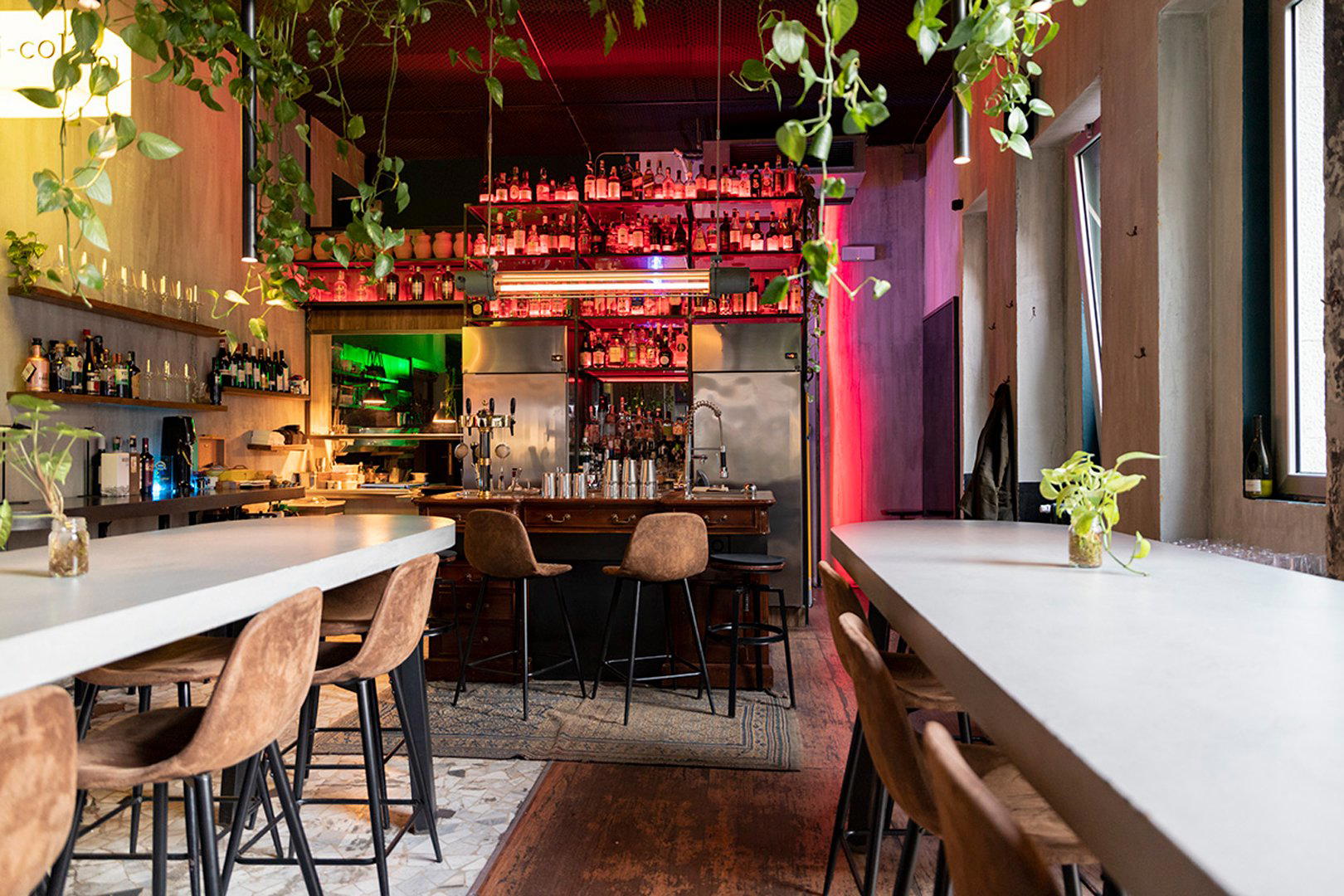
Elegant and cozy with sleek modern furniture, soft lighting, and a warm family atmosphere despite fine-dining caliber; outdoor seating available under a vine-trained pergola.