Buerehiesel




Michelin Plate · Star Wine List · Gault & Millau Remarkable Restaurant
Our verdict
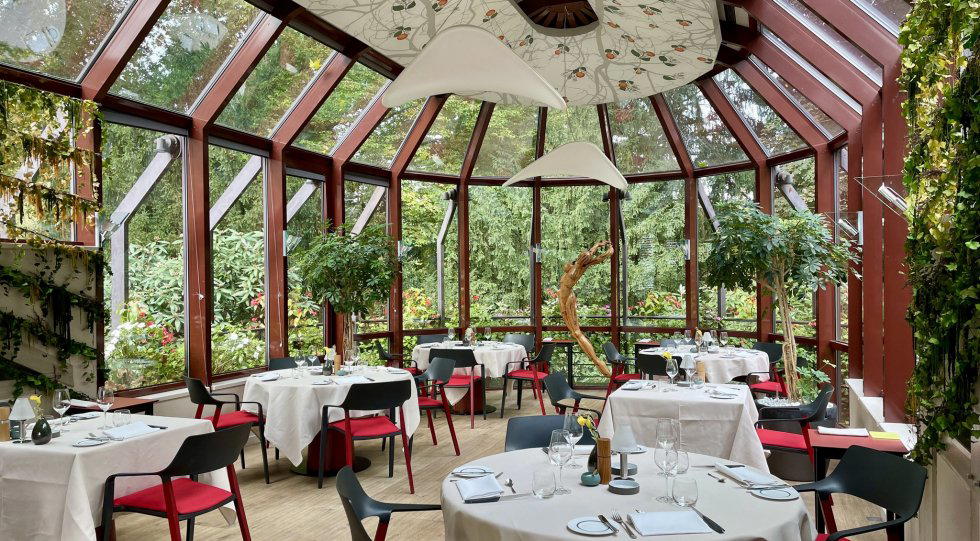
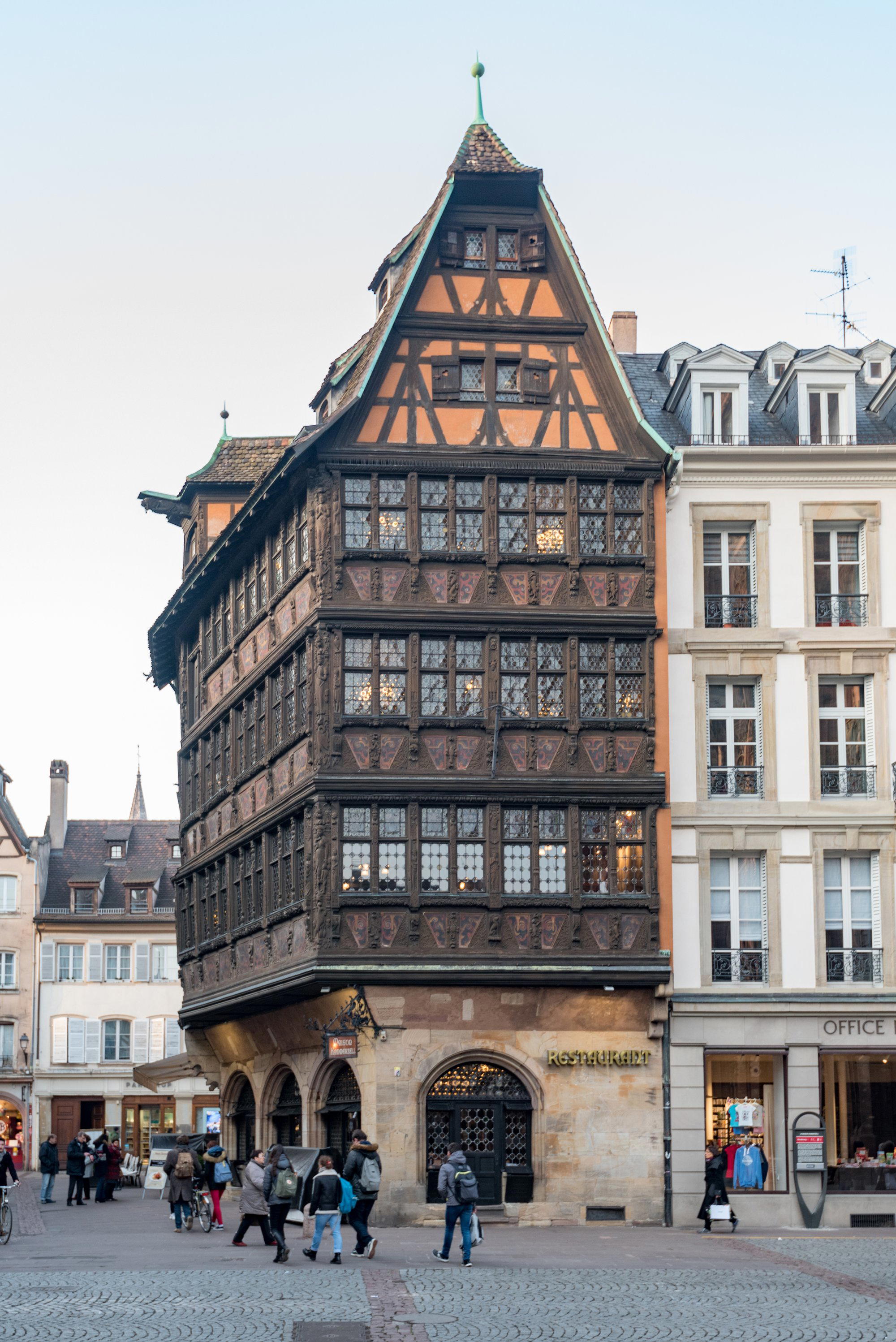
Set inside a half-timbered pavilion in Strasbourg's Parc de l'Orangerie, Buerehiesel has held its place in Alsatian haute cuisine for decades under chef Éric Westermann. The kitchen maintains Alsatian foundations while working in the register of modern French technique, earning consistent recognition from Michelin and a 2025 ranking of #201 in Opinionated About Dining's Classical Europe list. Tuesday through Saturday service only; book well ahead.

Pearl is the En Primeur Club membership app, where members save venues, book tables and use the concierge.
The menu
What to order
- Frog_legs_sautéed_in_chervil
- Poulette_alsacienne_baeckeoffe
- Grenouilles_poêlées_au_cerfeuil
A Pavilion in the Park, and What It Represents
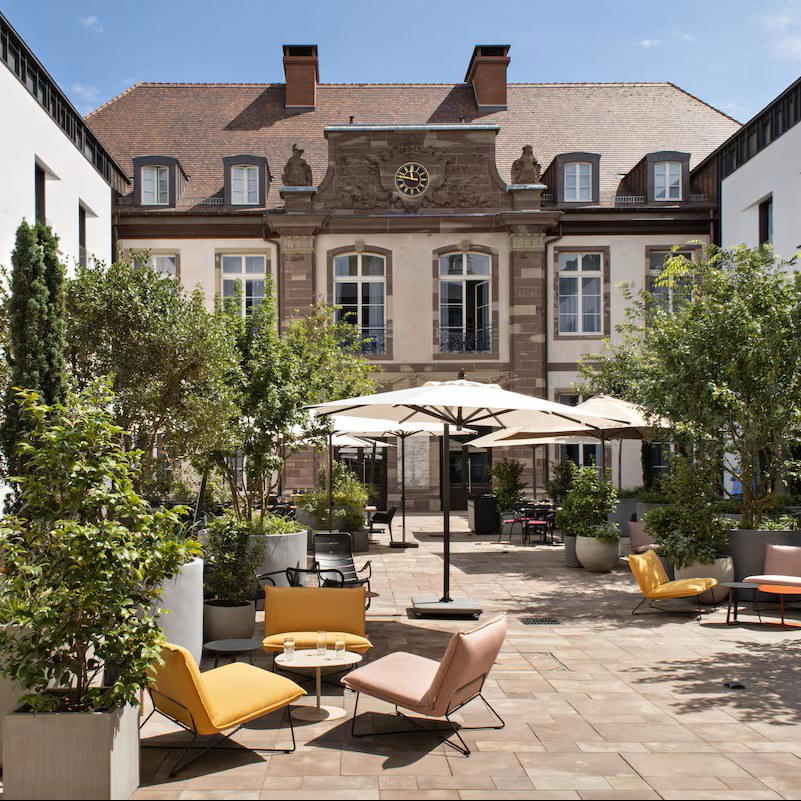
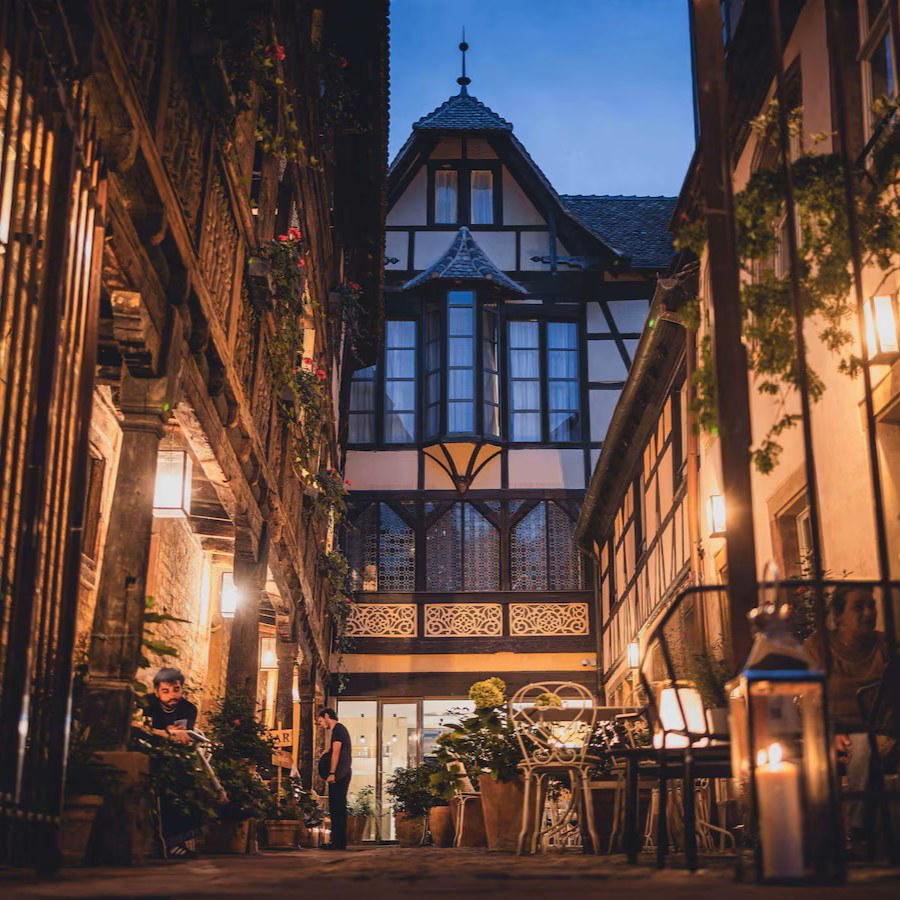
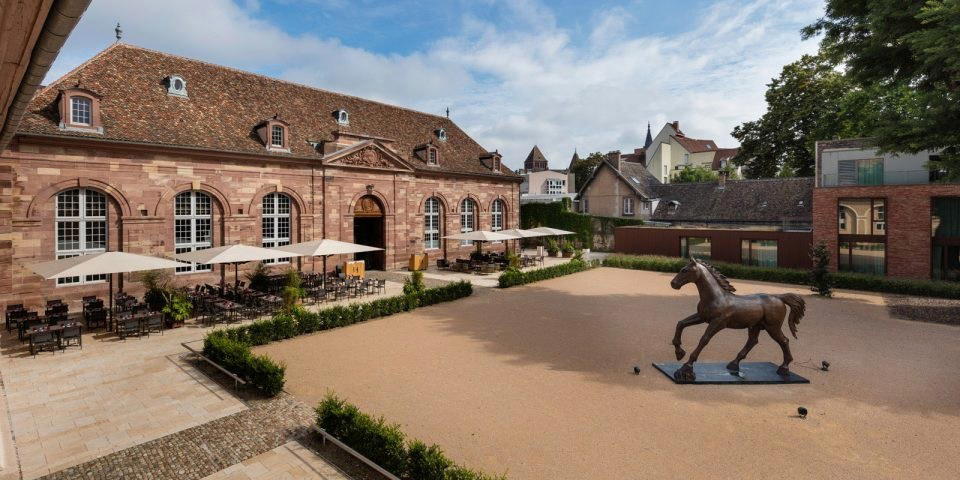
Strasbourg's relationship with grand institutional dining is older and more layered than most French provincial cities. Positioned at the fault line between French and German culinary tradition, the city has produced a cooking culture that resists easy categorisation: too refined to be called brasserie in the rustic sense, too grounded in pork fat and Riesling reductions to feel purely Parisian. Buerehiesel sits at the top of that tradition, occupying a half-timbered pavilion inside the Parc de l'Orangerie, the formal park that stretches east of the city centre. The approach is unhurried, the building framed by trees that change register across the seasons. In autumn the park is at its most theatrical; summer service extends the dining experience into a setting that few urban restaurants in France can match for sheer physical calm.
The address itself carries meaning in Strasbourg. The Parc de l'Orangerie is not a casual neighbourhood park but a designed landscape adjacent to the European Quarter, a short distance from the Parliament building and the Court of Human Rights. The clientele Buerehiesel draws reflects that geography: a mix of Alsatian regulars, visiting diplomats, and international diners who know the restaurant's tenure and reputation. This is the kind of room where the occasion is built into the location before a single dish arrives.
Where Buerehiesel Sits in Strasbourg's Dining Hierarchy
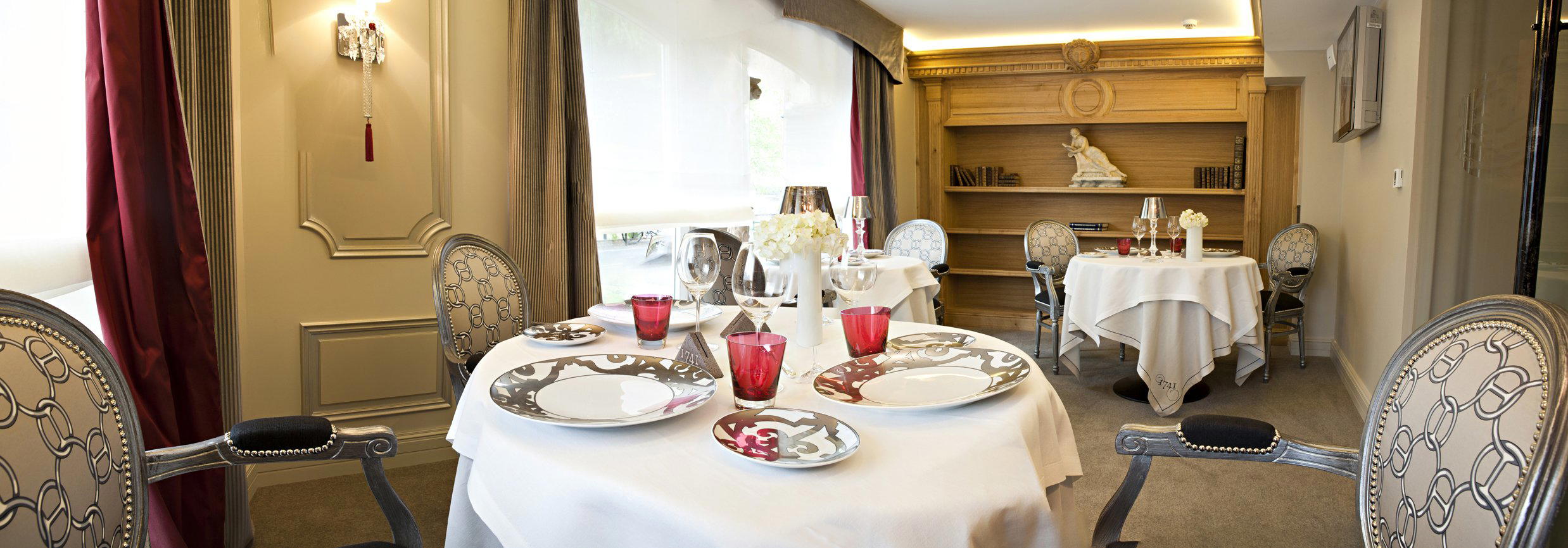
Strasbourg's high-end restaurant tier is more competitive than its size suggests. Au Crocodile, the city's most formally recognised Alsatian table, holds a Michelin star and operates in the same €€€€ price tier. 1741 (Modern Cuisine) and de:ja (Creative) each carry Michelin stars and push further into contemporary idiom.
On the Opinionated About Dining Classical Europe list, the restaurant has held consistent rankings across three consecutive years: #147 in 2023, #142 in 2024, and #201 in 2025. The trajectory is worth reading carefully. A rise from 147 to 142 in one year, followed by a drop to 201, signals neither decline nor irrelevance but rather the particular volatility of classical rankings when newer competition intensifies. OAD's Classical Europe category rewards consistency and tradition; placement within the top 200 in any given year indicates a kitchen operating at a level that a large majority of French regional restaurants do not reach. For diners who orient by that methodology, Buerehiesel belongs in the upper bracket of Alsatian classical cooking.
At the broader French level, the houses that define institutional dining in the country, from Auberge de l'Ill in Illhaeusern in southern Alsace to Troisgros - Le Bois sans Feuilles in Ouches and Bras in Laguiole, tend to share certain characteristics: a physical setting that amplifies the cooking, a kitchen lineage that spans generations, and a clientele that returns rather than discovers. Buerehiesel operates on that model. The Westermann name has been associated with this address for a long time, predating Éric's current tenure through earlier family involvement, which places the restaurant in a line of continuity that most contemporary openings cannot claim.
The Kitchen's Register: Classical Alsatian with Modern Technique
Alsatian cuisine in its haute form is not the same thing as Alsatian cuisine as it appears in a winstub. The tradition at this level involves the same foundational ingredients, foie gras, game, freshwater fish from the Rhine plain, white asparagus in spring, Munster-region dairy, but treated through the grammar of modern French kitchen technique. Reductions replace heavy sauces; seasonal produce gets more stage time than it once did; the wine pairings lean toward the Grand Cru Alsace whites that give the region its most distinctive vinous identity.
Éric Westermann's cooking at Buerehiesel works within that framework, described by observers as offering cuisine that is delicate and precise while maintaining recognisable regional character. The Michelin Plate designation (awarded in both 2024 and 2025) acknowledges consistent quality cooking without placing the kitchen in the starred tier, a distinction that matters for calibrating expectations. It is serious, accomplished cooking at a formal address, not an experimental proposition. Diners arriving from high-concept tables like de:ja (Creative) or from international reference points such as Mirazur in Menton or Atomix in New York City should adjust their frame accordingly: Buerehiesel rewards those who value refinement within a known tradition over those seeking formal innovation.
The comparison that illuminates Buerehiesel's register most clearly is with other long-established French houses that operate in the zone between institution and contemporary relevance. Flocons de Sel in Megève and Alléno Paris au Pavillon Ledoyen in Paris occupy different positions on that spectrum but share the quality of being embedded in their physical and culinary contexts in ways that new restaurants cannot manufacture. Buerehiesel belongs to that category in Alsace.
The Service Model and What It Signals
The grand brasserie tradition in France is not primarily about the food. It is about a service architecture, a pace, a room temperature (social, not literal), and the sense that the table is yours for as long as you occupy it. Buerehiesel operates in an refined version of that tradition: formal service, a room that does not rush, and a setting that makes lunch as legitimate a proposition as dinner. The lunch sittings run from noon to 1:30 PM and dinner from 7:30 to 9:30 PM, Tuesday through Saturday, with the restaurant closed on Sundays and Mondays. Lunch here, particularly in late spring when the park is in full leaf, functions differently from a city-centre lunch. The geography gives the meal a weight that the midday format rarely achieves elsewhere in the city.
For diners considering Strasbourg's full dining picture, Les Funambules (Modern Cuisine) and Umami (Modern Cuisine) offer alternatives at different price points and in different registers. Le Bernardin in New York City provides a useful international reference for the kind of sustained, technically accomplished cooking that earns long-term institutional status without constant reinvention.
Planning a Visit
Buerehiesel is located at 4 Parc de l'Orangerie, 67000 Strasbourg, in the eastern section of the park, accessible on foot from the city tram network. The €€€€ price tier positions it alongside the city's other high-end tables; expect a full lunch or dinner to reflect that bracket. Service runs Tuesday through Saturday, with two sittings daily at lunch (noon to 1:30 PM) and dinner (7:30 to 9:30 PM). Given the restaurant's consistent critical presence and limited weekly schedule of ten service windows, booking ahead is advisable, particularly for weekend lunches and for the late-spring and early-autumn periods when the park setting is at its most compelling.
For a fuller picture of dining and hospitality in the city, see our full Strasbourg restaurants guide, full Strasbourg hotels guide, full Strasbourg bars guide, full Strasbourg wineries guide, and full Strasbourg experiences guide.
Frequently asked questions
What does dinner at Buerehiesel typically cost?
Pricing at Buerehiesel is listed as €€€€.
When can I go to Buerehiesel?
Hours at Buerehiesel: Hours: Monday Closed Tuesday 12:00-13:30 19:30-21:30 Wednesday 12:00-13:30 19:30-21:30 Thursday 12:00-13:30 19:30-21:30 Friday 12:00-13:30 19:30-21:30 Saturday 12:00-13:30 19:30-21:30 Sunday Closed.
Nearby-ish Comparables
| Venue | Cuisine | Price | Awards | Notes |
|---|---|---|---|---|
| BuerehieselThis venue (the venue you are viewing) | Alsatian Haute French Fine Dining | $100–150 | Michelin Plate · Star Wine List | Not listed |
| Au Crocodile | Classic French Fine Dining with Alsatian Influences | $100–150 | 1 Michelin Star · Relais Chateaux Award | French - Alsatian, Modern Cuisine |
| Colbert | Modern French Bistro | $50–100 | Michelin Plate | French Brasserie, Modern Cuisine |
| Ondine | Modern Plant-Based French Fine Dining | $100–150 | Michelin Plate | Seafood, Modern Cuisine |
| 1741 | Modern French Fine Dining | Not listed | 1 Michelin Star | Modern Cuisine |
| de:ja | Modern Alsatian Fine Dining | $150–200 | 1 Michelin Star | Creative |
Recognition history
Dated appearances from independent guides and award organizations, with the underlying list record or original source where available.
Michelin Plate
Michelin
Star Wine List
Star Wine List
Gault & Millau Remarkable Restaurant
Gault & Millau
Opinionated About Dining Classical in Europe Ranked #201
Opinionated About Dining
Full recognition history (8 entries)
Michelin Plate
Michelin
Michelin Plate
Michelin
Opinionated About Dining Classical in Europe Ranked #142
Opinionated About Dining
Opinionated About Dining Classical in Europe Ranked #147
Opinionated About Dining
Continue exploring
More in Strasbourg
Restaurants in Strasbourg
All restaurants in Strasbourg →
Bars in Strasbourg
All bars in Strasbourg →

Buerehiesel
The wine
- Wine program
- Deep wine list
- Extensive wine list
- Sommelier-led
Details
- Romantic
- Elegant
- Classic
- Cozy
- Sophisticated
- Date Night
- Special Occasion
- Business Dinner
- Garden
- Terrace
- Historic Building
- Extensive Wine List
- Sommelier Led
- Local Sourcing
- Garden
- Street Scene
- Tasting Menu
- A La Carte
- Prix Fixe
- Alsatian Wines
- Vegetarian Friendly
- Gluten Free Options
Current opening hours
- Monday
- Closed
- Tuesday
- 12–1 PM, 7:30–9 PM
- Wednesday
- 12–1 PM, 7:30–9 PM
- Thursday
- 12–1 PM, 7:30–9 PM
- Friday
- 12–1 PM, 7:30–9 PM
- Saturday
- 12–1 PM, 7:30–9 PM
- Sunday
- Closed
Hours can change for holidays and private events. Hours as of .
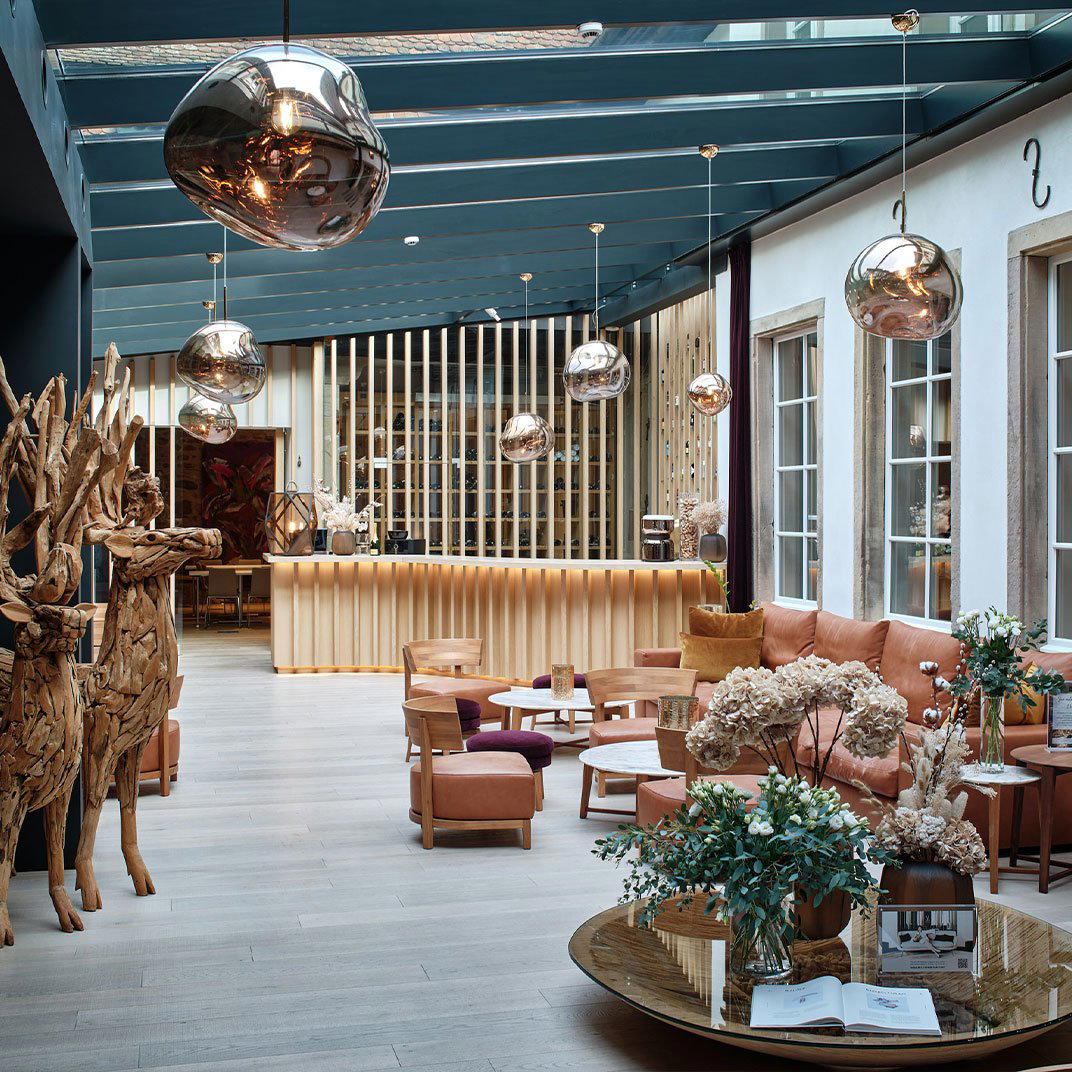
Beautiful conservatory and romantic park setting with panoramic glass windows offering inspiring views of nature; luminous inside, though some areas could be brighter.