Le Jardin Secret


Opposite La Wantzenau's small railway station, Le Jardin Secret earned its Michelin star in 2025 under chef Gilles Leininger, whose artichoke preparation won a prize at the 2019 Bocuse d'Or. The menu moves with market availability, spanning roasted scallops with Jerusalem artichoke and truffle to squab and duck foie gras pie, with a leafy rear patio that extends the dining room into the garden.
Pearl is the En Primeur Club membership app — saves, bookings, and concierge access live there. Same editors, same standards.
- Address
- 32 Rue de la Gare, 67610 La Wantzenau, France
- Phone
- +33 3 88 96 63 44
- Website
- restaurant-jardinsecret.fr
- Directions
- Get directions
 Saves & bookings on Pearl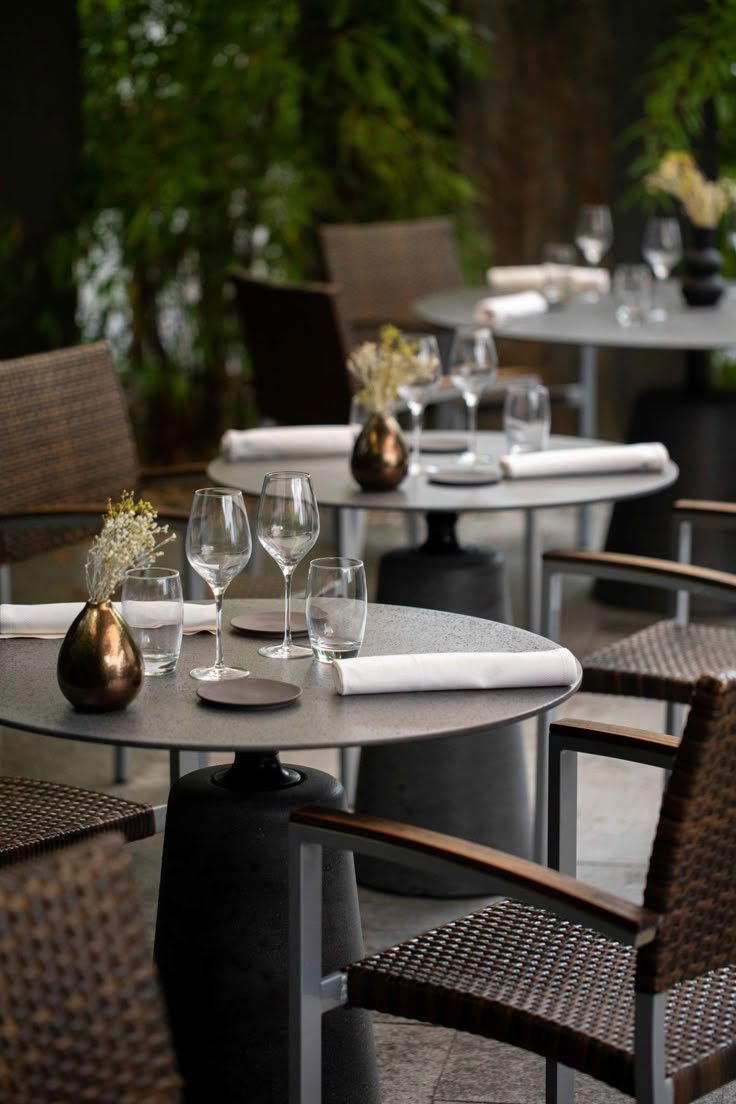
A Railway Village, a Rear Garden, and a Michelin Star
La Wantzenau sits in the Alsatian plain a short distance north of Strasbourg, a village more associated with Rhine-side Sunday lunches than with the kind of precise, market-led cooking that earns Michelin recognition. That context matters, because Le Jardin Secret's 2025 Michelin star didn't arrive in a competitive urban cluster. It arrived in a setting where ambition is less expected and therefore more legible. The restaurant occupies a building directly opposite the village's small railway station, an address that signals nothing extraordinary from the street. The transformation happens inside, and more particularly, in the leafy patio at the rear, a garden space that gives the place its name and its quietly theatrical quality.
Alsace already has one of France's most storied fine-dining traditions. Auberge de l'Ill in Illhaeusern has carried three Michelin stars across generations, anchoring a regional identity built on classical technique and local produce. That tradition casts a long shadow, and younger kitchens in the area position themselves either in relation to it or deliberately apart from it. Le Jardin Secret falls into the latter category, running a contemporary programme that draws on the market and on broader European and Asian technique rather than anchoring itself to Alsatian choucroute logic.
Gilles Leininger and the Bocuse d'Or Credential
The competitive cooking circuit offers a particular kind of credential: it tests precision, originality, and the ability to perform under structured scrutiny. Chef Gilles Leininger's artichoke preparation, which placed at the 2019 Bocuse d'Or competition, belongs to that category. The Bocuse d'Or is among the more demanding culinary competitions on the calendar, drawing chefs from across Europe and beyond into a format that rewards both technical discipline and composed creativity. A recognised result there signals something about a kitchen's baseline rigour, independent of what any individual diner thinks of a particular dish.
What competition credentials don't always predict is the ability to translate tournament precision into an evolving, hospitality-focused menu. That translation is where Le Jardin Secret makes its case. The kitchen works with what the market provides, rotating its programme in response to seasonal availability rather than locking into a fixed set of showpieces. The result is a menu that changes across the year, with Michelin citing roasted scallops with Jerusalem artichoke and truffle, turbot in a Tom Yam sauce, and squab with duck foie gras pie as examples of the current range. That combination, from a classical French scallop treatment through to a Thai-inflected sauce base, indicates a kitchen operating without a single rigid framework.
This kind of culinary range characterises a particular tier of French regional cooking that has emerged over the past decade. Away from the prestige addresses in Paris, where kitchens like Alléno Paris au Pavillon Ledoyen operate within highly structured creative identities, regional one-star operations have gained room to be more eclectic. Flocons de Sel in Megève and AM par Alexandre Mazzia in Marseille each demonstrate how chefs outside Paris have built distinct, internationally recognised programmes on their own terms. Le Jardin Secret operates in that same spirit, even if its profile remains smaller.
The Menu's Structural Logic
The dishes Michelin cites give a clear reading of how Leininger constructs a plate. The scallop preparation pairs the sweetness of hand-dived or farmed scallop with the earthiness of Jerusalem artichoke and the concentrated richness of truffle, a combination that is classical in its three-ingredient discipline but contemporary in the way those three elements interact. Turbot in a Tom Yam sauce moves toward South-East Asian aromatics, applying a French fillet treatment to a broth framework borrowed from Thai cooking. The squab and duck foie gras pie points back toward classic French pasty technique, the sort of preparation that takes significant time and skill to produce in a small restaurant.
Together, the range suggests a chef who trained across multiple references and uses them selectively rather than thematically. That approach carries risk: menus that borrow broadly can feel unfocused. The Michelin recognition suggests the execution here is coherent enough to make the borrowing feel considered rather than scattered.
The Space and the Garden
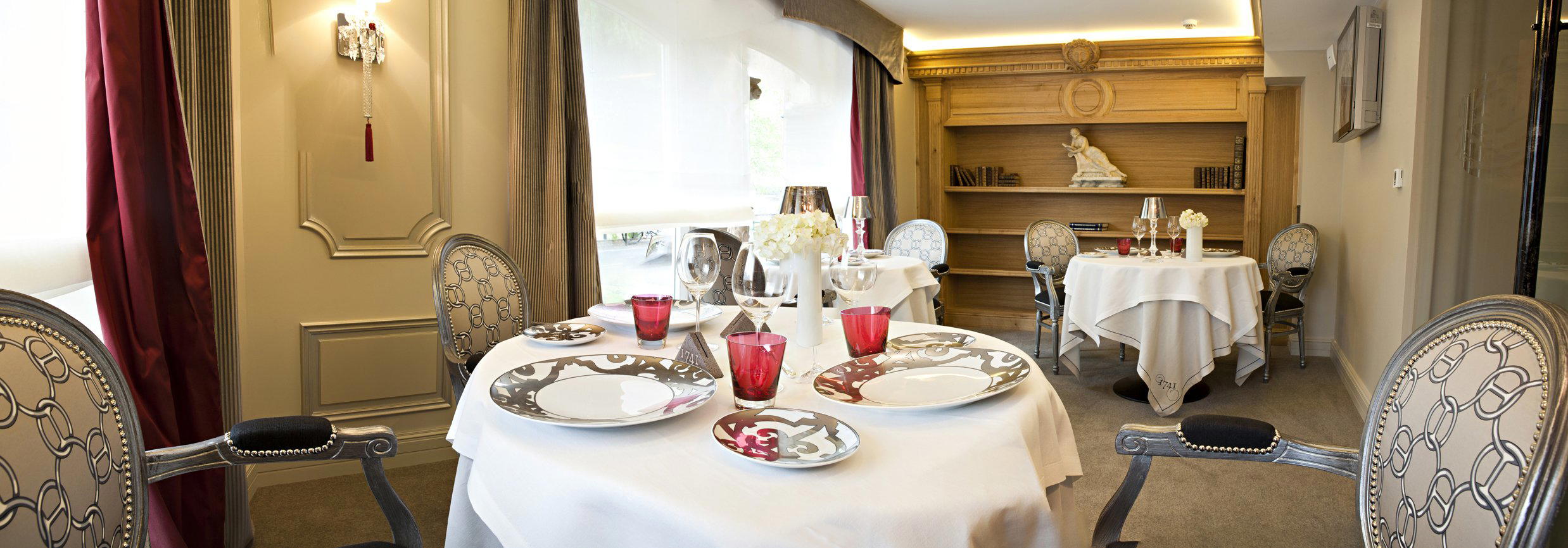
Contemporary-styled is how the restaurant's Michelin entry describes the interior, a term that in this context means the fitout has been updated to sit closer to a modern bistro register than to the wood-panelled Alsatian auberge tradition. The more distinctive spatial feature is the rear patio, a garden space that Michelin specifically flags as part of the appeal. Garden dining in Alsace has a long tradition, particularly in summer, when the region's light evenings make outdoor tables genuinely pleasant from early June through early September. At the restaurant, the patio adds a dimension that the interior alone would not provide, creating a contrast between the precise, technique-driven cooking and the informal, open-air setting.
That contrast is worth noting because it shapes the dining register. This is not a room where formality or ceremony is the primary texture of the experience. The Michelin notes characterise the team as youthful and welcoming, language that in Michelin's careful register typically indicates a service approach that is technically attentive without being rigid. For diners accustomed to the more ceremonial service culture at three-star addresses like Mirazur in Menton or Troisgros in Ouches, the tone here will read as more relaxed, which for a village restaurant at this price point is an appropriate calibration.
La Wantzenau's Dining Picture
The restaurant does not stand alone in La Wantzenau's dining offer. Le Relais de la Poste and Les Semailles represent alternative choices in the village, each with their own positioning. The village as a whole occupies a specific niche within the Strasbourg food orbit: far enough from the city to feel removed from its rhythm, close enough to attract diners willing to make a short journey for a table. For the broader picture of what the area offers, our full La Wantzenau restaurants guide maps the local options in detail.
Beyond restaurants, the village's character as a base can be assessed through our La Wantzenau hotels guide, bars guide, wineries guide, and experiences guide, which together give a picture of whether a multi-stop visit to the area makes logistical sense.
For reference on what France's modern cuisine looks like at full scale, the gap between a new one-star in a village and addresses like Paul Bocuse's Auberge du Pont de Collonges, Bras in Laguiole, or Assiette Champenoise in Reims is instructive. Those kitchens operate with multi-decade track records and multi-star recognition. The restaurant is at an earlier point in that arc, but its Bocuse d'Or credential and 2025 star establish a foundation that places it inside the relevant conversation. Internationally, the modern cuisine format the restaurant occupies has parallels at addresses like Frantzén in Stockholm and FZN by Björn Frantzén in Dubai, though at a different scale and price tier.
Planning a Visit
The restaurant is priced at about $130 per person. The restaurant is at 32 Rue de la Gare, 67610 La Wantzenau, directly opposite the village railway station, which makes it accessible by train from Strasbourg for those who prefer not to drive.
What's the Signature Dish at Le Jardin Secret?
The dish with the clearest competition-verified provenance is Gilles Leininger's artichoke preparation, which received recognition at the 2019 Bocuse d'Or. Beyond that anchor, Michelin's 2025 entry cites roasted scallops with Jerusalem artichoke and truffle, turbot in a Tom Yam sauce, and squab with duck foie gras pie as representative of the current menu. Because the kitchen works with seasonal market availability, the specific dishes on any given visit will depend on timing, but those three preparations give a reliable indication of the style and ambition of the cooking.
Side-by-Side Snapshot
Comparable venues nearby, for context on price, style, and recognition.
| Venue | Cuisine | Price | Awards | Notes |
|---|---|---|---|---|
| Le Jardin SecretThis venue — the venue you are viewing | Modern French Seasonal Tasting Menu | $$$$ | Michelin 1 Star | Not listed |
| Le Relais de la Poste | Michelin-Starred French Gastronomic | $$$$ | Michelin 1 Star | La Wantzenau |
| Les Semailles | Modern French Gastronomic | $$$$ | Michelin Plate | La Wantzenau |
| Zimmer | Traditional French Terroir | $$$ | Not listed | La Wantzenau |
| Thierry Schwartz - Le Restaurant | Modern Natural Alsatian Cuisine | $$$$ | Michelin 1 Star | Obernai |
| Le 7ème Continent | Michelin-Starred French Fusion | $$$$ | Michelin 1 Star | Rixheim |
Recognition history
Dated appearances from independent guides and award organizations, with the underlying list record or original source where available.
Michelin 1 Star
Michelin
Gault & Millau Remarkable Restaurant
Gault & Millau
Michelin 1 Star
Michelin
Michelin 1 Star
Michelin
Continue exploring
More in La Wantzenau
Restaurants in La Wantzenau
Browse all →
Bars in La Wantzenau
Browse all →
Hotels in La Wantzenau
Browse all →

At a Glance
- Romantic
- Elegant
- Intimate
- Quiet
- Sophisticated
- Date Night
- Special Occasion
- Celebration
- Garden
- Terrace
- Private Dining
- Standalone
- Sommelier Led
- Local Sourcing
- Farm To Table
- Garden
Current opening hours
- Monday
- Closed
- Tuesday
- Closed
- Wednesday
- 12–1:30 PM, 7–9:30 PM
- Thursday
- 12–1:30 PM, 7–9:30 PM
- Friday
- 12–1:30 PM, 7–9:30 PM
- Saturday
- 7–9:30 PM
- Sunday
- 12–1:30 PM
Hours can change for holidays and private events. Last verified .
Luminous and intimate interior with a tranquil, sheltered garden terrace surrounded by lush greenery; described as peaceful, soothing, and contemplative with simple, elegant table settings.