Our verdict
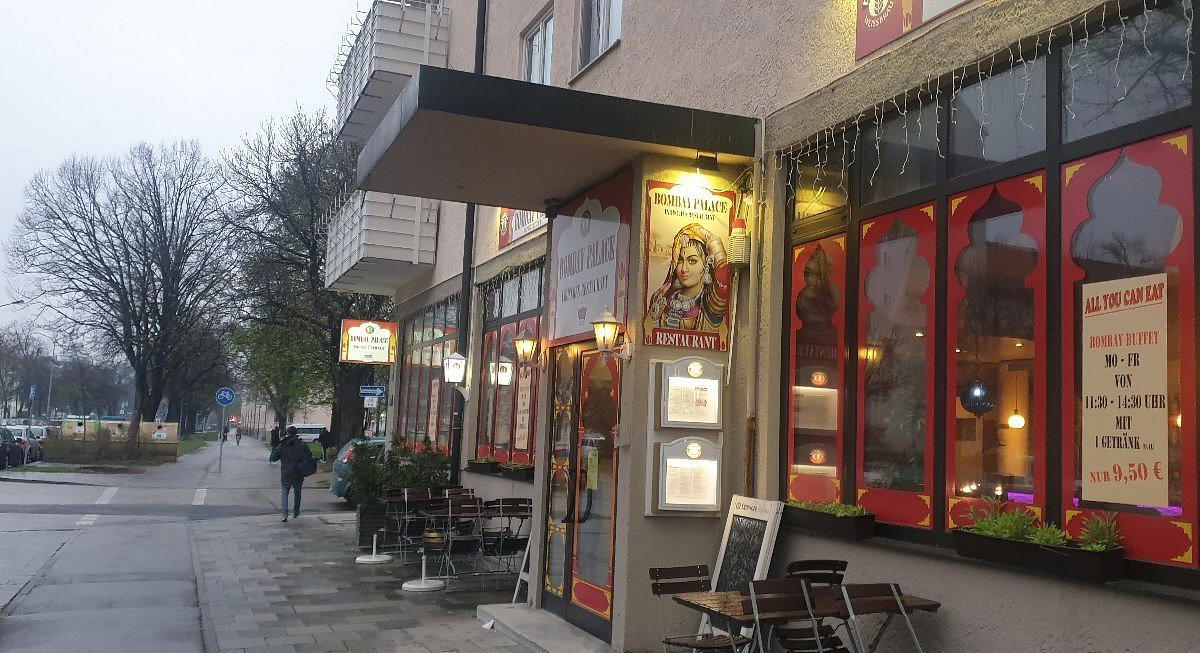
On Theresienstraße in central Munich, Bombay Indien Grill occupies a corner of the city's Indian dining scene where the focus lands on the grill itself, the smoke, the char, and the spice sequencing that defines subcontinental cooking at its most direct. For visitors looking beyond Munich's celebrated fine-dining circuit, this address offers a different kind of precision: not tasting menus and wine pairings, but the structured pleasure of a meal built around heat and spice.

Pearl is the En Primeur Club membership app, where members save venues, book tables and use the concierge.
The menu
What to order
- Chicken tikka wraps
- Samosas
Where the Grill Does the Talking
Munich's restaurant identity is anchored, in the popular imagination, by its Michelin-heavy fine-dining tier. Venues like Tantris, Atelier, and Alois - Dallmayr Fine Dining set a standard of French-inflected precision that defines how the city is discussed abroad. But Munich also sustains a quieter, more workaday international dining scene, and Theresienstraße, a long residential and commercial artery running through the city's western core, is part of that fabric. Bombay Indien Grill sits at number 124 on that street, in a neighbourhood that mixes apartment blocks, small shops, and a student-adjacent energy drawn from the university district nearby. The setting is not ornate. What arrives on the table matters more than what surrounds it.
Indian restaurants in German cities occupy a complicated position. The category is large and uneven, ranging from fast-casual lunch trade to more considered cooking that takes subcontinental spice structure seriously. The better addresses tend to organize themselves around a cooking method, the tandoor, the tawa, the karahi, rather than around an encyclopaedic menu designed to reassure unfamiliar diners. The word "Grill" in Bombay Indien Grill signals a commitment to the former approach: a meal shaped by direct heat, smoke, and the discipline of working a live fire.
The Arc of a Meal Built on Heat and Spice
Indian cooking rewards a sequencing logic that differs from European tasting menus but is no less deliberate. A meal at a grill-focused Indian kitchen tends to move from the lightest, most aromatic work of the tandoor, seekh kebabs, chicken tikka, the charred edges of a naan pulled at the right moment, through to the slower, deeper logic of a curry or dal that carries the accumulated warmth of a dozen spices cooked in stages. That progression, from high-heat snap to low-heat complexity, is the editorial structure of the meal itself.
The Bombay reference in the name anchors the kitchen to a specific culinary geography. Mumbai's food culture draws on the coastal Konkan kitchen, on the Parsi traditions of the city's older communities, and on the street-food energy of the city's market districts. A restaurant working in that tradition is not cooking a generic pan-Indian menu, it is making an argument about which flavours and techniques deserve attention. Grilled meats with maritime spice profiles, the tang of tamarind in finishing sauces, the contrast between a char-heavy exterior and a yielding interior: these are the markers of that regional sensibility when it is applied to a grill kitchen.
For comparison, Germany's most discussed tasting formats, from CODA Dessert Dining in Berlin to Schanz in Piesport, operate within a European progression logic where the kitchen controls pacing, portion, and surprise. An Indian grill meal operates differently: the diner assembles their own arc, choosing which grilled items open the meal, which bread serves as the vehicle for a main, which dal provides the closing warmth. The intelligence is still there; it just asks more of the table.
Munich's Broader Indian Dining Context
The German city that has historically attracted the most critical attention for Indian cooking is not Munich but Berlin, where a larger South Asian community has shaped a more competitive and varied restaurant environment. Munich's Indian restaurants work in a smaller ecosystem, which means individual addresses carry more weight for diners specifically seeking subcontinental cooking. For visitors already planning time at the city's headline venues, Tohru in der Schreiberei or JAN, for instance, Bombay Indien Grill offers a contrasting register: informal, spice-forward, and built around a cooking tradition with its own internal rigour.
Across Germany's broader fine-dining geography, the restaurant conversation tends to focus on addresses like Schwarzwaldstube in Baiersbronn, Aqua in Wolfsburg, Vendôme in Bergisch Gladbach, or Waldhotel Sonnora in Dreis, all operating at the upper end of European technique. Bombay Indien Grill belongs to an entirely different conversation, one that does not compete on that axis. Its value is the specificity of a single regional cooking tradition applied with consistency, not the accumulation of technique signals that defines the Michelin tier.
For global context on what it means for a restaurant to organize itself around a single method and cooking lineage, it is worth thinking about how addresses like Le Bernardin in New York City or Lazy Bear in San Francisco built their identities around commitment to a specific logic, seafood precision and communal format respectively, rather than breadth. A grill restaurant operating within an Indian culinary framework is making a similar kind of bet on depth over range.
Planning Your Visit
Theresienstraße 124 is accessible from central Munich by U-Bahn, with the neighbourhood sitting within reasonable distance of the Maxvorstadt area. The street itself is practical rather than scenic, which means the restaurant draws on repeat local custom rather than tourist traffic. For visitors to Munich who have already consulted our full Munich restaurants guide and booked their fine-dining evenings elsewhere, Bombay Indien Grill offers a format suited to a more relaxed night: no dress code pressures, no tasting-menu time commitment, a meal structured as much by your own ordering decisions as by the kitchen's sequencing.
Venues in this category across Germany's cities, see also Restaurant Haerlin in Hamburg for comparison on the opposite end of the formality spectrum, or Bagatelle in Trier for another regional register, tend to reward diners who come with a specific appetite rather than a general curiosity. At Bombay Indien Grill, that specific appetite is for smoke, spice, and the structural pleasures of a grill-anchored Indian menu. That is the argument the address makes, and it is a coherent one. Similarly, ES:SENZ in Grassau and Victor's Fine Dining by Christian Bau in Perl each anchor themselves to a clear culinary identity, a reminder that the clearest restaurant propositions, across price tiers, are built on conviction about what they do.
Frequently asked questions
Does Bombay Indien Grill work for a family meal?
What kind of setting is Bombay Indien Grill?
What's the must-try dish at Bombay Indien Grill?
Is Bombay Indien Grill a good choice for diners who want Indian food but aren't familiar with regional Indian cuisine?
Style and Standing
Comparable venues nearby, for context on price, style, and recognition.
| Venue | Cuisine | Price | Notes |
|---|---|---|---|
| Bombay Indien GrillThis venue (the venue you are viewing) | Indian Grill | Not listed | Not listed |
| 89Anju | Authentic Korean Street Food | $20–30 | Schwabing |
| Bowls & Blenders | Fresh Superfood Bowls | $10–20 | Neuhausen |
| Y.OUR Pavillon | Modern International with Regional Focus | $20–30 | Neuhausen |
| The Indian Room Munich | Modern Indian Fine Dining | Not listed | Schwabing |
| Zum Franziskaner | Traditional Bavarian | $20–30 | Lehel |
Continue exploring
More in Munich
Restaurants in Munich
All restaurants in Munich →
Bars in Munich
All bars in Munich →


Details
- Casual Hangout
- A La Carte
- Vegetarian Friendly
Current opening hours
- Monday
- 11 AM–8 PM
- Tuesday
- 11 AM–8 PM
- Wednesday
- 11 AM–8 PM
- Thursday
- 11 AM–8 PM
- Friday
- 11 AM–8 PM
- Saturday
- 11 AM–8 PM
- Sunday
- 11 AM–6 PM
Hours can change for holidays and private events. Hours as of .
Casual fast food atmosphere.