Bánh Xèo Tôm Nhảy Năm Hiền sits on Phan Thanh Street in Da Nang's Thanh Khê district, where the central Vietnamese sizzling crepe tradition is taken seriously at local prices. The kitchen focuses on bánh xèo with live-prawn variants that define the dish in this part of the country. It represents the workaday end of Da Nang's street-food spectrum, where repetition and volume produce consistency.
Pearl is the En Primeur Club membership app — saves, bookings, and concierge access live there. Same editors, same standards.
- Address
- 46 Phan Thanh, Thạc Gián, Thanh Khê, Đà Nẵng 550000, Vietnam
- Phone
- +84905684246
- Website
- facebook.com
- Directions
- Get directions
 Saves & bookings on Pearl
The Sizzle Before the Seat
On Phan Thanh Street, the sound arrives before the signage does. The sharp crack of wet batter hitting a hot, oil-slicked pan carries into the street, and by the time you've located the source, the logic of the place is already clear: this is a room organised entirely around one dish, executed at volume, for a crowd that knows exactly what it came for. Bánh Xèo Tôm Nhảy Năm Hiền sits in the Thạc Gián ward of Thanh Khê, a residential district that doesn't see much tourist traffic, which explains both the price point and the atmosphere. The tables fill with local families and office workers, not visitors consulting maps.
That geographic context matters. Thanh Khê sits away from the beachfront strip and the Han River promenade that anchor most Da Nang restaurant guides. Dining here operates on different terms than venues closer to the tourist corridor. For comparison, the same city hosts La Maison 1888, a French Contemporary property at the ₫₫₫₫ price tier that positions itself against international fine-dining benchmarks. Năm Hiền occupies the opposite end of that spectrum, where cost per head is low and the measure of quality is precision and consistency in a single preparation.
What the Dish Requires
Bánh xèo is a dish with strong regional identity across central and southern Vietnam, but the Da Nang version has specific characteristics worth understanding before you sit down. The crepe here is thinner and crisper than the southern interpretation, cooked in individual cast-iron pans rather than on a shared griddle, with a turmeric-tinted rice-flour batter that produces a lacy, brittle edge when done correctly. The "tôm nhảy" element, literally "jumping prawns," refers to the use of live or fresh shrimp, a marker of quality that distinguishes this category of bánh xèo house from lower-tier versions using pre-frozen seafood.
The ritual of eating the dish is as important as the dish itself. In central Vietnamese custom, the crepe is not eaten directly from the pan. It is broken into sections, wrapped in rice paper with mustard leaf, perilla, and local herbs, then dipped into a thin nước chấm that carries more acidity and less sweetness than the southern variant. First-time visitors who skip the herb plate or attempt to eat the crepe with chopsticks alone are missing the structural logic of the meal. The wrapping moderates the heat and crunch of the crepe, and the herb selection changes the flavour profile of each bite. Regulars work through the process without looking at it.
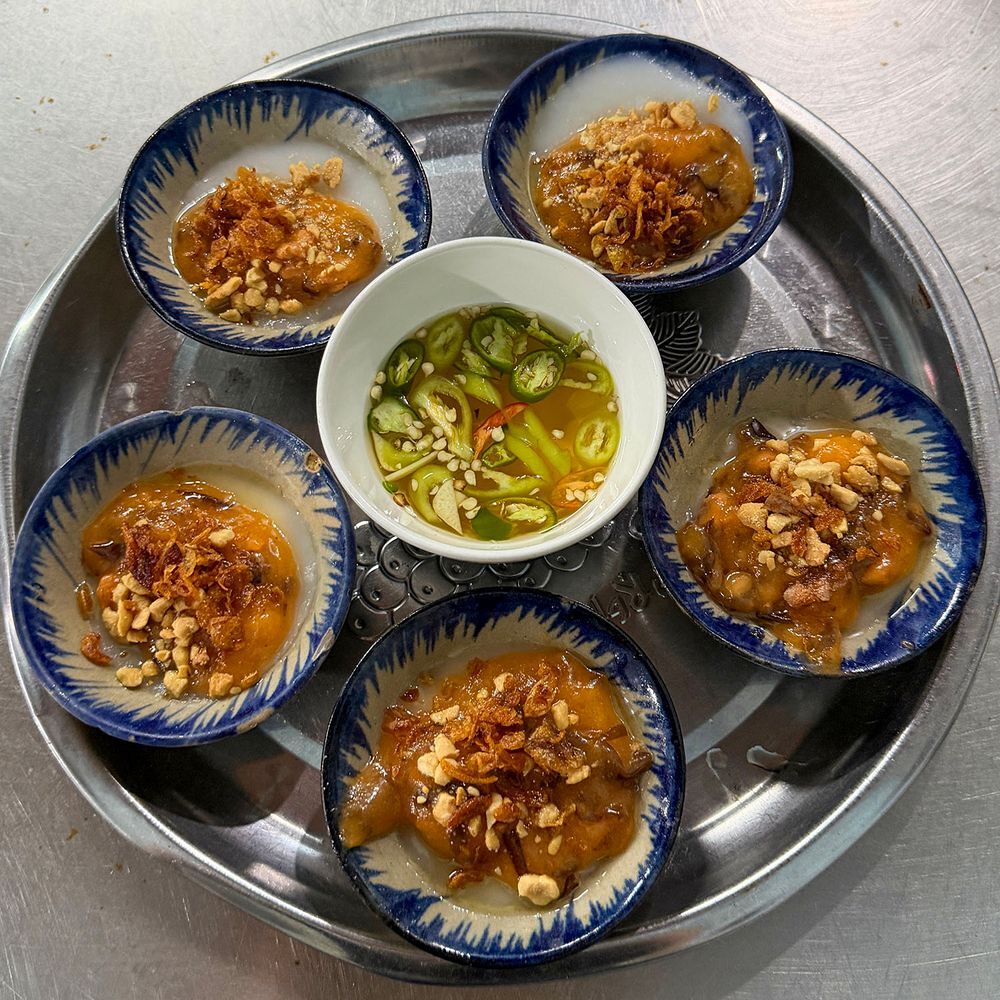
This same wrapping-and-dipping structure appears at other Da Nang specialists in central Vietnamese preparations. Ba Be, which focuses on bánh bèo, bánh nậm, and bánh bột lọc, uses a comparable herb-and-dipping format applied to steamed rice cakes rather than fried crepes. The underlying grammar of the meal, small preparations eaten with fresh aromatics and acidic dipping sauce, connects a range of central Vietnamese dishes that look different but follow the same pacing and etiquette.
The comparable set in Da Nang's Street-Food Tier
Da Nang's street-food category at the ₫ price tier operates across several distinct formats. Noodle houses, bánh mì counters, and rice-plate spots each have their own rhythms and regulars. Năm Hiền sits within the specialty single-dish category, where the entire operation is built around depth in one preparation rather than breadth across a menu. This is a different proposition from, say, Banh Mi Ba Lan, which applies similar single-dish focus to the bánh mì format, or the noodle specialists in Thanh Khê like Mi Quang Ba Vi, where the local mì quảng tradition is the organising principle.
Within central Vietnam more broadly, the commitment to fresh seafood as a quality signal connects Năm Hiền to a wider pattern. Venues like Bau Troi Do in Son Tra and Duyên Anh Restaurant in Phu Vang both use proximity to coastal supply as a distinguishing factor, even at different price tiers and in different dish categories. The live-prawn specification at Năm Hiền reads as part of that same regional instinct: sourcing freshness is the point, and it is expected rather than advertised.
For visitors moving between Da Nang and nearby cities, the central Vietnamese sizzling crepe has close relatives in Hội An and Huế but is not identical across those cities. Cargo Club in Hội An operates across a broader menu in a tourist-facing format. Saffron in Huế works in Huế's more delicate royal-court culinary tradition. The bánh xèo at Năm Hiền is neither of those things: it is a workhorse preparation in a no-frills room, and the value of the experience is precisely that it isn't dressed up for outside audiences.
Planning the Visit
The address is 46 Phan Thanh, Thạc Gián ward, Thanh Khê district, Da Nang. The location is not on the tourist circuit, and getting there from the beachfront or Han River area requires a taxi or ride-share of ten to fifteen minutes depending on traffic. Capacity is managed by turnover rather than reservation. Arriving during peak lunch or early dinner hours, when the pans are running continuously and the herb plates arrive pre-assembled, gives the leading read on the kitchen's rhythm. Off-peak visits may mean slower service and less active cooking. No dress code applies. Bring cash; card infrastructure at this tier in Thanh Khê is not guaranteed.
Visitors comparing Da Nang to other Vietnamese cities at the higher end of the price spectrum can use Gia in Hanoi or Akuna in Ho Chi Minh City as reference points for where contemporary Vietnamese cooking is going. Năm Hiền is not part of that conversation. It is part of a different and equally serious one, about what the traditional form of a dish looks like when it has not been adjusted for external audiences.
Other central Vietnamese specialists worth knowing in context include Bà Diệu and its Trần Tống Street branch, which cover the noodle end of the local repertoire, and Nhà hàng Madame Lân in Hai Châu, which operates at a more formal register within Da Nang's Vietnamese dining category.
Cuisine and Awards Snapshot
Comparable venues nearby, for context on price, style, and recognition.
| Venue | Cuisine | Price | Notes |
|---|---|---|---|
| Bánh Xèo Tôm Nhảy Năm HiềnThis venue — the venue you are viewing | Central Vietnamese Bánh Xèo | $ | Not listed |
| Banh Mi Ba Lan | Classic Vietnamese Banh Mi | $ | Hai Chau |
| Bún Chả Cá 109 Nguyễn Chí Thanh | Central Vietnamese Fish Cake Noodles | $ | Hai Chau |
| Ka Cong Coffee | Vietnamese Coffee Café | $ | Da Nang |
| Madam Khanh The Banh Mi Queen | Traditional Vietnamese Banh Mi | $ | Minh An Ward |
| Phi Banh Mi | Vietnamese Banh Mi Sandwiches | $ | Minh An Ward |
At a Glance
- Rustic
- Cozy
- Scenic
- Family
- Casual Hangout
- Group Dining
- Open Kitchen
- Beer Program
- Local Sourcing
- Garden
Current opening hours
- Monday
- 9:30 AM–10:15 PM
- Tuesday
- 9:30 AM–10:15 PM
- Wednesday
- 9:30 AM–10:15 PM
- Thursday
- 9:30 AM–10:15 PM
- Friday
- 9:30 AM–10:15 PM
- Saturday
- 9:30 AM–10:15 PM
- Sunday
- 9:30 AM–10:15 PM
Hours can change for holidays and private events. Last verified .
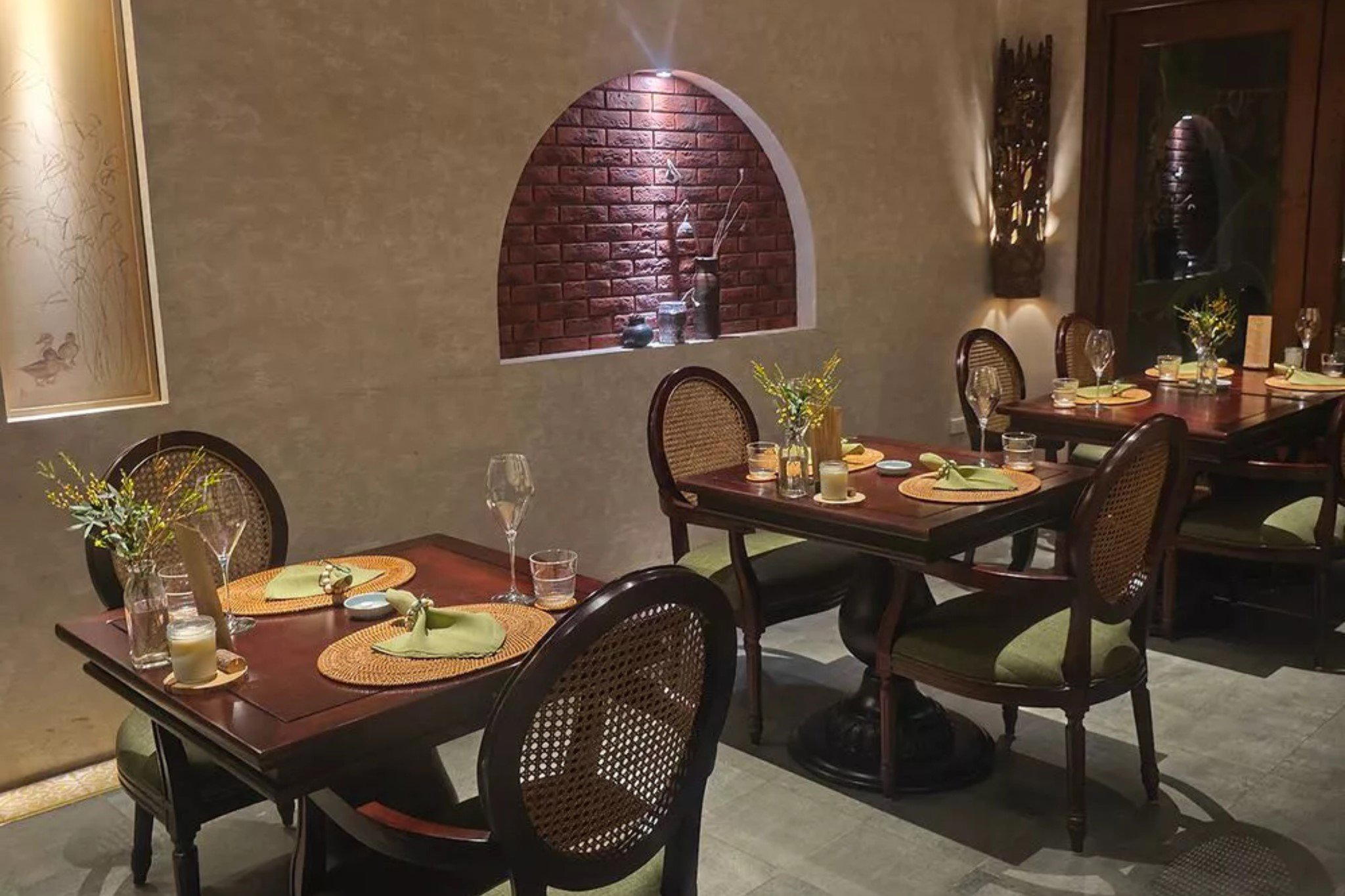
Dripping in lush greenery, creating an indoor garden atmosphere.