Our verdict
Phi Banh Mi sits inside Da Nang's well-worn street food circuit, where the banh mi remains the city's most democratic meal: a short menu, a tight format, and a roll that functions as both breakfast and late-afternoon fuel. The venue represents how a single-item focus can anchor a spot within one of Vietnam's most competitive quick-service traditions.

Pearl is the En Primeur Club membership app — saves, bookings, and concierge access live there. Same editors, same standards.
- Address
- Da Nang, Vietnam
- Hours
- Daily 8 AM–8 PM
- Directions
- Get directions
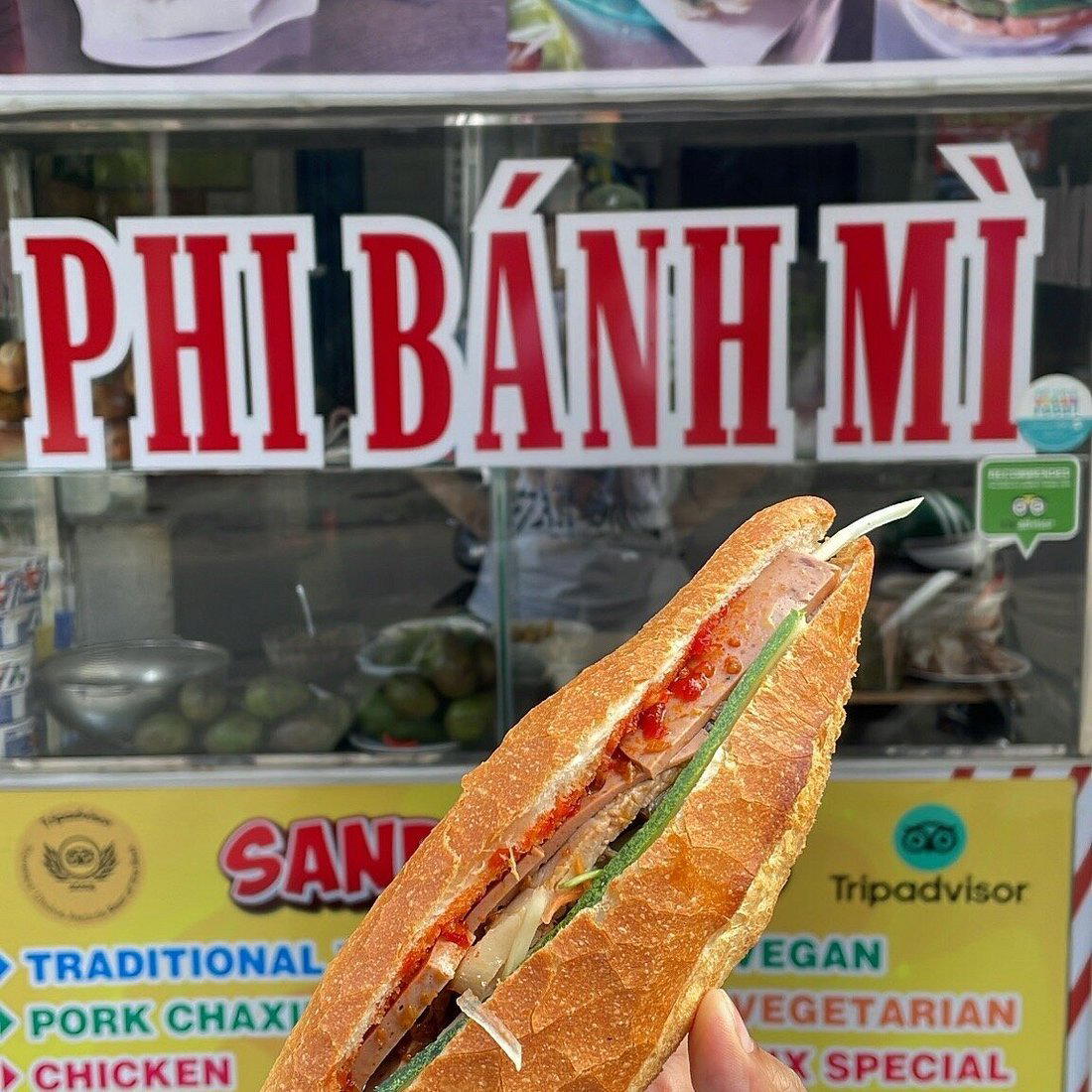
The menu
What to order
- Pork Banh Mi
- Phi Special
- Pork Banh Mi with Avocado
The Banh Mi as Menu Architecture
Vietnam's banh mi is one of the more instructive examples of colonial culinary inheritance done on local terms. The French baguette tradition arrived in the nineteenth century; what Vietnamese cooks did with it over the following decades — layering pork preparations, pickled daikon, fresh herbs, and chilli into a hand-held format — produced something that now operates almost entirely on its own logic. In Da Nang, that tradition sits alongside a dense local food culture that includes fresh noodle soups at Bà Diệu on Tran Tong Street and the steamed rice cake specialities at Ba Be. The banh mi occupies a specific slot in that ecosystem: fast, portable, affordable, and structurally fixed enough that quality differences come down to sourcing and execution rather than creativity.
Phi Banh Mi works within that fixed format. The menu at this kind of Da Nang specialist is typically short by design, a narrow selection of fillings built around a central pork combination, with options that adjust heat, herb quantity, or protein type rather than depart from the core template. That restraint is a feature, not a limitation. Specialist banh mi counters across Vietnam have long understood that menu brevity signals confidence in the base product. When a shop offers twelve variations, it is often compensating for instability in the core; when it offers three or four, it is usually because the core holds.
Da Nang's Street Food Position
Da Nang sits between Hoi An and Hue in both geography and culinary character. Hoi An has exported its food identity internationally, the White Rose dumpling and cao lau have become internationally recognisable reference points. Hue carries the weight of imperial cuisine, with its multi-dish formal structures and emphasis on presentation. Da Nang's food culture is more workaday than either: it is a working port city with a strong seafood tradition and a street food scene that feeds residents rather than performing for visitors.
That context matters for understanding where a banh mi specialist fits. This is not the dining tier occupied by La Maison 1888, which operates at the upper end of Da Nang's fine dining market with a French Contemporary format. Phi Banh Mi operates in the ₫ tier, the same price bracket as Bà Diệu and the street food counters that define daily eating in the city. At that level, the competitive set is enormous, and differentiation comes from consistency and reputation built over time rather than from format innovation or awards recognition.
Across Vietnam's broader dining scene, the contrast in tiers is sharp. At one end, tasting-menu restaurants like Gia in Hanoi and Akuna in Ho Chi Minh City are building structured fine-dining propositions around Vietnamese ingredients. At the other end, the banh mi counter remains the format that most Vietnamese people interact with daily. Phi Banh Mi sits firmly in that second category, useful precisely because of its accessibility, not despite it.
What the Format Tells You
The editorial angle on a banh mi specialist is almost always the same: the interest lies in how tightly the format is executed rather than in what has been added to it. A well-made banh mi depends on the bread arriving from the oven at the right time, the crust should fracture cleanly, the interior should have enough structure to hold fillings without compressing into paste. The pork preparations (typically a combination of cha lua, head cheese, and roast pork) need to be calibrated against the acidity of the pickled vegetables, and the herb layer should be generous enough to register as a flavour rather than a garnish.
These are not complicated requirements, but they are daily ones. A banh mi counter that maintains them across a full service, from early morning through the mid-afternoon peak, is doing something that many shops in the same tier do not manage. The menu architecture at Phi Banh Mi, insofar as it reflects this specialist tradition, is built around that daily discipline rather than around seasonal rotation or conceptual development.
For comparison, Banh Mi Ba Lan represents another point in Da Nang's banh mi circuit, and the two venues together illustrate how the city sustains multiple operators in the same narrow format. In a city with this density of street food competition, survival over time is its own form of credential.
Planning a Visit
Banh mi counters in Da Nang typically operate from early morning through early afternoon, with some extending into the early evening for a second service peak. The format does not require advance planning, this is walk-in eating by definition, with queue length at peak hours functioning as the clearest indicator of demand. Pricing sits at the lower end of the Vietnamese street food scale, meaning a full sandwich costs a fraction of what a sit-down meal at even a mid-range Da Nang restaurant would. For visitors working through Da Nang's food circuit, a banh mi stop fits logically between a morning bowl of noodles and a heavier evening meal, rather than competing with either. The city's broader food options are covered in our full Da Nang restaurants guide.
Further afield in Vietnam, the country's street food and casual dining range is wide: from seafood-focused formats like Bien 14 in Ha Long to chain operations like Jollibee in Kon Tum, King BBQ in Rach Gia, Dookki in Minh Xuan, GoGi House in Bac Lieu, Big Bowl in Cam Ranh, and BIG CHILL International Food Court in Phan Thiet. At the premium international end, reference points like Le Bernardin and Atomix in New York illustrate just how far the global dining spectrum extends from the banh mi counter, a reminder that both formats serve a purpose, and that purpose is what defines the experience.
Frequently asked questions
Is Phi Banh Mi a good option for a quick lunch in Da Nang?
Banh mi counters are built for speed, making them among the most practical midday stops in Da Nang. The format, a filled baguette eaten standing or in transit, suits the city's pace better than a sit-down lunch. Da Nang's central Vietnam position means the local banh mi style carries regional influence distinct from both Saigon and Hanoi variants.
What dish is Phi Banh Mi famous for?
Phi Banh Mi focuses on the banh mi format, a Vietnamese sandwich built on a French-style baguette with local fillings and condiments. In Da Nang, the banh mi tradition sits in the shadow of Hoi An's internationally exported food identity, which makes a specialist counter like this one more notable for its precision within the format than for menu breadth.
Can I walk in to Phi Banh Mi?
Banh mi counters in Da Nang typically operate on a walk-in basis, with no reservation system. Peak hours run from early morning through midday, when counters see the heaviest traffic. Arriving outside the breakfast-to-lunch window often means a shorter queue and fresher reads on what's sold out.
What's the standout thing about Phi Banh Mi?
The case for Phi Banh Mi rests on format discipline. Da Nang sits geographically and culinarily between Hoi An and Hue, giving the city's food a character that is less exported and more locally calibrated. A banh mi specialist in this context succeeds or falls on how tightly it executes a narrow format, not on how many options it offers.
Reputation Context
Comparable venues nearby, for context on price, style, and recognition.
| Venue | Cuisine | Price | Awards | Notes |
|---|---|---|---|---|
| Phi Banh MiThis venue — the venue you are viewing | Vietnamese Banh Mi Sandwiches | $1–10 | Not listed | Not listed |
| Bún Chả Cá 109 Nguyễn Chí Thanh | Central Vietnamese Fish Cake Noodles | Not listed | Not listed | Hai Chau |
| Bún Bò Bà Rơi | Huế-Style Bún Bò | $1–10 | Michelin Bib Gourmand | Hai Chau District |
| Ka Cong Coffee | Vietnamese Coffee Café | $1–10 | Not listed | Da Nang |
| Bún Riêu Cua 39 | Vietnamese Crab Noodle Soup | $1–10 | Michelin Plate | Hai Chau District |
| La Sen | Contemporary Vietnamese | $50–100 | Wine Spectator Award of Excellence · We're Smart World 3 Radishes | An Hoi |
Details
- Casual
- Rustic
- Casual Hangout
- Solo
- Standalone
- Local Sourcing
- A La Carte
- Vegetarian Friendly
- Vegan Options
Current opening hours
- Monday
- 8 AM–8 PM
- Tuesday
- 8 AM–8 PM
- Wednesday
- 8 AM–8 PM
- Thursday
- 8 AM–8 PM
- Friday
- 8 AM–8 PM
- Saturday
- 8 AM–8 PM
- Sunday
- 8 AM–8 PM
Hours can change for holidays and private events. Last verified .
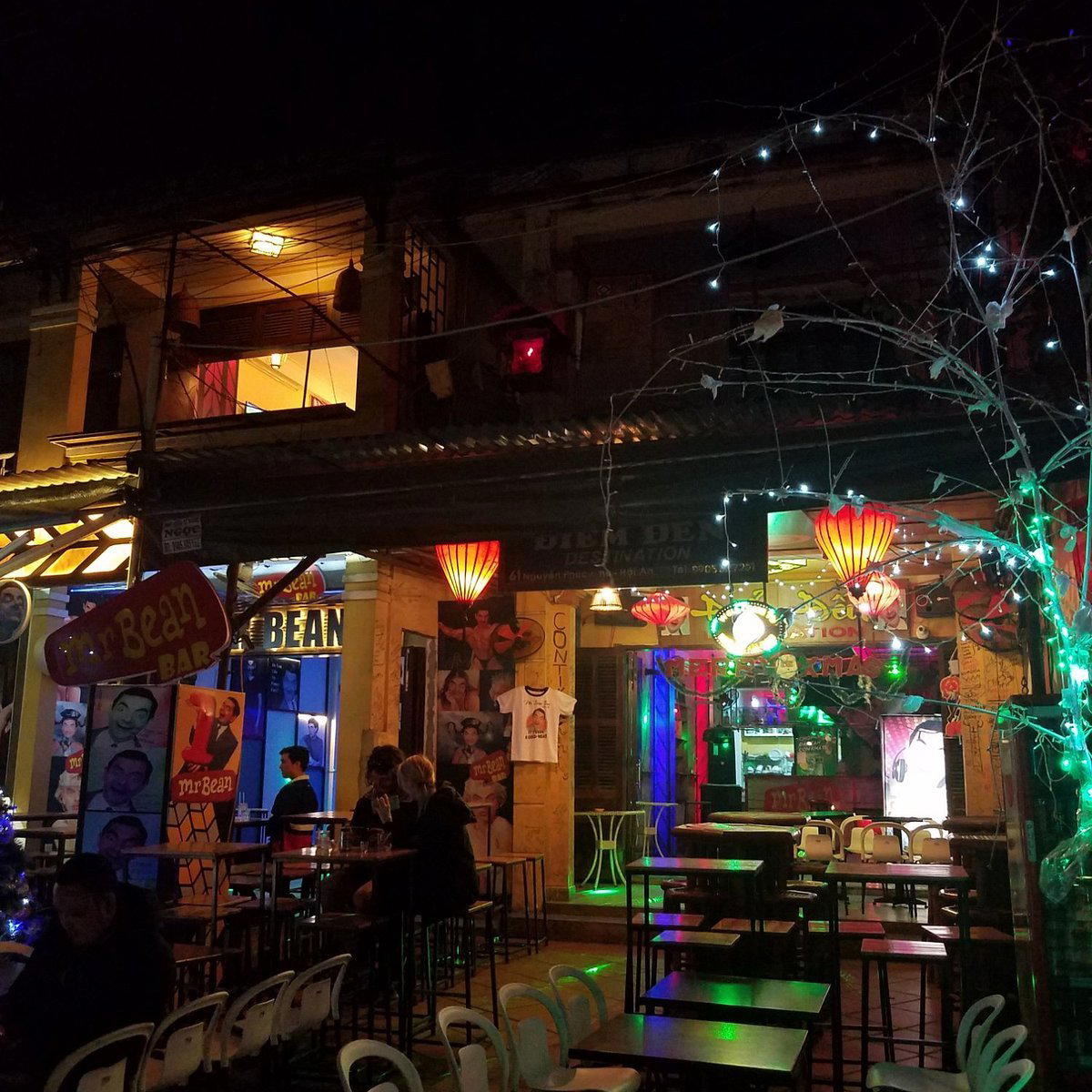
Casual street-side atmosphere with small tables and chairs for on-site dining amid a quiet lane.